REVIEW · SIEM REAP
Angkor Wat Sunrise Tour
Book on Viator →Operated by Easy Angkor Trip · Bookable on Viator
Sunrise at Angkor is worth the early alarm. This Angkor Wat sunrise tour from Siem Reap pairs pickup with a professional guide, so you’re not trying to figure out timing and temple flow before the light arrives. You’ll also have an air-conditioned ride and cold water to keep things bearable.
I like the way the day is built around the magic window. You’ll start very early (often around 4:30am), catch the first glow at Angkor Wat, then move into Angkor Thom to see major sights while the crowds are still manageable.
The one thing to plan for: the $50 tour price doesn’t include the Angkor Temple Pass listed at $37, and you’ll be walking for hours in morning heat, dust, and temple steps.
In This Review
- Key points before you go
- Why Angkor Wat at sunrise feels different
- Price and value: what your $50 covers (and what doesn’t)
- Getting to the temples early: pickup, timing, and comfort
- Stop 1: Angkor Wat at first light
- Stop 2: Bayon Temple and the 54 towers at Angkor Thom
- Stop 3: Chau Say Tevoda for a quick classic Khmer temple stop
- Stop 4: Ta Prohm where the roots take over
- Stop 5: Ta Nei, a calmer stone temple by the reservoir
- Stop 6: The South Gate of Angkor Thom and its famous faces
- The guide matters: why Mr K’s approach is so often praised
- Who this Angkor Wat sunrise tour is best for
- Should you book this Angkor Wat sunrise tour?
- FAQ
- What time does the Angkor Wat sunrise tour start?
- Is the sunrise part included or optional?
- How long is the tour?
- What’s included in the $50 price?
- Do I need to buy the temple pass?
- Is this tour private?
- Can I cancel and get a full refund?
Key points before you go
- Sunrise timing that keeps you at Angkor Wat early enough for the best light
- Pickup and drop-off plus an air-conditioned vehicle for the long early morning
- Cold drinking water and a towel, which is genuinely useful before the sun climbs
- Angkor Thom highlights with Bayon and the South Gate’s famous stone faces
- Ta Prohm plus smaller temples that help you see more than just the big postcard spots
- Guides like Kosorl Oun (Mr K) are praised for smart photo stops and making history easier to follow
Why Angkor Wat at sunrise feels different
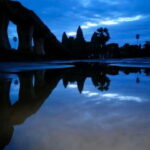
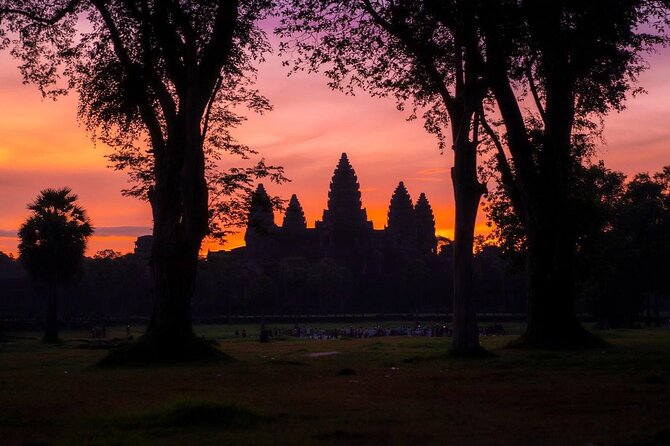
Angkor Wat is dramatic anytime, but sunrise changes the feeling fast. The light is softer, the temple shapes look sharper, and the whole complex feels more like a place you discover instead of a place you rush through. Starting early also helps with crowd control. Even if you’re not chasing perfect photos, arriving before the bulk of the day-trippers changes your pace and your stress level.
This tour also does something smart: it doesn’t treat sunrise as a quick photo stop and then leave. You’re timed to see Angkor Wat properly, then you keep going to Angkor Thom. That means you get both the iconic sunrise view and the larger city-of-temples vibe the rest of Angkor is known for.
You can also read our reviews of more tours and experiences in Siem Reap

Price and value: what your $50 covers (and what doesn’t)
The headline price is $50 per person, with a set of practical inclusions that matter on a long day: an English-speaking tour guide, pickup and drop-off, an air-conditioned vehicle, and cold drinking water. The tour also mentions cold water and a towel, which is a small add-on that can make temple time feel less grim.
But the big cost item is the admission. You’ll need an Angkor Temple Pass listed at $37 per person. So your realistic total tends to be closer to $87 per person once you add that pass. For a full morning-to-afternoon run with multiple temples, a guide, and transport, that can still be good value—especially if you’d otherwise pay for separate tuk-tuk time or private driver hours to stitch everything together.
One more practical note: the operator lists group discounts. If you’re traveling with friends or family and can line up a shared booking, you may get better per-person pricing than solo-style arrangements.
Getting to the temples early: pickup, timing, and comfort
A sunrise tour lives or dies by logistics. This one includes pickup and drop-off, which removes the biggest headache in Siem Reap mornings: getting to Angkor at the right time without stress or waiting around.
The tour also uses an air-conditioned vehicle and includes cold drinking water. That matters because the early start is followed by walking through stone corridors and open courtyards. Heat builds quickly, and even if the morning starts cool, you’ll feel it once you move into longer temple circuits.
If your body runs warm, plan for a slower early pace. In the tour experience, people have mentioned carrying kids and adjusting when someone doesn’t feel great in the heat—so think of this as an active tour, not a sit-and-stare museum visit. Comfortable shoes and a hat help, and I’d treat the morning like a hike day.
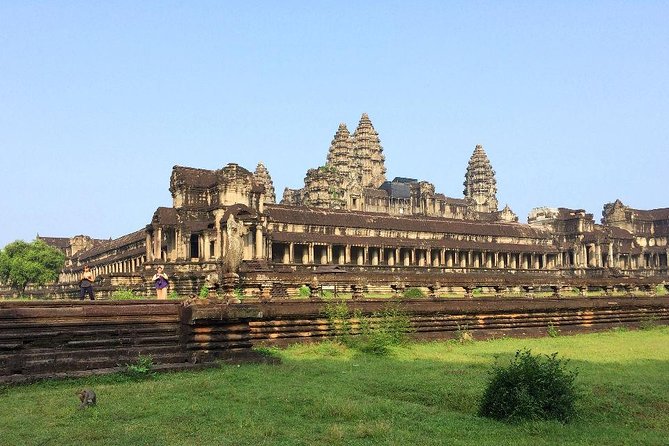
Stop 1: Angkor Wat at first light
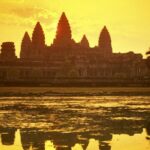
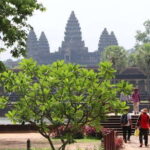
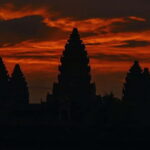
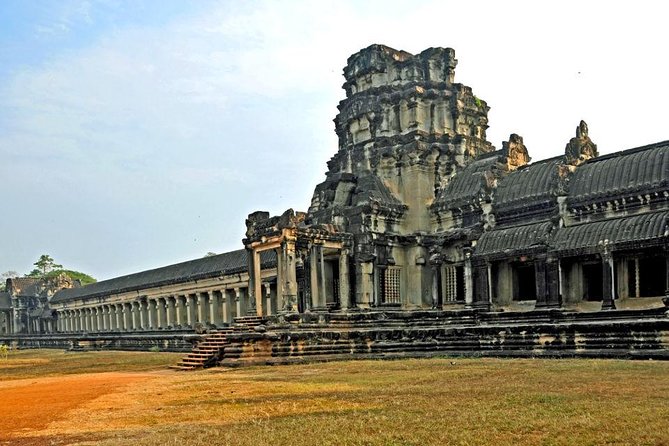
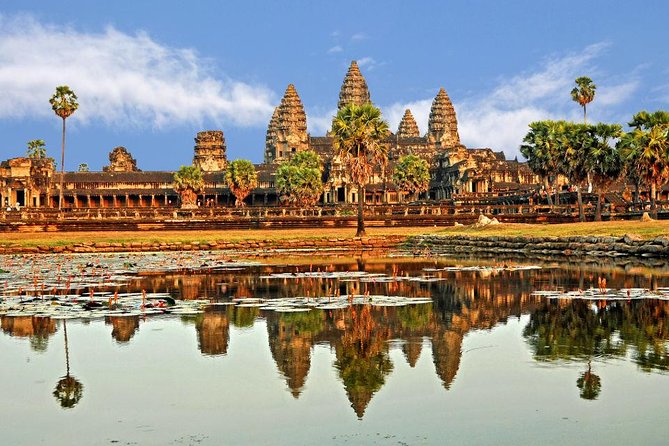
Angkor Wat is the main event. It’s the largest and most famous Khmer temple, built in the 12th century (between 1113 and 1150) during the reign of Suryavarman II. The temple rises about 65 meters high, and it sits within a large moat—so at sunrise you get that classic layered look: sky, water, then massive stone lines.
What makes it special on a sunrise tour is how your eyes adapt. Early morning contrast makes carvings and rooflines easier to read. It also helps you understand why Angkor Wat is treated like the center of the whole Angkor story.
Practical tip: give yourself a little patience for where you stand. A good guide helps here—especially if they know the timing for photo angles and when to shift before the light changes. People who went on this tour with Kosorl Oun (Mr K) mention that he selects spots for the best views and quieter photo moments. Even if you don’t care about photography, that timing keeps you from wandering at the wrong time.
Admission note: Angkor Wat’s entry is part of the Angkor Temple Pass requirement. The tour itself does not include that pass.
Stop 2: Bayon Temple and the 54 towers at Angkor Thom
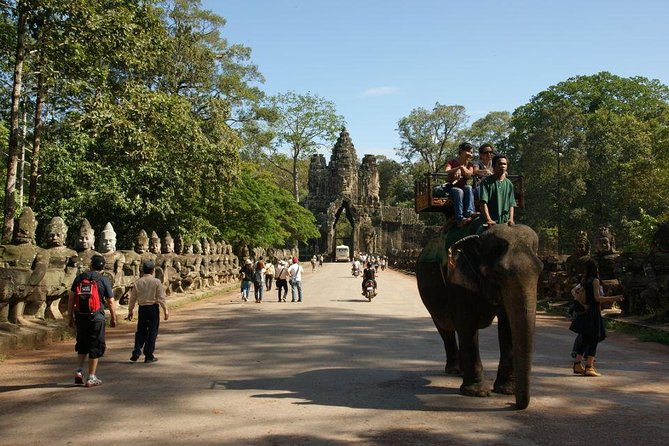
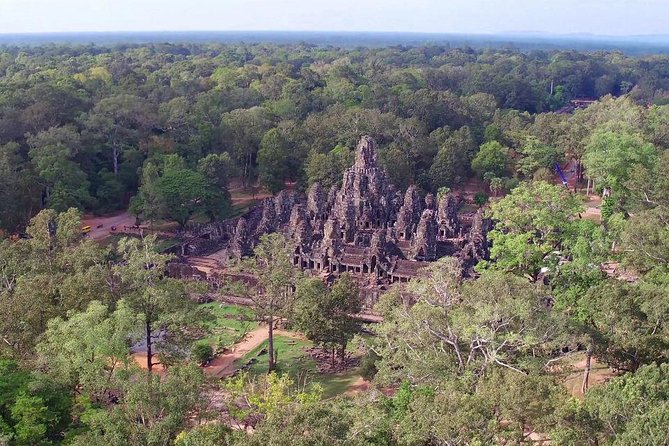
After Angkor Wat, you move into Angkor Thom, the ancient walled city. The next major stop is Bayon Temple. Bayon is a Buddhist-style temple built in the late 12th and early 13th centuries by Jayavarnam VII.
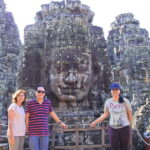
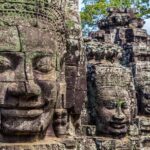
Here’s the wow factor: Bayon has 54 towers, representing the 54 provinces during the Khmer empire. The towers are known for their stone faces, and the whole temple feels like you’re inside a living symbol of political power and belief.
Bayon is listed as free for this stop (you’ll still want your pass for the overall temple complex access). Since it’s a central part of Angkor Thom, it’s also where you start feeling the scale of the city plan—gate lines, causeways, and temple layout all connect.
A balanced way to enjoy Bayon is to do it in two passes: first, take in the towers and faces from key points; second, slow down on details like symmetry and how the towers frame walking paths. If you speed through, Bayon turns into just another temple—if you pace it, it becomes easier to read.

Stop 3: Chau Say Tevoda for a quick classic Khmer temple stop
Chau Say Tevoda sits just east of Angkor Thom, directly south of Thommanon across the Victory Way. It’s a mid-12th century Hindu temple from the Angkor Wat period.
This stop is shorter (about 30 minutes). That’s actually a plus. It breaks up the day without forcing you into another long endurance block. If you want a taste of a Hindu temple layout and want contrast with the later Buddhist and royal changes you’ll see elsewhere, Chau Say Tevoda adds variety.
The caution is simple: if you’re already tired from early hours, shorter stops help, but your best experience will come from a quick mindset shift—treat this as a highlight scan rather than a deep study.
Admission note: this stop is listed as not included in the materials provided, so your pass planning matters.
Stop 4: Ta Prohm where the roots take over
Ta Prohm is the temple people often recognize from films, including Tomb Raider. The temple was built in the late 12th century by Jayavarman VII and dedicated in 1186 to his mother. It originally had a Buddhist background, then later shifted to a Hindu context.
What you’ll feel at Ta Prohm is the way nature and architecture wrestle for attention. Stone corridors and galleries give you structure, and then the trees and roots pull your gaze in different directions. It’s the kind of temple where every time you turn, your view changes.
This stop is listed for about two hours. That’s enough time to see the main areas without feeling like you’re trapped in one corner. Still, it can be physically demanding. Uneven ground, shaded areas, and the dense root setting can slow movement.
Practical tip: pace yourself. Start with the big scene views, then circle back for smaller details once the main crowd flow settles. A guide who knows when to shift can help a lot here, especially for photo timing and avoiding bottlenecks.
Admission note: Ta Prohm is shown as free in the provided stop list, but it’s still within the Angkor temple area that uses the temple pass system.
Stop 5: Ta Nei, a calmer stone temple by the reservoir
Ta Nei is a late 12th century stone temple in Angkor, built during the reign of King Jayavarman VII. It sits near the northwest corner of the East Baray, a large holy reservoir, and it’s dedicated to the Buddha.
This is one of those stops that can feel like relief after more famous temple zones. It’s shorter (about 35 minutes) and more about quiet appreciation: stone geometry, a different scale, and the sense of being in a temple that people often overlook.
If you like variety, Ta Nei helps balance the day. The big names (Angkor Wat and Ta Prohm) give you the headline visuals. Ta Nei gives you a slower, more contemplative angle—especially if you’re still processing the amount of stone and symbolism you’ve already seen.
Admission note: this stop is listed as not included in the materials provided, so plan around the temple pass system.
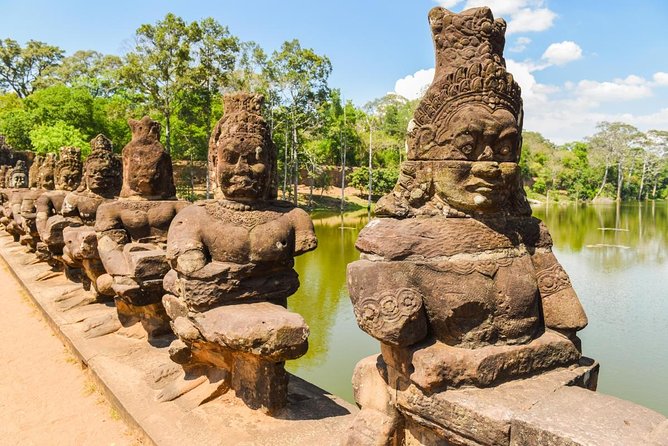
Stop 6: The South Gate of Angkor Thom and its famous faces
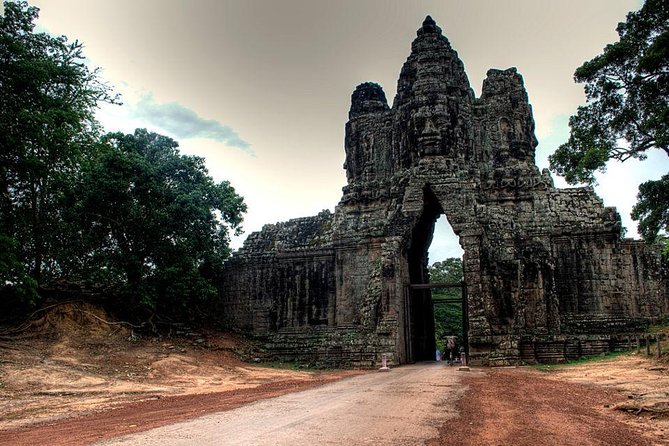
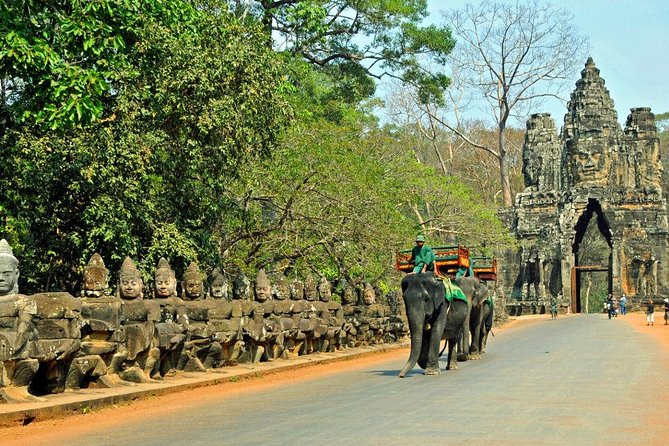
The tour wraps with Bayon Temple again as the South Gate entrance visit. The South Gate is one of five grand entrances to Angkor Thom, built in the late 12th century, and it’s described as the best-preserved and most famous gate.
It’s known for its impressive causeway lined with stone figures, and the South Gate itself has those recognizable smiling faces. It’s a great ending because it ties the day together: you started with the spiritual centerpiece of Angkor Wat and you ended by returning to the city entrance identity of Angkor Thom.
At this point, you’ll likely feel two things at once: satisfaction and exhaustion. The trick is to keep your energy for the entry walk and the main gate views rather than trying to squeeze in extra wandering.
The guide matters: why Mr K’s approach is so often praised
A sunrise temple tour is a timing game. The best experiences come when the guide understands where to stand, when to move, and how to interpret what you’re seeing without turning it into a lecture.
Kosorl Oun (Mr K) is specifically named in the provided experiences. People mention that he’s passionate about history, friendly with families, and helpful with photo spots—plus he adapts when someone is struggling with heat or energy. That last part matters. A good guide doesn’t just know facts; he knows how to pace a group.
Look for cues in the tour itself: does your guide explain what you’re looking at in plain language, then give you a moment to look? Does the schedule flow without long waiting? Do you get guidance on best viewing angles? When those pieces line up, Angkor stops feeling like a crowded checklist and starts feeling like a coherent visit.
Who this Angkor Wat sunrise tour is best for
This tour fits best if you want the iconic sunrise at Angkor Wat and you also want the major Angkor Thom stops in one day without juggling multiple drivers.
- Families who want structure: pickup, guidance, and a real plan beats piecing it together on your own.
- Couples who care about photos and timing: sunrise helps, and a guide who knows the best spots can make a difference.
- Anyone who doesn’t want to spend the day guessing: the guide context helps you move through temples with meaning instead of just location names.
It may feel like a hard day if you prefer very relaxed sightseeing. It’s about 6 to 8 hours, and you’re outdoors for long stretches.
Should you book this Angkor Wat sunrise tour?
If you want Angkor Wat in the softest light and you’d like a guided sweep through Angkor Thom plus Ta Prohm, this is a strong option. The included pickup/drop-off, AC ride, and cold water are the kind of practical perks that make early mornings less punishing. And if you get a guide like Kosorl Oun (Mr K), you can expect help with timing, photo angles, and clear explanations.
Do book with one clear planning mindset: budget for the Angkor Temple Pass listed at $37, and treat the day as active. If you’re ready for early hours and temple walking, you’ll get a lot of iconic sights packed into a well-timed route.
FAQ
What time does the Angkor Wat sunrise tour start?
The tour includes an optional sunrise experience, departing the hotel around 4:30am. Your exact pickup timing can vary based on the schedule.
Is the sunrise part included or optional?
Sunrise is optional. You can choose to do the sunrise-focused departure or follow the standard timing.
How long is the tour?
The duration is about 6 to 8 hours (approx.).
What’s included in the $50 price?
The tour includes an English-speaking tour guide, pickup and drop-off, an air-conditioned vehicle, and cold drinking water (cold water and a towel are also listed).
Do I need to buy the temple pass?
Yes. The Angkor Temple Pass is not included and is listed at $37.00 per person.
Is this tour private?
It’s described as a private tour/activity, with only your group participating.
Can I cancel and get a full refund?
Yes. You can cancel up to 24 hours in advance for a full refund. If you cancel less than 24 hours before the start time, the amount paid is not refunded.