REVIEW · SIEM REAP
3-Day Exploring Angkor Wat & Siem Reap Highlights Tour.
Book on GetYourGuide →Operated by Angkor Visitor Tour · Bookable on GetYourGuide
Angkor Wat at sunrise changes the tempo of your whole trip. This 3-day private highlights route strings together Angkor Wat, Ta Prohm, and Angkor Thom, then keeps going with pink carvings, jungle temples, and Tonle Sap life. The icing is that you get skip-the-line access plus an English-speaking guide from pickup to drop-off.
What I like most is how the days balance famous icons with quieter, more personal stops: Banteay Srei feels delicate and refined, while Kompong Phluk gives you a real look at life on the water. The one thing to think about is the early schedule—pickup is very early, and some days involve uneven paths and heat after sunrise.
In This Review
- Key highlights you’ll feel on the ground
- A 3-day plan that balances big monuments and real daily life
- Angkor Wat sunrise, Ta Prohm, and Bayon’s faces in Angkor Thom
- Banteay Srei, Phnom Kulen waterfall time, and Beng Mealea’s lost-city vibe
- Kompong Phluk on Tonle Sap, then Wat Thmei’s Khmer Rouge memorial
- Skip-the-line timing, AC transport, and what your $325 covers
- Getting the most out of the early starts (without burning out)
- Guide quality: Sok Guia and Praiem-style service you’ll want
- Who should book this tour, and who should rethink it
- Should you book this 3-Day Exploring Angkor Wat & Siem Reap Highlights Tour?
- FAQ
- What is the meeting time for hotel pickup on Day 1?
- What time is pickup on Day 2 and Day 3?
- Is Angkor Wat sunrise included?
- Are entrance fees included in the tour price?
- Are meals provided?
- What does the tour include for comfort during the day?
- Is this tour suitable for wheelchair users?
- Can I bring a drone?
- What cancellation options are available?
Key highlights you’ll feel on the ground
- Skip-the-line entry to keep your mornings moving, not waiting
- Sunrise Angkor Wat plus Ta Prohm’s dramatic tree roots and the faces of Bayon
- Banteay Srei pink sandstone and Phnom Kulen’s sacred sights and falls
- Beng Mealea’s unrestored jungle ruins (the “lost city” feeling)
- Kompong Phluk boat ride and stilted village life on Tonle Sap
- Wat Thmei for the Khmer Rouge history lesson with a serious, respectful tone
A 3-day plan that balances big monuments and real daily life
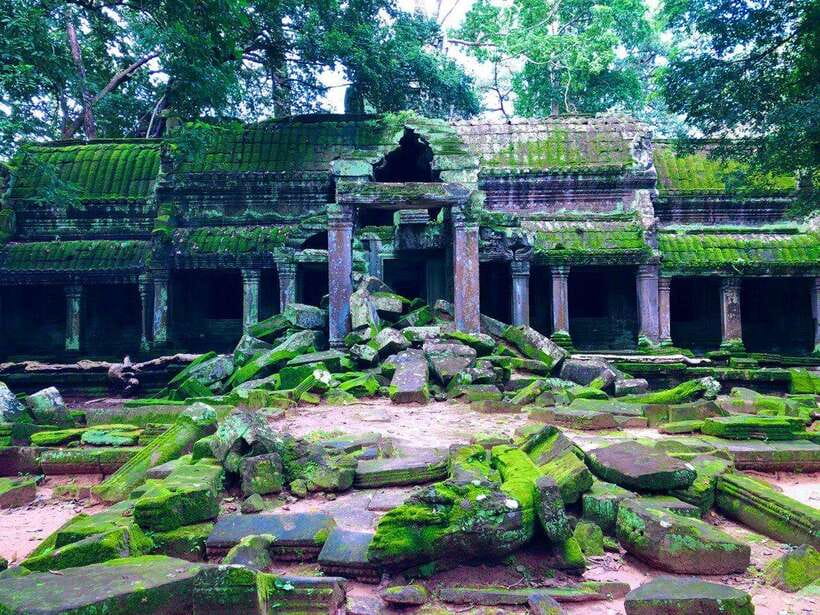
This tour works because it doesn’t treat Angkor as a single-day checkbox. Day 1 is about waking up at the right moment—when Angkor Wat feels cinematic and cool. Day 2 shifts to craft and nature: intricate stonework, a sacred mountain, and a temple site that still looks half swallowed by the jungle. Day 3 switches your lens again, from ancient stone to modern resilience on the lake, then ends with a heavy but necessary historical visit.
You’ll also appreciate the private-group pacing. You’re not fighting the same crowds all day with strangers pushing past you. And with hotel pickup and an air-conditioned vehicle, the long travel legs between sites don’t drain you as much.
You can also read our reviews of more tours and experiences in Siem Reap
Angkor Wat sunrise, Ta Prohm, and Bayon’s faces in Angkor Thom

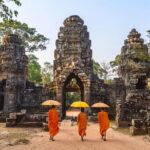
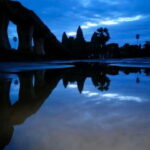
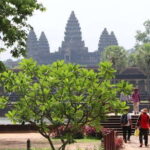
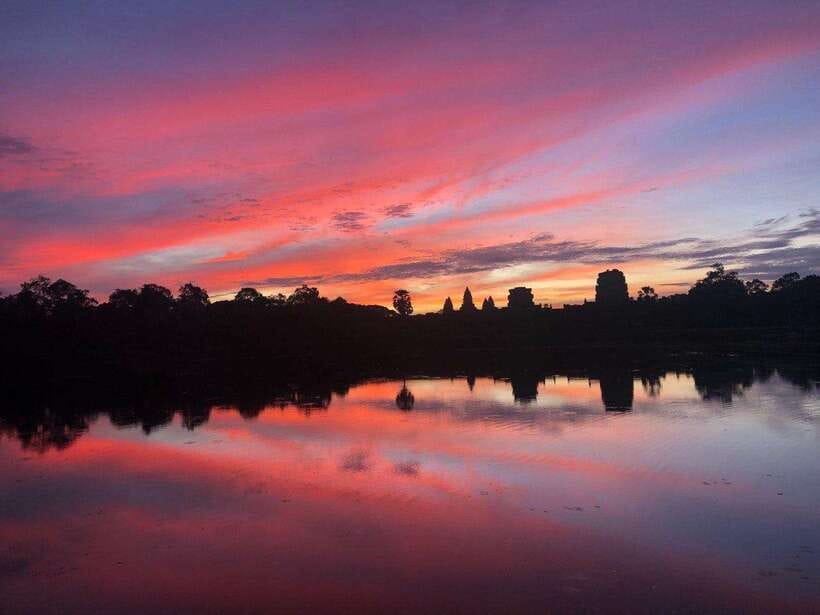
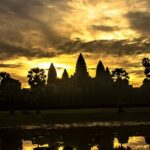
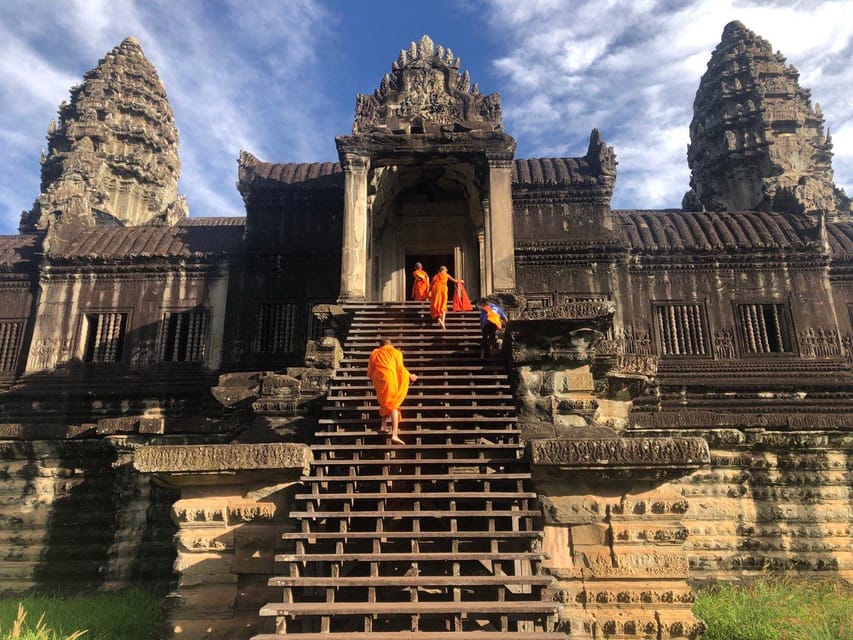
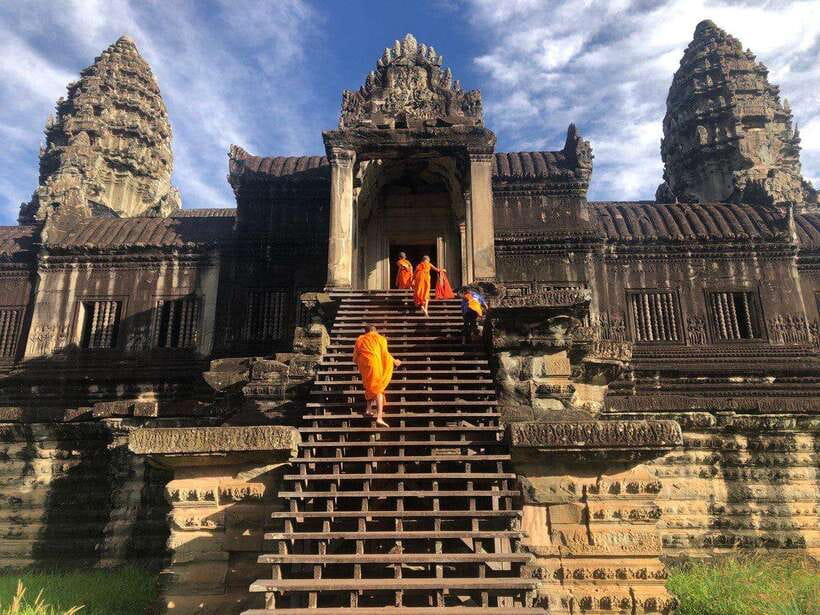
Your first morning begins with a 4:45 AM hotel pickup, so plan for a real early wake-up. You’ll head straight into the Angkor complex and start with sunrise at Angkor Wat. This is the part most people remember, because the light hits the towers at an angle that makes the carvings and stone layers look almost new. It’s also one of those moments where you’ll understand why everyone talks about dawn at Angkor.
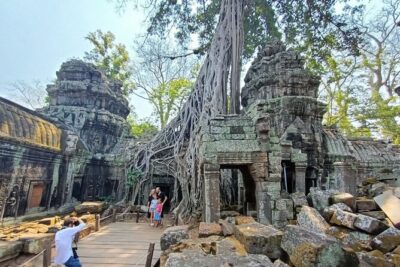
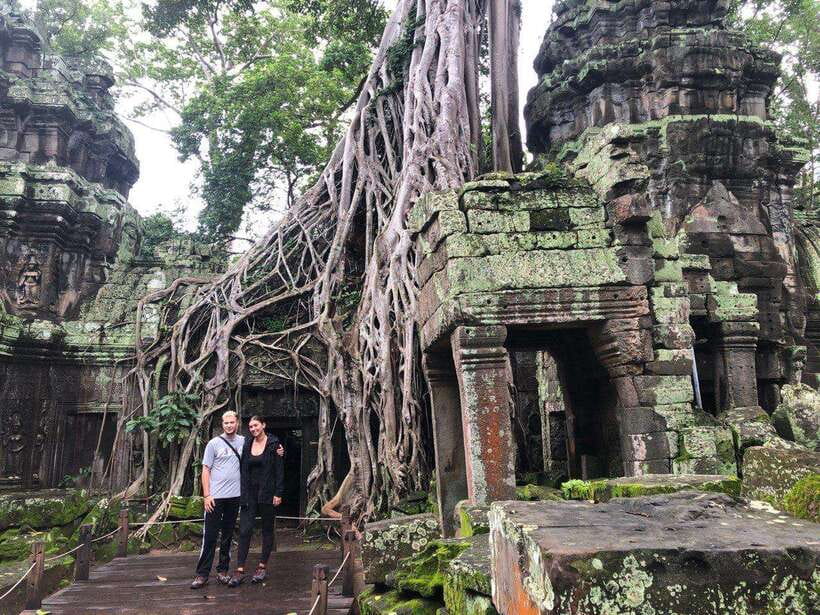
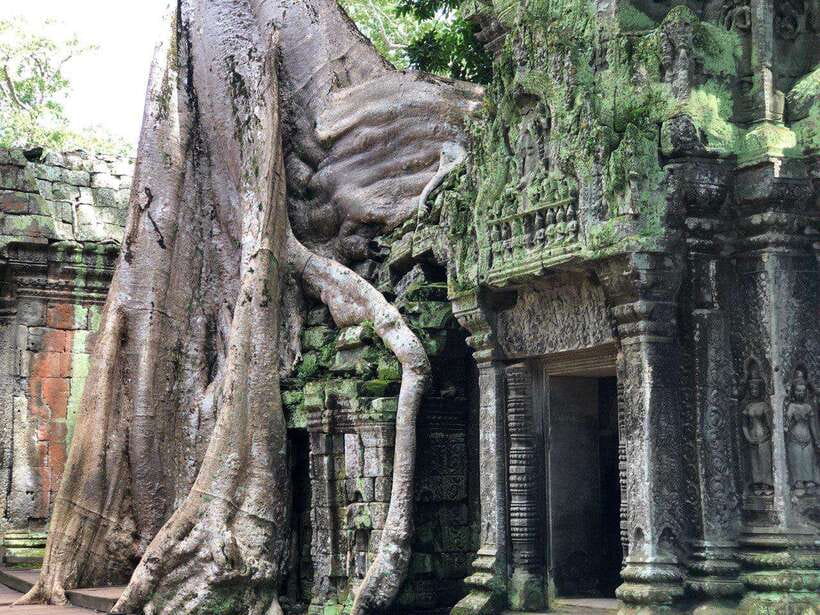
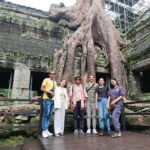
From there, you get solid time at Angkor Wat itself—enough to walk, pause, and actually look at the details rather than just snapping photos and sprinting to the next spot. After that, the route moves to Ta Prohm, the temple known for trees growing around and through the ruins. The best way to enjoy it is slow: look up at how roots twist around stone, then look around at the ruined corridors and doorways.
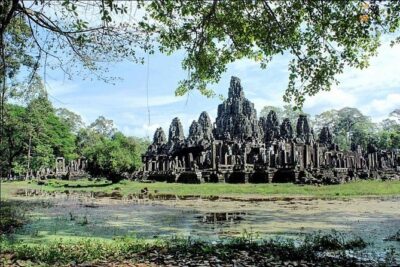
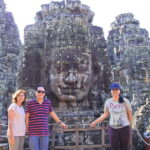
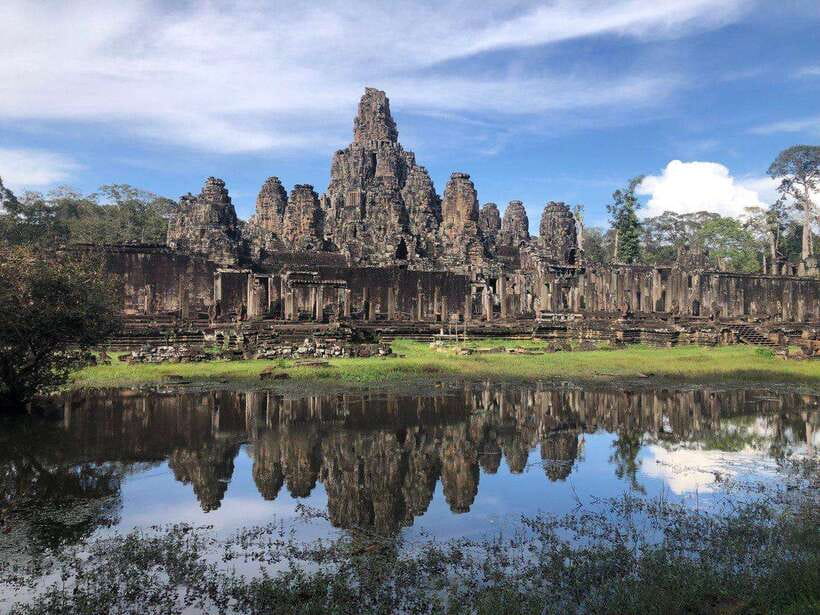
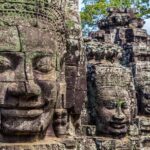
Next comes Angkor Thom, the former royal city. The centerpiece is Bayon Temple, famous for its stone faces. They’re not just decorations; the faces give you something to orient yourself with as you walk deeper into the complex. You’ll also see the Terrace of the Elephants, a reminder that these sites were once built for power, ceremony, and movement.
Practical notes for this day:
- Comfortable shoes matter. Even though the tour gives you a schedule, you still need to handle stone steps and uneven ground.
- Bring sunglasses, a hat, and sunscreen. The morning starts cool, but the sun shows up fast.
- The tour includes cold drinking water and wet and cold towels, which is exactly what you want once you start sweating in the open areas.
Banteay Srei, Phnom Kulen waterfall time, and Beng Mealea’s lost-city vibe
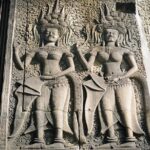
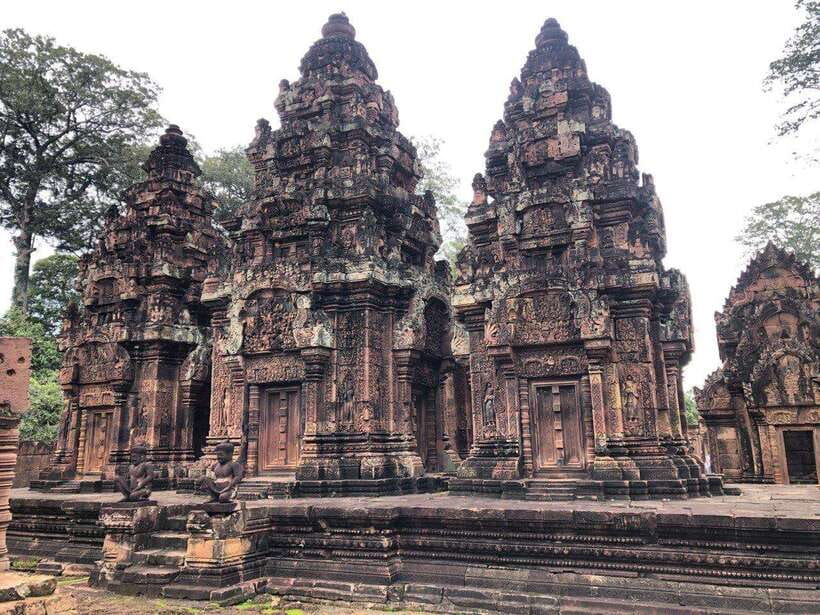
Day 2 pickup is at 8:00 AM, which feels like a gift compared with the dawn start. The day opens with Banteay Srei, often called a jewel of Khmer art. The reason it’s special is the stonework: pink sandstone carvings with fine detail that’s easier to appreciate than at some larger, busier sites. If you like craftsmanship, this is the stop that makes the rest of your Angkor knowledge click.
Then you’ll head to Phnom Kulen National Park. This area feels more like a sacred landscape than a single monument. You’re there for a mix of spiritual and natural sights, including the River of a Thousand Lingas, a reclining Buddha, and a chance to refresh at the two-level Phnom Kulen waterfall.
Because there’s time for the waterfall, it’s smart that the tour asks you to bring swimwear. Even if you don’t plan a full swim, you might want to dip your feet or cool down when conditions allow. Just remember: water areas can get slippery, so your shoes and caution matter.
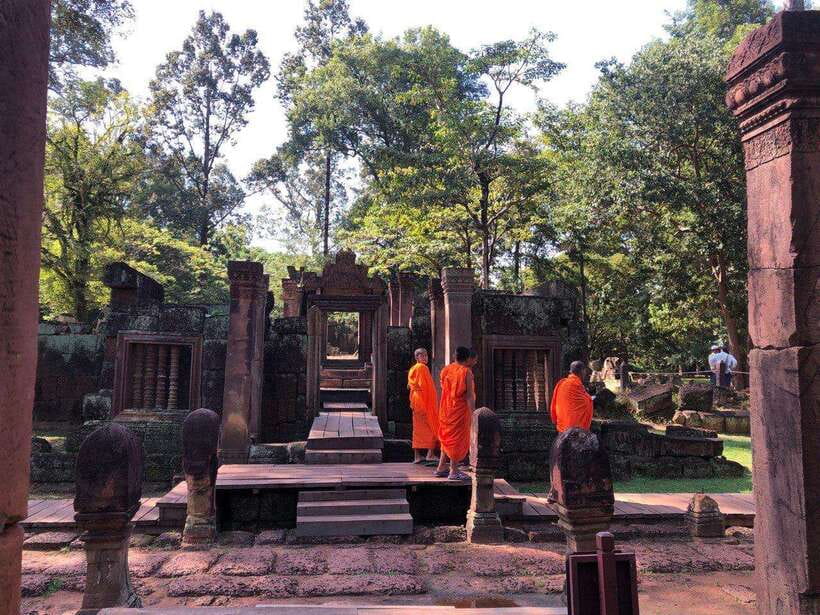
Finally comes Beng Mealea. This is the “lost city” feeling part—because it’s described as completely unrestored. That means fewer polished paths and less smoothing of the experience. You explore in a more jungle-wild way, with stones, roots, and walls that look like they’re still being reclaimed by nature. It’s exciting, but it’s also where you’ll notice fatigue more. If you’re the type who likes adventure over comfort, this is your peak moment.
Practical note:
- In Beng Mealea and Phnom Kulen areas, you’ll want insect repellent and clothes that can handle heat and light rain. The tour provides towels and water, but nature doesn’t pause for your schedule.
Kompong Phluk on Tonle Sap, then Wat Thmei’s Khmer Rouge memorial
Day 3 starts at 8:30 AM, and it immediately shifts your understanding of Cambodia. Instead of more temples, you’re going to Kompong Phluk, about 27 km southeast of Siem Reap on Tonle Sap.
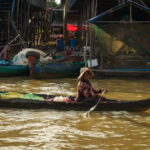
You’ll take a boat ride around 1 hour through the village’s maze of waterways. This is built around what makes Kompong Phluk different: homes on stilts that rise and fall with the lake’s changing water levels. You’ll pass by stilted houses, plus schools and markets—so it’s not just scenic. It’s daily life.
One of the most meaningful parts is the chance to interact with the setting beyond the view. The tour includes time to visit local homes, which helps you understand the challenges of living where the water level can transform your world. You’ll also see fish farms, where locals raise fish in floating enclosures—an example of how routine becomes survival skill.
The tour also notes something you should plan around: during the rainy season, you may take a canoe through the flooded forest. The idea isn’t just to see water; it’s to see what the landscape looks like when it’s fully adapted into the lake cycle. If you’re traveling in that season, you’ll likely feel like you’re moving through a living ecosystem.
After the lake day, the experience becomes intentionally serious with Wat Thmei, described as a former Buddhist temple turned killing field during the Khmer Rouge regime. This isn’t a light stop. The tour frames it as a chance to pay respects to victims and learn about Cambodia’s tragic past. Even if history is heavy for you, going with a guide helps you keep your visit thoughtful rather than rushed.
Then you’ll wrap with a Siem Reap old market city tour for shopping, and finish back at your hotel.
Skip-the-line timing, AC transport, and what your $325 covers
The price is $325 per group up to 4 people for the 3 days. That’s important because the value changes depending on whether you fill the group. If you’re traveling with up to three others, splitting it can make the daily cost feel more reasonable than single-person sightseeing add-ons. If you’re solo or two people, it still can be worth it because you’re paying for a private vehicle, a guide, and the morning efficiency.
What’s included:
- Hotel pickup and drop-off
- English-speaking tour guide
- Transportation by air-conditioned vehicle
- Cold drinking water
- Wet and cold towels
- Skip the line using a separate entrance
What’s not included:
- Entrance fees
- Meals
- Personal expenses
This is a tour where “hidden costs” usually come from entrances and food, not from the transportation. I’d plan a small buffer for entrance fees across multiple sites, because you’re visiting several major areas over three days.

Getting the most out of the early starts (without burning out)
Angkor days can trick you. You think the hardest part is the walking, but the real challenge is pacing—especially with very early pickup times. On Day 1 you’re up at 4:45 AM, and then Day 2 and Day 3 still start by late morning at 8:00 AM and 8:30 AM.
Here’s how to keep it enjoyable:
- Wear comfortable shoes you already trust. New shoes plus ancient stone is a bad combo.
- Keep sunglasses + hat in reach. When the sun hits, it hits.
- Use insect repellent before the first outdoor stop of the day.
- Take the towels seriously. They’re not a luxury item; they help you recover faster.
- Bring water habits. Even with included water, you’ll want to sip consistently.
Also, pay attention to the tour’s “not allowed” list: drones are not allowed, and alcohol and drugs aren’t permitted. If you’re carrying anything you didn’t expect to have to leave behind, this matters.
Guide quality: Sok Guia and Praiem-style service you’ll want
The strongest part of this tour is the guide experience. Two guide names come up in the feedback you provided: Sok Guia and Praiem.
Sok Guia is described as kind, competent, and prepared, and available to requests. That matters because a good guide can adjust your day without derailing the schedule—especially when you’re juggling sunrise timing, walking comfort, and the kind of explanations that help you understand what you’re seeing.
Praiem is noted for punctuality, clear and precise history explanations for Angkor Wat, and careful driving. When a guide plans the itinerary well, you spend less time guessing where to go and more time enjoying the sites.
My practical advice: when your guide pauses at a viewpoint or carving detail, ask one question. Even a simple Why did they build it that way? turns your visit from sightseeing into understanding.
Who should book this tour, and who should rethink it
This is a strong fit if you want:
- Sunrise Angkor Wat and a real Angkor circuit, not just a quick loop
- Time at Ta Prohm, Bayon, and Terrace of the Elephants
- A mix of stonecraft (Banteay Srei) and nature (Phnom Kulen waterfall)
- Adventure energy at Beng Mealea
- A respectful, educational ending at Wat Thmei
- A private-group pace with an English guide and AC transport
It may be less ideal if:
- You’re not comfortable with early mornings.
- You need a fully wheelchair-friendly route. This tour is not suitable for wheelchair users.
- You want meals included. Meals aren’t included, so you’ll plan where you eat during breaks.
One last practical note: the tour explicitly doesn’t allow electric wheelchairs, so if mobility is a concern, it’s better to choose an alternative format designed for that need.
Should you book this 3-Day Exploring Angkor Wat & Siem Reap Highlights Tour?
I’d recommend booking if you want an efficient, well-structured overview of the Siem Reap region that still leaves room for moments of wonder. You get the big Angkor hits at the right times, plus stops that feel more human—Kompong Phluk’s stilted life and the reality check of Wat Thmei.
Before you commit, do two things:
- Budget for entrance fees and meals, since those aren’t included.
- Pack for outdoor conditions: shoes, hat, sunscreen, repellent, and swimwear if you want to use the waterfall time.
If that sounds like your style—early starts, solid walking, and a day-to-day mix of ancient and local life—this tour is the kind you’ll remember long after the photos fade.
FAQ
What is the meeting time for hotel pickup on Day 1?
Pickup is at 4:45 AM from your hotel. The guide will look for you in the hotel lobby and have your name.
What time is pickup on Day 2 and Day 3?
Day 2 pickup is at 8:00 AM. Day 3 pickup is at 8:30 AM.
Is Angkor Wat sunrise included?
Yes. The itinerary includes sunrise at Angkor Wat on Day 1, with time to explore Angkor Wat afterward.
Are entrance fees included in the tour price?
No. Entrance fees are not included, and you’ll pay them separately.
Are meals provided?
No. Meals are not included.
What does the tour include for comfort during the day?
You get cold drinking water and wet and cold towels, plus transportation in an air-conditioned vehicle.
Is this tour suitable for wheelchair users?
No. The tour is not suitable for wheelchair users.
Can I bring a drone?
No. Drones are not allowed on this tour.
What cancellation options are available?
You can cancel up to 24 hours in advance for a full refund.