REVIEW · SIEM REAP
Shared day tour with Spanish-speaking guide at Angkor Temple.
Book on GetYourGuide →Operated by Camboya Travel · Bookable on GetYourGuide
Angkor feels unreal, even on a busy day. This shared tour gives you a smart route through Angkor Thom and then into the big moment of Angkor Wat, with a guide who helps the temples make sense instead of feeling like random stone blocks.
Two things I especially like: the itinerary is paced so you hit the main stories—Bayon’s enormous faces, then Ta Prohm with its jungle feel—without burning the whole day only on walking. And the small group size (up to 9) makes it easier to ask questions and actually follow what’s being explained; one Spanish-speaking guest noted that guide Sem broke down the history in detail, which is exactly what you want here. One possible drawback: because it’s shared, you don’t control the exact rhythm—so if you’re the type who wants to linger for hours on every carving, you may feel slightly rushed in an 8-hour window.
In This Review
- Key points at a glance
- Starting in Siem Reap: the day’s route is the real value
- Angkor Thom’s South Gate: the entrance is a whole show
- Bayon and the terraces: faces, power, and a few oddities
- Ta Prohm: the temple that acts like a jungle park
- Angkor Wat in one afternoon: huge, planned, and worth the time
- The Spanish-speaking guide (plus English): why it matters
- Price and time: is $50 good value for Angkor?
- What to bring (and what to skip) for temple comfort
- Who this tour fits best (and who might want something else)
- Should you book this shared Angkor temple tour?
- FAQ
- What is the duration of the tour?
- How much does the tour cost?
- What languages are available for the live guide?
- How big is the group?
- Where do you start the tour?
- What temples are included in the itinerary?
- Is the tour refundable and flexible to book?
Key points at a glance
- Small group (max 9) means easier conversation with a multilingual guide
- Angkor Thom South Gate + demon/god causeway sets the tone fast
- Bayon’s giant faces are the emotional center of the morning
- Terrace of the Elephants and Terrace of the Leper Kings add variety beyond just towers
- Ta Prohm shows what happens when jungle and stone share the same space
- Angkor Wat (81 hectares) gives you the huge, perfectly planned finish
Starting in Siem Reap: the day’s route is the real value
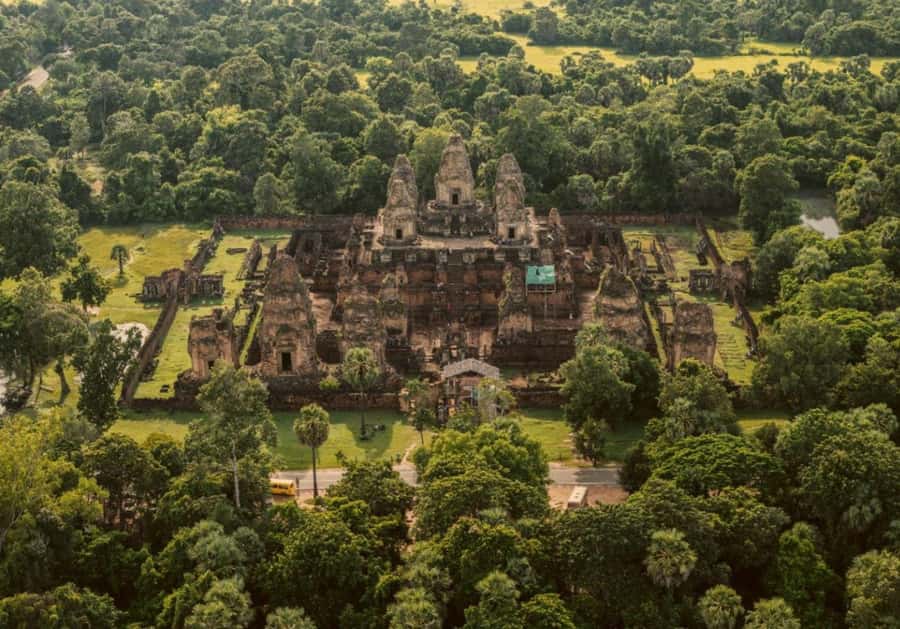
This is a straightforward, single-day plan that begins with pickup at your hotel in Siem Reap. After that, you’re heading straight to the ancient core of Angkor, so you’re not wasting time shuffling around the province.
The big value here is how the stops build on each other. You start with the fortified city of Angkor Thom (about 10 square kilometers), then move temple to temple like the story is unfolding in real time. Even if you’ve seen photos, the order matters because the different styles and purposes of each site start to click.
One practical note: the tour lasts 8 hours, and you’ll want to confirm the starting time when you check availability. That matters because temple light and crowds change fast, and your best photos depend on getting there at the right part of the day.
You can also read our reviews of more guided tours in Siem Reap
Angkor Thom’s South Gate: the entrance is a whole show
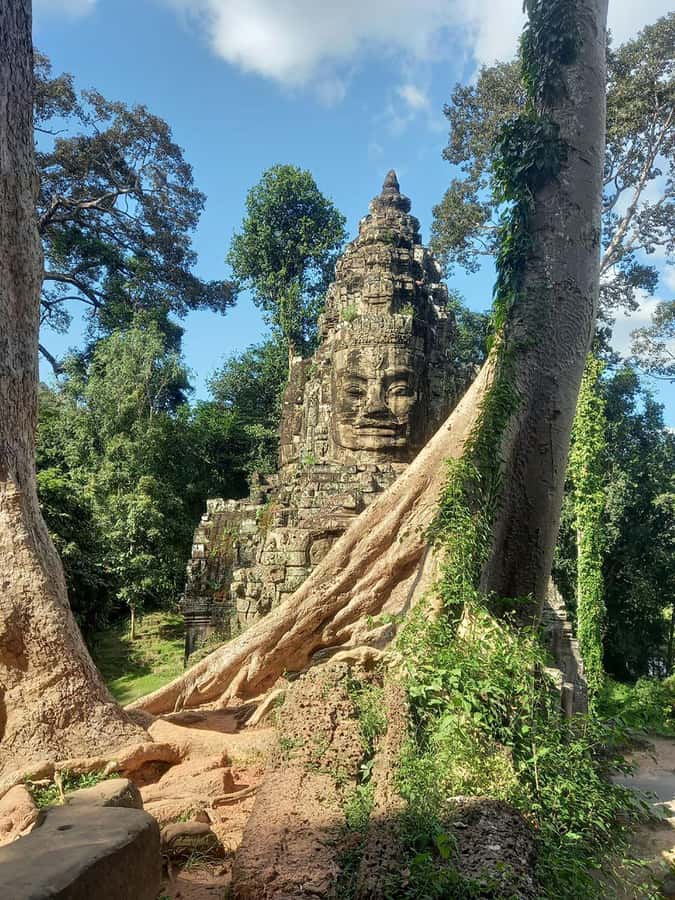
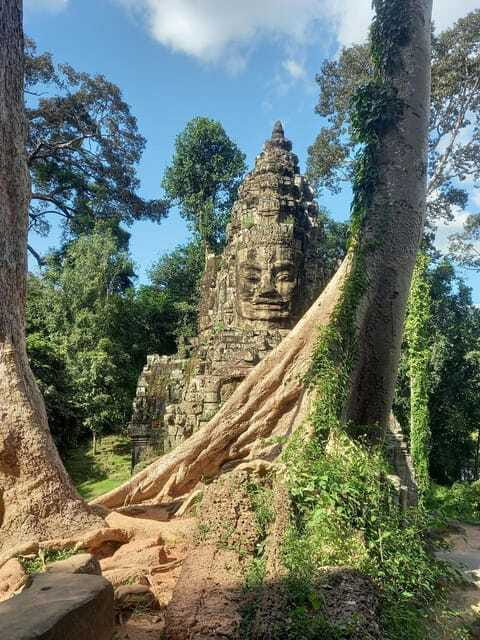
Your morning begins with Angkor Thom, the walled city and royal center. You enter through the monumental South Gate on a causeway lined with statues of demons and gods, each paired with a giant naga.
This is one of those moments where your brain goes: okay, this place wasn’t built to be subtle. The causeway sets an immediate mythic vibe, so by the time you reach Bayon later, you’re not just staring at random faces—you understand that you’re moving through a symbolic landscape.
Also, getting oriented early helps a lot. Angkor can feel like a maze at first. Starting with a strong gateway like this gives you a mental map of where you are and why you’re there.
Bayon and the terraces: faces, power, and a few oddities
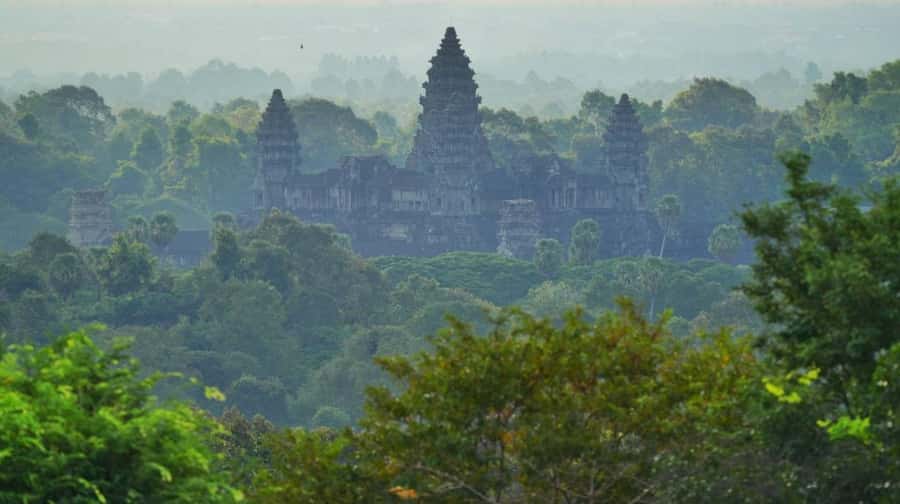
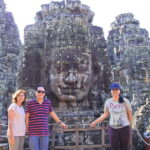
Next up is Bayon Temple, famous for the enormous carved faces that rise from the towers. This stop is the emotional centerpiece of the morning because it’s not just impressive—it’s intimidating in the best way. The faces make it feel like the city is watching you, even when you’re just trying to find your bearings and take one more photo.
After Bayon, the tour continues to the Terrace of the Elephants and the Terrace of the Leper Kings. These are different in character, which is exactly why they belong in a good one-day route.
- Terrace of the Elephants gives you a sense of ceremonial scale and royal display.
- Terrace of the Leper Kings is more specific and strange-sounding, and that’s part of the appeal. It adds contrast to the face-heavy Bayon so your brain doesn’t melt into one visual style.
The advantage of a guided day becomes obvious here. Without context, terraces can feel like they’re just decorative stone. With a guide—especially one explaining in Spanish or Portuguese alongside English—you get the “why” behind what you’re seeing, not just the “what.”
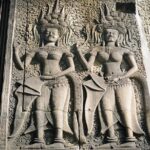
And yes, the carvings reward patience. You don’t need to spend forever, but a few slow minutes at each terrace will pay off more than sprinting through.
Ta Prohm: the temple that acts like a jungle park
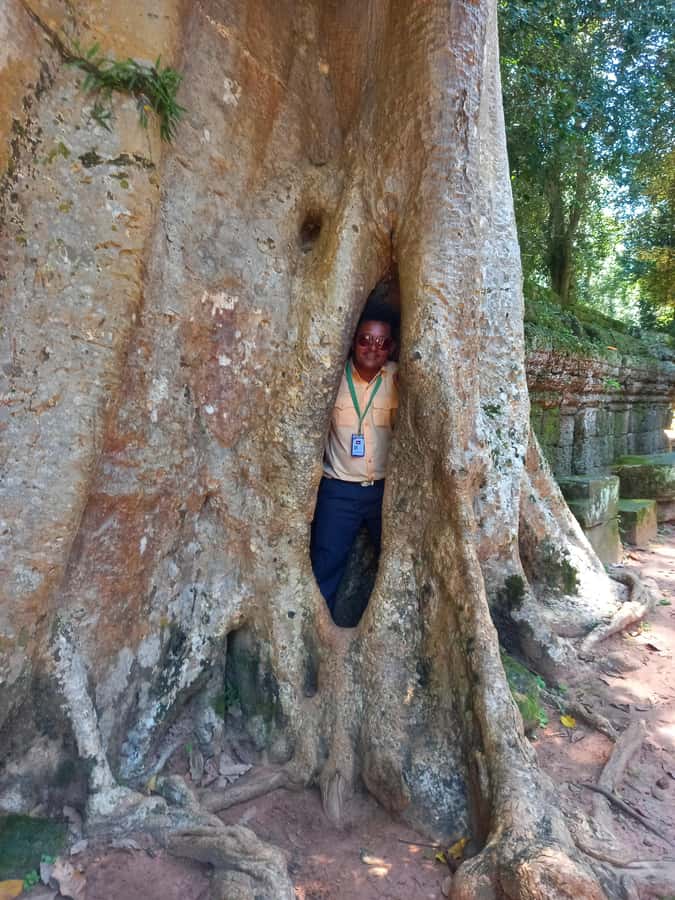
Then you arrive at Ta Prohm, the temple in the jungle that has stayed relatively untouched since its discovery. This is where Angkor shifts from formal, ordered geometry into something more alive.
Ta Prohm tends to grab people because it feels like the natural world is part of the architecture. Even when you’ve read captions, it’s hard to fully understand the visual tension until you’re standing there.
This is also a good break in the route. After the more symmetrical grandeur of the earlier stops, Ta Prohm gives you a different kind of atmosphere—more shadows, more textures, more “how is this even standing?” energy.
If you like temples that look weathered and human-sized in feeling, you’ll probably enjoy the Ta Prohm segment most. It’s also a nice contrast before the big finale later.
Angkor Wat in one afternoon: huge, planned, and worth the time
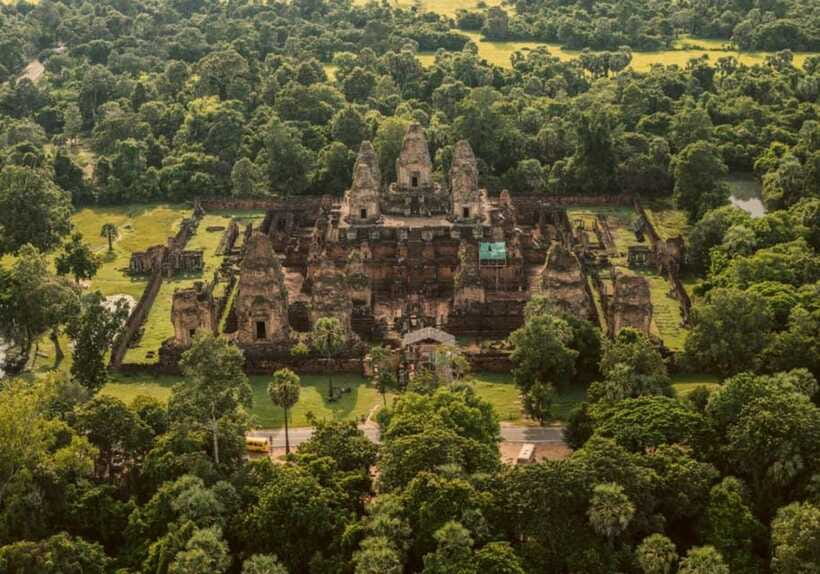
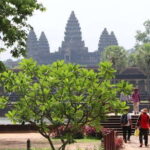
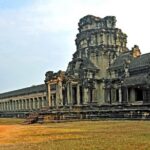
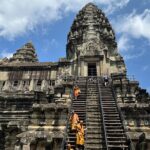
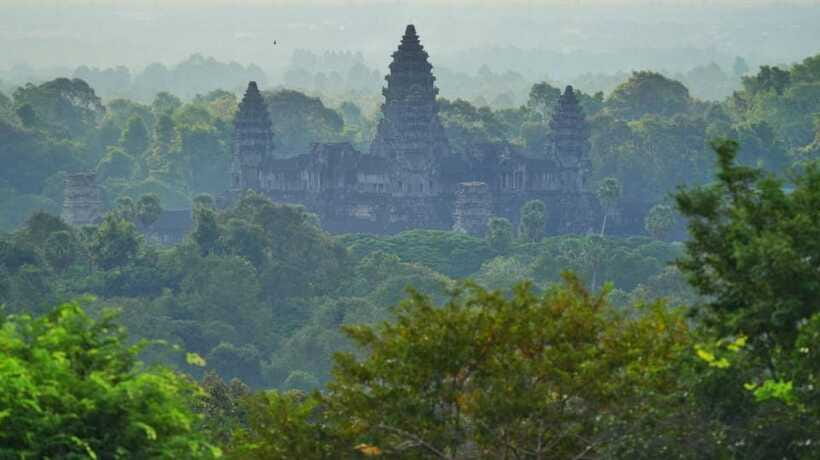
In the afternoon, the tour focuses on Angkor Wat, the most famous site on the Angkor plain. The complex covers 81 hectares, and it’s big enough that it can feel like you’re walking through a whole city rather than a single building.
The key idea is its design logic. The day’s earlier temples can feel like a collection of statements. Angkor Wat feels like a system: composition, balance, proportions, and sculptural detail worked together to create a monument that still feels precise after centuries.
The tour’s value here is that you see enough of Angkor Wat to understand why it’s considered one of the finest monuments ever built. You’re not just checking off a name; you’re getting the reason behind the reputation.
One practical tip for your own comfort: Angkor Wat days tend to reward a slower pace at the biggest photo points, then quicker movement between them. That keeps you from exhausting yourself before the best views.

The Spanish-speaking guide (plus English): why it matters
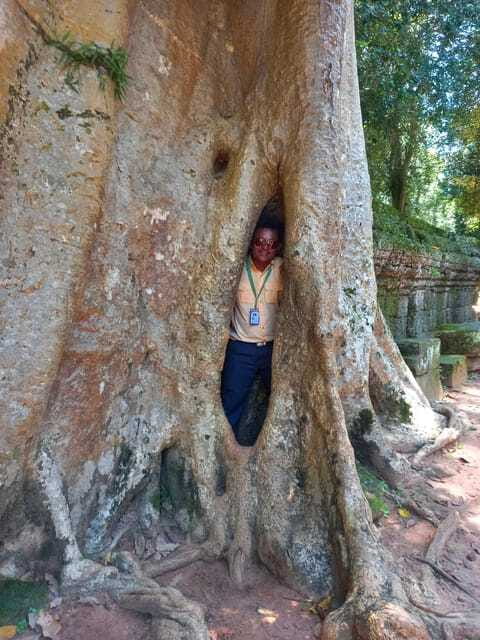
This is a live tour with a guide who speaks Spanish, Portuguese, and English, and the group is limited to 9 participants. That combination is a big deal at Angkor, where the difference between a good and a mediocre visit is often understanding what you’re looking at.
One review specifically praised guide Sem for explaining everything in detail. That aligns with what you should look for: explanations that connect the carvings, the layout, and the purpose of each temple to the bigger Angkor story.
In a small group, you’re also more likely to hear answers to other people’s questions, and those might be the exact ones you’re silently thinking. It’s a simple advantage, but it makes the day feel less like a script and more like a guided conversation.
Price and time: is $50 good value for Angkor?
At $50 per person for an 8-hour shared day tour, this sits in the “reasonable and doable” zone for Angkor. The cost makes sense when you factor in two things you’d otherwise have to pay for separately: guided interpretation and the efficient route covering major sites in one day.
You’re not paying for luxury here. You’re paying for a structured day that moves you through the big temples without leaving you to figure it all out alone. If you’re the kind of traveler who wants a plan but also wants context, this is often the sweet spot.
Also, they offer free cancellation up to 24 hours in advance and reserve now & pay later. That flexibility matters in Siem Reap, where plans can change due to heat, crowds, or your energy level.
One caution: it’s shared, so you’ll likely follow the group pace. If you prefer total freedom to linger, consider a private option instead of sacrificing your rhythm.
What to bring (and what to skip) for temple comfort
The tour instructions include a clear list, and it’s worth taking seriously:
Bring:
- Drinks
- Jacket
- Internet access
- GPS/map
- Pen
Not allowed:
- Pets
Not suitable:
- People over 331 lbs (150 kg)
For readers who like to travel light: the drinks and jacket are the big ones. I’d treat them like your basic safety kit for a long day outdoors. The GPS/map and internet access are also useful because Angkor is easier when you can confirm where you are and how far the next stop feels.
And if you’re carrying anything you won’t realistically use, skip it. Angkor is all about movement, shade, and quick photo stops, and you’ll feel it if your day turns into a pack-carrying workout.
Who this tour fits best (and who might want something else)
This shared tour is a solid match for:
- You want an organized Angkor day without planning each route leg
- You care about interpretation (especially with a Spanish/Portuguese-speaking guide)
- You like the balance of major highlights: Bayon, terraces, Ta Prohm, and Angkor Wat
It may be less ideal if:
- You’re a slow-tempo temple wanderer who needs hours at one spot
- You get irritated when group pacing overrides your personal photography rhythm
- You’re traveling with accessibility needs beyond the listed weight limit
Should you book this shared Angkor temple tour?
If you want the big Angkor hits in one day and you’ll actually use a guide to understand what you’re seeing, I think this is an easy recommendation. The combination of small group size, the Spanish/Portuguese/English live guiding, and a route that flows from Angkor Thom into Angkor Wat is a practical way to get real value from limited time in Siem Reap.
Book it if you like structured days and want your questions answered on the spot. Consider a different format (like private) if your travel style is all about total freedom and long lingering sessions.
For most visitors, $50 for an 8-hour guided route that hits the key temples—and comes with the flexibility of free cancellation and reserve-pay-later—is a good deal.
FAQ
What is the duration of the tour?
The tour lasts 8 hours.
How much does the tour cost?
The price is $50 per person.
What languages are available for the live guide?
The live tour guide speaks Spanish, Portuguese, and English.
How big is the group?
The group is small, limited to 9 participants.
Where do you start the tour?
The tour includes hotel pickup in Siem Reap.
What temples are included in the itinerary?
You’ll visit Angkor Thom (South Gate and Bayon), the Terrace of the Elephants, the Terrace of the Leper Kings, Ta Phrom, and Angkor Wat.
Is the tour refundable and flexible to book?
Yes. Free cancellation is available up to 24 hours in advance for a full refund, and you can reserve now and pay later.