REVIEW · SIEM REAP
Siem Reap: 2-Day Temple Highlights Sunrise and Sunset Option
Book on GetYourGuide →Operated by Journey Cambodia · Bookable on GetYourGuide
Sunrise at Angkor changes the whole mood. This Siem Reap 2-day temple highlights tour strings together major sites plus lesser-visited temples, with a licensed English-speaking guide and an early torch-lit start that makes the carvings feel brand new. I especially like the pacing that keeps up with the heat, and the small touches like cold towels and water after each stop.
One thing to plan for: you’re up early, you walk a lot, and the schedule assumes decent mobility. It’s also not wheelchair accessible, and the dress rules mean no shorts and covered knees/shoulders are required.
In This Review
- Key Things to Know Before You Go
- The Real Value: Why This Two-Day Setup Works
- Angkor Wat Sunrise: The Eastern-Side Torch Strategy
- Day 1 Temples Outside Angkor Thom: Pre Rup to Preah Khan
- Pre Rup: The Hindu State Temple Foundation
- Banteay Srei: Small Temple, Big Detail
- Neak Pean: The Buddhist Temple Island
- Preah Khan: Ruin Atmosphere with Restoration
- Day 1 Sunset: Rice Fields and a Drink, or Bakheng at Golden Hour
- Day 2: Sunrise at Angkor Wat, Then the Best of the Complex
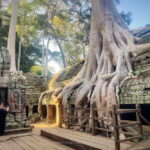
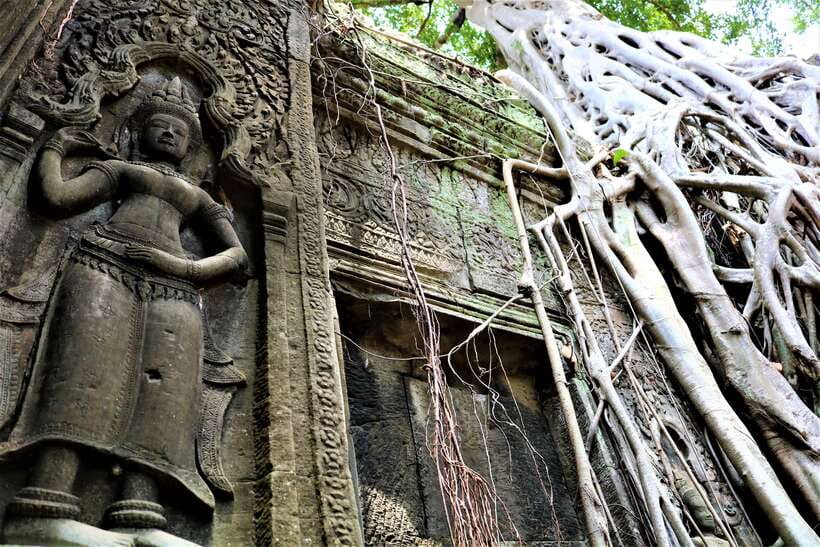
- Ta Prohm: Jungle Temple and Old-School “Rediscovery”
- Ta Nei: Late 12th-Century Stone Simplicity
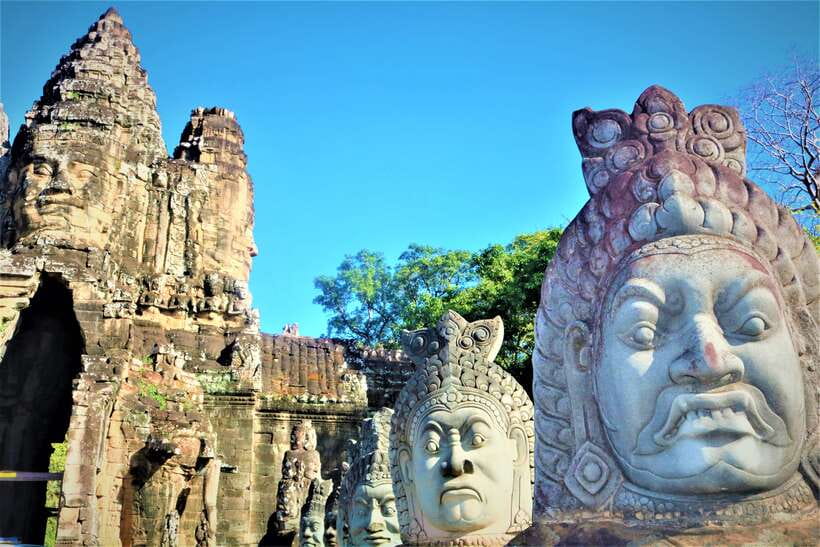
- Angkor Thom Gate: Gods to One Side, Demons to the Other
- Bayon: The Faces That Make You Look Twice
- Terrace of the Leper King and Terrace of Elephants
- Guides and Drivers: The Difference Between Seeing and Understanding
- Heat, Comfort, and Pacing: How This Tour Survives Cambodia
- What You’ll Pay: $46 Tour Price vs. the $62 Entry Pass
- Who Should Book This Tour (and Who Should Rethink)
- Tips That Make This Easier From Day One
- Should You Book This Siem Reap 2-Day Temple Highlights Tour?
- FAQ
- What’s included in the tour price?
- Do I have to pay Angkor temple entry fees?
- What should I bring for the sunrise portion?
- Which temples are visited on Day 1?
- What’s the main schedule on Day 2?
- Is this tour suitable for children or wheelchair users?
Key Things to Know Before You Go
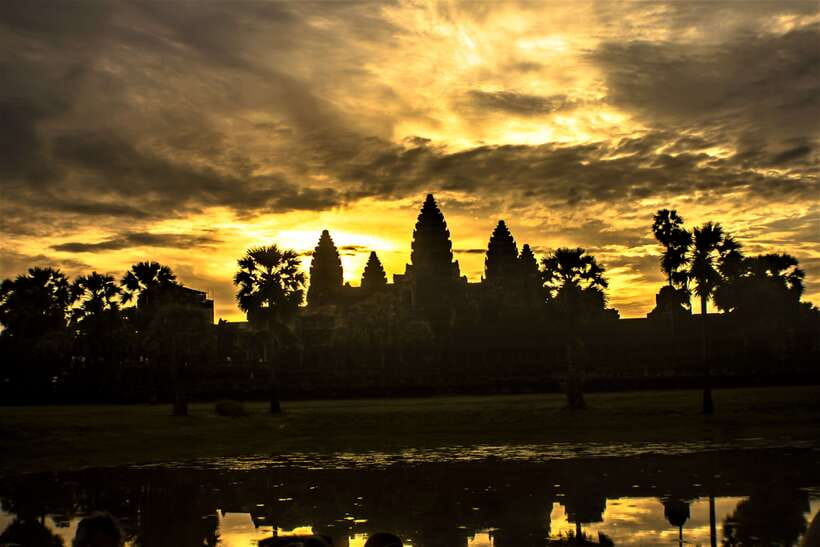
- Torch-and-dark entry for Angkor Wat: you start from the eastern side before sunrise, so you can move through quieter corridors in the dim light.
- Day 1 swaps in big contrasts: Pre Rup’s state-temple origins, Banteay Srei’s famous relief work, and the atmosphere of Preah Khan’s tree roots.
- World Monument Fund restoration at Preah Khan: that mix of crumbling stone and active restoration makes the site feel lived-in, not frozen in time.
- Rice-field sunset drink or Bakheng Temple sunset: the last moment of Day 1 can be calm countryside—or a classic temple-sunset scene depending on your group option.
- Sunrise + sunset planning that helps you avoid chaos: guides time the big moments so you’re not just standing wherever you ended up.
- Heat management is built in: air-conditioned transport, plus bottled water and cool towels that you’ll actually use.
The Real Value: Why This Two-Day Setup Works
Angkor isn’t one temple. It’s a whole system of cities, belief, and architecture, spread across days of walking. The smart move is not trying to cram everything into one rushed day. This tour’s two-day flow does a better job of giving your brain time to connect the dots.
Day 1 stays mostly outside the Angkor Thom city core. That matters because you get the “how” and “why” of Khmer temple building without starting with the loudest crowd magnets. You’ll also get variety: a Hindu state temple, an intricate sandstone showpiece, a Buddhist water-based layout, and then Preah Khan’s atmospheric ruin-and-forest look.
Day 2 focuses on the headline combo: sunrise at Angkor Wat, then a classic mix of Ta Prohm, Ta Nei, and Angkor Thom’s gates and towers. It’s the best kind of second act—still intense, but structured so you’re not seeing everything through a single exhausted blur.
You can also read our reviews of more evening experiences in Siem Reap

Angkor Wat Sunrise: The Eastern-Side Torch Strategy
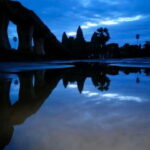
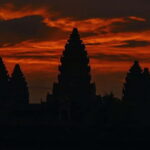
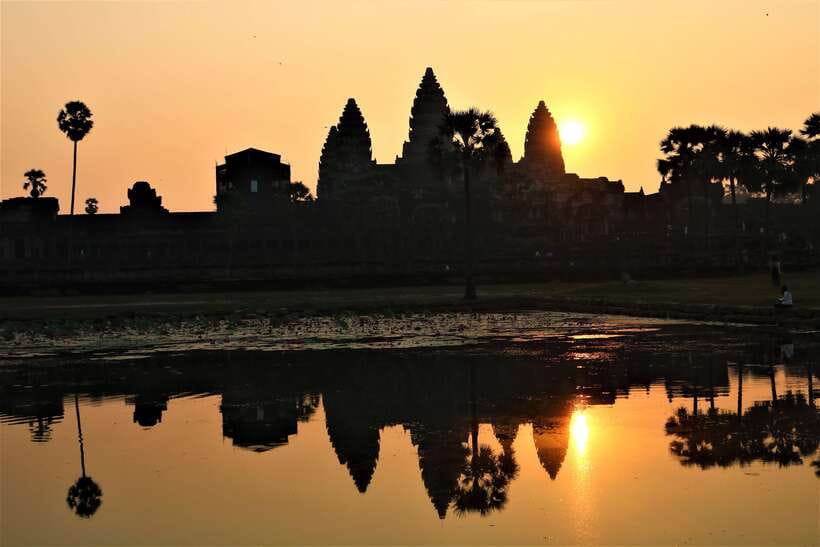
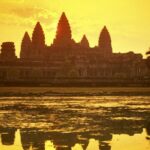
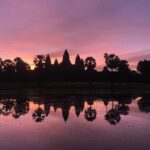
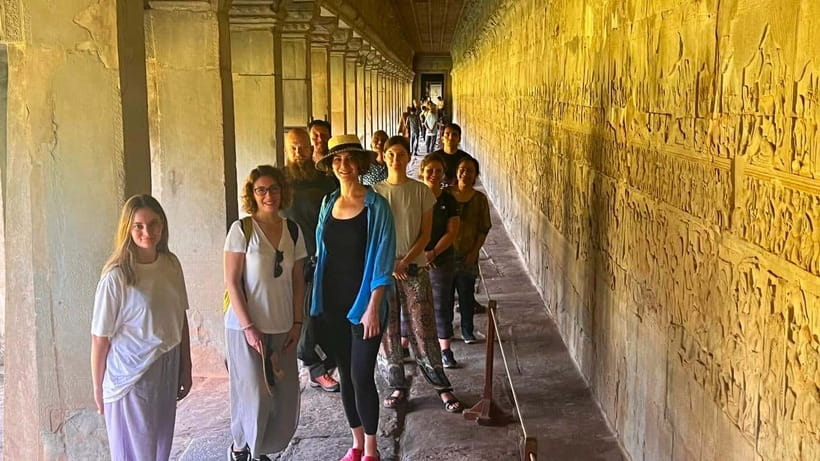
If you only do one Angkor experience, make it this sunrise. The tour starts pre-dawn and you enter Angkor Wat in darkness. You’re asked to bring a torch, and that changes how you move through the space. In the dim, you’re not just looking for a photo—you’re learning the rhythm of corridors and bas-relief bands before the sun makes everything bright and busy.
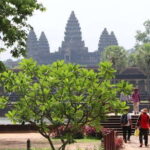
The key detail here is the start point. You enter from the little-visited eastern side, which means the vibe is calmer and the temple’s long story unfolds more slowly. The tour also guides you past a major stretch of bas-reliefs—described as the longest stretch in the world—so the morning doesn’t turn into only sky-watching. You get light over stone and context for what you’re seeing.
After sunrise, you stop for breakfast outside the temple. That part sounds small, but it helps a lot. Early-morning temple trips can feel like an endless grind. A proper breakfast stop keeps the day from turning into a caffeine-only survival run.
Day 1 Temples Outside Angkor Thom: Pre Rup to Preah Khan
Day 1 has a strong theme: Khmer religion and temple design in different forms, moving from grand state power to more personal, human-scale artistry.
Pre Rup: The Hindu State Temple Foundation
You begin at Pre Rup, a Hindu temple built as the state temple of Khmer king Rajendravarman, dedicated in 961 or early 962. It’s described as a temple mountain with combined brick, laterite, and sandstone construction. That mix matters because it hints at how Khmer builders engineered both structure and meaning: temple mountains weren’t just buildings. They represented sacred geography.
Pre Rup is also a good “warm-up temple.” It helps you train your eye for symbolism—like how each layer of a temple relates to the belief world it was built to represent—before you move into smaller, more intricately carved sites.
Banteay Srei: Small Temple, Big Detail
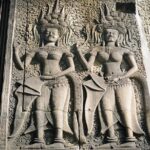
Next comes Banteay Srei, famous for intricate reliefs and its status as one of Cambodia’s finest examples of sandstone carving. The tour emphasizes the careful craft, and that’s exactly what you’ll feel on-site: the carvings look “tight,” with detailed story scenes that reward time.
There’s also a historical footnote built into the experience. Banteay Srei has been accessible since the late 1990s, after the Khmer Rouge left the area. So it’s not only an art stop. It’s also a reminder of how long recovery can take.
Practical note: this is a temple where you’ll want to slow down. If you rush, you miss the point.
You can also read our reviews of more tours and experiences in Siem Reap
Neak Pean: The Buddhist Temple Island
Then you move to Neak Pean, an artificial island with a Buddhist temple in the middle, set within Jayatataka Baray. The layout makes it feel different from the surrounding stone-heavy complexes. It’s more about composition—water, circular structure, and a temple placed like a spiritual center point.
This stop also adds religious contrast. You’re moving away from the Hindu state-temple vibe you started with, and that helps you understand how Angkor’s builders used different religious frameworks to shape temple design.
Preah Khan: Ruin Atmosphere with Restoration
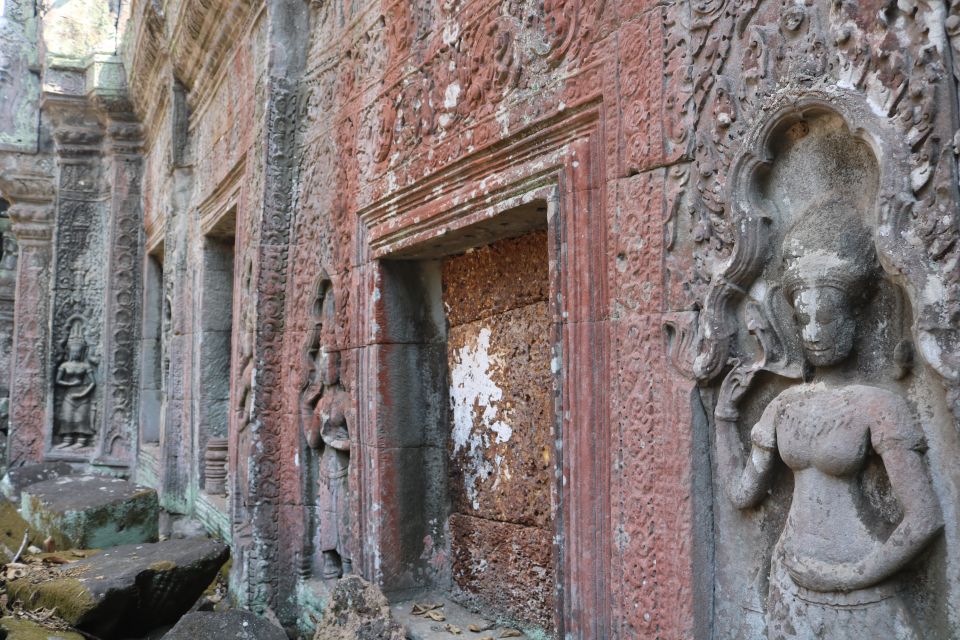
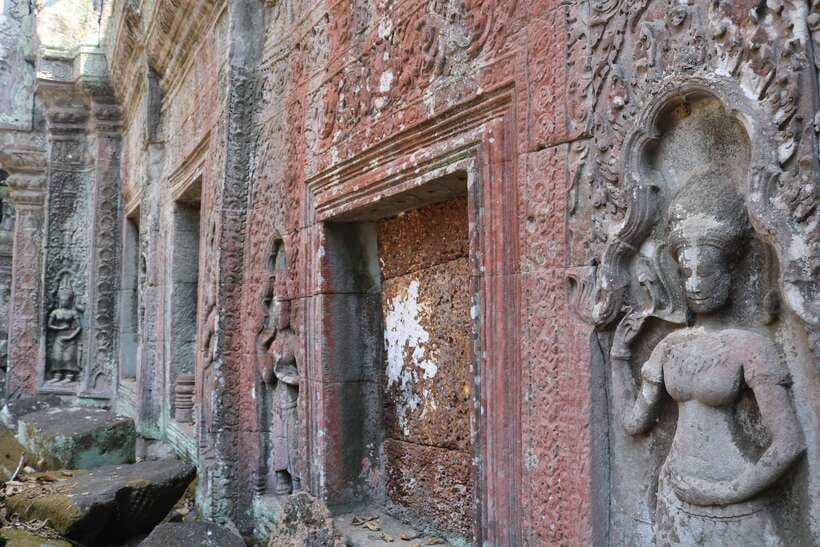
You finish Day 1 at Preah Khan. It’s a ruined but highly atmospheric complex—tree roots, crumbling stone, and a sense that nature is actively part of the scene. The tour points out the commissioning story: construction was commissioned by Jayavaraman VII, in honor of his father, and you’re visiting a site that lets you feel the scale of devotion even when parts are broken.
One reason this stop hits harder today is that it’s currently being restored by the World Monument Fund. In places, it’s in remarkably good condition. That means you see both sides of heritage: what time does, and what careful conservation tries to undo.
Day 1 Sunset: Rice Fields and a Drink, or Bakheng at Golden Hour
The end of Day 1 is where the trip stops being only about temples and becomes about the landscape and light around them.
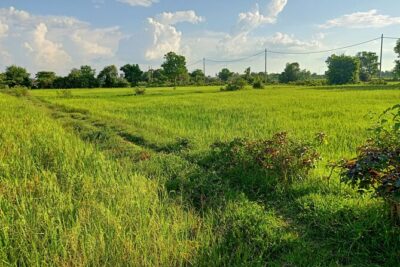
For the private option, you round things off with a rice field sunset drink. That’s a calm, countryside way to close a dense day of walking and stone details. Even if you’re temple-obsessed, this kind of “breather light” helps your mind reset.
For the small group option, sunset is at Bakheng Temple. That’s the classic temple-sunset idea, and it’s popular for a reason. Just know it’s still part of a long day—so dress for the change in air temperature and be ready for crowds.
Either way, the point is good: you get a final dose of magic before Day 2 starts pulling you back into early-morning mode.
Day 2: Sunrise at Angkor Wat, Then the Best of the Complex
Day 2 is the big-name day. It starts the same way most people dream about Angkor—pre-dawn for sunrise outside Angkor Wat—then turns into a structured march through key parts of the complex.
Ta Prohm: Jungle Temple and Old-School “Rediscovery”
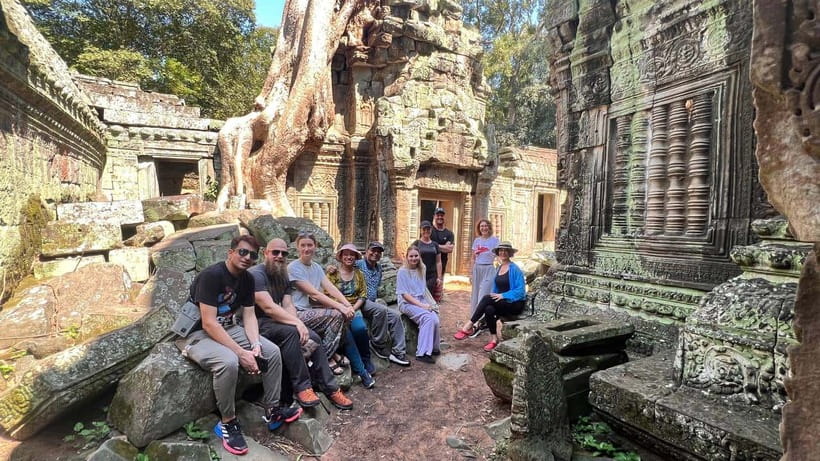
After breakfast outside Angkor Wat, the tour moves to Ta Prohm, one of the most atmospheric temples in Angkor. It’s described as looking much as it did when French explorer Henri Mouhot “rediscovered” the site in the 1850s.
The standout detail here is the way it feels like the jungle belongs to the temple. Also, Ta Prohm was once home to 2,740 monks. Knowing that changes the mood. It’s not only a photo backdrop; it’s a former living religious center.
Ta Nei: Late 12th-Century Stone Simplicity
Then you drive to Ta Nei, a late 12th-century stone temple. This stop is different from Ta Prohm. If Ta Prohm is dramatic and tangled, Ta Nei feels more like a composed, stone-based piece of the broader story.
Angkor Thom Gate: Gods to One Side, Demons to the Other
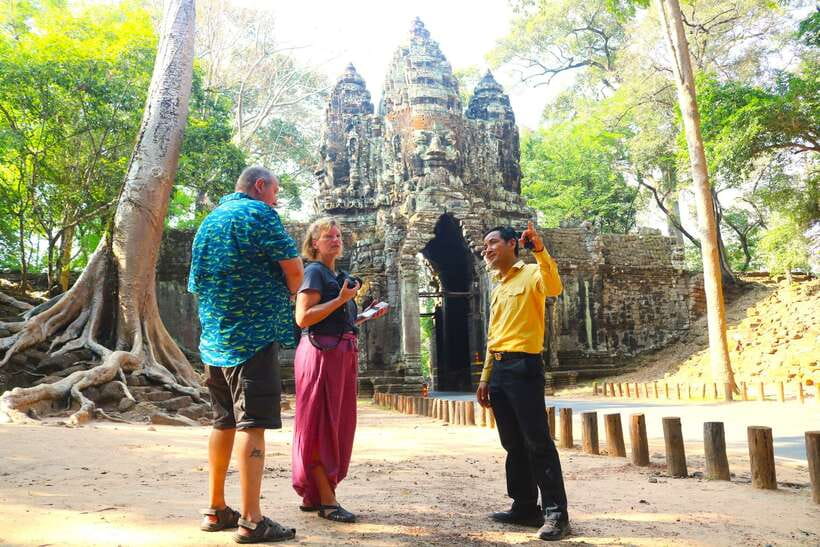
Next up is the southern Gate of Angkor Thom, flanked by 54 stone figures on each side. One side represents gods, the other demons. That kind of detail is exactly what your guide helps with—because the gate isn’t just a gate. It’s an instruction in symbolism.
Bayon: The Faces That Make You Look Twice
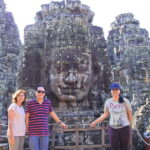
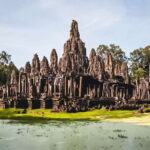
At Bayon, you’ll see central towers covered in more than 200 enormous faces. This is where Angkor Thom’s “urban belief” vibe becomes obvious. The faces look out over the city layout like guardians.
Terrace of the Leper King and Terrace of Elephants
Finally, you explore two famous terraces: the Terrace of the Leper King and the Terrace of Elephants. Even if you’ve seen photos before, being there in person is different. You notice patterns in carving placement, and you start to understand why certain areas became must-visit stops.
Guides and Drivers: The Difference Between Seeing and Understanding
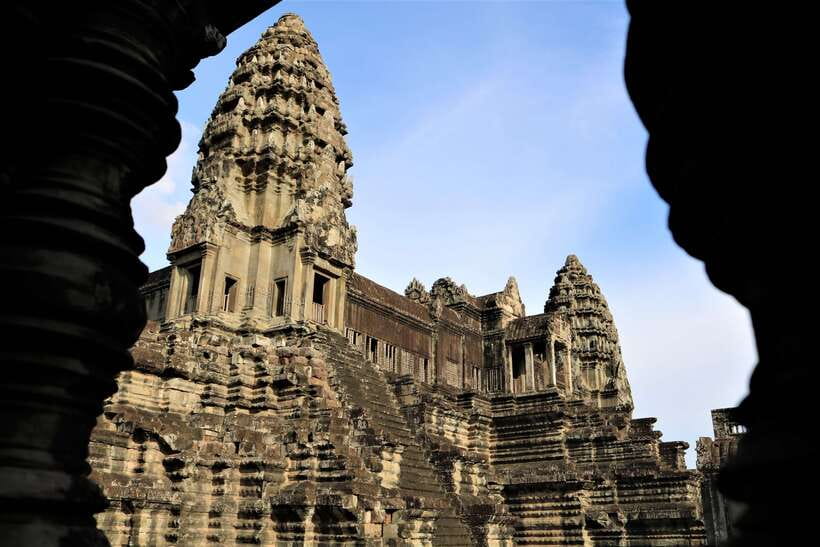
This tour relies on its guide. You’re getting a licensed English-speaking guide who explains Khmer history and religion, and the best part is how they connect symbolism to what you’re physically standing in.
Different guides come through on different days—names you’ll see associated with this tour include Chhay, Sak, Bun, Pi, Pal, and others. Common praise shows up across them: humor, patience, and the ability to answer questions without making you feel like you’re slowing the group down.
A few practical things that show up again and again in service:
- Help with photo angles, often including volunteering to take pictures.
- Timing that helps you get good sunrise positioning and not just generic viewing spots.
- Heat management from the driver: cold towels and water waiting after temple stops.
If you’re the type who likes to understand what you’re looking at, these guides make the day feel less like a checklist and more like a story with chapters.
Heat, Comfort, and Pacing: How This Tour Survives Cambodia
Angkor isn’t hard just because it’s old. It’s hard because of the weather and the pace of constant movement. The good news: this tour is built around comfort.
You get air-conditioned round-trip hotel transfers, and you’re also given complimentary bottled water and a cool towel. In the real world, that’s the difference between enjoying temples and just getting through them.
Pacing is another deal. Many people start strong and then hit the wall mid-day. Guides on this tour are described as keeping the pace manageable in hot weather and not rushing you through key points. That flexibility matters when you’re tired, or when you want extra time for photos.
Also, the vehicle transfer time matters. Moving between temples outside and inside the Angkor complex takes time. AC reduces the strain so your body can keep up with your attention.
What You’ll Pay: $46 Tour Price vs. the $62 Entry Pass
The listed tour price is $46 per person, but temples entry fees are not included. The additional cost is $62 per person for a 2- or 3-day pass.
So your baseline math looks like this:
- $46 for the tour experience
- plus $62 for temple entry
- meals are extra
Is it worth it? For most people, yes—because you’re not only paying for the temples. You’re paying for:
- licensed guide interpretation
- air-conditioned transfers
- hotel pickup and drop-off
- hydration and cool towels across two days
- built-in timing for sunrise (and a sunset option)
If you plan to do sunrise and cover a serious mix of major and “outside the center” temples, it’s usually better value than buying separate, single-day plans that duplicate transport and fail to manage the heat as well.
Who Should Book This Tour (and Who Should Rethink)
This is a great fit if:
- you want a structured two-day Angkor plan without having to research every stop
- you care about history and religion details, not just photos
- you want sunrise at Angkor Wat with help on where to stand and how to experience the carvings
- you like small-group energy and guidance for pictures
It may not be ideal if:
- you have mobility limits or need wheelchair access (the tour isn’t wheelchair accessible)
- you’re traveling with kids under 8
- you don’t like early starts, long days, and covered clothing rules
One more practical thought: this is a walking-and-standing tour. Even with breaks, you’ll want comfortable shoes and the stamina for uneven stone paths.
Tips That Make This Easier From Day One
Here’s what you should do before you go:
- Bring a torch for the sunrise entry at Angkor Wat. This is explicitly requested.
- Wear comfortable walking shoes. You’ll be on stone and uneven ground.
- Use insect repellent.
- Dress respectfully: covered shoulders and knees are required, and shorts aren’t allowed.
- Plan for heat. Even with AC and towels, you’ll feel the day. Pace yourself and use the water stops.
If you’re serious about photos, do what your guide will be doing: ask for timing and angles. You’ll get more keepers when the guide directs your spot.
Should You Book This Siem Reap 2-Day Temple Highlights Tour?
I’d book it if you want the best combo of Angkor Wat sunrise, strong Day 1 temple variety, and Day 2 hits across Angkor Thom and Ta Prohm—without having to manage the logistics yourself. The guide-led history and religion context, plus the heat-friendly comfort, make it feel like more than sightseeing.
Skip it if you need wheelchair access, you can’t handle early-morning starts, or you’re mainly after quick photos with minimal walking. In those cases, you might prefer something shorter and more relaxed.
For most people landing in Siem Reap and wanting a real Angkor experience across two days, this is a solid value choice—especially if sunrise is at the top of your list.
FAQ
What’s included in the tour price?
The tour includes hotel pickup and drop-off, air-conditioned transportation, a licensed English-speaking guide, and bottled water plus cool towels. Depending on the option, it includes a rice field sunset drink (private) and/or sunset at Bakheng Temple (small group).
Do I have to pay Angkor temple entry fees?
Yes. Temple entry fees are not included, and the pass is listed at $62 per person for a 2- or 3-day pass.
What should I bring for the sunrise portion?
You should bring a torch for the pre-dawn sunrise entry at Angkor Wat. You’ll also want comfortable shoes and insect repellent.
Which temples are visited on Day 1?
Day 1 includes Pre Rup, Banteay Srei, Neak Pean, and Preah Khan. It also ends with either a rice field sunset drink or sunset at Bakheng Temple depending on the option.
What’s the main schedule on Day 2?
Day 2 centers on Angkor Wat at sunrise, then moves to Ta Prohm and Ta Nei, followed by Angkor Thom highlights including the southern gate, Bayon, and the Terrace of the Leper King and Terrace of Elephants.
Is this tour suitable for children or wheelchair users?
It’s not suitable for children under 8. It’s also not wheelchair accessible and not suitable for people with mobility impairments.