REVIEW · SIEM REAP
Siem Reap Angkor Wat Sunrise Explore The Most Iconic Temples
Book on GetYourGuide →Operated by Khmer Bookingcom · Bookable on GetYourGuide
Sunrise at Angkor Wat hits hard. Angkor Wat at first light plus a lineup of Bayon and Ta Prohm makes this feel like a greatest-hits day without rushing you through only one site. I especially like the early timing that helps you arrive before the heaviest crush, and I like how the guide helps you notice the carvings and tower faces instead of just snapping photos. The main drawback is simple: if you’re in a very large group, one guide can feel busy and you may get less personal attention.
This is an 8-hour, city-based tour from Siem Reap (pickup between 4:20am and 5:15am, back around noon to 1:00pm), with an air-conditioned minibus and drinking water included. One guide name you’ll hear a lot is Noun, and the good reports focus on his explanations and even pointing out strong photo spots. Still, group size can swing the experience from homey and smooth to hectic and repetitive.
In This Review
- Key things to notice before you go
- How the early pickup shapes the whole day
- Angkor Wat sunrise: photos, reflections, and first impressions
- Inside Angkor Wat: bas-reliefs and the Hindu-to-Buddhist layers
- Banteay Kdei: the quieter temple break you’ll appreciate
- Ta Prohm: jungle roots, “Tomb Raider” fame, and photographic drama
- Bayon Temple: 54 towers and the faces that follow you
- Tonle Om Gate: the big entrance that closes the loop
- Price and time: is $13 good value?
- Service levels and group size: the one factor that can change everything
- Who this tour fits best (and who should consider alternatives)
- Should you book this Angkor Wat sunrise tour?
- FAQ
- What time is pickup in Siem Reap?
- How much does the tour cost?
- Are temple tickets included?
- What temples do you visit during the day?
- What’s included in the price?
- Is meals included?
Key things to notice before you go
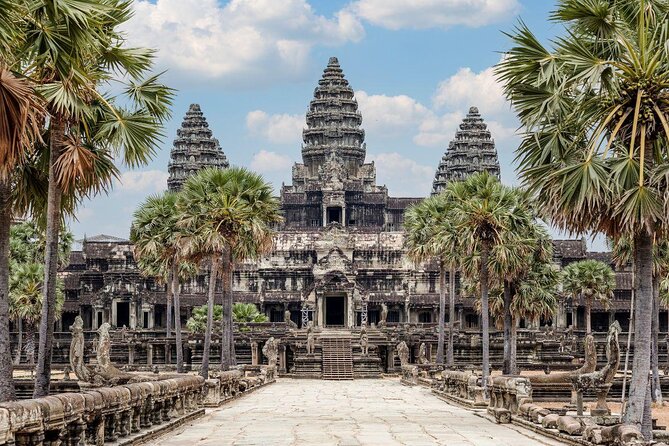
- Sunrise timing with a quieter approach: You’ll go through the western entrance so you can experience Angkor Wat before peak crowds land.
- A balanced temple mix: You get the famous icons and also a calmer stop at Banteay Kdei.
- Two different “wow” styles: Ta Prohm is the jungle-with-roots spectacle, while Bayon is all about the smiling faces and tower density.
- Structured walking without an all-day marathon: Each main temple has set time for photos, guided viewing, and walking.
- What’s in the price (and what isn’t): The tour includes guide, transport, and water, but temple tickets and meals are on your own.
How the early pickup shapes the whole day
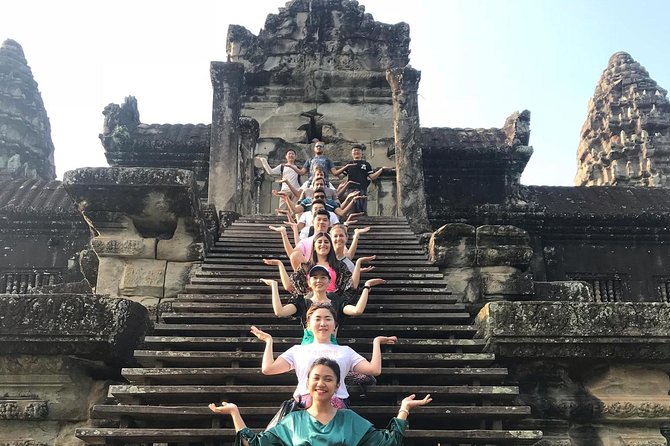
This tour starts long before breakfast—pickup from Krong Siem Reap is scheduled between 4:20am and 5:15am. That early start matters because Angkor Wat’s best moments are tied to light: the towers, the moat reflections, and the calm before the day warms up into full visitor mode.
You’ll ride in an air-conditioned minibus, and the tour keeps things straightforward: you travel, you buy your entrance ticket on arrival (temple ticket is not included), then you start the sunrise portion right away. With drop-off back in Siem Reap between 12:00pm and 1:00pm, the day doesn’t swallow your entire schedule. That makes it a smart choice if you want temple highlights but still want a longer afternoon to recover, explore town, or book another activity.
One thing to keep in mind: the earliest start also means the day feels fast. You’re not just seeing temples—you’re stacking them in a tight flow. If you prefer slow travel, plan to treat this as a focused highlights tour rather than a meandering day.
You can also read our reviews of more tours and experiences in Siem Reap

Angkor Wat sunrise: photos, reflections, and first impressions
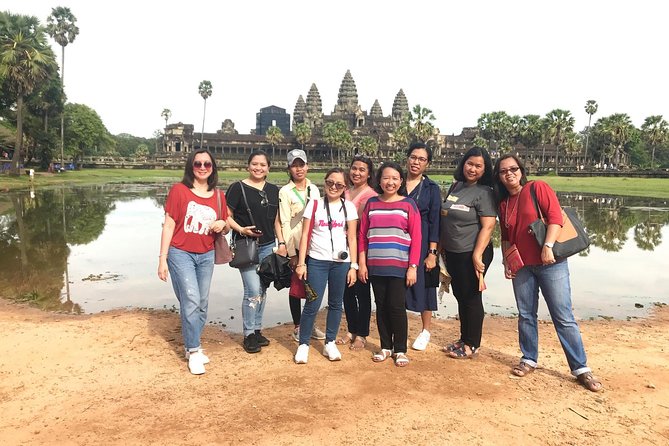
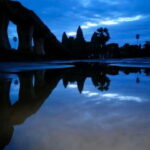
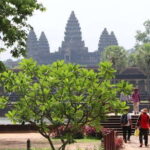
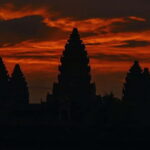
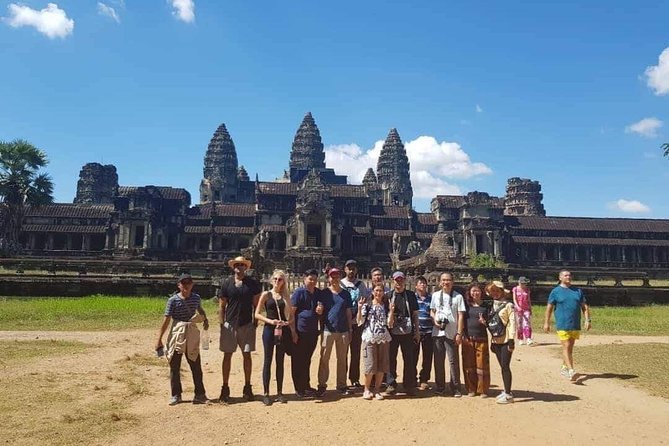
Angkor Wat is the headline, and sunrise is when it earns the hype. The tour plan centers your morning around the moment the light hits the towers and the surrounding moat, creating that iconic reflective look people chase. The schedule is built to let you take photos and see the scene before the main crowds arrive.
The route choice helps too. You’ll go through the western entrance, which is described as the little-visited way in. For you, that usually translates to less waiting and a calmer arrival rhythm, so you can focus on positioning and timing for pictures.
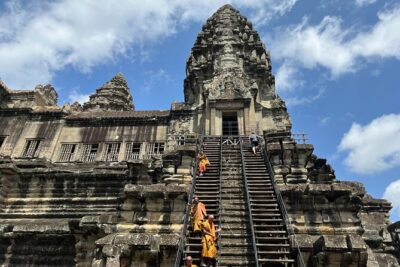
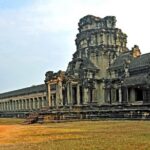
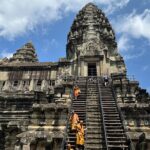
Once sunrise settles, you’ll also have time for guided exploration inside Angkor Wat. This is where you’ll get more than a quick glance. The tour points you toward what’s meaningful: the grand galleries, sacred sanctuaries, and the intricate bas-reliefs. Even if you’re not a mythology scholar, the guide-style focus helps you connect what you’re seeing to why it mattered to the builders.
Inside Angkor Wat: bas-reliefs and the Hindu-to-Buddhist layers
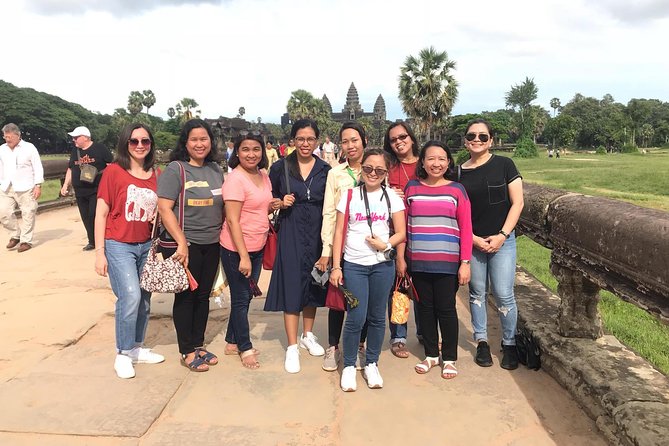
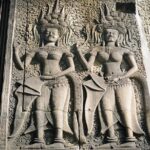
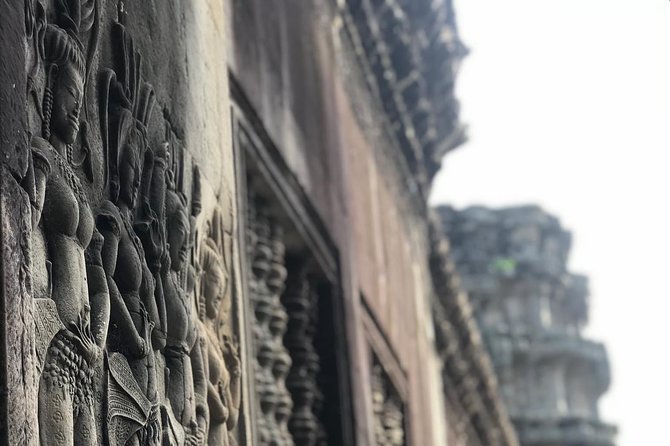
Angkor Wat’s interior is not just impressive—it’s readable. You’ll see bas-reliefs with scenes drawn from Hindu mythology, along with the architectural flow that guides you through galleries toward the central sanctuary.
The tour also frames a key historical shift: Angkor Wat began as a Hindu temple dedicated to Vishnu and later became a Buddhist site. You don’t need to memorize dates to appreciate the contrast. What you notice on the ground is that the carvings, layout, and the spiritual use of the space evolved over time. That’s one reason this stop feels more satisfying when it’s guided—you’re not only looking at stone, you’re learning how the place transformed.
Practical note: your early start means you’ll likely be most alert during the sunrise and early interior portion. If you want the best photos, this is the time to slow down and take your bearings—after the day warms up, the pace between stops tightens.
Banteay Kdei: the quieter temple break you’ll appreciate
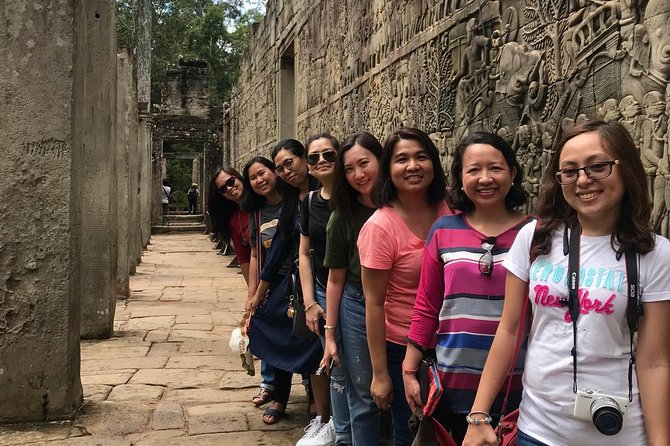
After the grand scale of Angkor Wat, you head to Banteay Kdei. This is one of the most valuable parts of the itinerary because it breaks the day’s intensity. Banteay Kdei is described as peaceful and lesser known, and the guide time here leans into that mood.
The name Banteay Kdei means citadel of chambers, and the temple is linked to the late 12th century as a Buddhist monastery. What you’re looking for is the architecture and the serene corridors, plus the fact that it’s partially in ruins. That ruins element changes the feel: the stone doesn’t look freshly polished or overly restored, so the space can feel more mysterious and less like a checklist stop.
The tour gives you about an hour here, including a walk. It’s long enough to absorb and wander, but short enough to keep you on schedule for Ta Prohm and Bayon. If you’re the type who gets temple fatigue after two “big ones,” this is the stop that helps you reset.
Ta Prohm: jungle roots, “Tomb Raider” fame, and photographic drama
Next is Ta Prohm, the jungle temple. It’s famous for giant tree roots growing over its ruins, and the tour schedule builds in time for photos and guided viewing plus a 1.5-hour walk.
Ta Prohm has that instant visual hook. Even if you’ve only seen it through screens, when you’re there you understand why it went global. The roots don’t just decorate the temple—they feel like they’re claiming the structure. That gives Ta Prohm a different kind of drama than Angkor Wat. Instead of symmetry and planned geometry, you get nature shaping what you see.
One useful way to approach it: let the guide lead you to the most interesting angles for the roots and walls. The better guides also help you understand which parts were left largely unrestored, and why that matters to the look of the place. If you love photography, this is often where you’ll spend the most time framing shots, because the scene keeps offering new layers.

Bayon Temple: 54 towers and the faces that follow you
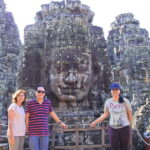
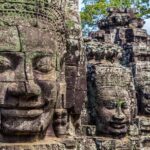
Then you move to Bayon Temple, located at the center of Angkor Thom. Bayon is known for its 54 towers, each adorned with four massive faces of Avalokiteshvara. This is the other signature temple in the day, and it works as a perfect pairing with Ta Prohm.
Ta Prohm feels wild and organic. Bayon feels intense and watchful. Those faces are not subtle. They show up from multiple approaches, and they make the temple feel alive even when you’re standing still. The guide will also point out how the carvings show scenes of daily life and historical battles.
You’ll have about 1.5 hours here including guided time and walking. That’s usually just enough to see the faces up close and then walk far enough to get a sense of the temple’s overall layout. It’s also a good moment to check your pace: by now you’ve been up since very early, so take breaks when you need them and don’t feel pressured to sprint.
Tonle Om Gate: the big entrance that closes the loop
After Bayon, the final temple highlight is Tonle Om Gate, the south gate of Angkor Thom. The tour time is shorter—about 30 minutes including photos, guided viewing, and a walk.
This gate is grand, and the details matter. The causeway is lined with statues of gods and demons, and the gate itself is crowned with four giant stone faces similar to those at Bayon Temple. It’s a strong visual payoff because it ties the day together: you see the face motif again, but in a more ceremonial entrance setting.
If you’re thinking like a photographer, this is also a helpful stop to grab one more round of shots while the light is still workable. Then you’re back on the minibus and heading to Siem Reap.
Price and time: is $13 good value?
At $13 per person, this tour is priced to be accessible, especially because it includes an English-speaking guide, air-conditioned transportation, pickup and drop-off, and drinking water. For a sunrise day that visits multiple major temples, that’s a solid deal on the basics.
The trade-off is what’s not included. Temple tickets are your responsibility, and meals are not included. That means you should budget extra for entry fees and plan for food on your own before or after. Also, you’re working with a fixed schedule—there isn’t time for extra stops or lingering at one temple for hours.
Still, if you want the classic Angkor Wat sunrise plus Bayon and Ta Prohm without the hassle of arranging transport yourself, this is exactly the type of value that makes sense. You’re paying for organization: early start, transport, and guided context.
Service levels and group size: the one factor that can change everything
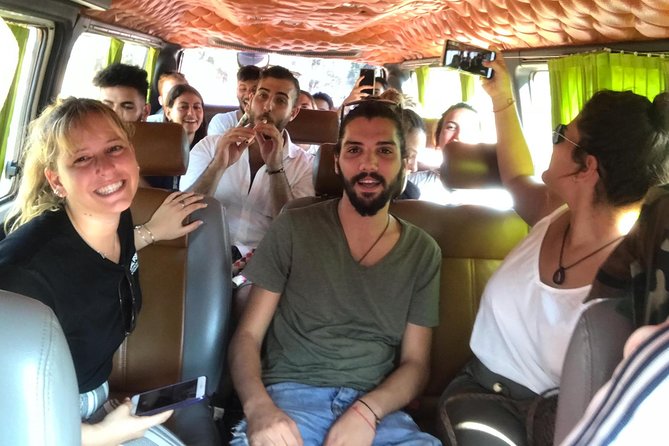
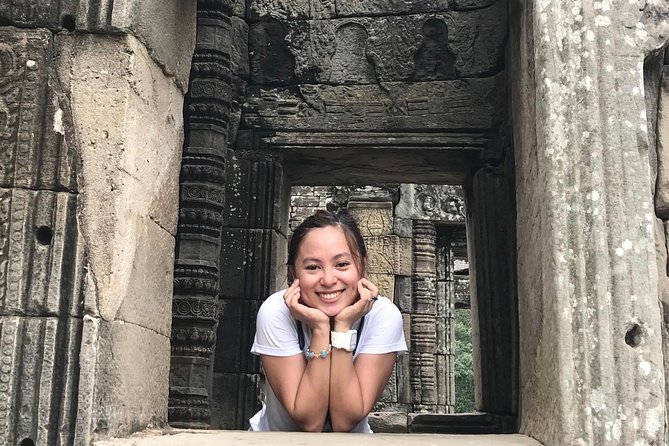
The best reviews emphasize guides who can explain what you’re looking at and who know where to stand for good pictures. Noun, in particular, is highlighted as very knowledgeable about Angkor Wat and helpful with photo spots.
But there’s a clear caution too. One critical review described a situation where a large group (over 40 people) was managed with one guide, and that made coordination harder. The guide and driver were friendly, but the pacing and repetition became a problem.
So here’s the practical takeaway for you: if you want lots of personal questions answered, keep expectations flexible when group size is big. The tour still runs, but the experience may feel more like a guided flow than a one-on-one conversation.
Who this tour fits best (and who should consider alternatives)
This is a strong match if you:
- Want Angkor Wat sunrise plus the main icons in one day.
- Like having someone point out what matters in carvings and temple design.
- Prefer a scheduled route with air-conditioned transport and included water.
It might feel less ideal if you:
- Dislike tight timing and early mornings.
- Want deep, slow exploration rather than highlights.
- Are sensitive to large-group logistics (where the guide may focus on keeping the whole bus moving).
If you’re traveling as a couple or solo and enjoy group tours, this can still be a great way to reduce stress and see a lot. If you’re a marathon walker who wants zero rush, you might prefer a private guide day so you can linger.
Should you book this Angkor Wat sunrise tour?
I’d book it if your priority is a classic sunrise start and a full temple lineup that mixes the famous and the calmer. The structure works: sunrise at Angkor Wat first, then Banteay Kdei as a breather, Ta Prohm for spectacle, Bayon for the face towers, and Tonle Om Gate for a strong finish.
I would hesitate if you know you’ll struggle with early wake-ups, or if you want a lot of space for questions and individualized guidance. In that case, the group-size factor can make the experience feel more standardized.
If you do book, set yourself up for success: plan for a ticket and food budget since they’re not included, wear comfortable walking shoes for temple paths, and treat the sunrise portion as the most time-critical part of the day.
FAQ
What time is pickup in Siem Reap?
Pickup is included from your hotel in Siem Reap City between 4:20am and 5:15am. The tour ends between 12:00pm and 1:00pm.
How much does the tour cost?
The price listed is $13 per person.
Are temple tickets included?
No. Temple tickets are not included, and you’ll need to purchase your entrance tickets separately.
What temples do you visit during the day?
You’ll visit Angkor Wat (sunrise and inside), Banteay Kdei, Ta Prohm, Bayon Temple, and Tonle Om Gate (South Gate of Angkor Thom).
What’s included in the price?
Included are an English-speaking tour guide, air-conditioned transportation, drinking water, pickup, and drop-off.
Is meals included?
No. Meals are not included, so you’ll need to arrange food on your own.