REVIEW · SIEM REAP
Siem Reap: Angkor Wat Sunrise Explore The Most Iconic Temples
Book on Viator →Operated by Hellobird Tour · Bookable on Viator
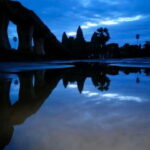
Wake up before your alarm. Then Angkor starts talking. This early-morning Siem Reap tour is built around a classic plan: catch Angkor Wat at first light and then move through several standout temples in the same day with an English-speaking guide who points out what most people miss when they wander on their own. In my view, the best part is the rhythm—temples first, smart explanations second, and fewer hours spent figuring things out.
Two things I really like: hotel pickup/drop-off in an air-conditioned vehicle (a must at 4:30 am), and the way the guide brings the story of the Khmer Empire into what you’re seeing. I’ve also seen this guided experience done by guides such as Nuon and Channoun, and both show a knack for explaining the site without turning it into a lecture.
One consideration: sunrise can be hit-or-miss with weather, and while umbrellas may be provided, clouds or rain can limit what you see. Also note the entrance fees are not included, so your total cost isn’t only the tour price.
In This Review
- Key things to know before you go
- A 4:30 am start that actually makes sense
- Pickup, comfort, and how the day stays organized
- Angkor Wat: sunrise time, plus what a good guide changes
- Banteay Kdei: the calmer stop that adds variety
- Ta Prohm: the tree roots and the “left as found” feel
- Bayon and the faces: Angkor Thom in a concentrated dose
- Tonle Om Gate: the statues-lined entrance moment
- Price and tickets: where the real math lands
- What to bring so you don’t suffer (too much)
- Who this tour suits best
- Should you book this sunrise temple circuit?
- FAQ
- What time does the tour start?
- How long is the tour?
- Does the tour include hotel pickup and drop-off?
- Is there an English-speaking guide?
- Is transportation included?
- Is drinking water included?
- Do I need to buy Angkor Wat entrance tickets?
- Is a meal included?
- What’s the group size limit?
- What happens if weather is bad for sunrise?
- Can I cancel for free?
Key things to know before you go
- 4:30 am departure: You’re moving early so you can reach Angkor Wat in time for the best light.
- English-speaking guide: Expect context for Khmer Empire history and the carvings you’ll pass.
- Tight, efficient route: Angkor Wat, then Banteay Kdei, Ta Prohm, Bayon, and Tonle Om Gate.
- Admission tickets are extra: Especially the Angkor Wat ticket you’ll need on-site.
- Group size up to 25: Large enough to feel social, small enough for logistics to usually work.
- Bring weather-ready basics: Even with an early start, rain happens, and it changes the sunrise plan.
A 4:30 am start that actually makes sense
This tour kicks off at 4:30 am, which sounds brutal until you remember where you’re going: the Angkor area gets crowded fast, and morning light makes the stone look different. Starting early also helps you avoid some of the hottest parts of the day when you’re still walking between temple zones.
You’ll be picked up from your hotel and transported by minibus in air-conditioning. That matters more than you’d think. At this hour, you’re not just “leaving early”—you’re probably still waking up, and you want the comfort of a ride before you start climbing stone steps and reading bas-reliefs.
The reality check: sunrise requires good weather. One of the practical frustrations here is also the tour’s core appeal. If the sky doesn’t cooperate, the day still happens—just with a different feel. And because this is Angkor, even a “not perfect sunrise” morning can still be special once you’re standing in front of Angkor Wat.
You can also read our reviews of more tours and experiences in Siem Reap

Pickup, comfort, and how the day stays organized
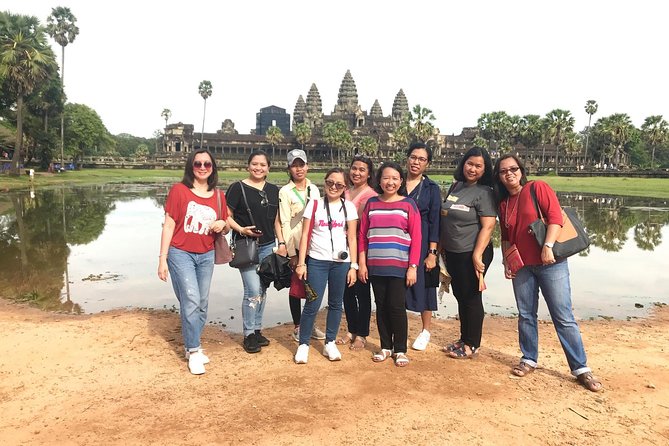
Logistics are one of the real value points in this kind of Angkor day. You’re not trying to coordinate your own transport across multiple temple stops, and you’re not scrambling to find your way into the right areas while your energy is low.
The tour includes hotel pickup and drop-off, transportation, and drinking water. That’s a helpful base for an 8-hour day where you’ll be outdoors for most of it. You should still plan your own water habits—heat and morning starts can make you forget—but having water provided removes one small stressor.
One thing to keep your expectations realistic: despite the usual goal of a manageable group, the maximum group size is up to 25 travelers. And if you’re sensitive to the idea of a small group experience, this is worth factoring in. On at least one occasion, the group logistics were less tidy than expected, with people traveling on more than one vehicle and the guide split across transports—meaning some parts can feel rushed or uneven. If you prefer tight, consistent guiding at every single stop, you may want to check what vehicle the guide will be on and how the group is arranged that day.
Angkor Wat: sunrise time, plus what a good guide changes
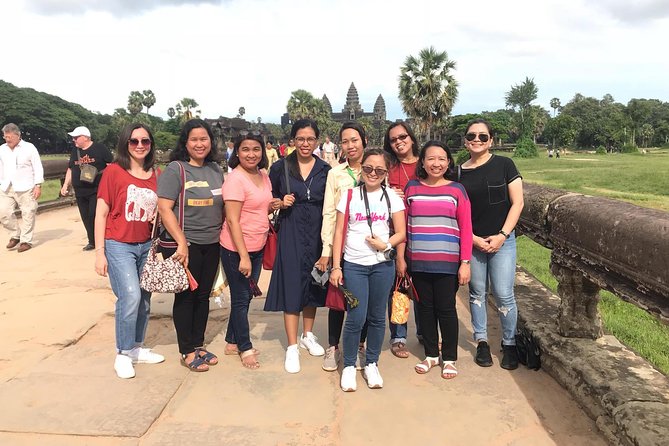
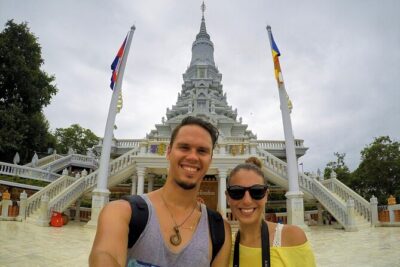
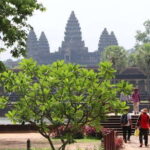
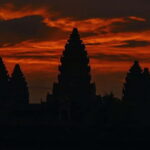
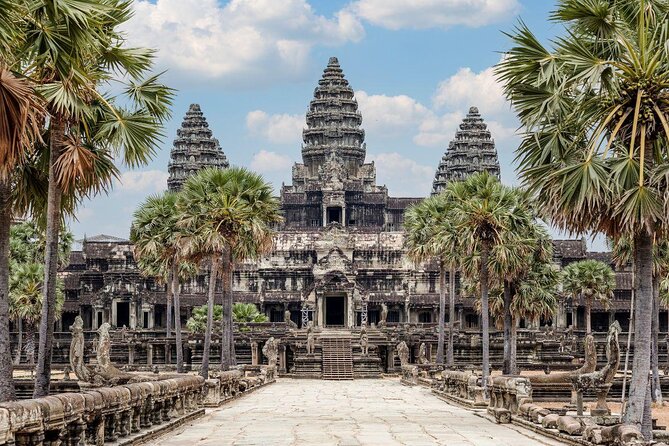
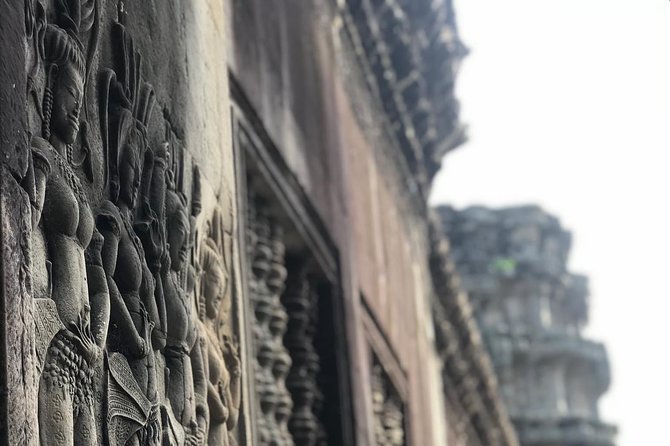
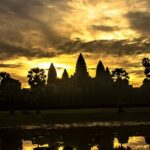
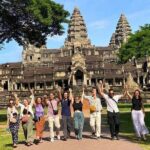
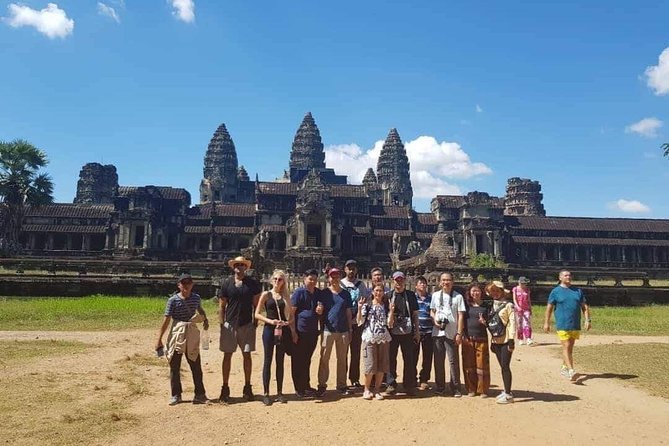
Angkor Wat is the reason most people come to Siem Reap. Even if you’ve seen it in photos a hundred times, being there in person is different: scale hits you first, then the geometry, then the carvings.
Here’s where the guided part pays off. When you move through Angkor Wat with a guide, you’re not just “looking at a temple.” You’re learning how the Khmer Empire shaped this complex—what the layout suggests, what the stonework is telling you, and what the symbols are connected to. That context helps you notice details that are easy to miss when you’re moving independently.
The tour also makes you buy your entrance ticket (Angkor Wat admission is not included) once you’re at the site. Plan for that stop to add a bit of time to your “first temple” moment. It’s normal, but it’s part of the day. If you like to arrive and go immediately, give yourself a little mental buffer for ticketing.
Also keep in mind that if rain rolls in, you may not get the sunrise effect. That said, the day still includes a structured schedule, so you’re not left hanging. Umbrellas may be provided, which helps you keep moving without turning the visit into a wet slog.
Banteay Kdei: the calmer stop that adds variety
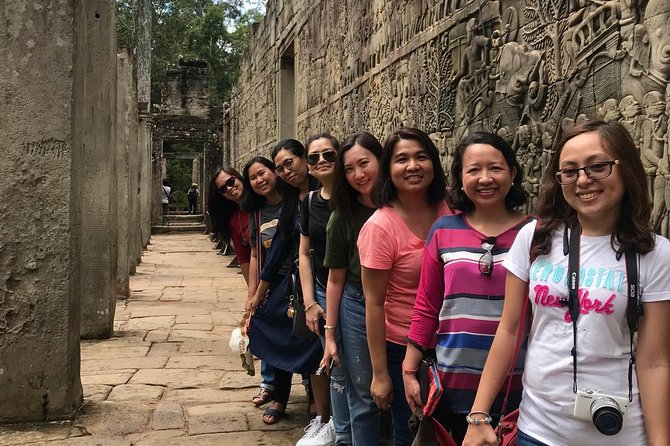
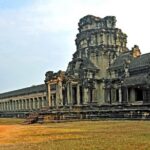
After Angkor Wat, you’ll head to Banteay Kdei, described as a quieter, lesser-known temple compared to the main circuit. The name means Citadel of Chambers, and that’s a useful way to think about it: it’s less about the big dramatic photo angle and more about serene corridors, enclosed spaces, and a vibe that feels more reflective.
This is a late 12th-century Buddhist monastery. You’ll get to see unique carvings and slower-moving architecture details—exactly the kind of stop that refreshes you after the intensity of Angkor Wat. If you’ve only ever experienced Angkor in the “big-ticket” way, Banteay Kdei gives your eyes a different job: read the stonework, watch the light in hallways, and let the silence do some of the work.
The time here is about 1 hour. That’s enough to feel like you visited a distinct temple, not just a quick waypoint. If you want to sketch, take your time, or linger for photos, aim to pace yourself so you don’t run short later—because Ta Prohm and Bayon are the two stops where you’ll probably want extra time.
Ta Prohm: the tree roots and the “left as found” feel
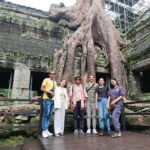
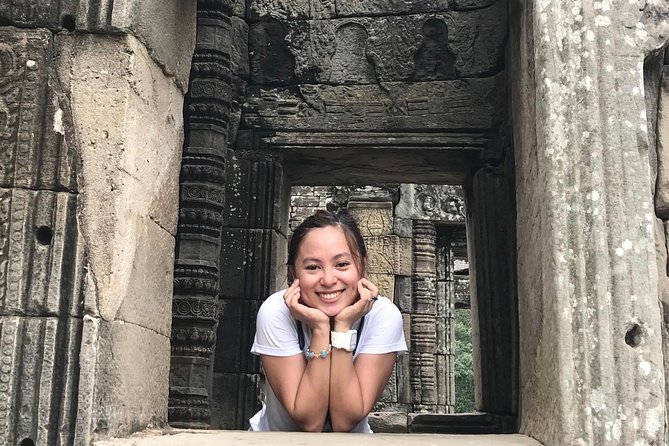
Then comes Ta Prohm, the temple with those enormous tree roots wrapping around walls. It’s one of the most photogenic spots in the area, and you’ll understand why fast. The roots turn the temple into a living scene, with stone surfaces partially swallowed by nature.
What makes this stop interesting in a guided format is that you’re not only seeing the visual effect—you’re getting information about why the temple is remembered and what it means that it was left largely unrestored. That “jungle temple” feel is part of the historical and cultural conversation. It’s not just aesthetics.
You’ll spend about 2 hours here, which is a comfortable amount. You get time to walk through the main spaces, find a few good angles, and pause without feeling like the guide is rushing you along. Still, keep your pace sensible: the surfaces can be uneven, and you’ll want stable footing when you’re stopping for photos.
If it’s wet, expect the paths to feel slick. Even with umbrellas, this is the type of site where you’ll appreciate sturdy shoes over sandals or slick footwear.
Bayon and the faces: Angkor Thom in a concentrated dose
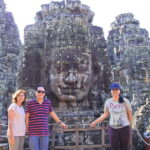
Next is Bayon Temple, located in the center of Angkor Thom. The big hook here is the 54 towers and the four-faced carvings you’ll see again and again—serene expressions that seem to follow you.
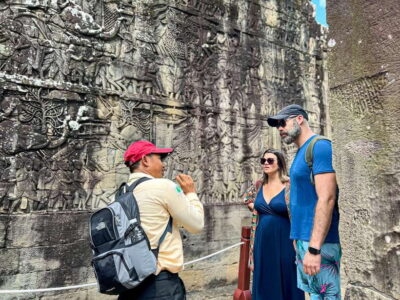
With a guide, Bayon becomes more than a photo moment. You’ll likely hear about the figures represented and how the carvings relate to daily life and historical scenes. That helps you shift from “wow, faces” to “oh, this was a storytelling machine carved in stone.”
You’ll get around 1 hour at Bayon. For many visitors, that’s a good compromise: Bayon is dense and visually intense, and too much time can turn it into sensory overload. But too little time would feel like a tease. This schedule hits the sweet spot for most people.
After Bayon, you’re still not done seeing the “city layout” feel of Angkor Thom. That sets you up well for the next stop.
Tonle Om Gate: the statues-lined entrance moment
The final stop is Tonle Om Gate (often described in relation to the South Gate of Angkor Thom), with a dramatic causeway lined by statues of gods and demons. It’s the kind of place where you can feel the temple city’s theater: you approach through the corridor, the gate rises above you, and the giant faces top the structure.
This is about 1 hour, which works well because the gate is visually clear. You don’t need hours to understand what it is—though you may need a few minutes to actually appreciate the scale and the repeated motifs along the causeway.
If you’re the kind of traveler who likes to end with a strong “I get it now” moment, this stop does that job. It wraps the day in a broader Angkor Thom story rather than ending with another temple interior.
Price and tickets: where the real math lands
The tour price is $26 for roughly 8 hours. That’s a very low price for a guided day with pickup/drop-off, transportation, and water. For most people, that makes it a high value option.
But you must factor in what’s not included:
- Meal: not included
- Angkor Wat ticket: not included
Since you’ll pay for admission on your own, your “all-in” cost is tour price plus tickets plus whatever you spend on food. This is why I treat this as a logistics-and-guiding value deal, not a full package where everything is handled.
Also, because the tour offers a mobile ticket, you can keep things simple once you book. Just make sure your phone is charged and you have the confirmation details ready.
What to bring so you don’t suffer (too much)
Because this is an early morning and a temple day, you want the basics right.
Bring:
- Weather-ready layers (rain can change everything)
- Comfortable, grippy shoes (temple paths are not always forgiving)
- Something for sun protection even if it’s gray early (you may still get light break-through)
- Your best water habits, even though drinking water is included
And plan your food. Meals aren’t part of the tour, so either eat before pickup or bring a plan for after. If you’re traveling with kids or you hate hangry mornings, have a snack strategy ready.
Who this tour suits best
This is a great fit if:
- You want the headline temples in one day without navigating on your own
- You like learning the meaning behind carvings and layouts, not just collecting photos
- You value hotel pickup and air-conditioned transport
- You’re okay with a moderate group size (up to 25)
It may be less ideal if:
- You want a very small-group, stop-by-stop, one-guide-only experience every single time
- You’re extremely sensitive to sunrise unpredictability and would feel disappointed if clouds block the view
- You prefer a long, slow wander where you control your pace completely
Should you book this sunrise temple circuit?
If your priority is efficiency plus an explanation—Angkor Wat first light, then a smart run through Banteay Kdei, Ta Prohm, Bayon, and Tonle Om Gate—this tour makes a lot of sense for the price. The inclusion of pickup/drop-off, transportation, an English-speaking guide, and water helps you spend your energy on the temples, not the logistics.
I’d book it if you can handle weather uncertainty and you’re realistic about ticket costs. On the other hand, if you’re the type who would be upset by a less-than-perfect sunrise or by day-of group arrangement quirks, you should confirm the on-site vehicle plan and your expectations for time at each stop.
Overall: for $26, with guidance and convenience, it’s a strong way to do Angkor in a single organized morning-to-midday flow.
FAQ
What time does the tour start?
The start time is 4:30 am.
How long is the tour?
It runs for about 8 hours.
Does the tour include hotel pickup and drop-off?
Yes. Pickup and drop-off are included.
Is there an English-speaking guide?
Yes. An English-speaking tour guide is included.
Is transportation included?
Yes. Transportation is included, and you’ll travel in an air-conditioned vehicle.
Is drinking water included?
Yes. Drinking water is included.
Do I need to buy Angkor Wat entrance tickets?
Yes. The Angkor Wat ticket is not included (you purchase entrance tickets on-site).
Is a meal included?
No. Meals are not included.
What’s the group size limit?
The tour has a maximum of 25 travelers.
What happens if weather is bad for sunrise?
This experience requires good weather. If it’s canceled due to poor weather, you’ll be offered a different date or a full refund.
Can I cancel for free?
Yes. You can cancel up to 24 hours in advance for a full refund. If you cancel less than 24 hours before the experience starts, the amount paid won’t be refunded.