REVIEW · SIEM REAP
Sunset or sunrise bicycle tour around Angkor Wat and nearby temples
Book on Viator →Operated by Angkor Wat Shared Tours · Bookable on Viator
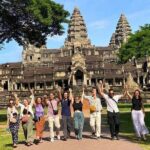
Angkor Wat by bike sounds like a cheat code for getting early, big views, and this tour is built for exactly that. You’ll cycle with a guide through Angkor Wat, Angkor Thom, Ta Prohm, and more, with two options: pre-sunrise or a sunset finish from Phnom Bakheng. It’s a lower-impact way to cover major temples without the usual transport stress.
What I like most is how the day is paced for real sightseeing: you’re not just passing temples, you’re stopping, walking the ground level, and getting context from a local guide. I also like the practical inclusions for the price—a small group (max 15), bikes, bottled water, and hotel pickup/drop-off—so you can focus on the temples, not logistics.
One thing to consider: you’ll need a temple pass (Angkor Pass) and you won’t have lunch included, so plan for those extra costs and your own food break. If you choose the sunrise option, it can also mean dark riding early on, so bring or request lights for safety.
In This Review
- Key things to know before you pedal
- Sunrise vs. sunset: how timing changes the whole experience
- Siem Reap pickup and transfers that actually reduce stress
- How hard is the cycling? What your body should expect
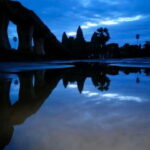
- Angkor Wat at first light: the main reason to go
- Angkor Thom and Bayon: faces, gates, and that iconic chaos
- Ta Prohm: the jungle-catching-ruins stop
- Banteay Kdei and Ta Keo: the quieter temple contrast
- Phnom Bakheng: the sunset finish (if you choose that option)
- Price and value: what $45 buys you (and what it doesn’t)
- Guides can make or break your day: look for energy and photo skills
- What to pack for a comfortable Angkor bike day
- Who this bicycle tour is best for
- Should you book this Angkor Wat bicycle tour?
- FAQ
- Does this tour include the temple pass?
- How long is the Angkor bicycle tour?
- Is pickup from hotels included?
- Which temples are included on the route?
- What is the difference between sunrise and sunset tours?
- Is lunch included?
- What is the group size?
- Do I need moderate fitness?
- What happens if weather is bad?
- What is the cancellation window?
Key things to know before you pedal
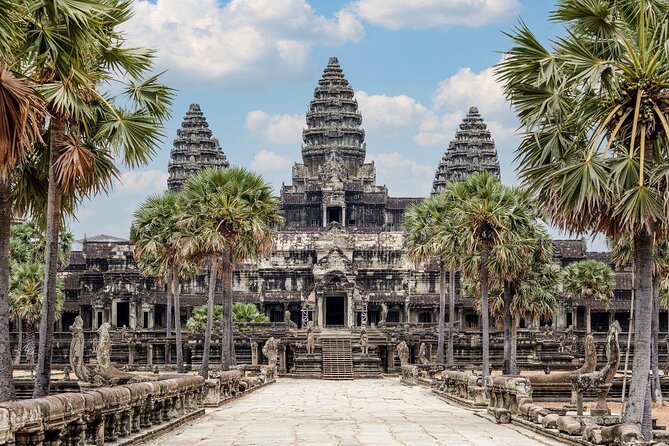
- Two route styles: sunrise at Angkor Wat or sunset from Phnom Bakheng, both covering the Angkor essentials
- Small group limit (15): more space to ask questions and get photo stops
- Bike + water + guide included: you’re paying for the experience flow, not just transportation
- Temple pass extra: Angkor Wat and the other sites require admission/Angkor Pass
- Moderate fitness needed: expect a full day of cycling plus walking and some climbing
Sunrise vs. sunset: how timing changes the whole experience
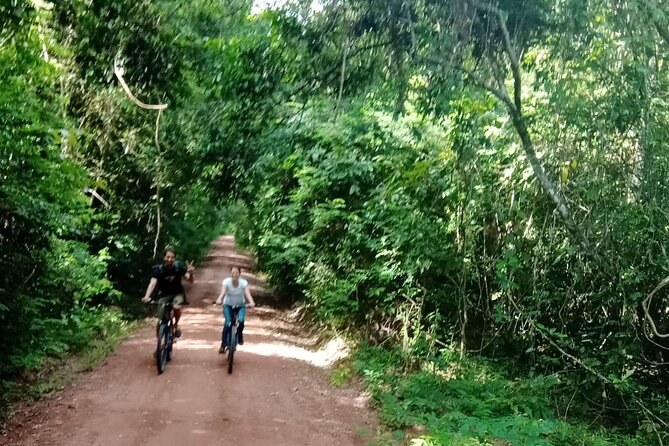
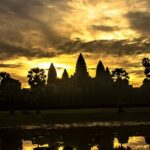
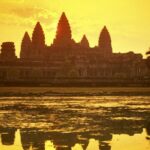
This tour gives you a real choice, and it’s not just about light. The sunrise option aims for early entry energy at Angkor Wat, which means cooler air and that famous first-glow moment over the causeways. The sunset option takes a more relaxed start and ends with views from Phnom Bakheng, where the sky becomes the show.
If you like crisp mornings and don’t mind an early pickup, sunrise is the better deal on atmosphere. If you’d rather sleep in and still get big end-of-day views, sunset can feel more balanced even though the day still includes cycling and temple walks.
Either way, you’re cycling through the Angkor complex area in a structured order, so you’re less likely to waste time figuring things out. That matters because Angkor days can get long fast.
You can also read our reviews of more evening experiences in Siem Reap

Siem Reap pickup and transfers that actually reduce stress
Logistics can make or break a temple day, and this one tries hard to remove friction. The tour includes two-way transfers from Siem Reap hotels to the base, plus pickup and drop-off back where you started.
The meeting point is set near Siem Reap Pub Hostel and behind Angkor Night Market, which is convenient if you’re staying in that central zone. If you’re not, still plan on the included transfer being the easiest way to get to the start without hunting down meeting spots.
You also get a mobile ticket, which is helpful when you’re juggling early hours or temple entrances. I like anything that reduces the number of things you have to remember at Angkor.
How hard is the cycling? What your body should expect
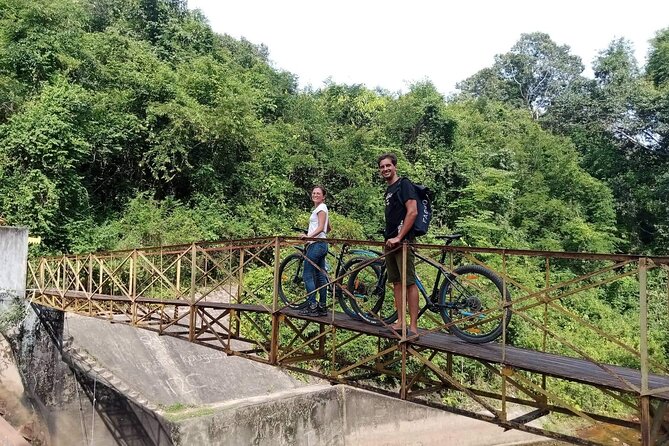
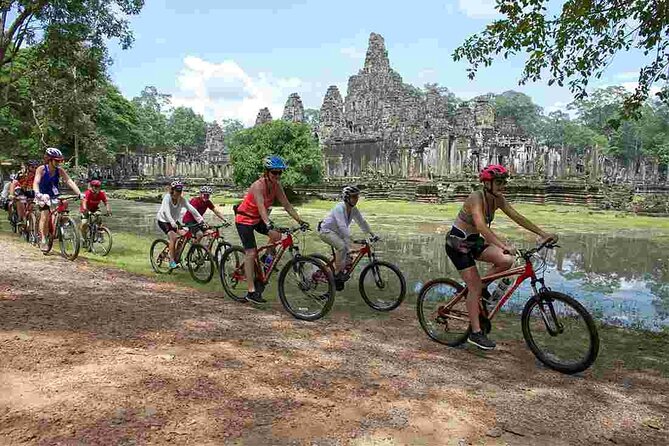
This is listed for travelers with moderate physical fitness, and that label fits the reality of Angkor. You’re not just cruising on flat paths—you’ll cycle, then walk around temples, and at times climb or navigate uneven ground.
The day is long (about 7 to 8 hours), and sunrise tours can stretch that feeling because you’re starting in the dark and shifting your routine at the same time. In the best-case scenario, you feel like you’re getting away with something—early entry plus active travel. In the realistic scenario, you’ll be glad you brought water and paced your stops.
One practical safety note shows up in guide-focused feedback: for sunrise rides, it can be dark on roads and paths. If you’re doing the sunrise version, I’d plan to have a small bike light with you, or at least a flashlight you can use to see safely.
Angkor Wat at first light: the main reason to go
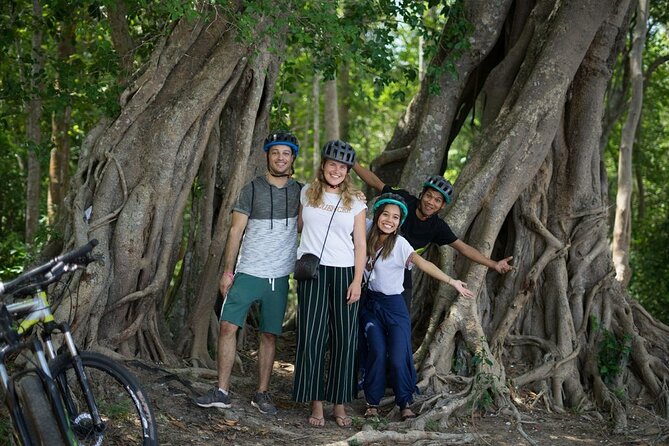
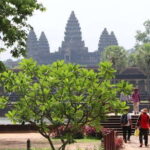
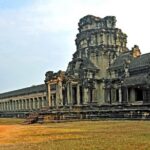
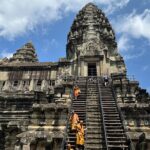
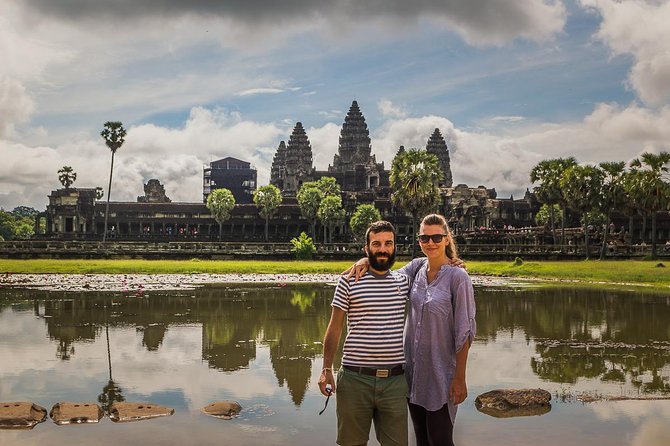
Angkor Wat is the headliner for a reason, and this tour treats it that way. You’ll arrive for sunrise (on the sunrise route), and you’ll have time to watch the complex as the light changes rather than rushing through.
You’ll spend about an hour at Angkor Wat, and you’ll be walking and taking it in with a guide. That guided element is valuable here because Angkor Wat can feel overwhelming if you’re staring without a map in your head.
Admission is not included, so you’ll need to budget for the temple pass (Angkor Pass). Plan to handle that before you get to the gates so your morning doesn’t turn into a scramble.
Angkor Thom and Bayon: faces, gates, and that iconic chaos
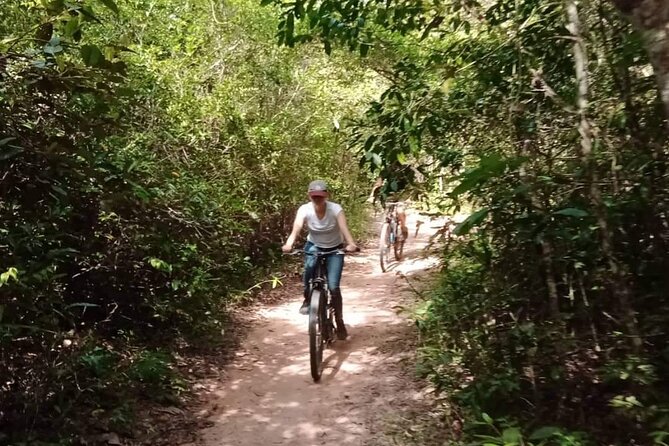
After Angkor Wat, the route shifts to the later Angkor capital: Angkor Thom. You’ll pass the South Gate area with its mythic figures—gods and demons locked in an eternal tug-of-war—and it’s exactly the kind of detail that photographs well but hits harder in person.
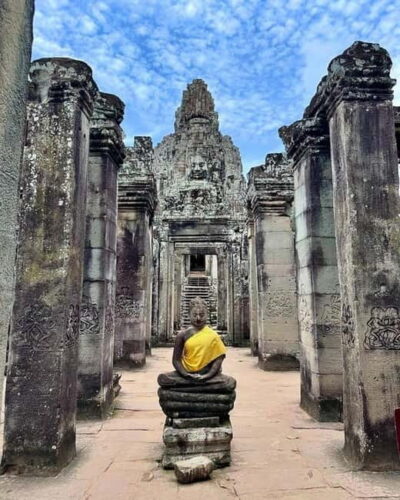
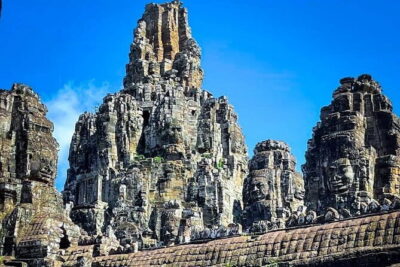
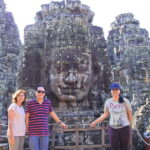
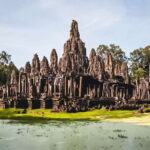
Next comes the Bayon, at the center of Angkor Thom, where you’ll see the famous face towers up close. You spend about an hour here, which is usually enough time to see the main angles without feeling like you’re jogging through.
A drawback to temple crowds is that you can get stuck in photo traffic, and Angkor is famous for that. A bike tour won’t remove all crowd pressure, but traveling as part of a small group helps you move with a plan and keep your energy.
You can also read our reviews of more tours and experiences in Siem Reap
Ta Prohm: the jungle-catching-ruins stop
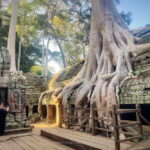
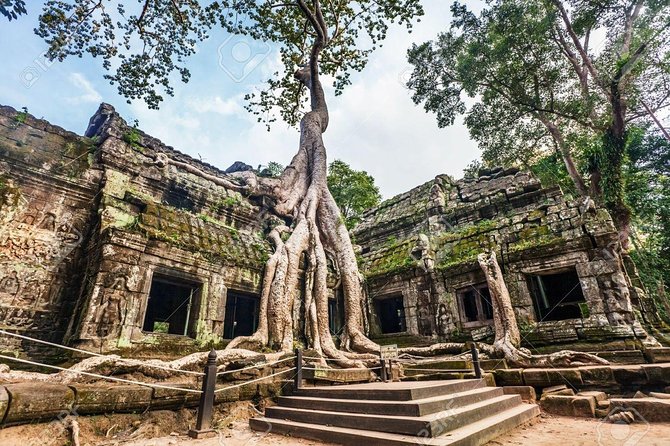
Ta Prohm is where Angkor starts to look like a movie set. This is the temple you’ll recognize from the Tomb Raider association, with ruins partially retaken by jungle and dramatic tree roots working their way through stone.
You’ll spend about an hour here. That’s a sweet spot: long enough to notice root patterns and carvings, but not so long that you melt into the heat.
Admission is extra, same as the rest of the major sites. I’d treat Ta Prohm like your visual break in the middle of the day—grab water, slow your pace, and look at the details you’ll miss if you just keep moving.
Banteay Kdei and Ta Keo: the quieter temple contrast
Not every stop is as famous as Angkor Wat, and that’s what makes the bike route feel worth it. Banteay Kdei is described as the citadel of monks’ cells, and it’s known for being partially overgrown with tall, winding trees and roots.
Then you’ll reach Ta Keo, a temple that was never finished. That unfinished feel matters: its layered pyramid shape looks different from many of the surrounding temples, and you’ll notice more of its “skeleton” structure rather than a fully developed look.
In both cases, you get about an hour, and it’s time that often helps your brain reset from the big-ticket sites. If you want the Angkor experience to feel more like discovery than a checklist, these stops help a lot.
Phnom Bakheng: the sunset finish (if you choose that option)
If you book the sunset tour, your final temple stop is Phnom Bakheng, a hilltop temple built centuries before Angkor Wat. It’s one of the best places in Cambodia to watch the sun go down, with Phnom Bakheng overlooking Angkor Wat itself.
You’ll spend about an hour at the viewpoint area. Sunset timing is where a guide can be especially useful: you don’t just need to be there, you need to be there at the right spot and right moment to see the sky shift across the complex.
Because this is the ending highlight, it can be emotionally tiring in a good way. If you’ve cycled all day, give yourself permission to slow down at the top—this stop is about the view, not speed.
Price and value: what $45 buys you (and what it doesn’t)
At $45 per person, this tour lands in the budget-friendly zone for a guided, structured Angkor day. You’re getting bicycles, bottled water, and pickup/drop-off, plus a guide leading a small group through multiple major temple sites.
What’s not included is also important: the temple pass (Angkor Pass) and lunch. Each stop notes admission isn’t included, so the extra cost of a pass is the real financial variable. Still, even with that add-on, biking with transfers and a guide for a full Angkor circuit can feel like good value compared with paying for separate transport and piecing together your own route.
Also note the small group cap (15). For me, that’s part of the price logic: you’re less likely to get swallowed by the chaos that larger groups can bring.
Guides can make or break your day: look for energy and photo skills
In the feedback, a recurring theme is that the guides bring enthusiasm and strong storytelling. One name that comes up is Sam Vone, praised for being passionate about Khmer history and also for taking great photos and spotting good angles.
That matters because Angkor can feel repetitive if you don’t understand what you’re seeing. A guide’s ability to explain symbolism, layout, and why a temple looks the way it does turns ruins into something you can actually follow.
The flip side is that guide performance can vary. One experience described a guide with weak English and low motivation, and the day didn’t deliver the learning they expected. If you’re the type who wants deep commentary, consider asking what language support and speaking style you should expect when booking.
What to pack for a comfortable Angkor bike day
This tour includes water, but you’re still out for a full day with cycling and walking. Bring sun protection, wear shoes that work on uneven surfaces, and plan for heat even on cooler morning starts.
For sunrise tours, pack light for darkness: a small headlamp or bike light can be a smart move, especially if you’re riding roads and paths before sunrise. The idea is simple—your safety and visibility should come from you, not just luck.
If you’ll need the temple pass, keep your documents or phone accessible so you don’t have to juggle them at gates. And since lunch isn’t included, decide in advance whether you’ll snack with what you buy on your own or plan a full meal break.
Who this bicycle tour is best for
This tour fits best if you want a structured Angkor day without renting a scooter or doing complicated transport planning. It’s also a good match if you like active travel and want the temples in motion—cycling between stops feels efficient, and it reduces the “parked bus” feeling.
You’ll likely enjoy it if:
- you’re comfortable with a full 7 to 8 hour outing
- you like guided explanations and photo moments
- you’d rather reduce vehicle stress and cover ground by bike
You might want to skip it if:
- you expect a fully relaxed pace with no climbing or walking
- you’re very sensitive to early mornings (sunrise pickup can be very early)
- you dislike cycling on mixed surfaces, even with a guide and a bike
Should you book this Angkor Wat bicycle tour?
Book it if you want an efficient, lower-impact way to see the core Angkor sites while keeping your day organized. The combo of small group size, included bike and transfers, and a guide who can point out history and photo angles makes it a practical choice for a first (or second) Angkor visit.
Skip it or choose carefully if you’re counting every dollar, because the temple pass and lunch are extra. Also think through your sunrise tolerance: if early starts and dark riding aren’t your thing, the sunset option is the safer bet for comfort.
If you choose to go, I’d prepare for a day that mixes cycling, walking, and some climbing. Done right, it’s one of the more fun ways to experience Angkor Wat without feeling stuck in transport time.
FAQ
Does this tour include the temple pass?
No. The tour includes the guide, bicycles, bottled water, and pickup/drop-off, but the Angkor Pass / admission tickets are not included.
How long is the Angkor bicycle tour?
It runs about 7 to 8 hours.
Is pickup from hotels included?
Yes. The experience offers pick-up and drop-off, with included two-way transfers from Siem Reap hotels to the tour base.
Which temples are included on the route?
You’ll visit Angkor Wat, Angkor Thom (including Bayon), Ta Prohm, Banteay Kdei, and Ta Keo. If you choose the sunset option, Phnom Bakheng is included.
What is the difference between sunrise and sunset tours?
The sunrise tour focuses on watching sunrise at Angkor Wat, while the sunset tour finishes with sunset from Phnom Bakheng.
Is lunch included?
No. Lunch is not included.
What is the group size?
The tour has a maximum of 15 travelers, which keeps it small-group.
Do I need moderate fitness?
Yes. The tour is intended for travelers with moderate physical fitness due to cycling plus walking and some climbing.
What happens if weather is bad?
This experience requires good weather. If it’s canceled due to poor weather, you’ll be offered a different date or a full refund.
What is the cancellation window?
You can cancel for a full refund up to 24 hours before the experience starts. If you cancel less than 24 hours before, the amount paid isn’t refunded.