REVIEW · SIEM REAP
1 day special Tour: Angkor Wat,Bayon,Ta Prohm, Bantey srei and Beng Mealea
Book on Viator →Operated by Angkor Special Tours · Bookable on Viator
Five temples, one long day of wow. This 8 to 9 hour special Angkor circuit strings together the biggest names plus the more untamed Beng Mealea ruins, with A/C comfort and cold water included. You start with a hotel pickup, use a mobile ticket, and spend the day moving between temple “moods” instead of just repeating the same stone layout.
I love that you travel with a certified tour guide and a dedicated A/C car or van, so you’re not fighting traffic or figuring things out mid-day. I also like the mix: the polished grandeur of Angkor Wat and Angkor Thom paired with Ta Prohm’s giant tree roots and Banteay Srei’s tiny, intricate carvings.
One possible drawback: admission fees are extra (Angkor and Beng Mealea tickets total $37 per person), and the pace is intense if you want long, slow wandering in every site. Also, plan around the 7:30 AM hotel lobby pickup, because this is built for a full day, not a relaxed one.
In This Review
- Quick hits you’ll feel right away
- The one-day Angkor plan: how this route fits 8–9 hours
- Beng Mealea Prasat: a jungle ruin start that feels less staged
- Angkor Wat and Angkor Thom: the monumental anchors of the day
- Bayon’s Buddha faces and Ta Prohm’s tree roots: where the vibe changes
- Banteay Srei Pink Lady: why the small carvings are worth the detour
- Price and value: what $162.06 per group really means
- Guides in practice: how names you’ve heard make a difference
- What to expect on the ground: transportation, pace, and “getting through it”
- Practical tips before you go
- Should you book this one-day Angkor special tour?
- FAQ
- What time does the tour start?
- How long is the tour?
- Is hotel pickup included?
- Are admission tickets included in the price?
- What’s included besides the guide?
- Is this tour private?
Quick hits you’ll feel right away
- Private group up to 6 means you can set the pace inside the temples
- Cold water and cold towels help when you get warm between sites
- Beng Mealea first gives you jungle ruin energy before the main Angkor circuit
- Tree roots at Ta Prohm are the photo moment people remember
- Pink Lady details at Banteay Srei add variety beyond the big temple faces
The one-day Angkor plan: how this route fits 8–9 hours
This tour is designed for people with limited time in Siem Reap who still want the “greatest hits” of Angkor. You’re packing in multiple major temple areas in one go, so the key isn’t staying forever at any single stop. The value is variety: grand gates and giant religious architecture, carved faces, jungle temples with living trees, and the smaller-detail carvings at Banteay Srei.
Because you’re visiting so much, you’ll want to think like this: arrive, orient fast, pick what you came to see, then move on. A guide helps a lot here because you get the story points you need without losing half the day to aimless wandering. You’ll also get ticket help before you start, with your guide assisting you in buying tickets prior to heading out.
The tour is private for your group, and the vehicle setup (A/C car or van) matters. Angkor days can feel long in the heat, and the ability to cool down between stops keeps the day enjoyable instead of draining.
You can also read our reviews of more tours and experiences in Siem Reap
Beng Mealea Prasat: a jungle ruin start that feels less staged
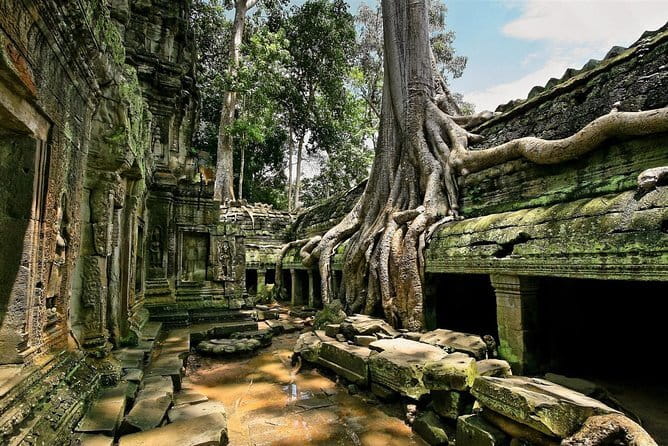
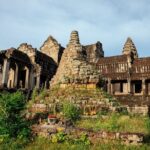
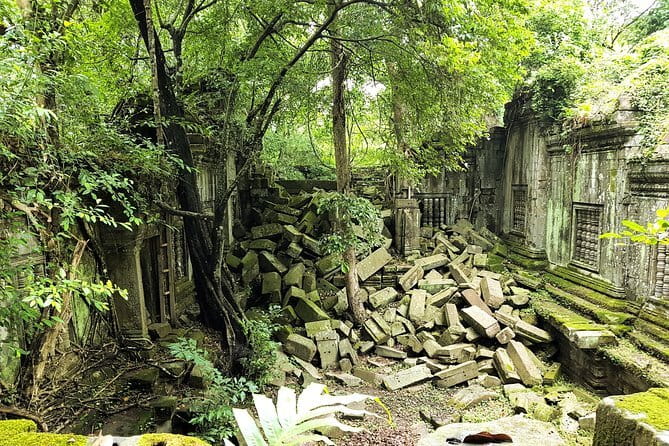
You begin at Prasat Beng Mealea, which is a smart choice for a one-day temple sprint. Instead of starting with the most photographed Angkor Wat scenes, you ease into the day with an older, wilder-feeling ruin where vegetation has taken over parts of the stonework.
What you’ll notice right away is the texture and atmosphere. Beng Mealea is described as being in the jungle, with trees and vegetation growing from the stone walls. That matters for your eyes because it changes the kind of pictures you’ll get. You’ll likely spend more time looking at the way the ruins interact with the surrounding greenery, not just the symmetry of carvings.
On the drive and between temples, you may also catch scenic bits like rice paddies and village homes along the way. This kind of in-between scenery can make a long day feel less like a checklist and more like a real view of the region.
If you’re hoping for a calm, quiet temple moment, Beng Mealea is a good place to start. Still, it’s part of a full-day itinerary, so expect a schedule rather than a leisurely stroll.
Angkor Wat and Angkor Thom: the monumental anchors of the day
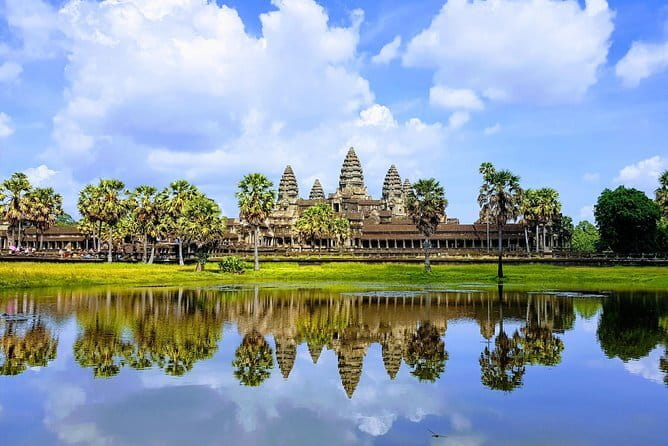
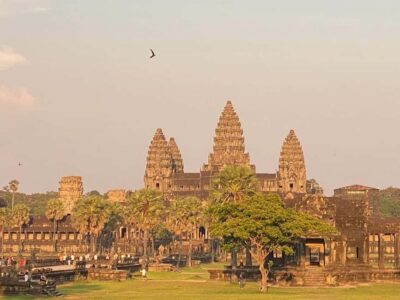
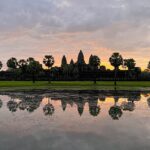
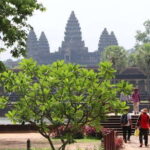
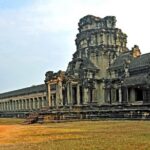
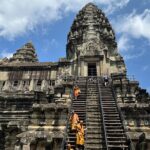
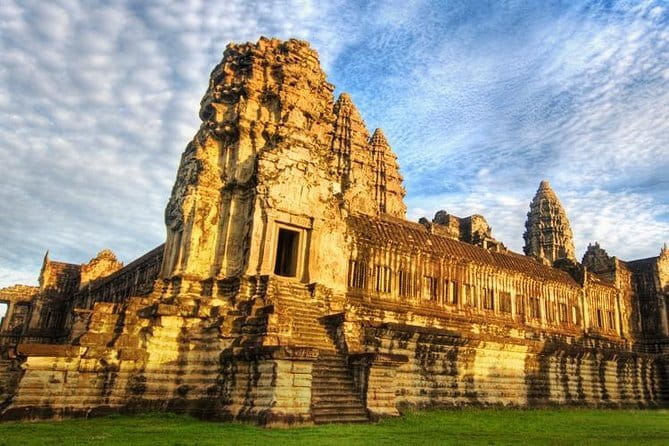
After Beng Mealea, you move into the heart of the Angkor complex with Angkor Wat and Angkor Thom. Angkor Wat is presented as the Seven Wonders of the World and the largest religious temple in the world. Even if you’ve seen photos, visiting in person tends to hit differently because the scale makes you feel tiny in a good way.
What I’d focus on first is not trying to see everything. Angkor Wat is massive, and you’ll enjoy it more if you choose a couple of vantage points and let your eyes adjust. Your guide can help you time your viewing so you’re not just walking past the best angles while everyone else gathers.
Then comes Angkor Thom, which is not just a temple area but an enormous setting. A standout stop here is the gate work, including the Buddha and Asura gate. Gates at Angkor are more than decoration; they’re part of the story about power, protection, and religious symbolism. If you’re the type who likes to know what you’re looking at, your guide’s explanations will make these carvings feel far more meaningful.
A practical note: because Angkor Wat and Angkor Thom are the most famous, you can expect a lot of visual energy. If you’re sensitive to crowds, try to stay flexible and use your guide to “read the flow,” meaning you follow where the day is easiest rather than forcing the same spot at the same time.
Bayon’s Buddha faces and Ta Prohm’s tree roots: where the vibe changes
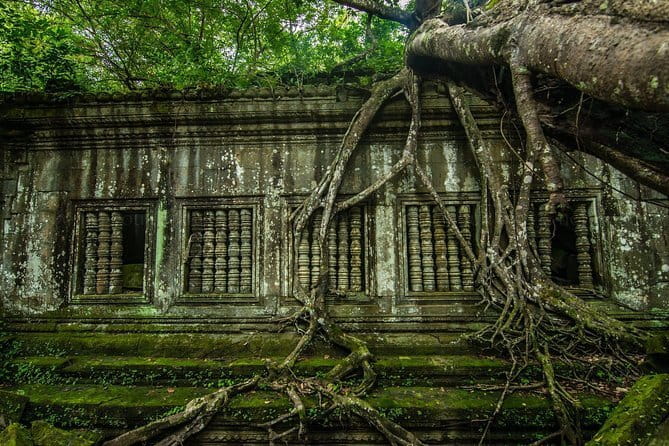
Once you’ve handled the big gates and the grand temple layouts, the mood shifts at Bayon Temple and Ta Prohm.
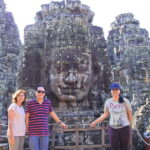
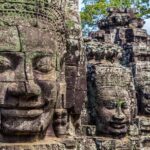
Bayon is described as a Buddhist temple with many enormous carved Buddha faces. This is one of those places where the architecture turns into an expression. Instead of scanning for one main view, you’ll start to notice the face angles as you move. They feel like you’re being watched, which is exactly why this stop hits people so hard.
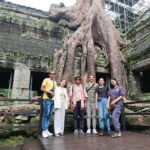
Then you go to Ta Prohm, famous for the jungle temple feel and the giant tree roots growing into the temple structures. It’s also known as the Tomb Raider temple because it was used as a location in the Tomb Raider film. Even if you’re not thinking about the movie, the roots and overgrowth create a distinctive visual chaos in a controlled way. You’ll get a different kind of “wow” than at Angkor Wat: less polished and more alive.
This is the part of the day where I’d slow down mentally. You’re still on a schedule, but you can take a moment to look at the way roots frame doorways and walkways. That’s where the best photos usually come from: not just standing in front of a wall, but finding the natural framing created by the trees.
If you care about photography, your guide can help you line up viewpoints and keep the day moving without rushing past the best angles. The reviews around this kind of tour often praise guides for making the experience feel smooth and light, not just factual.
Banteay Srei Pink Lady: why the small carvings are worth the detour
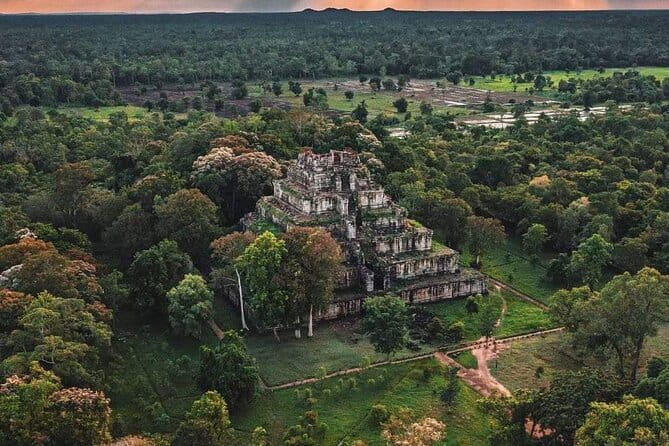
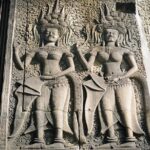
After the big visual moments, you get Banteay Srei, often called the Pink Lady temple. It’s known for some of the finest and most intricate carvings found in Angkor. This is a different kind of stop. Instead of the huge, sweeping scenes, you’re looking for details.
Carvings like these are easy to miss if you treat the temple like just another photo stop. Your best move is to let your eyes adjust and then look for patterns: repeated motifs, carved faces, and the fine lines that make the stonework stand out. If you like architecture beyond the “big landmark” feeling, Banteay Srei is where you’ll get that satisfaction.
It also balances the day. A one-day circuit can start to feel repetitive: same style of stone, same courtyard logic, similar visual rhythms. Banteay Srei breaks that pattern by asking you to slow down and appreciate the craftsmanship.
In a full-day itinerary, this stop can be the difference between feeling like you checked boxes and feeling like you actually understood what made Angkor special beyond famous silhouettes.

Price and value: what $162.06 per group really means
The price listed is $162.06 per group for up to 6 people, which makes this tour more budget-friendly than it looks at first glance if you’re traveling with family or friends. You’re paying for a private guide and an A/C vehicle, and those costs don’t scale down the way a public bus ticket does.
Now for the part you should budget for: admission fees are not included. Angkor and Beng Mealea tickets are $37.00 per person. That means your real total cost depends on group size. If you’re a group of 2, you’ll feel the admissions more. If you’re a group of 5 or 6, the private-tour value gets better fast because the base price gets divided.
Lunch is also not included. Food and drink start from $6 based on your order, so plan on spending extra if you want more than something quick. The good news is the tour includes cold water and cold towels, so at least you’re not starting the day dehydrated.
Overall, this tour is best value for people who want a single-day Angkor hit list with a real guide. If you love total freedom and want to wander on your own pace, you might do fine renting a driver and tickets. But if your priority is seeing the right highlights without wasting time, the private setup is what you’re really paying for.
Guides in practice: how names you’ve heard make a difference
The guide names that show up in this operator’s past experiences are a clue about what you’ll likely get: people who can explain and guide without turning the day into a lecture.
Some examples from reported experiences include Thean (a guide nicknamed bull frog), Pin, and Vannak. The descriptions focus on guides being kind, thoughtful with pacing, and able to handle families, including young kids. That matters because in Angkor, the “how you move” part is as important as the “what you see” part.
If you want better results, ask your guide a practical question early. Something like: where should we stand for the clearest Bayon faces, and where should we avoid if the crowd is thick right then. Good guides can read timing and help you get angles you’d miss alone.
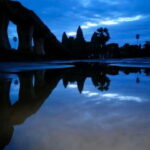
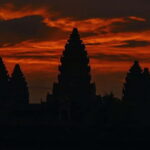
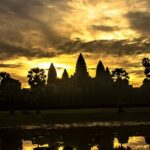
Also, if you’re hoping for early morning light at Angkor Wat, mention it. One review highlighted that early morning sunrise over Angkor Wat was worth waking up for. Your exact timing depends on the day’s schedule, but this tour does start with a 7:30 AM pickup, so you’re in the right general window for morning viewing.
What to expect on the ground: transportation, pace, and “getting through it”
This is an A/C car or van day, not a scooter scramble. You’ll get cold water and cold towels, which sounds small until you’re walking stone corridors in the heat and you feel your energy dip. Those included extras make the schedule feel manageable.
The itinerary includes ticket assistance before you start, which reduces hassle. In a place like Angkor, that matters because the difference between enjoying your day and stressing about admissions is often just a few minutes of smooth handling.
The biggest thing to expect is pace. With multiple major sites in one day, you’ll do a mix of shorter stops and focused viewing. That’s not a flaw; it’s the trade you’re making to fit everything into 8 to 9 hours. You’ll enjoy the day most if you go in with a plan for what you want to see most at each temple.
If you’re traveling with kids, the private format helps. A guide can shift pacing to keep everyone engaged. If you’re traveling solo, the benefit is still real: a dedicated guide can tailor micro-stops to your interests, like whether you’d rather spend a bit longer on carving detail at Banteay Srei or get more time framing Ta Prohm’s roots.
Practical tips before you go
Here’s what I’d do to make this one-day Angkor tour feel smooth instead of exhausting.
Wear shoes you can walk in for hours. You’ll be moving between temple areas, and even if some visits feel like short stops, the total time on your feet adds up fast.
Bring light layers. The guide provides cold water and towels, but you’ll still want something for sun protection and occasional shade. A hat and sunscreen are the typical essentials, and they pair well with the fact that Ta Prohm’s roots and courtyards often mean you’re both in sun and in partially shaded areas.
Expect extra money for admission tickets ($37 per person) and plan a lunch budget starting around $6. With so many stops, it’s easy to forget food until you’re hungry and that’s when small decisions get annoying.
If mobile tickets are your thing, this tour uses a mobile ticket, which can simplify on-the-go entry compared with paper-only setups.
Finally, consider taking a breath between stops. It’s tempting to rush to the next gate, but one pause for water and a quick reset makes the next temple easier to enjoy.
Should you book this one-day Angkor special tour?
Book it if you want a guided, private way to hit the major temple highlights in one day, including the less “museum-like” feel of Beng Mealea and the detail-focused carvings at Banteay Srei. It’s especially strong value for groups up to 6 because the base price is per group, not per person.
Skip it or rethink it if you hate fast pacing and want long, slow time in every temple. This itinerary is built for efficiency, and you’ll feel that. Also, make sure you’re comfortable paying admission separately at $37 per person and adding lunch on top.
A final plus: the ability to cancel for a full refund up to 24 hours before the experience start time gives you breathing room for planning. If your Siem Reap days are flexible, that reduces the risk.
If you want an Angkor day that feels like you saw the real range of the temples, from massive architecture to jungle roots to intricate stonework, this is a solid way to do it in a single shot.
FAQ
What time does the tour start?
Your guide meets you in your hotel lobby at 7:30 AM.
How long is the tour?
The experience runs about 8 to 9 hours.
Is hotel pickup included?
Yes, pickup is offered.
Are admission tickets included in the price?
No. Admission fees for Angkor and Beng Mealea are $37 per person and are not included.
What’s included besides the guide?
The tour includes a certified tour guide, transportation in an A/C car or van, cold water, and cold towels. It also mentions mobile ticket use and that the guide assists with ticket purchase before you start.
Is this tour private?
Yes, it’s private. Only your group participates, up to 6 people per group.