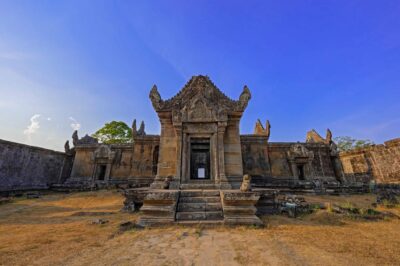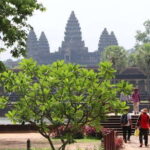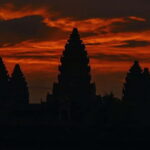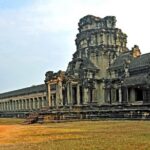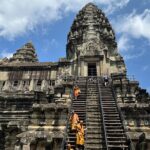
Sunrise at Angkor Wat starts the whole trip right. I love the early sunrise session and the calm way the English-speaking guides walk you through each temple, including how Mr. Mony helps with photos. The trade-off is the very early pickup, usually 4:30–5:00 am.
This is a small-group tour (up to 14) that connects Angkor Wat, Angkor Thom, and Ta Prohm, then swaps to Phnom Kulen for viewpoints and a waterfall picnic lunch. The pacing is active, but the breaks and included meals keep it from feeling like a nonstop shuffle.
At $79 per person, you’re getting AC transport, bottled water and towels, and meals (breakfast and picnic lunch). Just plan for the Angkor pass at $37 per person since several Angkor temple entry fees aren’t included, while Kulen Mountain admission is covered.
In This Review
- Key things I’d prioritize on this tour
- Sunrise Angkor Wat and the early-morning reality check
- Day 1: From Srah Srang breakfast to the big faces of Bayon
- Angkor Wat at dawn: the main event
- Srah Srang: a calmer break with included ticket and local food
- Pre Rup: the biggest brick temple stop
- Ta Prohm: jungle roots and the famous feel
- Bayon and the smiling faces of Angkor Thom
- Terrace of the Elephants and Terrace of the Leper King
- Angkor Thom South Gate: a quick landmark hit
- Day 2: Phnom Kulen, rural Cambodia, and that waterfall picnic
- Phnom Kulen National Park: the right mix of “stop and look”
- Poeng Ta Kho (amazing cliff): viewpoints that make the drive worth it
- 1000 Lingas: sacred river symbols and cooling off
- Preah Ang Thom reclining Buddha: a slower, longer stop
- Phnom Kulen Waterfall: time to rest and eat local food
- Price and value: $79 and what you may still pay
- Group size, guide style, and the photo advantage
- Comfort tips that make both days easier
- Who this tour fits best
- Should you book this 2-day Angkor Wat and Kulen tour with picnic?
- FAQ
- What time does the tour start?
- Does the tour include hotel pickup?
- Is the Angkor pass included in the price?
- Are meals included?
- Is Kulen Mountain admission included?
- Do I need to buy admission tickets for the temples?
- What does transportation include?
- Can I cancel for a full refund?
Key things I’d prioritize on this tour
- Angkor Wat at sunrise: early start, big payoff, and a timing window that makes photos and first impressions easier.
- Guides who explain what you’re seeing: names that came up include Seila, Sam, Mony, Sotin, David, and Ho.
- Air-conditioned comfort when it matters: minivan/minibus rides, plus cool towels and water.
- A strong temple route on Day 1: Angkor Wat → Srah Srang → Pre Rup → Ta Prohm → Bayon → terraces → South Gate.
- Phnom Kulen’s mix of views and sacred spots: Poeng Ta Kho cliff views, 1000 Lingas, and more.
- Waterfall picnic lunch: local food served at Phnom Kulen Waterfall, with time to relax.
Sunrise Angkor Wat and the early-morning reality check
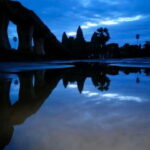
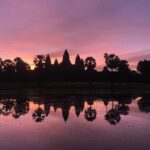
Angkor Wat sunrise is the reason most people sign up, and it’s not subtle. Your day begins with hotel pickup between 4:30 am and 5:00 am, which means you’ll want your night before to be simple and early-sleep friendly. If mornings aren’t your thing, you’ll feel it at first—but the payoff is the kind you remember long after.
What I like most is that the tour doesn’t treat sunrise like a quick drive-by. You get dedicated time in the temple area (about 2 hours around that sunrise window), so you’re not stuck sprinting from one spot to another. And because you’re going early, the experience feels more focused and less chaotic.
One practical note: sunrise timing often means cooler air and softer light, but it can also mean chilly fingers for anyone sensitive to early mornings. A light layer can help, especially when you’re waiting for the sky to change.
You can also read our reviews of more tours and experiences in Siem Reap

Day 1: From Srah Srang breakfast to the big faces of Bayon
Day 1 has a clear arc: start at Angkor Wat, then move through a set of temples that show different styles and moods of the Angkor world. You’ll be in AC transport between stops, which matters because the heat in Siem Reap can build fast.
A big part of the value here is how the route stacks up. You don’t just bounce randomly. The stops create a flow from wide iconic angles (Angkor Wat) to smaller, more human-scale moments (courtyards, terraces, and jungle-touched stones).
Angkor Wat at dawn: the main event
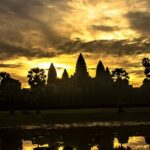
After pickup, you head to watch the sunrise over Angkor Wat. This stop is listed at about 2 hours, and admission isn’t included under the base price. In practice, that means you should budget for the Angkor pass (listed as $37 per person) if you plan to visit the main Angkor sites.
Even if you’ve seen pictures, sunrise changes the feeling. The light shifts the colors of sandstone and shadows between towers, and you get that first look at why Angkor Wat became the symbol it is today.
Srah Srang: a calmer break with included ticket and local food
Next comes Srah Srang, a great “exhale” moment between the iconic big temples. You’ll spend about 45 minutes here, and this is one of the stops where the admission ticket is included.
This is also where breakfast enters: the tour includes breakfast in the village with local food and desserts, including items like Khmer noodle soup, palm cake, and steamed rice (as described in the tour info). For me, the meal is more than fuel—it’s a reset so your temple hours don’t blur together.
Pre Rup: the biggest brick temple stop
Then it’s Pre Rup, described as the biggest brick temple of Angkor. The time here is about 40 minutes. Admission is listed as not included for this stop, so again, having the Angkor pass matters.
Pre Rup tends to feel different from carved-stone temples because brick changes how light hits surfaces. It’s a good chance to slow down and notice texture instead of only chasing photo angles.
Ta Prohm: jungle roots and the famous feel
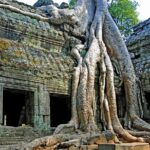
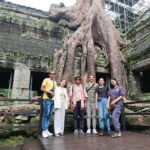
Next you move to Ta Prohm, the jungle temple often associated with roots and the dramatic “left as found” look. You’ll have around 1 hour here.
Ta Prohm works well on a guided route because the setting can distract you if you don’t know what to look for. With a guide pointing out the structure and how the site is shaped, you spend less time lost at the edges and more time understanding what you’re seeing.
Also: wear shoes you can trust on uneven ground. Ta Prohm’s “adventure” is part of the charm, but it’s still real walking.
Bayon and the smiling faces of Angkor Thom
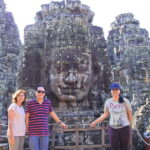
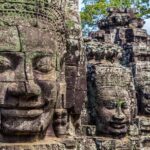
After Ta Prohm, you head to Bayon, known for the smiling faces. The stop is about 1 hour.
This is a good moment to compare styles. Ta Prohm feels wild and overgrown; Bayon feels more composed and ceremonial. With time set aside, you can step back for broad views, then come in closer for details.
Terrace of the Elephants and Terrace of the Leper King
The itinerary then includes two short but meaningful stops inside Angkor Thom:
- Terrace of the Elephants (about 15 minutes)
- Terrace of the Leper King (about 15 minutes)
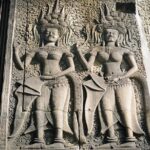
These are brief by design, which can be a pro or a con. If you like learning enough to make the carvings “stick,” a quick stop can be perfect. If you prefer long, slow wandering, you may want to return later on your own day.
What I like about these terraces is that they’re the kind of place where small details reward time—but you can still get a solid first impression in 15 minutes if you’re paying attention.
Angkor Thom South Gate: a quick landmark hit
Finally, you visit Angkor Thom South Gate (about 10 minutes). This is a classic, high-recognition landmark, and short timing can keep it from turning into a rushed photo line.
Then you’re transferred back toward Siem Reap.
Day 2: Phnom Kulen, rural Cambodia, and that waterfall picnic
Day 2 starts later, with hotel pickup between 8:00 am and 8:30 am. That’s a relief after sunrise day. Your drive takes you through rural Cambodian villages, where the tour info specifically mentions watching daily routines along the way—so you’re not only doing temple tourism.
You also get another chunk of guided time in Phnom Kulen National Park (listed at about 1 hour 30 minutes, with admission included). This part of the day is built around scenery, sacred sites, and then a long, relaxing break at the falls.
Phnom Kulen National Park: the right mix of “stop and look”
The National Park time is about more than transit. You’re given time to take in the area, and you’re not forced to rush through every viewpoint. Admission for this park segment is included.
If you’re expecting beaches or city vibes, you won’t get that. You’re seeing the countryside and mountain setting, and the pace feels more like a day trip than a checklist.
Poeng Ta Kho (amazing cliff): viewpoints that make the drive worth it
Next up is Poeng Ta Kho, also described as an amazing cliff. This stop is listed at 30 minutes, with admission included.
Even though it’s short, this is a big “reward moment.” The cliff views are the kind of thing that makes you stop talking and just look for a while. It’s also a good place to take photos from a safe angle without sprinting across terrain.
1000 Lingas: sacred river symbols and cooling off
Then you visit 1000 Lingas, described as a sacred river carved with ancient Hindu symbols, with multi-level falls nearby. You’ll get about 30 minutes here, and admission is included.
This stop is especially interesting because it mixes religion with physical geography—symbols beside moving water. The tour info also mentions the falls being ideal for refreshing swims and riverside dining, but you’ll only want to do water time if conditions feel right and you’re comfortable with slippery edges.
Preah Ang Thom reclining Buddha: a slower, longer stop
You then visit Preah Ang Thom pagoda, listed as about 1 hour. Admission isn’t included for this stop, so it’s one more reason the Angkor pass isn’t the only ticket question in your planning (even though Kulen Mountain admission is included).
The highlight here is the largest 16th-century reclining Buddha statue in Cambodia, as stated in the tour info. One hour gives you enough time to look, take in the setting, and not just snap one photo and move on.
Phnom Kulen Waterfall: time to rest and eat local food
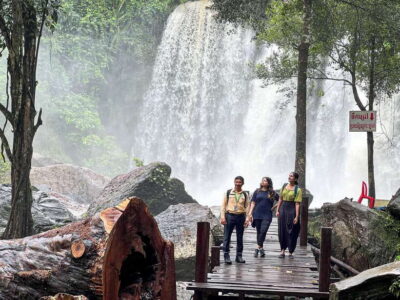
The final and most relaxing stop is Phnom Kulen Waterfall, with 2 hours on site. Admission is included, and the best part is the picnic lunch with local food at the waterfall.
This is where the tour earns its name. You spend time outdoors without constantly stepping into a new queue. You can sit, eat, and reset your energy before heading back to Siem Reap.
The waterfall stop is also your chance to cool down after temple days. Even if you don’t swim, the water area tends to feel like a break from heat and stone.
Price and value: $79 and what you may still pay
The tour price is $79 per person for 2 days, which includes a lot of “day-trip logistics” that are usually the hidden cost:
- Professional English-speaking tour guide
- Transportation with A/C
- Cool bottle of water and towels
- Breakfast on Day 1
- Picnic lunch on Day 2
- Kulen Mountain admission ticket
The main extra cost you should plan for is the Angkor pass at $37 per person, listed as not included. Also, soft drinks are listed as not included. That doesn’t make the tour bad—it just means you should budget like a grown-up and avoid the surprise moment.
Here’s how I think about the value: if you would otherwise pay for private transportation plus a guide plus admissions plus meals, $79 starts to look like a reasonable deal, especially because the tour caps group size at 14 people.
Group size, guide style, and the photo advantage
This tour runs with a maximum of 14 travelers, which is a sweet spot. Big enough to share the experience, small enough that the guide can keep an eye on timing and keep you from feeling swallowed by a crowd.
From the feedback included with the experience, guide names that repeatedly came up were Seila, Sam, Mony, Sotin, David, Ho, and the driver Tra. The recurring theme is that the guides don’t just point. They explain and they help with photos. That photo help matters more than people think—if you know where to stand and when to frame, you stop wasting time and you get better results.
The transport also gets credit: a clean vehicle, smooth driving, and hydration with water and towels. You feel that most on the long temple day, and especially when Day 2 includes a full day outdoors.
Comfort tips that make both days easier
A few practical things will help you get the most from this exact schedule:
- Plan for early mornings: sunrise starts with pickup around 4:30–5:00 am. If you’re a late sleeper, set a strategy the night before.
- Bring sun protection: temples and cliff viewpoints both mean open sky time.
- Wear reliable shoes: Ta Prohm and the terraces involve uneven surfaces.
- Use the included water and towels: they’re there for a reason.
- Have the Angkor pass ready: several Angkor stops list admission as not included, so don’t assume everything is covered by the base price.
Who this tour fits best
This tour is a strong match if you want:
- Guided temple touring with an organized route
- The Angkor Wat sunrise experience without doing everything solo
- A balanced 2-day mix of temples plus Phnom Kulen waterfall time
- An English-speaking guide and air-conditioned transport
If you’re the type who hates early wake-ups, you might find the Day 1 start hard. But if you can handle one rough morning, you’ll likely feel the payoff all day.
Should you book this 2-day Angkor Wat and Kulen tour with picnic?
I’d book it if you want a well-paced route that covers the big Angkor highlights (Angkor Wat, Ta Prohm, Bayon, and Angkor Thom terraces) and then gives you a break in nature at Phnom Kulen. The combination of sunrise timing, included meals, and cool water/towels makes it feel like more than just transport and ticket stops.
I wouldn’t book it if your main goal is ultra-flexible free time or long, slow wandering at one site. This is structured. You’ll see a lot, and you’ll move on.
If you’re okay with the early start and you’re ready to budget for the $37 Angkor pass, this is a solid value way to experience both the temples and the mountain-side waterfall in just two days.
FAQ
What time does the tour start?
Pickup for the Day 1 Angkor Wat sunrise portion is between 4:30 am and 5:00 am.
Does the tour include hotel pickup?
Yes. Pickup is offered from your accommodation on both days.
Is the Angkor pass included in the price?
No. The Angkor pass is listed separately at $37 per person.
Are meals included?
Yes. Breakfast is included on Day 1, and a picnic lunch with local food is included on Day 2.
Is Kulen Mountain admission included?
Yes. Kulen Mountain admission is included, and Phnom Kulen National Park admission is also listed as included.
Do I need to buy admission tickets for the temples?
Some stops list admission as included and others as not included. The Angkor pass is listed as not included, while several Kulen-related admissions are included.
What does transportation include?
Transportation is provided with A/C (minivan/minibus), plus cool bottled water and towels.
Can I cancel for a full refund?
Yes. You can cancel up to 24 hours in advance for a full refund. If you cancel less than 24 hours before the start time, the amount paid isn’t refunded.