REVIEW · SIEM REAP
3-Day Angkor Wat with All Interesting Major Temples, Banteay Srei & Beng Mealea
Book on Viator →Operated by Happy Angkor Tour · Bookable on Viator
Angkor hits harder when you’re not fighting logistics. This private 3-day circuit in Siem Reap pairs sunrise and sunset with major sites like Angkor Wat, Ta Prohm, Bayon, and Beng Mealea, with a licensed English guide talking you through what you’re seeing. I love the hotel pick-up and drop-off that keeps your days simple. I also like the way the itinerary moves between the big-name temples and the quieter corners, so you get variety instead of repeating the same view all day.
The one real thing to think about is cost add-ons: the Angkor pass is not included, and meals (lunch) aren’t either, so your final day-to-day budget will be higher than $261.
In This Review
- Quick reasons this tour makes sense
- Private pickup and air-conditioned comfort across three temple-heavy days
- Day 1: Angkor Wat, Ta Prohm roots, and the Angkor Thom walk to Phnom Bakheng sunset
- Angkor Wat first: when the day feels fresh
- Ta Prohm: the tree-root drama
- Ta Nei: small, quieter, and surrounded
- Angkor Thom classics: Victory Gate, Bayon faces, and the Royal Enclosure area
- Phnom Bakheng sunset: spectacular, but plan for limits
- Day 2: sunrise start, Preah Khan’s massive feel, and Banteay Srei pink sandstone
- Sunrise at Angkor Wat: it’s not just a photo moment
- After breakfast: Preah Khan and the Buddhist Khmer maze
- Neak Pean and Ta Som: smaller, more intimate
- Eastern Mebon and Pre Rup: temple-mountains and view points
- Lunch then Banteay Srei and the smaller circuit break
- Day 3: Beng Mealea jungle ruins plus Rolous Group temples
- Beng Mealea: what you’re really seeing
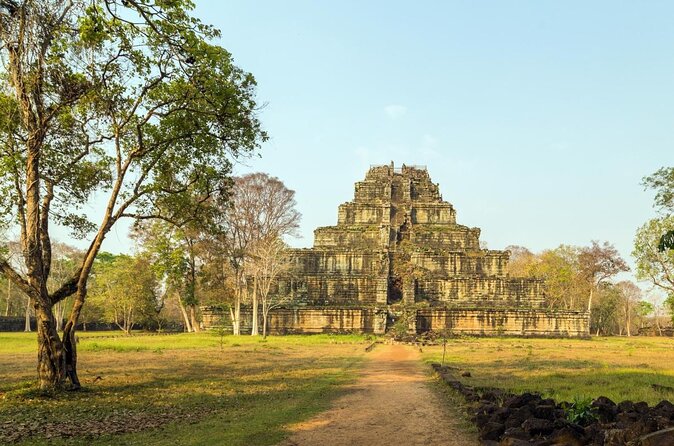
- Rolous Group: Lolei, Preah Ko, and Bakong
- Lunch on the move, then optional local stops
- Tickets, entrance fees, and what the $261 price covers
- The guide makes or breaks the temple experience
- Who should book this private Angkor circuits tour
- Should you book this tour?
- FAQ
- What’s included in the tour price?
- What isn’t included?
- Do I need to buy the Angkor temple pass during the tour?
- What time is the sunrise part?
- Is there a sunset stop?
- Is this tour private?
- Can I cancel for free?
Quick reasons this tour makes sense
- Sunrise at Angkor Wat and sunset at Phnom Bakheng so you see temples at the best light
- Private, licensed English guide for clear commentary instead of guesswork
- Angkor Thom highlights done in one loop with Victory Gate, Bayon faces, and more
- Beng Mealea’s jungle takeover for that wild, overgrown Angkor feeling
- Banteay Srei’s pink sandstone plus other smaller temples that help break up the crowds
- Optional stops in the city like Artisans Angkor and Psar Chaa (only if you want them)
Private pickup and air-conditioned comfort across three temple-heavy days
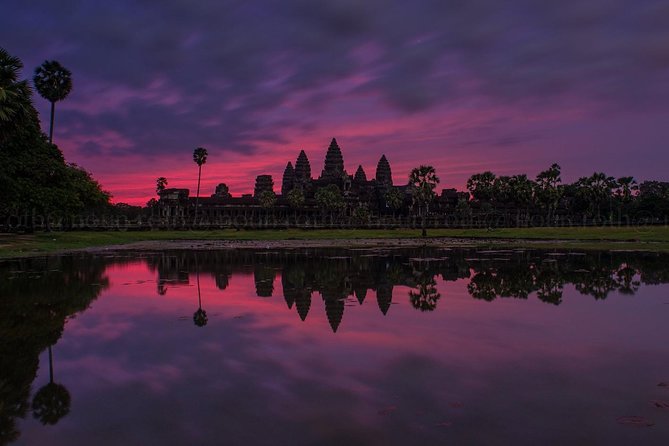
What you’re really buying here is time. Angkor days are long, and Siem Reap traffic and road navigation can eat that time fast. This plan removes the headache: you’re picked up and dropped back at your hotel each day, with air-conditioned transport, parking fees and road tolls included, plus cool water and a cool wet towel in the vehicle.
That matters because temple visits aren’t just walking. They’re waiting, climbing, photos, and heat management. When you’re doing two early starts (one for the sunrise) and a sunset climb, having a driver who knows where to go reduces stress a lot. And because this is a private tour (only your group), you’re not stuck with anyone else’s pace.
Also, the tour uses a mobile ticket. That’s one less thing to juggle when you’re trying to keep your day flowing. Just remember the Angkor admission is separate, so you’ll still want to budget for the official temples pass.
You can also read our reviews of more tours and experiences in Siem Reap
Day 1: Angkor Wat, Ta Prohm roots, and the Angkor Thom walk to Phnom Bakheng sunset
Day 1 is built around the classic Angkor-Wat-to-Angkor-Thom storyline. You start at 8:00am with pick-up from your accommodation. The guide helps you get the temples pass along the way, then you’re straight into the main draw.
Angkor Wat first: when the day feels fresh
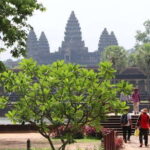
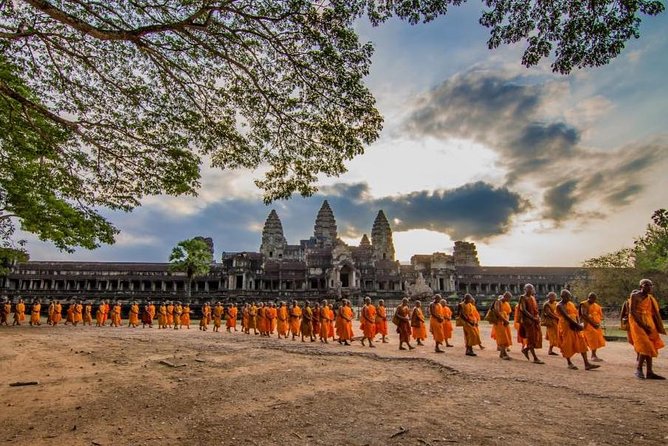
Angkor Wat gets its own morning slot (about 2.5 hours). This is the time to look at the layout: the causeways, the symmetry, the way the temple reads like a designed map, not just stone ruins. Since this stop is early and your guide is there to point out what matters, you’re less likely to feel like you’re just snapping photos and moving on.
Ta Prohm: the tree-root drama
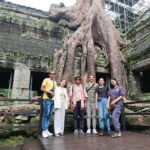
Next is Ta Prohm (about 2 hours). This is the temple with huge tree roots wrapped around structures. It’s famous for a reason: the mix of carved stone and tangled jungle looks theatrical, even in real life. It also sets a tone for the day—Angkor isn’t one mood. It’s different moods stacked together.
Ta Nei: small, quieter, and surrounded
Ta Nei is shorter (about 45 minutes). It’s described as small and less restored, and it’s also a good option if you want to avoid heavy crowds. I like days like this because it breaks the “only famous names” pattern and gives you a chance to see how the smaller Khmer spaces feel.

Angkor Thom classics: Victory Gate, Bayon faces, and the Royal Enclosure area
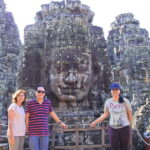
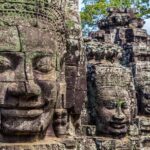
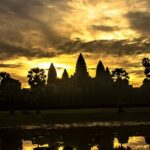
After Ta Nei, you move into Angkor Thom with a quick stop at the Victory Gate, then Bayon (about 45 minutes). Bayon is the temple with 49 towers, each carved with four faces, so you’re looking at 196 faces of Avalokiteshvara. Walking through that area with guidance makes the whole place feel less random.
Then come several “Royal Enclosure” style stops: Baphuon (about 30 minutes), Phimeanakas (about 15 minutes), Terrace of the Elephants (about 10 minutes), and Terrace of the Leper King (about 10 minutes). These aren’t long stops individually, but together they give you a sense of how power, ritual, and storytelling were built into everyday viewing spaces—terraces used by kings to watch processions and returnees.
Phnom Bakheng sunset: spectacular, but plan for limits
The day ends with a climb to Phnom Bakheng for the sunset view (about 2 hours). There’s an important note: there’s a limited number of tourists allowed. So if you want that sunset from the hilltop, go with the assumption you’ll follow the guide’s timing closely.
If you don’t want to wait or climb for sunset, the plan says you can skip that part. That’s a good flexibility, because sunset days can run you out of energy after already doing a full loop.
Day 2: sunrise start, Preah Khan’s massive feel, and Banteay Srei pink sandstone
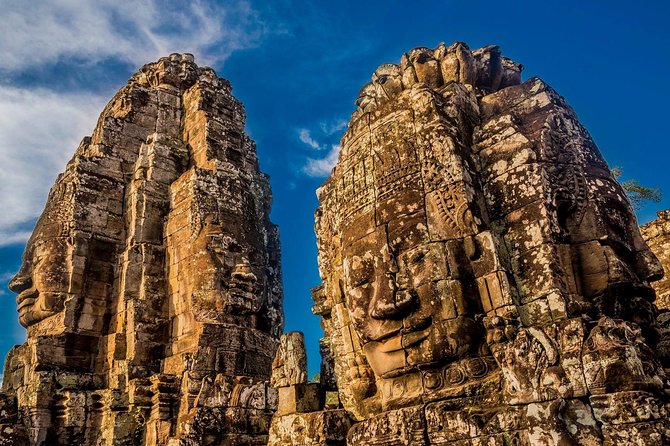
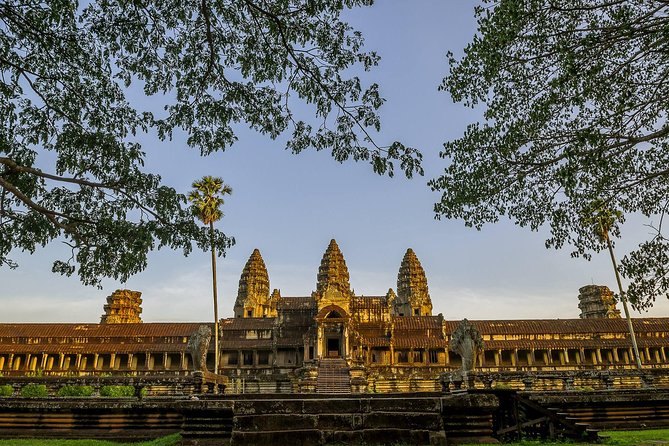
Day 2 shifts gear. It starts earlier for sunrise: pick-up is 5:00am, and you go to watch sunrise at Angkor Wat.
Sunrise at Angkor Wat: it’s not just a photo moment
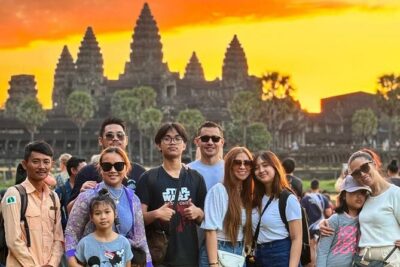
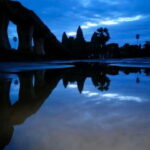
You get about 1 hour 45 minutes at the sunrise viewpoint. Sunrise changes the feel of Angkor Wat. Everything looks sharper and more layered: the stone, the sky, the way the temple reads from a distance. Even if you’re not a sunrise person, this is usually where the temples start to click as a designed city, not just a collection of monuments.
After breakfast: Preah Khan and the Buddhist Khmer maze
After sunrise, the day continues with Preah Khan (about 1 hour). It’s described as a huge Buddhist temple built by King Jayavarman VII and dedicated to his father. This is one of those sites where you can feel the scale even if you don’t fully decode every carving on your first visit. A good guide helps you see what to focus on so you don’t just walk through big spaces.
Neak Pean and Ta Som: smaller, more intimate
Next are Neak Pean (about 30 minutes) and Ta Som (about 30 minutes). Neak Pean is a small island temple in the middle of the last Barray. Ta Som is a smaller Buddhist temple on the east side of Neak Pean. These stops are short, but they’re useful for two reasons: they cool down your pace, and they remind you that Angkor isn’t only about grand scale. It’s also about settings and symbolism.
Eastern Mebon and Pre Rup: temple-mountains and view points
Eastern Mebon (about 20 minutes) gives you the “temple-mountain” feeling with three levels and five towers. Then you go to Pre Rup (about 1 hour), a late 10th-century Hindu temple dedicated to Hindu gods. The tour notes the Cambodian belief that funerals were conducted at the temple on the most distant day—so you’re not just seeing a structure. You’re seeing a place connected to ritual and belief.
Lunch then Banteay Srei and the smaller circuit break
After lunch, you go to Banteay Srei, sometimes called the Ladies temple. It’s built from pink sandstone in the half of the 10th century by King Rajendravarman II, dedicated to the trinity gods in Hinduism. This is a big change from the heavy stone mass of some other sites: the color and detail make it feel more delicate.
Then you continue to Banteay Samre (about 45 minutes) and Banteay Kdei (about 45 minutes). The tour highlights that Banteay Kdei’s style is similar to Ta Prohm and Bayon. I like this pairing because it helps connect architectural patterns across the complex.
Day 3: Beng Mealea jungle ruins plus Rolous Group temples
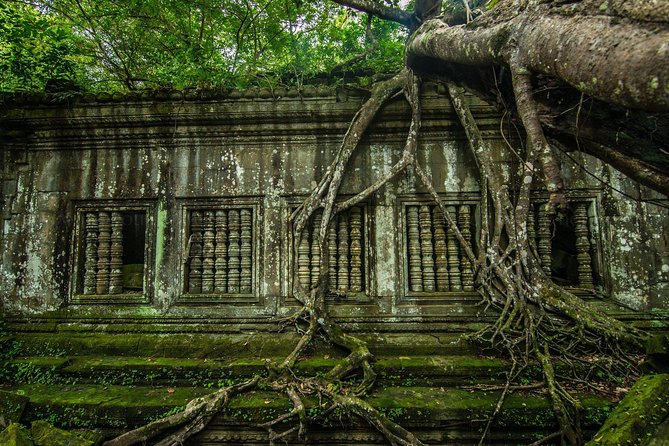
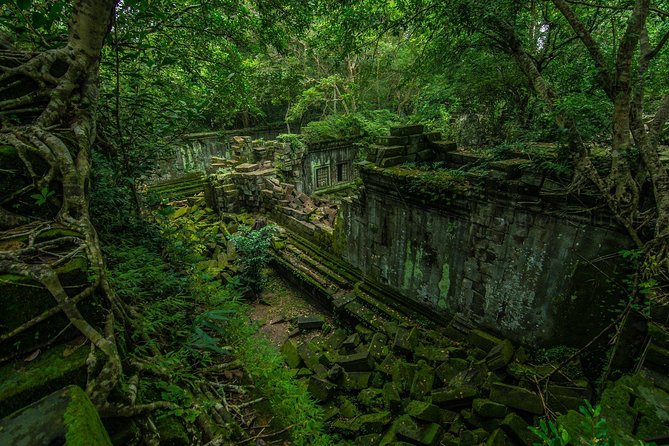
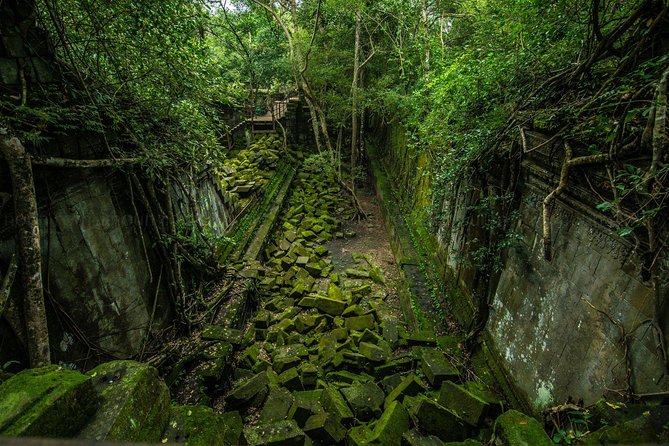
Day 3 is where the story gets wilder. You head to Beng Mealea first (about 3 hours 30 minutes). It’s around 68km northeast of Siem Reap, and it’s described as one of the most mysterious temples at Angkor because nature has truly taken over. This is the day that feels less “polished” and more like you’re exploring a place still being reclaimed by the jungle.
Beng Mealea: what you’re really seeing
Beng Mealea is often the temple people talk about when they want an Angkor that feels less curated. Carvings and walls are still there, but the plant growth adds texture and mood. If you love ruins where time looks active, this is the highlight.
Rolous Group: Lolei, Preah Ko, and Bakong
After Beng Mealea you visit the Rolous Group temples:
- Lolei (about 20 minutes), a smaller 9th-century Hindu temple in the cluster
- Preah Ko (about 20 minutes), the first temple built in Hariharalaya (the ancient, now defunct city)
- Bakong (about 1 hour), described as the first temple-mountain of sandstone and the biggest in the Rolous Group
This trio works because it gives context. Beng Mealea feels like a jungle event. The Rolous Group feels like the early Khmer foundation layer—how rulers built their world and placed temples as anchors in the landscape.
Lunch on the move, then optional local stops
There’s a lunch break at a good restaurant along the way. After that, the tour includes options like Artisans Angkor (for traditional craft skills like stone carving, wood carving, lacquering, gilding, and silk processing) and Psar Chaa (Old Market in central Siem Reap). The best part is you can skip them if you prefer more temple time or just a slower return to town.
Tickets, entrance fees, and what the $261 price covers
At $261 per person, this isn’t a budget-only tour, but it’s also not an extravagant one when you break down what’s included. Your price covers air-conditioned private transport, a licensed English-speaking guide, and the pick-up/drop-off each day, including parking fees and road tolls. It also includes water and a cool wet towel, which is a small thing that helps more than people expect in Angkor heat.
What’s not included:
- Meals (lunch is listed as about USD 5.00 per person, and the exact menu depends on where you eat)
- Admission fees: Angkor Wat + All Temples are listed at USD 62.00 per person
So your real “all-in” cost is $261 plus the Angkor pass plus your lunch expenses. If you already know you’ll want the official pass for the big circuit days, this tour still tends to represent good value because you’re buying route planning plus interpretation, not just seats in a car.
One more thing: this operator offers group discounts, and the average booking window is about 21 days in advance. If you’re aiming for a specific day (or you hate being rushed), booking earlier usually helps.
The guide makes or breaks the temple experience
The temples are visually impressive on their own. The guide is what turns those visuals into understanding.
This tour explicitly leans on personalized commentary from a private guide, and the feedback you provided points to real variation in style depending on the guide. You might be guided by people like Mony, Vanna, Mr. Khmer (described as an archeologist and teacher), Mr. Thou, or Mr Chen. That range matters because different guides highlight different angles—construction methods, religious meaning, story behind carvings, and how to read the layout.
Here are a few practical ways to get more out of the day:
- Ask the guide what you should look for at each stop before you start walking.
- Use the short stops strategically (Victory Gate, Phimeanakas, terraces). With a guide, they become meaningful instead of quick photo pauses.
- If you’re sensitive to crowds, you’ll probably appreciate the itinerary’s inclusion of places like Ta Nei, described as helpful for avoiding crowds.
Also, because transport is private, you can adjust your pacing without derailing the day. That’s a quiet advantage that often feels bigger than it looks on paper.
Who should book this private Angkor circuits tour
This is a strong fit if you want:
- A structured 3-day route across major Angkor sites without navigating on your own
- Early starts for the iconic moments: sunrise at Angkor Wat and sunset from Phnom Bakheng
- A balance of “must-see big names” plus sites that feel smaller or more atmospheric
- A guide who explains the why behind the stone, not only what the stone looks like
It’s especially good for history and culture-focused visitors, but you don’t need to be an academic to enjoy it. The itinerary naturally mixes grand scale (Angkor Wat, Bayon, Bakong) with more sensory experiences (Ta Prohm roots, Beng Mealea jungle).
If you’re the type who hates long days and prefers total freedom, you might feel the early mornings are a lot. But if you can handle a full schedule, the payoff is a well-connected set of temples with less wasted time.
Should you book this tour?
I’d book it if you want the big Angkor hits done in the right order, with private transport and a licensed guide, and you’re okay paying extra for the Angkor pass and lunch. The value comes from how much ground you cover with less stress, plus the chance to understand what you’re looking at instead of guessing.
I’d pause before booking if you’re traveling on a tight budget and the add-on admissions and meals would stretch you. Also, if sunset and sunrise feel like “nice-to-haves” rather than priorities, you might consider a lighter plan, because this one is clearly timed around those moments.
If you’re ready for three solid temple days with comfort built in, this tour is a practical way to see a lot of Angkor without turning your vacation into a navigation project.
FAQ
What’s included in the tour price?
The tour includes an air-conditioned vehicle, an English-speaking licensed guide, hotel pick-up and drop-off in Siem Reap, cool water and a cool wet towel, plus parking fees and road tolls.
What isn’t included?
Meals are not included, and lunch is listed as about USD 5.00 per person depending on the restaurant menu. Admission fees are also not included: Angkor Wat plus all temples are listed at USD 62.00 per person.
Do I need to buy the Angkor temple pass during the tour?
Your guide will help you buy the temples pass along the way to the temples, and the Angkor entrance fees are listed as not included in the tour price.
What time is the sunrise part?
For sunrise at Angkor Wat on day 2, the guide picks you up from your accommodation at 5:00am.
Is there a sunset stop?
Yes. Day 1 ends with a climb to Phnom Bakheng for sunset views, with limited numbers of tourists allowed.
Is this tour private?
Yes. It’s described as a private tour/activity, with only your group participating.
Can I cancel for free?
Yes. Free cancellation is available if you cancel at least 24 hours in advance for a full refund.