REVIEW · SIEM REAP
3 Days Siem Reap Explorer – Small Group
Book on Viator →Operated by Journey Cambodia · Bookable on Viator
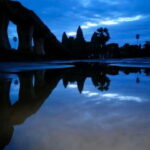
Angkor looks different before breakfast. This 3-day Siem Reap Explorer is built around the big wow factor: a pre-dawn Angkor Wat sunrise plus a maximum 15-person group that keeps the tour feeling personal. I love how the pacing is structured so you see the key sights without feeling like you’re trapped on a conveyor belt.
I also like the small details that make it easier to enjoy: hotel pickup, an English-speaking guide, air-con transport, and bottled mineral water throughout the days. The main drawback is the budget curveball—your $62 temple pass is not included, and you pay it directly at the sites on the day.
If you’re okay with early mornings and temples-with-rules (shoulders and knees covered), this tour is a smart way to tick off Angkor and still get out of town for Tonle Sap—or see a very Cambodian show at Phare Circus.
In This Review
- Key things to know before you go
- The 3-day rhythm: how Siem Reap gets you from early-dark to sunset-light
- Angkor Wat sunrise: entering before the crowds (and before the heat)
- What to watch for
- Angkor Thom and Ta Prohm: the storytelling temples
- The reality check
- Day 1 beyond Angkor: Kampong Phluk floating village or Phare Circus
- Kampong Phluk floating village (when it’s on)
- Phare Circus (when it’s on)
- Which option is better for you?
- Day 2 after sunrise: building a full Angkor picture (not just one temple)
- A practical tip for the midday portion
- Day 3 temples: roots, Buddhist symbolism, delicate stonework, and a temple mountain
- Preah Khan: tree roots and ruined stone
- Neak Pean: a Buddhist temple on a circular island
- Banteay Srei: the smaller temple with the sharpest reliefs
- Pre Rup: a classic Khmer state temple
- Price and value: what you’re really paying for
- Small-group tour feel: how “max 15” changes your day
- Who should book this Siem Reap explorer
- Should you book this 3 Days Siem Reap Explorer?
- FAQ
- How big is the group for this tour?
- Does the tour include hotel pickup and drop-off?
- Is the Angkor temple pass included in the $129 price?
- What time do you leave for Angkor Wat sunrise?
- Is Tonle Sap Lake included?
- What is Phare Circus, and is it included?
- Are meals included?
- What should I wear for temple visits?
- Is there a minimum age for children?
- What is the cancellation policy?
Key things to know before you go
- Sunrise timing is serious: you’ll leave around 4:00 to 4:30 am for Angkor Wat, depending on the season.
- Small-group cap of 15: more questions, less waiting, and a guide who can adjust on the fly.
- Tonle Sap vs Phare depends on the season: during the dry period (01 Mar to 31 Aug), the day’s option shifts to Phare Circus instead of the floating village.
- Ta Prohm is treated like a highlight, not a stop: expect time in the atmospheric “Tomb Raider” temple setting.
- You’ll still pay for temple access: the $62 pass covers temple entry and is required for the main sites.
The 3-day rhythm: how Siem Reap gets you from early-dark to sunset-light
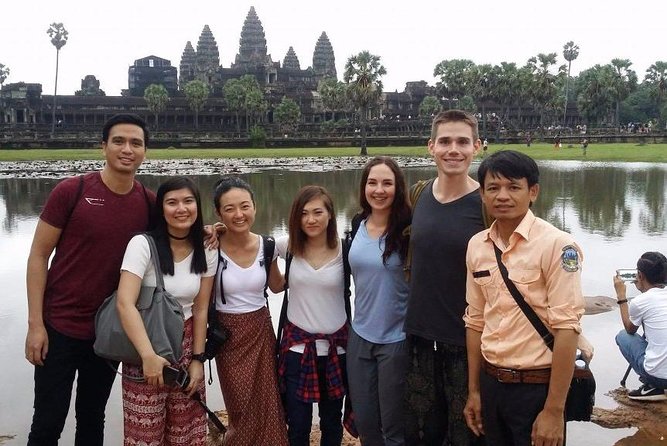
This tour is designed like a series of momentum swings. Day 1 starts with a morning drive to the Tonle Sap area, then you finish with either Kampong Phluk or Phare Circus depending on the season. Day 2 is the early-dark temple marathon, and Day 3 slows into a carefully chosen set of temples with different textures—roots, stone reliefs, and brick-and-sandstone mountains.
The big value here is that you’re not trying to organize everything yourself across multiple ticket types and routes. Pickup plus an air-con vehicle means you can focus on the sights and the explanations, not logistics.
One practical note: even though your tour meeting time is listed as 8:00 am, the Angkor sunrise day starts way earlier—pre-dawn—so plan to treat this as a “wake up and go” trip for at least one day.
You can also read our reviews of more tours and experiences in Siem Reap
Angkor Wat sunrise: entering before the crowds (and before the heat)
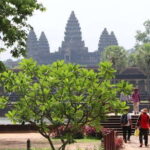
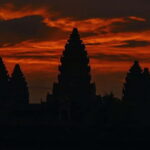
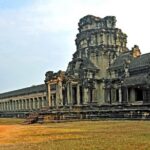
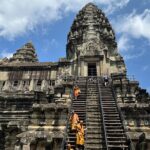
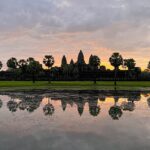
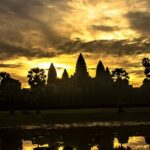
Angkor Wat is usually the headline in Siem Reap—and this one makes it count. You’ll depart around 4:00 to 4:30 am for sunrise outside Angkor Wat, depending on the time of year, then move through the temple early while the world is still dim and the light is doing its magic.
What I like about this approach is the emphasis on experience, not just checklist clicking. The tour mentions entering Angkor Wat from the eastern side, described as a little-visited entrance compared with the more common routes, which can help you get your bearings faster.
You’re also not left guessing why it matters. The guide frames Angkor Wat as more than pretty stones by connecting it to its place among the key temples of the area. That turns photos into context.
What to watch for
Wear something light but sensible for temples, because sunrise still brings cool air and then quick warming. Your guide covers the basic temple etiquette, but you’ll want to arrive mentally ready for a long, upright walk session.
Angkor Thom and Ta Prohm: the storytelling temples
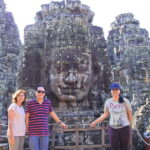
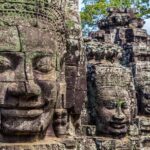
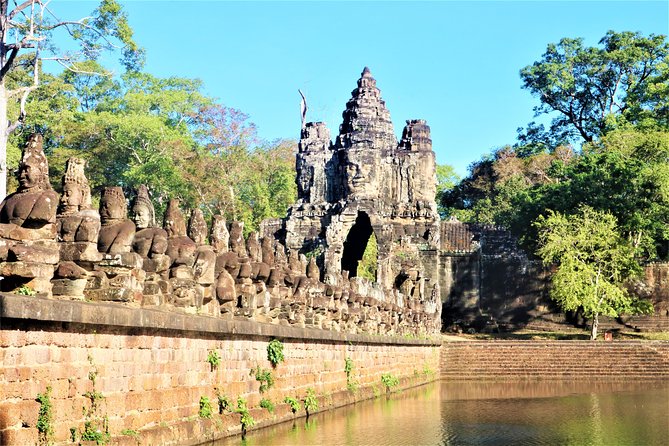
After sunrise at Angkor Wat, the next phase goes deeper into the Angkor complex. You’ll head into Angkor Thom—starting with the South Gate and then moving toward the Bayon area—where the scale of the old Khmer capital hits you in a way a map can’t.
The route includes the South Gate and then time at Angkor Thom proper, with a stop that encourages you to pause and really look at the grandiosity before moving inside. There’s also a pass by the Terrace of the Leper King and the Terrace of the Elephant, which are often just names in guidebooks—here you get them as part of the flow.
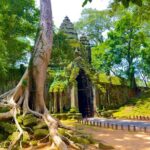
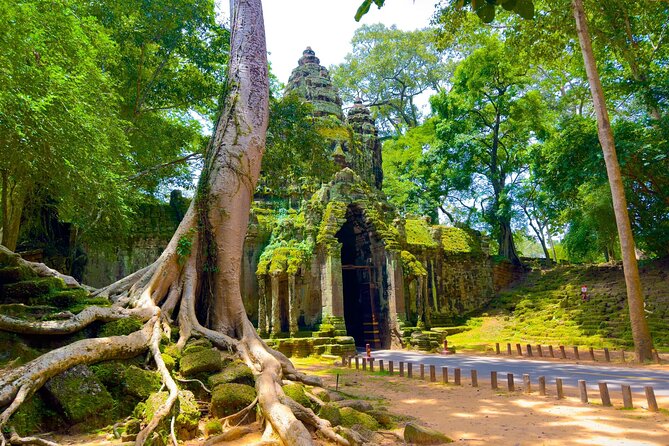
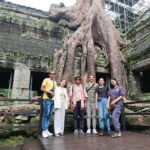
Then comes Ta Prohm, and it’s treated like a must-see. The tour describes Ta Prohm as one of the most atmospheric Angkor temples, with tree roots and crumbling stone structures doing the heavy lifting. It also notes it was once home to 2,740 monks, and that it looks much as it did when French explorer Henri Mouhot “rediscovered” the site in the early 1850s.
That matters because Ta Prohm is one of those places where the famous look is the point: the blend of architecture and nature is what you’re there to experience. If you only do one “storytelling” temple beyond the big famous ones, Ta Prohm is the logical pick.
The reality check
These temples are outdoors and uneven. Even with a guide and a route, you’ll still do real walking and standing time, so comfortable shoes are not optional.

Day 1 beyond Angkor: Kampong Phluk floating village or Phare Circus
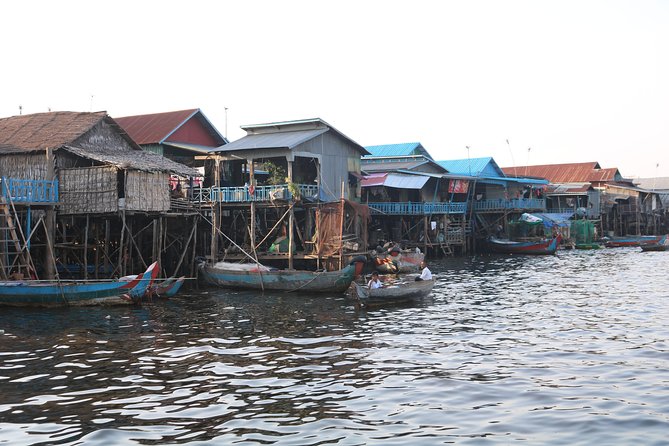
Day 1 gives you a break from the Angkor-only bubble. The morning takes you toward Tonle Sap Lake, the huge freshwater lake that swells dramatically with the seasons. The tour notes the Tonle Sap Lake can expand to around 12,000 km², which is a key reason why life here is tied so closely to water levels.
Kampong Phluk floating village (when it’s on)
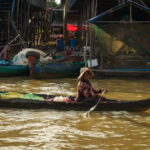
You’ll visit Kampong Phluk floating village in the morning, with Tonle Sap Lake entrance fee and a boat cruise included. This is the part of the trip where you trade temple stone for everyday life on the water. You’ll see people living in traditional Khmer stilt houses, and you’ll understand why “floating village” isn’t just a scenic label—it’s a whole adaptation.
The added boat time helps you see the scale of the water and gives you something to focus on beyond walking and staring at ruins.
Phare Circus (when it’s on)
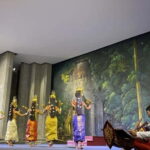
From 01 Mar to 31 Aug, the itinerary swaps the Tonle Sap village visit for Phare The Cambodian Circus (seat C). This is a smart alternative if you’re traveling during the dry season and you’d rather spend the evening in a cultural performance than focus only on water.
The tour describes Phare as a uniquely Cambodian show and points to its post-Khmer Rouge origins, which adds weight to what you’re watching. Even if you’ve never heard of Phare before, the practical point is that the stop is included and timed as a full evening activity, not a quick “check it out” diversion.
Which option is better for you?
If you want real-world Khmer life tied to the water, go for the floating village option. If you want performance, stories, and a strong cultural context in a fixed time block, Phare is a great trade.
Day 2 after sunrise: building a full Angkor picture (not just one temple)
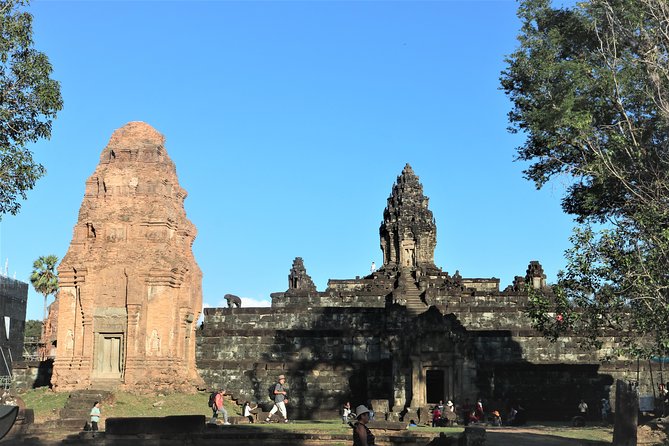
Day 2 is where the tour earns its reputation for structure. You start extremely early at Angkor Wat, then continue through Angkor Thom’s gates and Bayon area, then finish with Ta Prohm. The order matters because it helps you build a picture of how the Khmer Empire expanded and expressed itself through different temple types.
One thing I appreciate is the variety of temple “moods” in a single day. Angkor Wat brings symmetry and big visual geometry, Angkor Thom adds urban scale and gate drama, and Ta Prohm adds texture and atmosphere with roots and ruins taking the foreground.
A practical tip for the midday portion
This is the day you’ll want to stay ahead of fatigue. Even with transport and guiding, your energy dips during midday heat and uneven stone paths. The mineral water included helps, but your best move is to pace yourself mentally and accept that you’ll want breaks at the entrances.
Day 3 temples: roots, Buddhist symbolism, delicate stonework, and a temple mountain

Day 3 is for people who want Angkor without the same exact feel as the day before. Instead of repeating the biggest names, you shift into a mix of different site styles.
Preah Khan: tree roots and ruined stone
Preah Khan starts the day. The tour describes it as a ruined but highly atmospheric mix of tree roots and crumbling stone structures. This fits nicely after Ta Prohm because you get more of that “nature reclaiming stone” visual language—but in a different layout and setting.
Neak Pean: a Buddhist temple on a circular island
Next is Neak Pean, described as an artificial island with a Buddhist temple on a circular island in Jayatataka Baray. This stop is shorter, so you’ll want to treat it as a focused viewpoint rather than a long wandering session.
The value here is contrast. After huge complexes, Neak Pean feels like a symbolic “pause” in the route.
Banteay Srei: the smaller temple with the sharpest reliefs
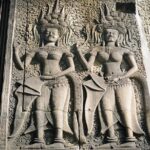
Then you get Banteay Srei, and it’s exactly the kind of place people remember. The tour highlights that Banteay Srei is well-preserved and that its detailed reliefs on a smaller sandstone structure are regarded as the finest and most skillfully crafted in Cambodia.
That description is important because it shapes expectations. This isn’t about scale. It’s about close-looking—the kind of carvings you can actually appreciate when you slow down.
Pre Rup: a classic Khmer state temple
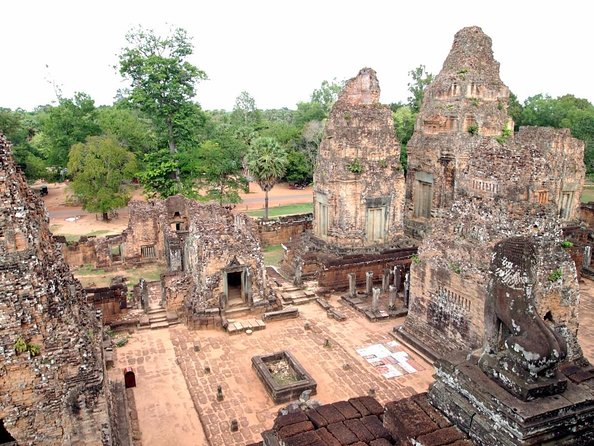
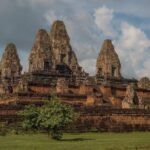
Finally, Pre Rup caps the experience. The tour frames it as a Hindu temple built as the state temple of Khmer king Rajendravarman, dedicated in 961 or early 962, and constructed as a temple mountain using brick, laterite, and sandstone. It’s a fitting last stop because it gives you one more strong “temple mountain” silhouette before you head back.
Price and value: what you’re really paying for
The tour price is listed at $129 per person for about 3 days, but the real cost is split between what’s included and what you pay directly for temple entry.
Your included items cover the day-to-day essentials: licensed English-speaking guide, air-con vehicle, hotel pickup and drop-off, mineral water, plus Tonle Sap entrance fee and boat cruise (or Phare Circus with seat C, depending on season). That’s meaningful in Siem Reap because transport and guiding are where the time savings become real.
The temple pass is the one piece you need to plan for: $62 per person, payable on the day of your activity. Since it’s required for the major sites, I recommend budgeting for roughly $191 total per person if you take the 3 days as listed.
Is it good value? Yes, if you want guided Angkor coverage without puzzle-solving ticketing. If you’re the type who prefers to roam solo with total freedom and you already know the temple pass process, then a self-planned route could cost less. But for most first-time visitors, paying for guidance and transport helps you get more meaningful time with the sights.
Small-group tour feel: how “max 15” changes your day

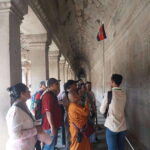
A maximum group size of 15 travelers is a practical advantage here. You get easier questions in the moment, fewer long waits at photo stops, and more control over pacing when the guide sees people tiring out.
It also tends to make the whole day calmer. When you’re moving through major temples, the difference between “crowd management” and “guided flow” is noticeable, especially at sunrise.
There’s also a comfort side. An air-con vehicle matters when you’re between sites, and mineral water helps keep the day from turning into a dehydration headache. Comfortable walking shoes are recommended for a reason, because temple terrain is not a gentle stroll.
Who should book this Siem Reap explorer
This tour is a strong fit if you:
- Want Angkor Wat sunrise plus a full, guided Angkor sweep in a short window
- Prefer small group comfort over big-bus chaos
- Like having explanations for what you’re seeing, not just entry tickets
- Want either Tonle Sap life on the water or a Cambodian cultural evening at Phare
It may be less ideal if you:
- Hate early mornings and long walking days
- Want complete freedom to spend extra time at one temple and skip another
- Are traveling with a child under 5, since the tour requires children to be accompanied and notes that younger than 5 are not allowed
If you do book, one easy win is packing a temple-friendly outfit. Shoulders and knees must be covered inside temples, so plan for that before you arrive at the first site.
Should you book this 3 Days Siem Reap Explorer?
If you want a guided, efficient way to see Angkor’s key temples, start with the sunrise, and still get off-the-map for Tonle Sap or a Phare evening, I’d call this a solid booking. The small-group limit is a real quality lever, and the included transport and guide save you a lot of time and stress.
Make your decision based on one thing: are you ready to pay the $62 temple pass on top of the $129 tour price and handle very early wake-ups at least one morning? If yes, this tour gives you strong value for a short stay.
FAQ
How big is the group for this tour?
The tour has a maximum of 15 travelers.
Does the tour include hotel pickup and drop-off?
Yes. Hotel pickup and drop-off are included.
Is the Angkor temple pass included in the $129 price?
No. A temple pass is not included. An additional surcharge of USD 62 for 3 days temples pass is payable on the day of your activity.
What time do you leave for Angkor Wat sunrise?
You depart pre-dawn at about 4:00 to 4:30 am depending on the time of year.
Is Tonle Sap Lake included?
Yes. The tour includes Tonle Sap Lake entrance fee and a boat cruise, but the visit can switch to Phare Circus during the dry season (01 Mar to 31 Aug).
What is Phare Circus, and is it included?
Phare, The Cambodian Circus is included as an alternative during the dry season (01 Mar to 31 Aug). Seat C is included.
Are meals included?
No. Meals are not included, and you can choose where to eat.
What should I wear for temple visits?
Dress code is casual, but shoulders and knees must be covered inside temples.
Is there a minimum age for children?
Children must be accompanied by an adult, and children younger than 5 are not allowed.
What is the cancellation policy?
Free cancellation is available up to 24 hours in advance for a full refund.