REVIEW · SIEM REAP
3-Day Tour(Unforgettable Angkor Temple Complex, Banteay Srei& Floating Village)
Book on Viator →Operated by Hidden Angkor Tour · Bookable on Viator
Angkor begins at 4:30am, so this tour is built for early light and big views. I love the sunrise at Angkor Wat and the way the days mix major Angkor highlights with calmer temple stops that are great for photos and quiet wandering. I also love that Day 3 adds a floating village on Tonle Sap, where you see daily Khmer life from the water. One catch: the Angkor Archaeological Site pass and the floating village boat ticket aren’t included, and lunch is on your own.
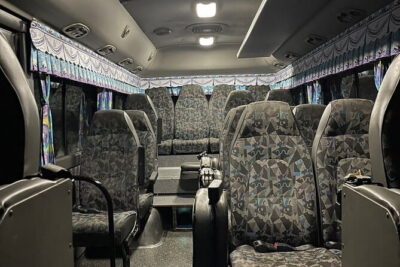
This is a private 3-day circuit with an English-speaking guide, plus an air-conditioned vehicle and the kind of small comfort touches that matter in the heat (cool waters and cool wet towels). If you want to move at your pace, ask questions, and get help choosing where to stand for photos, this format works well. Just know you’ll be on the move for long stretches between stops, especially with the early sunrise.
In This Review
- Key Things I’d Prioritize Before You Go
- How This 3-Day Angkor Route Works (Private pace, early starts, real variety)
- Day 1: Angkor Thom temples, terraces, and the face of Bayon
- Ta Prohm: jungle walls and tree-in-temple framing
- Ta Nei: classic Jayavaraman VII artistry in the green
- Ta Keo: a sandstone temple mountain dedicated to Shiva
- Victory Gate and the South Gate of Angkor Thom
- Bayon Temple: four-faced towers and a lot of symmetry
- Baphuon and the terrace wall carvings
- Preah Palilay: shaded forest and Buddhist-themed carvings
- Day 2: Angkor Wat sunrise at 4.30am, then Roluos group temples
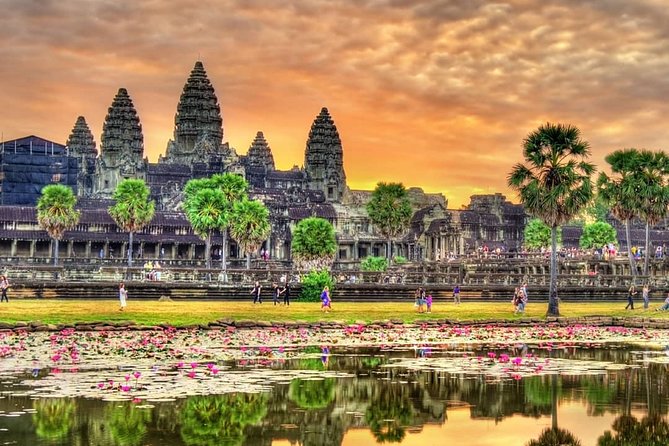
- Angkor Wat sunrise: light, scale, and a temple that feels different in morning
- Rolous group after sunrise: Bakong, Lolei, Preah Ko
- Day 3: Banteay Srei and Banteay Samre, then Kampong Phluk on Tonle Sap
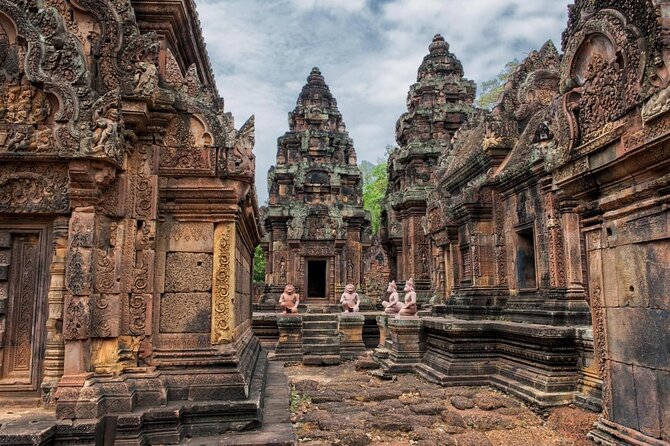
- Banteay Srei: pink sandstone temple detail
- Banteay Samre: Angkor Wat style in a lower, wider feel
- Kampong Phluk floating village: boat ride, fishermen routines, old market
- What’s Included (and what you’ll pay for anyway)
- Photo, Heat, and Dress-Code Rules That Actually Affect Your Day
- Dress code: shoulders covered, knees covered
- Use the comfort items
- Protect electronics from natural elements
- Photo strategy: follow your guide’s positioning
- Should You Book This Angkor and Floating Village Tour?
- FAQ
- What is included in the 3-day tour price?
- Are entrance passes to Angkor included?
- Is the sunrise at Angkor Wat included?
- Do I need a separate boat ticket for the floating village?
- Is lunch included during the tour?
- What should I wear for Baphuon and other strict dress-code temples?
Key Things I’d Prioritize Before You Go
- 4:30am Angkor Wat sunrise start so you catch the temple before it gets crowded
- A full loop through Angkor Thom with Bayon and multiple terrace carvings
- Jungle-temple photo chances at Ta Prohm and more shaded temple corners
- Day 3 includes Tonle Sap life via Kampong Phluk and a boat ride
- Air-conditioned transport plus cool towels to help you stay comfortable
- Budget time for the Angkor pass and boat ticket since they’re extra
How This 3-Day Angkor Route Works (Private pace, early starts, real variety)
This tour is designed less like a checklist and more like a route you can actually enjoy. Because it’s private, you’re not stuck waiting for a busload to finish photos or argue about where to eat. Your guide sets the rhythm, and you get to keep moving through temple areas that range from dramatic stone faces to quieter, half-hidden jungle settings.
The early start is the trade-off. You leave at 4.30am for Angkor Wat sunrise, which means you’ll feel jet-lag or early-morning tiredness if you don’t sleep well the night before. But that trade pays off: sunrise light makes stone carvings look sharper, and the temple feels more like a sacred morning space than a daylight attraction.
Then the tour keeps changing gears. Day 1 focuses on Angkor Thom and its gates, faces, and terraces. Day 2 returns to classic Angkor with the sunrise, then shifts to the Roluos group. Day 3 moves away from the temple complex and heads to Banteay Srei (pink sandstone, detailed carving) and finally Kampong Phluk on the lake.
You can also read our reviews of more tours and experiences in Siem Reap
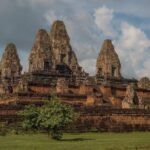
Day 1: Angkor Thom temples, terraces, and the face of Bayon
Day 1 is long on big visuals and short on wasted time. You start in the jungle-and-stone zone, then you work your way into Angkor Thom’s ceremonial heart.
Ta Prohm: jungle walls and tree-in-temple framing
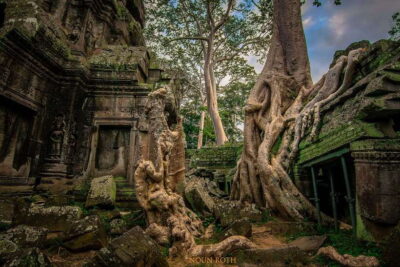
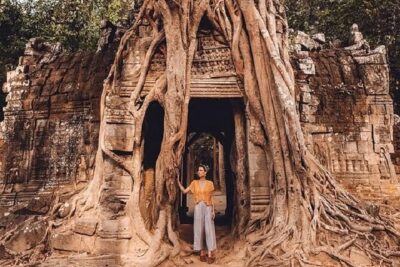
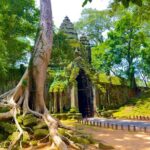
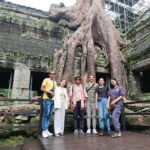
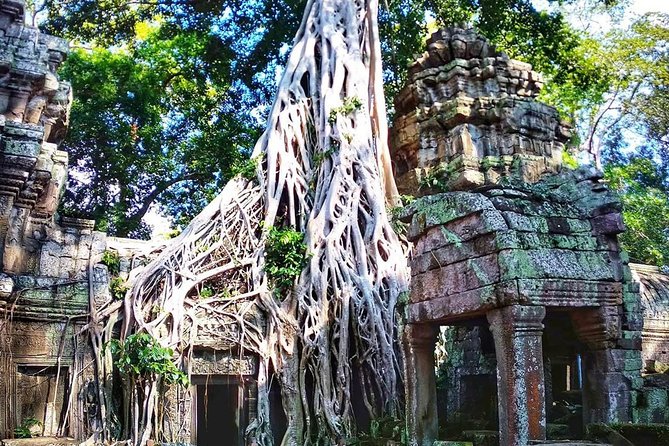
Ta Prohm is the kind of place where your camera almost runs ahead of you. Expect a quiet, sprawling monastic complex that’s partially cleared of jungle overgrowth, so the mix of roots, stone, and shade creates those classic temple-with-trees angles. It’s a strong opener because it doesn’t feel like another “walk straight to the most famous tower.” You can pause, look up, and frame shots in multiple directions.
One practical note: shaded areas feel cooler, but walking paths can still be dusty and uneven. Wear shoes you can trust.
Ta Nei: classic Jayavaraman VII artistry in the green
Next is Ta Nei, a jungle temple that feels reminiscent of Ta Som. The description here is all about craft and style—classic Jayavaraman VII artistry—so instead of only chasing dramatic photos, spend a few minutes looking closely at the stonework. This is also a good stop to reset your pace after Ta Prohm’s open sprawling layout.
Ta Keo: a sandstone temple mountain dedicated to Shiva
Ta Keo is a different mood: towering but more plainly decorated, and a key “how it’s made” moment. It’s described as the first temple-mountain constructed wholly of sandstone, dedicated to Shiva. Even if you’re not a carvings scholar, you’ll likely appreciate the clean structure and how the temple feels more geometric than the jungle scenes.
Climb expectations: this is a temple complex stop, so you’ll do walking and viewpoint searching, but you should still watch your footing in heat.
Victory Gate and the South Gate of Angkor Thom
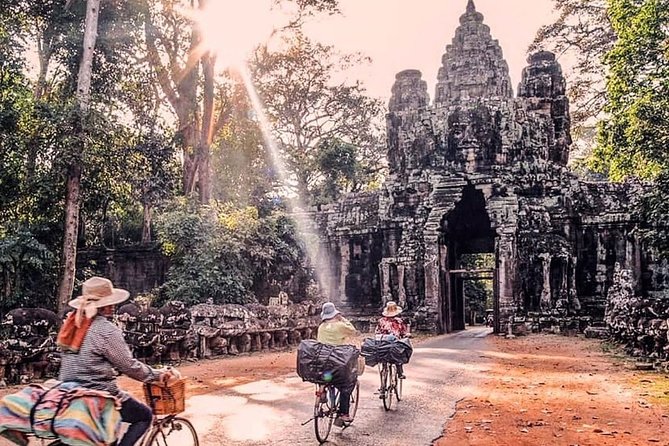
You then move to Angkor Thom’s perimeter drama: the Victory Gate of Bayon Temple and the Angkor Thom South Gate. The South Gate is especially photogenic because of the long causeway railings with 54 stone figures engaged in a Hindu story performance. This isn’t just decorative. It helps you understand Angkor Thom as a stage for religion, power, and ritual movement.
Bayon Temple: four-faced towers and a lot of symmetry
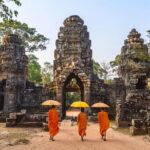
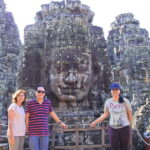
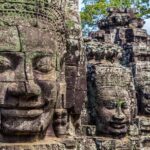
Bayon is the “face” moment most people come for. You’ll see the giant stone face imagery and the four-carved-face towers—described as 37 standing towers, most with four faces. The big lesson at Bayon is that it rewards walking. Step around, look up, and notice how angles change the feeling of the faces—serious, calm, watchful.
Baphuon and the terrace wall carvings
After Bayon, you head to Baphuon, described as a three-tiered temple mountain dedicated to Shiva and built as the state temple of Udayadityavarman II. Baphuon is one of the sites where you need to be careful with dress code (more on that later), and it’s also a place where you’ll want to pause so you can trace how the tiers create depth.
Then comes the two terrace walls—these are the “slow down and stare” stops:
- Terrace of the Elephants: a long carved wall described as about 300 meters, with elephant impressions and garudas.
- Terrace of the Leper King: a double terrace wall named for a status figure seated on top, with carved mythological beings including nagas and demons.
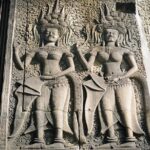
If you like details, these terraces are worth the extra minutes because the carving density is high and your eyes start connecting characters and themes.
Preah Palilay: shaded forest and Buddhist-themed carvings
You finish Day 1 at Preah Palilay, set in a cool, shaded forest setting. It includes a tower and a notable eastern gopura with Buddhist-themed carvings. This stop works as a reset button after the more intense Angkor Thom visuals: it feels calmer, and the forest setting makes it easier to slow down.
Day 2: Angkor Wat sunrise at 4.30am, then Roluos group temples
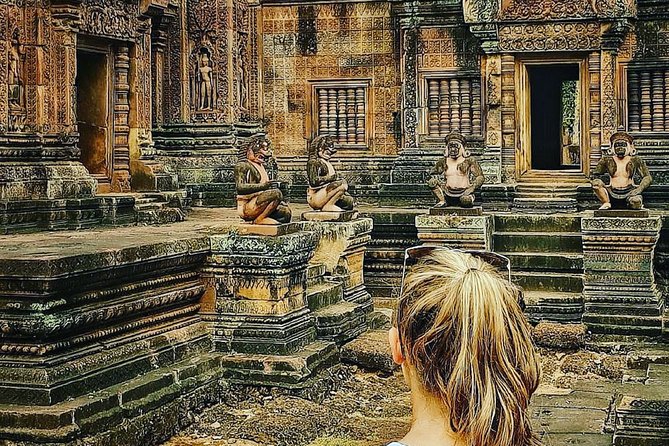
Day 2 is the classic two-part day: sunrise first, then temples that help you see Angkor as an evolving complex rather than a single photo spot.
Angkor Wat sunrise: light, scale, and a temple that feels different in morning
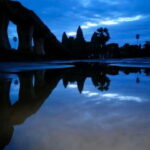
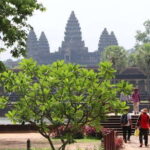
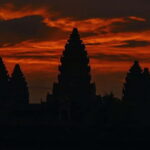
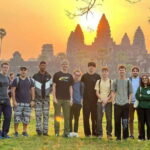
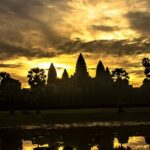
The tour starts early at 4.30am for the sunrise at Angkor Wat. Then you continue into the main temple circuit afterward, described as a magnificent 12th-century complex. If you’ve only seen Angkor Wat in midday photos, sunrise is a different experience. The light is softer, shadows are longer, and the temple seems more like a place of ceremony than sightseeing.
Practical tip: you’ll be standing for stretches. Bring a light layer if mornings are cool, and keep water access in mind since you’ll be moving for hours.
Rolous group after sunrise: Bakong, Lolei, Preah Ko
After Angkor Wat, the tour goes to the Rolous group area, including Bakong, Lolei, and Preah Ko.
- Bakong: described as part of the capital of Indravarman I from 877 to 889 AD. It’s an early-temple cluster that can feel more “temple city” than “one big monument.”
- Lolei: built in the 9th century, dedicated to Shiva.
- Preah Ko: dedicated to Shiva and named after the sacred bull Nandi. It’s described as built in 879 and noted as one of the oldest monuments in Angkor.
This sequence is valuable because it gives you a sense of progression. Instead of only “big name, big crowds,” you get to see older temple ideas, different layouts, and the way the Khmer builders experimented with temple form.
Day 3: Banteay Srei and Banteay Samre, then Kampong Phluk on Tonle Sap
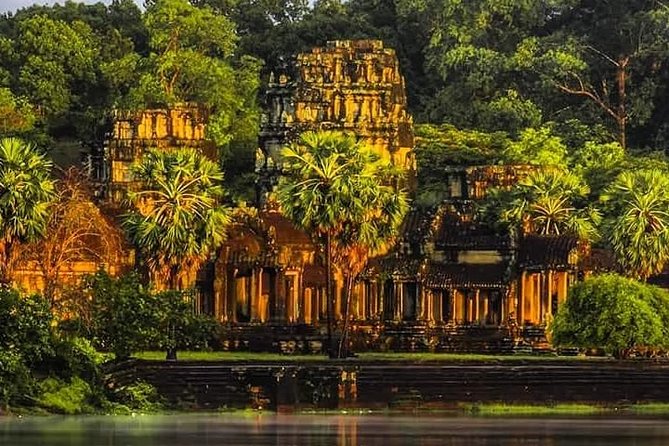
Day 3 is where the tour shifts from “stone city” to “Cambodia beyond the main circuit.” It’s a strong choice if you want Siem Reap beyond the standard temple lane.
Banteay Srei: pink sandstone temple detail
Banteay Srei is described as the famous pink temple of women, made of pink sandstone and known for its tribute connection. It’s located about 25 kilometers north of Angkor Wat and is one of those sites where the carving craftsmanship tends to grab you.
This stop is ideal if you like close-looking. Don’t treat it as a fast walk-through. Plan on slowing down, because the beauty here is in the fine details, not just the size.
Banteay Samre: Angkor Wat style in a lower, wider feel
Next is Banteay Samre, described as built in the distinctive Angkor Wat style. It’s relatively low-rise and large, built around the same time, with influence you can spot in the construction and art style. If you find Angkor Wat itself overwhelming, Banteay Samre can feel easier to absorb.
Kampong Phluk floating village: boat ride, fishermen routines, old market
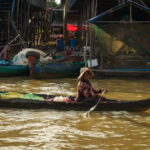
In the afternoon you head to Kampong Phluk, the floating village on Tonle Sap. The tour includes a scenic boat ride to see fisherman daily routine and visits the Old Market, noted as a place people go.
What makes this part worth your time is the change in perspective. On land, you’re surrounded by carved stone. On Tonle Sap, the focus is livelihoods and everyday rhythms—how people live with and around the water.
Respect note: keep your behavior low-key and be mindful about taking photos. You’re seeing real life, not a staged set.
What’s Included (and what you’ll pay for anyway)
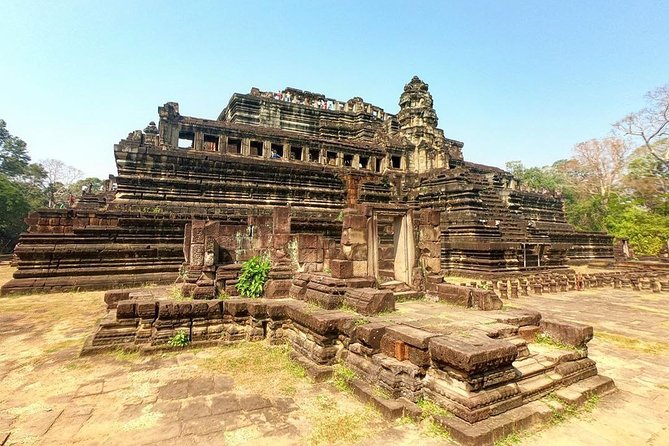
This tour lists a price of $245.00 per person for 3 days. For that, you get a professional English-speaking guide, air-conditioned transportation with a driver, and comfort items like cool waters and cool wet towels. That’s a real value in Siem Reap because temple days can be brutal without shade, water, and dependable transport.
But the extras matter. The Angkor Archaeological Site entrance pass isn’t included. You buy it at the main gate, and it’s available as one day up to seven day entry passes, charged in US Dollars. The pass gives access to Angkor and sights around it, and it should be shown when needed. Children under 12 are free.
Also not included:
- the boat ticket for the floating village
- lunch (it’s excluded on the tour day), and you’ll pay for your own meals and drinks
- personal expenses and tips/gratuities
- travel insurance (highly recommended)
- any single supplement charges, where applicable
How I’d budget mentally: treat the listed price as the “guide + transport + major stops” foundation, then add the Angkor pass and boat ticket. If you’re traveling with a friend and can share the group rate logic, you’ll likely feel the value more than if you’re solo.
Photo, Heat, and Dress-Code Rules That Actually Affect Your Day
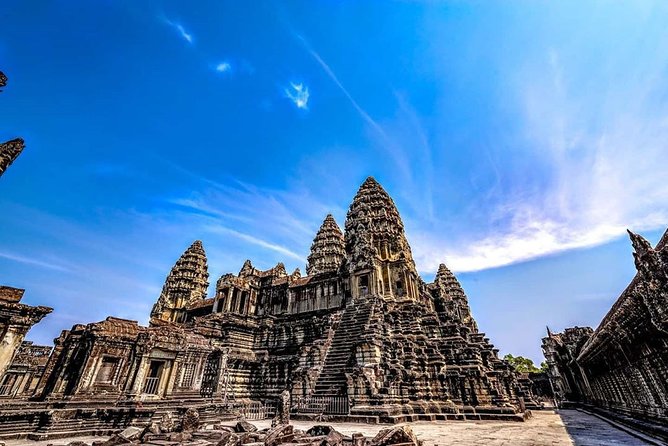
Angkor is sweaty, bright, and strict about clothing at certain spots. You can have the best guide in the world, but you still need to show up ready.
Dress code: shoulders covered, knees covered
Some sites uphold strict dress code. The guidance specifically calls out Baphuon and says you need clothes that cover shoulders and fall below the knees. Shirts with obscene or disrespectful prints and brightly-coloured clothing can lead to refused entrance, so keep your outfits plain and practical.
Bring a light layer that covers your body without overheating—something breathable helps.
Use the comfort items
You’ll have cool waters and cool wet towels during the day. Use them. Don’t wait until you feel bad—small cooling breaks help you keep your energy for the terrace and gate carvings.
Protect electronics from natural elements
The tour info also warns that natural elements can damage electronics. If you’re using a phone or camera, wrap it and protect it from moisture and dust. This isn’t paranoia; it’s a practical reality in humid temple areas and around water.
Photo strategy: follow your guide’s positioning
Your guide’s job isn’t only explaining. It’s helping you stand in the right place. One standout from the guidance experience is that the guide (English-speaking; for example, Mr Lion is specifically noted) helps with photo spots and even steers you toward local cuisine stops that fit the day’s timing. That combination makes the day feel less like commuting between ruins and more like a guided experience.
Should You Book This Angkor and Floating Village Tour?
If you want major Angkor highlights plus a day trip feel that goes beyond the standard temple lane, this one is a solid match. The biggest strength is the mix: sunrise Angkor Wat, a full Angkor Thom day with terraces and Bayon faces, then Banteay Srei and a real-life Tonle Sap floating village.
Book it if:
- you can handle a 4.30am start and you want sunrise light
- you care about photo timing and clear guidance on where to stand
- you want one day that leaves the temple complex and shows Khmer life on water
Consider skipping or swapping if:
- you’d rather do only the most famous Angkor sites and avoid extra early mornings
- you don’t want to manage extra costs for the Angkor pass and floating village boat ticket
- you prefer fully included meals (here, lunch is on your own)
If the weather is poor, the tour may be canceled due to needing good conditions, with options to change dates or receive a full refund. In other words: watch the forecast, and keep your plans flexible.
FAQ
What is included in the 3-day tour price?
The price includes a three-day tour with a professional English-speaking guide, air-conditioned vehicle transportation with a professional driver, cool waters and cool wet towels, and applicable taxes and service charges.
Are entrance passes to Angkor included?
No. The Angkor Archaeological site entrance pass is not included. You are responsible to purchase it at the main gate, with passes available from one day up to seven day entry passes.
Is the sunrise at Angkor Wat included?
Yes. The tour includes an early morning start at 4.30am for sunrise at Angkor Wat, followed by the temple visit.
Do I need a separate boat ticket for the floating village?
Yes. The boat ticket for the floating village is not included, so you’ll need to pay for it separately.
Is lunch included during the tour?
No. Lunch is excluded, so you’ll need to pay for your own meals and drinks.
What should I wear for Baphuon and other strict dress-code temples?
You’ll need clothing that covers shoulders and falls below the knees. Brightly-coloured clothing and shirts with obscene or disrespectful prints may lead to refused entrance.
If you want, tell me how many people are in your group and your travel month in Siem Reap, and I’ll suggest a simple day-by-day budgeting plan for the Angkor pass, boat ticket, and meal timing.