Three temples, one iconic day in Siem Reap. You’ll see Angkor Wat plus the face-filled Bayon and the root-choked Ta Prohm, then roll through major sights in Angkor Thom with a guide who explains what you’re actually looking at.
I especially like that the time is used well: you get a mix of outside views and inside access at multiple temples, not just a quick pass for photos. And this tour really shines when the guide turns the stones into a story, like Dan did for one group—good storytelling, plus clear knowledge of Cambodian history, religion, and the political forces behind the temples.
One thing to plan for: the temple fee ($37 per person) is not included, and you’ll be in the temples for about 5 to 7 hours with walking and a dress code (knees and shoulders covered).
In This Review
- Key things I’d bet on before you book
- A small-circuit temple day that doesn’t feel like a checklist
- Price and value: what you’re really paying for
- Getting picked up comfortably (and why that first hour sets the tone)
- Entering Angkor Wat with 1113–1150 in mind
- Tonle Oum to Bayon: the city gates and the face-on-face experience
- Ta Prohm: the tree temple that still feels like a movie set
- The optional energy-based stop inside the ancient city vibe
- Working with Dan: why the guide can make or break Angkor
- What to wear, bring, and plan for so the day stays fun
- Who this tour fits best (and who should think twice)
- Should you book this Angkor Wat, Bayon, and Ta Prohm day?
- FAQ
- What’s included in the $45 per person price?
- Are temple admission fees included?
- How long does the tour take?
- What should I wear when visiting the temples?
- Does the tour offer pickup from my hotel?
- Can I cancel and get a refund?
Key things I’d bet on before you book
- Inside-and-outside temple time so you can actually read the places, not just stare at them
- Dan-style guiding that connects carvings to Cambodian history and religion
- Angkor Wat’s scale in 3 hours with a guided route through the main features
- Angkor Thom layout at Tonle Oum (South Gate) with key stops like Baphuon and the Elephant Terrace area
- Ta Prohm’s tree temple vibe that still feels otherworldly even on a normal day
A small-circuit temple day that doesn’t feel like a checklist
This is the kind of Angkor day you’ll enjoy most if you like context. The big draw is that it follows the classic trio—Angkor Wat, Bayon, and Ta Prohm—but it also folds in the heart of Angkor Thom so you’re not stuck doing three “stand and snap” moments.
You move through multiple sites with a local English-speaking guide, and that matters. Angkor can look overwhelming at first—lots of stone, lots of faces, lots of time periods. With guidance, you start noticing patterns: how the architecture is laid out, what the carvings are trying to say, and why these temples were built the way they were.
The pacing is built for a normal day, about 5 to 7 hours. Angkor isn’t about racing; it’s about seeing enough that it clicks. This tour aims at that sweet spot: you get meaningful time at the heavy hitters and still have room for the extra Angkor Thom sights.
You can also read our reviews of more walking tours in Siem Reap

Price and value: what you’re really paying for
The base price is $45 per person, and you’re typically booking around 10 days ahead. That’s the part you pay for the experience itself—the driver, the air-conditioned car, and the guide time.
Then there’s the one add-on you should budget early: the temple fee is $37 per person, and it’s not included in the price. So your real temple-day math is roughly $82 before tipping.
Is that good value? For many people, yes, because you’re getting:
- Hotel pickup and drop-off
- An air-conditioned car
- Drinking water and cold towels
- A local English-speaking guide
- Multiple major sites rather than just one temple
If you tried to do this on your own, you’d still pay for entry tickets—and you’d spend time figuring out routes, timing, and who can explain what you’re seeing. Paying a fixed amount for guided structure is often the cheaper option in the long run, even when the temple fees add up.
Getting picked up comfortably (and why that first hour sets the tone)
You start with hotel pickup and drop-off, which is a big deal in Siem Reap. Angkor days are easier when you’re not juggling tuk-tuk negotiations or timing yourself between gates.
You’ll be riding in an air-conditioned car, and you’ll get drinking water and cold towels. That’s not glamorous, but it helps you stay human when the sun and heat hit. You also have a mobile ticket option, plus group discounts depending on your booking—so the experience side is meant to run smoothly.
Practical tip: follow the dress rule before you go. You must cover your knees and shoulders when entering temples. That means planning outfits that work for a day with stone floors, short stairs, and changing weather.
And bring the basics: comfortable walking shoes matter here more than you think. The itinerary moves through several temple zones, and your feet will feel it by the end.
Entering Angkor Wat with 1113–1150 in mind
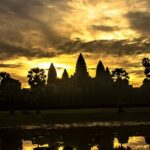
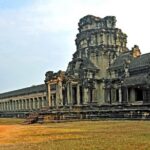
Angkor Wat is huge, and the tour treats it like the main event. You spend about 3 hours, with guided time to see Angkor Wat from the outside and then inside.
Here’s what makes Angkor Wat more than a famous silhouette: it was built between 1113 and 1150 AD by King Suryavarman II, and the temple complex measures about 330 meters by 260 meters. It has three levels and five main towers. You’ll hear these facts and, more importantly, you’ll see what they mean while walking through the space.
What you should look for during the guided route:
- How the layout guides your movement through levels
- Why the temple’s symmetry matters
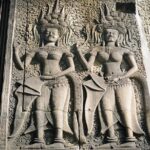
- How the carvings connect to the religious and political worldview of its builders
Angkor Wat is also a national symbol, even showing up on Cambodia’s flag as a symbol of the soul of the country. When your guide points that out, it reframes the visit: this isn’t just a postcard. It’s a living emblem of identity.
One note: the temple fee is not included, so have that budget ready. Also, inside time can include areas that feel warmer or darker depending on the corridor and shade, so a light layer can help even if you’re sweating outside.
Tonle Oum to Bayon: the city gates and the face-on-face experience
After Angkor Wat, you shift to Angkor Thom, starting at the South Gate. The South Gate is named Tonle Oum, and this part of the day gives you a useful big-picture map.
Angkor Thom’s layout is built around five gates, and your guide explains them: South Gate, Ghost Gate (Gate of the Dead), Victory Gate, Dei Chhnang Gate (North Gate), and the Killing Gate. The city is described as about 3 kilometers each side, which is a helpful scale reminder when you’re walking and turning corners.
Then you move deeper into the city zone with stops you’ll recognize from most Angkor routes:
- Baphuon Temple
- Elephant Terrace
- Terrace of the Leper King
- Royal Palace
- and then Bayon Temple as the face landmark
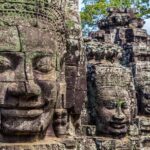
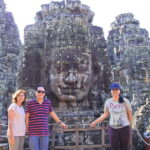
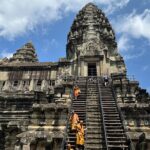
Bayon is famous for its faces, and you’ll get about 1 hour there. You see Bayon from the outside and inside, with a guide explaining what those faces represent and why they show up the way they do on the towers.
The drawback here is simple: Bayon is visually intense. If you’ve never seen Angkor up close, it can feel like information overload—faces everywhere, stone details everywhere, your brain trying to remember which direction you came from. The fix is to slow down in the inside areas where your guide can walk you through what to notice.
You can also read our reviews of more city tours in Siem Reap





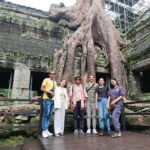
Ta Prohm: the tree temple that still feels like a movie set
Ta Prohm is one of those temples where the setting does part of the storytelling. It’s known as a tree temple, and it’s sometimes called the Tomb Rider temple because of its pop-culture fame.
In this tour, Ta Prohm gets about 1 hour, again with outside views and inside access guided by your local expert.
What makes Ta Prohm special (even if you’ve seen photos before) is the way the temple and the roots seem to share the space. It’s not just “cool ruins.” It has an atmosphere that makes you pay attention to texture, light, and stone paths that don’t look straight.
A practical expectation: Ta Prohm has uneven ground and lots of surfaces. Comfortable shoes help you move without rushing. And since you’re covering multiple temples today, this stop is where fatigue can creep in—so take the time to sit or pause if the roots and doorways start to blur together.
The optional energy-based stop inside the ancient city vibe
One detail that makes this tour feel more flexible is that it includes extra time for additional sights if you have energy. The description mentions another small temple, and it also references a short walk around an ancient city area.
What that means for you in the real world: the core experience stays the same (Angkor Wat, Bayon, Ta Prohm), but you might get a little more texture from the surrounding Angkor Thom zone depending on your group pace and timing.
If you’re the type who likes “one more thing” without needing a full extra half-day, this is a nice bonus. If you’re feeling tired, you can keep your energy for the main temples, since the tour’s main value is still the guided attention at the big three.
Working with Dan: why the guide can make or break Angkor
One of the most praised parts of this experience is the guide. In a strong example, the guide Dan was described as terrific: a storyteller with a wide understanding of Cambodian history and the religions that shaped the buildings and carvings.
That kind of guiding changes what you see at every stop. Instead of asking yourself, What am I looking at? you start asking better questions:
- Which parts are tied to royal ambition and which parts are tied to belief?
- How do the carvings connect to the world view of the era?
- Why do certain temples feel like they’re designed for order and others feel more tangled or human?
If you want the most value, do a simple thing before you walk into a temple: ask your guide what one or two features you should focus on. Then you’ll get a sharper visit without needing to memorize everything.
Also, since tipping for the guide and driver is recommended (it’s not included), plan a few extra dollars in cash for the day.
What to wear, bring, and plan for so the day stays fun
You’re outdoors a lot, then inside a lot. So dress and footwear are your first line of comfort.
You should plan on:
- Knees and shoulders covered for entry
- Comfortable walking shoes
- Not bringing valuables (just keep things simple)
- Using the water and cold towels provided by the tour rather than stretching yourself too thin
If you forget the dress rule, you may have to deal with coverage at the door. Better to plan ahead.
And in terms of your day: it’s about 5 to 7 hours. That’s long enough that you’ll want a normal meal beforehand and some rest after. Angkor days don’t pair well with a packed schedule later.
Who this tour fits best (and who should think twice)
This works well if you:
- Want the classic trio—Angkor Wat, Bayon, Ta Prohm—with real guidance
- Like learning while you walk, especially when the guide connects temple design to belief and history
- Prefer hotel pickup and not coordinating transport between sites yourself
- Want a structured day that still leaves room for a possible small added stop
You might think twice if:
- You dislike walking for several hours on uneven temple terrain
- You only want one temple and hate paying for additional entry time and temple-fee add-ons
- You’re very sensitive to heat and sun, since you’ll be moving between sites through daylight (even with AC transport between zones)
Should you book this Angkor Wat, Bayon, and Ta Prohm day?
If your goal is to see Angkor’s biggest names and understand what you’re looking at, I think this is a smart booking. The price is reasonable for guided, multi-site structure, and the guide quality is clearly a standout—especially when someone like Dan brings the stories of Cambodian religion and politics into the carvings and architecture.
Just go into it with clear expectations:
- Budget for the $37 temple fee per person.
- Dress for coverage, bring good shoes, and keep valuables out of the way.
- Give the guide room to explain, and you’ll walk away with more than photos.
If you want, tell me your travel dates and how many people are in your group, and I’ll help you sanity-check whether the temple fee + guide day length makes sense for your schedule.
FAQ
What’s included in the $45 per person price?
The tour includes hotel pickup and drop-off, an air-conditioned car, drinking water and cold towels, and a local English-speaking tour guide.
Are temple admission fees included?
No. The temple fee is $37 per person and is not included in the tour price.
How long does the tour take?
The duration is approximately 5 to 7 hours.
What should I wear when visiting the temples?
You must cover your knees and shoulders when entering temples.
Does the tour offer pickup from my hotel?
Yes. Hotel pickup and drop-off are included.
Can I cancel and get a refund?
Yes, you can cancel for free. You can cancel up to 24 hours in advance for a full refund.