REVIEW · SIEM REAP
Private Angkor Wat Temple Tour
Book on GetYourGuide →Operated by Travel to Inspire · Bookable on GetYourGuide
Angkor hits you fast, even on day one. This private Angkor Wat Temple Tour turns a long, hot temple day into something you can manage, with a licensed guide explaining what you’re seeing and when to look closer.
What I like most is the way the day flows from Angkor Wat to Angkor Thom without feeling chaotic, and how the guide gives you actual context instead of just pointing. One key consideration: temple tickets/passes are not included, so you need to plan for them before you enter.
In This Review
- Key Points You’ll Actually Care About
- Private Comfort in Siem Reap: How This 7-Hour Day Works
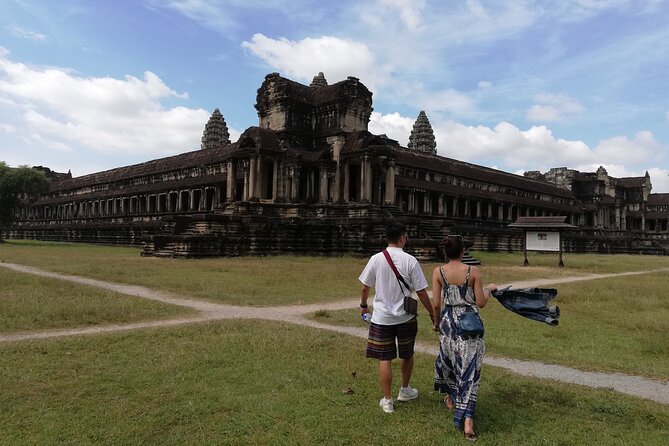
- Angkor Wat for Real: Five Towers, Three Levels, and the Cambodia Flag
- Angkor Thom’s South Gate and Bayon Faces: The Khmer City in One Block
- Beyond Bayon: Baphuon, Elephant Terrace, Leper King Terrace, and the Royal Palace
- Ta Prohm: The Jungle Temple and the Spung Roots
- Price and Value: What $35 Includes (and What You Must Handle)
- The Guide and Driver Touch: Why Names Like Chuop, Tom, Trophy, and Teat Come Up
- How to Pack for Angkor Heat and Temple Dress Rules
- Who Should Book This Private Angkor Wat Tour (and Who Should Skip It)
- Should You Book This Private Angkor Wat Temple Tour?
Key Points You’ll Actually Care About
- Hotel pickup and drop-off in Siem Reap Town keeps the day simple
- Licensed English-speaking guide (with options in French, German, Spanish) adds meaning to the stone
- Angkor Wat gets a real 3-hour block so you can see the layers and towers without rushing
- Angkor Thom covers more than just Bayon, including key terraces and the royal zone
- Cooler comfort moments like iced water and cold face towels help on hot mornings
- Ta Prohm time is built in so you can catch the tree roots and photo angles at a calmer pace
Private Comfort in Siem Reap: How This 7-Hour Day Works
This is a 7-hour private or small-group tour built for people who want order. You start with pickup from hotels in Siem Reap Town, and you’ll show your voucher when the guide collects you. You should wait in the lobby about 10 minutes before pickup, and it’s worth being ready—drivers won’t wait more than 5 minutes after the scheduled time.
The rhythm is practical: short van hops between temple zones, then a guided walk where you’ll actually have time to pause for photos, ask questions, and soak in the details. The tour includes drinking water, and guides and drivers are praised for staying calm and helpful during the breaks between stops.
You can also read our reviews of more private tours in Siem Reap


Angkor Wat for Real: Five Towers, Three Levels, and the Cambodia Flag
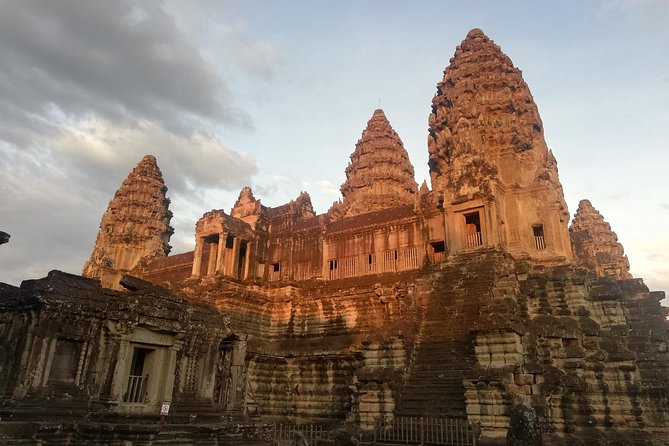
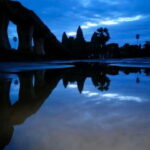
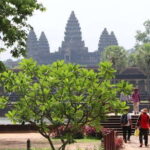
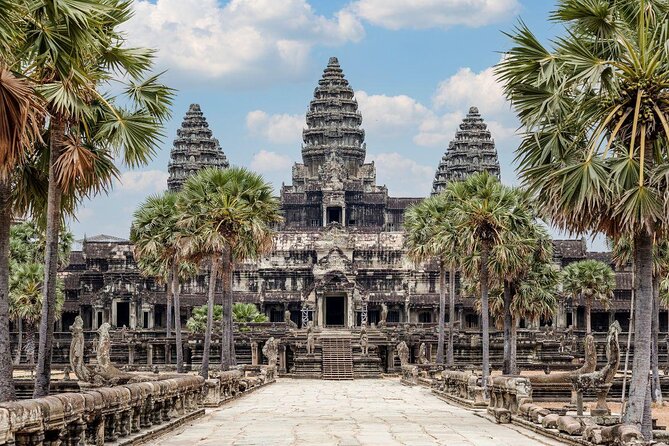
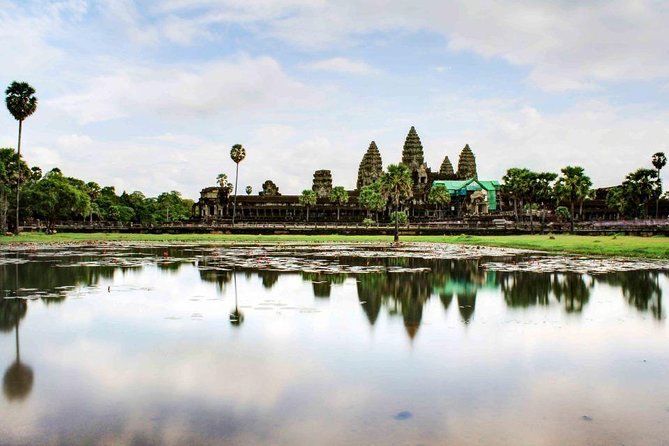
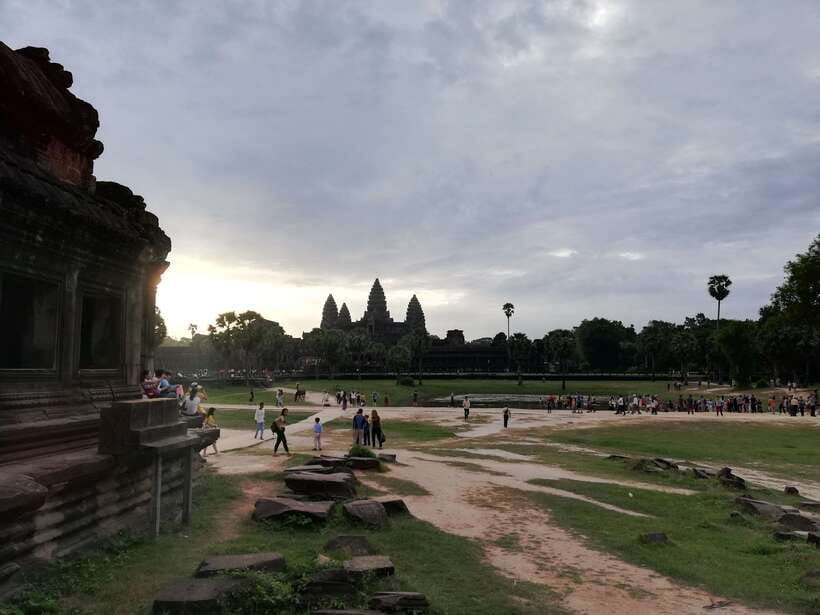
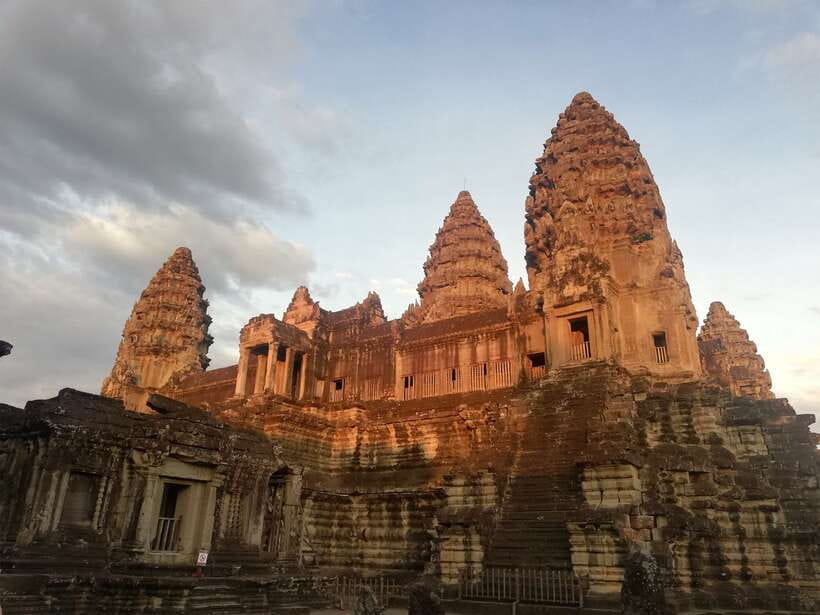
Angkor Wat is the headline, and the tour gives it the time it deserves—about 3 hours of guided touring plus a break and photo time. This is the big one: built in the early 12th century under King Suryavarman II, designed in three levels, and defined by five main towers that rise to about 65 meters.
Here’s what makes Angkor Wat more than impressive stone. It’s also a national symbol. It represents the soul of Cambodia and even appears on the country’s flag. That means when you stand there, you’re not just looking at ruins—you’re looking at something the modern country treats as part of its identity.
What I’d do during your Angkor Wat time:
- Use the guided moments to orient yourself on the levels and why the layout matters.
- Take a few slow photo pauses rather than trying to capture everything at speed.
- Plan for heat. Even with breaks, Angkor can run brutal—one guide outing was described in 38°C weather, so long sleeves and shade become real needs, not suggestions.
Angkor Thom’s South Gate and Bayon Faces: The Khmer City in One Block
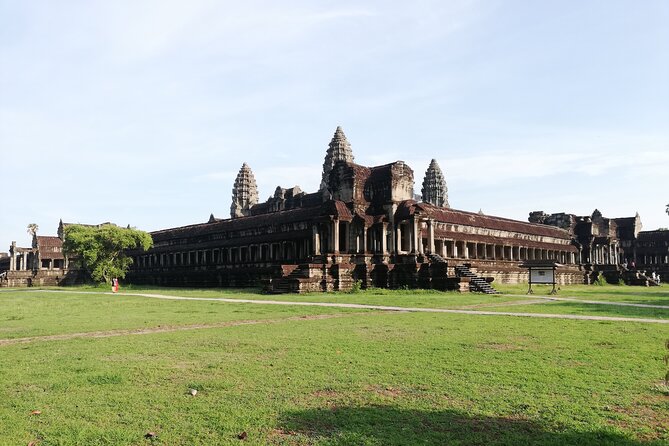
After Angkor Wat, the tour transitions into Angkor Thom, the ancient capital of the Khmer Empire. This part of the day runs about 1 hour at Bayon Temple, but it’s not “only Bayon.” The stop sequence includes the key landmarks that help you read the city.
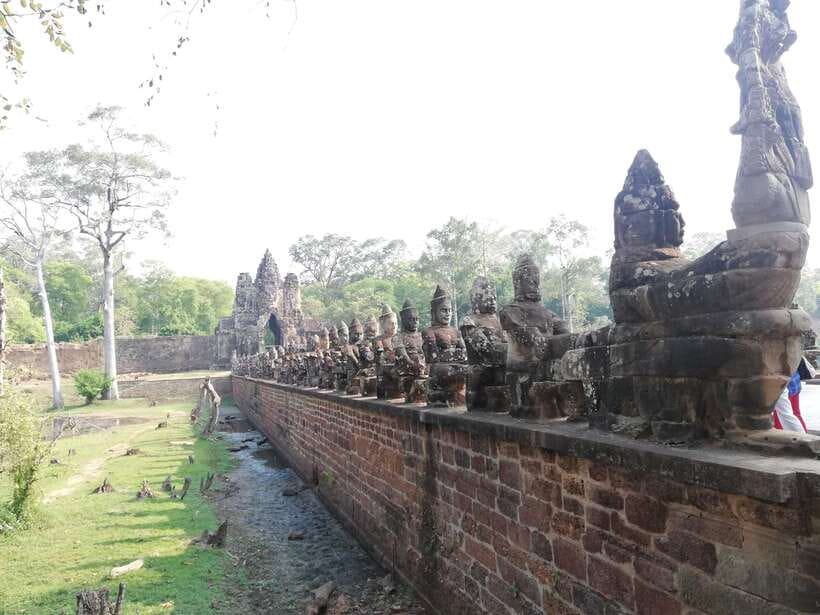
The first big moment in Angkor Thom is the South Gate. This gate is marked by a statue featuring 54 figures on each side—a detail your guide can point out so it doesn’t become just another decorative wall.
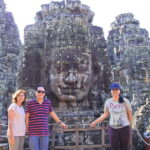
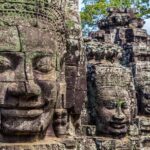
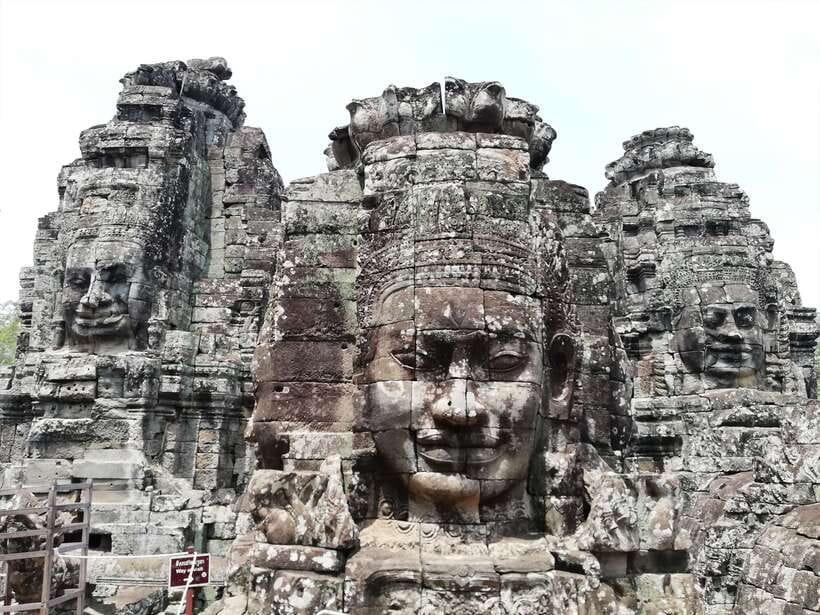
Then comes Bayon Temple, famous for its smiling faces. In practice, Bayon can feel like a maze—many angles, lots of faces staring from different directions. That’s where the guide earns their keep: you get help understanding what you’re seeing and which viewpoints are worth prioritizing.
Practical note: Bayon time is shorter than Angkor Wat, so keep your expectations realistic. You’ll see plenty, but this is not a “linger for hours” stop.
Beyond Bayon: Baphuon, Elephant Terrace, Leper King Terrace, and the Royal Palace
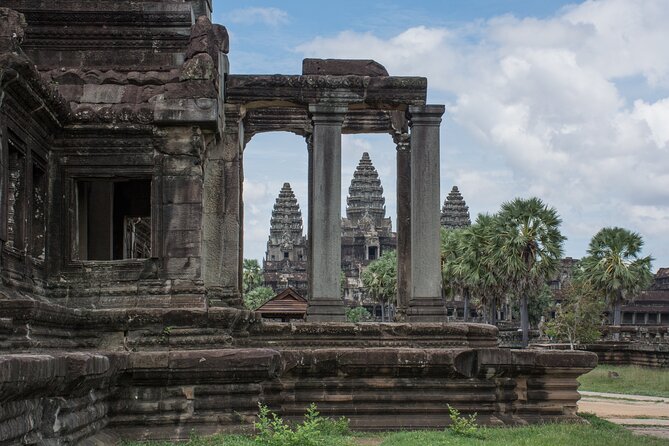
Even if Bayon grabs your attention first, you’ll also move through other famous Angkor Thom sites during this portion of the tour, including:
- Baphuon Temple
- Elephant Terrace
- Terrace of the Leper King
- Royal Palace
This mix matters because Angkor Thom wasn’t just one temple—it was a functioning ceremonial city layout. Seeing these spots in a single day helps you connect the dots: how terraces frame processions, how royal areas differ in feel, and how the complex tells its story through space.
One small drawback to plan for: your feet will work. You’ll do walking at each site, so wear comfortable shoes and don’t plan on “temple day sneakers” you haven’t tested first.
Ta Prohm: The Jungle Temple and the Spung Roots
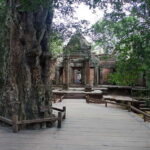
The final major temple stop is Ta Prohm Temple, known as the Tomb Raider Temple. It’s a different kind of experience from Angkor Wat and Bayon. Here, you’re dealing with ruins that feel actively “taken over” by nature.
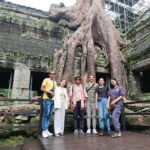
The tour includes about 1 hour of guided time plus free time for photos and your own wandering. You’ll see the signature tree roots people talk about as spung—those thick roots that wrap around stones and create dramatic angles from almost every direction.
My advice for Ta Prohm photo time:
- Don’t try to chase every perfect shot. Pick one or two viewpoints and use the rest of the hour to move slowly.
- Use your guide’s explanations early, then let the jungle vibe take over for the rest.
Ta Prohm is the stop that usually makes people feel like they’ve stepped into a living set rather than a museum. It’s also the one where you’ll notice how hot and shaded spots alternate—shade can help, but it can also hide details. Ask your guide where the best angles are, then explore.


Price and Value: What $35 Includes (and What You Must Handle)
The tour price is $35 per person for a 7-hour experience in Siem Reap Province, and the included items are the real value drivers:
- Hotel pickup and drop-off (from Siem Reap Town hotels)
- Licensed English speaking tour guide (plus French, German, Spanish options)
- Drinking water
- Transport by van between temple sites
What’s not included is just as important: temple tickets/passes and meals. The pass requirement is clear: you need your temple pass before you enter the temples, and you can buy it online through Angkor Enterprise dot gov dot kh.
So the right way to think about the $35 is this: you’re paying for logistics, guidance, and time management inside a complex day. You’re also paying to avoid the stress of figuring out entry and transport yourself. If you’re traveling with family or friends, a private or small-group setup can feel especially fair because you’re not sacrificing comfort for speed.
The Guide and Driver Touch: Why Names Like Chuop, Tom, Trophy, and Teat Come Up
A tour like this lives or dies on the guide. This one is repeatedly praised for depth without turning into a lecture.
In particular, names like Chuop/Choup, Tom, Thom, Trophy, and drivers like Teat are tied to smooth, friendly service. The recurring theme is practical storytelling: why temples were built, how Khmer rulers thought about power and sacred space, and how the mythology and symbolism connect across multiple sites.
Another detail that matters in real life: comfort during breaks. A couple of guide-driver setups are described as bringing iced water and cold face towels when you return to the van after temple visits. That’s not a luxury detail—it can genuinely help you keep going instead of fading out from heat.
And if you like snapping photos, it helps that some guides are described as comfortable with phone cameras and are willing to take extra pictures for you.
How to Pack for Angkor Heat and Temple Dress Rules
Angkor days can be tough, even when the tour is well run. The packing list is specific for a reason.
Bring:
- Comfortable shoes
- Hat
- Water (you’ll have some included, but carrying your own is smart)
- Comfortable clothes
- Long-sleeved shirt and long pants
- Cash
- Charged smartphone
Not allowed:
- Shorts and short skirts
- Sleeveless shirts
- Drones
- Alcohol and drugs
- Chewing gum
- Firework and making fire
This dress guidance isn’t just about rules. It’s about staying comfortable for the walking and sun. If you show up in the wrong clothes, you may lose time fixing it—or you may feel miserable as soon as you step out into bright weather.
Who Should Book This Private Angkor Wat Tour (and Who Should Skip It)
This tour is best for:
- People who want private or small-group comfort
- Anyone who prefers a licensed guide to help you understand what you’re seeing at each temple
- Travelers who want a focused highlights route: Angkor Wat, Angkor Thom sites, then Ta Prohm
It’s not a good fit for:
- Wheelchair users
- Pregnant women
- People with recent surgeries
If that’s you, you’ll want a different plan that matches your mobility and comfort needs.
Should You Book This Private Angkor Wat Temple Tour?
If your priority is a smooth, guided day across the most important Angkor stops—without spending your energy on logistics—this is an easy yes. The combination of real time at Angkor Wat, targeted coverage of Angkor Thom, and a proper Ta Prohm finale makes the 7 hours feel intentional rather than rushed.
Just be honest about the one main hurdle: you have to take care of the temple pass/tickets yourself before entry. If you do that and dress for heat and long walks, this tour is strong value for the money—especially because the guide and driver support is repeatedly tied to comfort, explanations, and helpful pacing.