REVIEW · SIEM REAP
Private Angkor Wat Exploring Tour (Sunset or Sunrise)
Book on Viator →Operated by Angkor Guide Sarak · Bookable on Viator
Sunrise at Angkor feels unreal. This private day gives you early light at Angkor Wat plus time at Ta Prohm and Bayon with a guide who knows how to time photos and explain what you’re seeing. The one catch: the big Angkor ticket is extra (and the walk/climb is real).
You’ll be picked up in an air-conditioned vehicle, then spend about 8–9 hours moving through Cambodia’s most famous stone sights without the chaos of a large group. You start at a convenient meeting point near a 7-Eleven, and you’re back there at the end—simple. If you want a well-paced temples day (not a sprint), this is a strong choice.
In This Review
- Key Points You’ll Care About
- Why Sunrise or Sunset Makes Angkor Wat Feel Personal
- How a Private Day With Sarak Works (So You Don’t Waste Time)
- Stop 1: Angkor Wat Galleries and the Climb to the Central Towers
- Stop 2: Ta Prohm’s Tree Roots and Shaded Passages
- Stop 3: Entering Angkor Thom Through the South Gate to Bayon
- Getting There Comfortably: Pickup, A/C, and What to Bring
- Tickets, Timing, and the Real Cost Breakdown
- Who Should Book This Private Angkor Wat Sunrise/Sunset Tour
- Should You Book This Tour?
- FAQ
- Is the Angkor ticket included in the price?
- How long is the tour?
- What stops are included in the day?
- Is this tour private?
- Do I need to be able to walk and climb?
- Does the tour include pickup?
- What does the tour include?
- Where is the meeting point?
- What is the cancellation policy?
Key Points You’ll Care About
Private experience with only your group**, so your pace and photo stops are easier.
Licensed English guide led by Sarak, often with a focus on practical explanations and good photo viewpoints.
Three major stops in one day: Angkor Wat → Ta Prohm → Bayon in Angkor Thom.
Air-conditioned transport and drinking water, useful when you’re walking in heat and humidity.
Moderate physical demands: galleries, a climb at Angkor Wat, and narrow passages at Ta Prohm.
Why Sunrise or Sunset Makes Angkor Wat Feel Personal
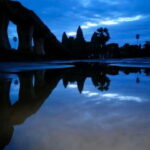
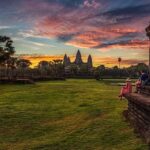
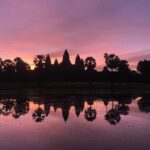
Timing changes everything at Angkor. When you arrive early for sunrise or late for sunset, the temple doesn’t look like a postcard—it looks like a place people built, prayed in, and guarded.
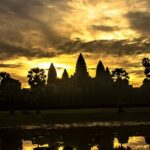
At sunrise, the stone takes on soft color and you’ll often find more breathing room for photos and for just standing still. At sunset, the shadows stretch across courtyards and carvings, and the mood shifts from grand to ghostly—in a good way.
This tour format helps because you’re not starting after the morning rush. Instead, you’re moving through Angkor Wat’s galleries and central towers at a time when light and crowds are both more manageable. You still need to be ready for a long day, but it feels more like a guided visit and less like stampede tourism.
You can also read our reviews of more private tours in Siem Reap


How a Private Day With Sarak Works (So You Don’t Waste Time)
This is a private tour, meaning you’re not sharing attention with strangers. That matters at Angkor, where the “best spot” changes with the sun and the angle of your group.
Sarak is the named guide for this experience, and the vibe is practical: he’ll point out what you’re looking at, help you understand the big themes behind the carvings and layout, and suggest good spots for photos. When tours work well here, it’s because you’re guided to the right viewpoints at the right time—otherwise you’re just wandering around impressive rocks.
You’ll ride in an air-conditioned vehicle (a real upgrade in Siem Reap’s heat), and you get drinking water. The temples are the main show, but comfort on the transfer is part of the value.
The day runs about 8–9 hours, so plan your energy like it’s a full outing, not a quick hit.
Stop 1: Angkor Wat Galleries and the Climb to the Central Towers
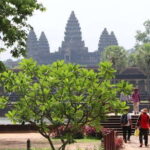
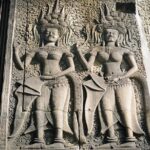
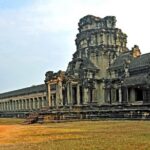
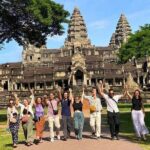
Angkor Wat is the headline for a reason. Even if you’ve seen photos, being inside the long corridors and looking closely at carved details hits differently. You start with the grand setting first—walk through the long galleries, admire the carvings, and then go up toward the central towers.
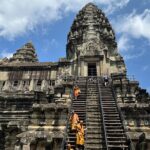
That climb is one of the most important parts of the day. From higher ground, you get a better sense of symmetry and layout, and the temple stops looking random. It also gives you a moment to slow down and take in the scale, because from the top the complex feels designed rather than merely built.
Practical note: wear shoes you trust. There are steps, uneven stone, and places where you’ll want solid footing. If you have moderate physical fitness, you’ll likely be fine—but treat it as real walking and climbing, not a gentle stroll.
Admission to Angkor Wat is not included in the tour price. You’ll need a 1-day Angkor ticket purchased separately (listed at $37 per person). That extra step is the biggest “gotcha” with this type of tour, so budget for it upfront.
Stop 2: Ta Prohm’s Tree Roots and Shaded Passages
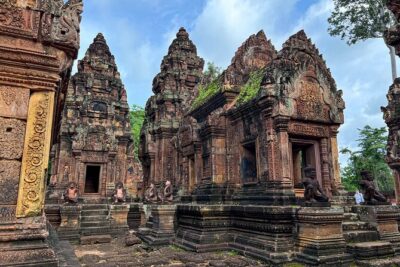
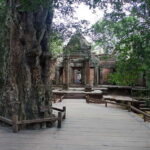
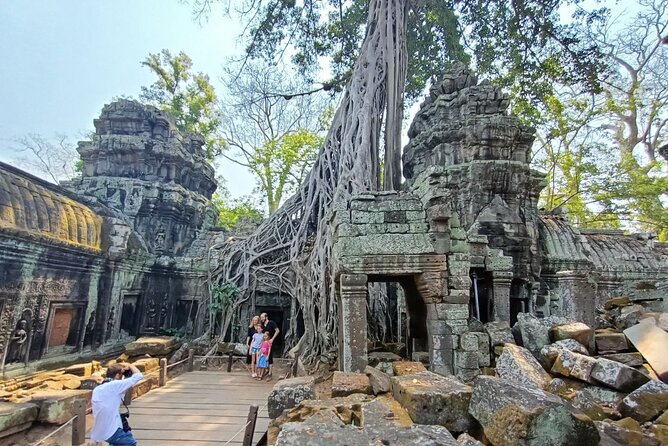
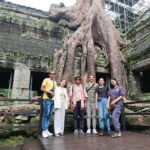
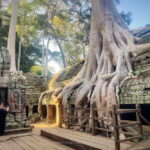
Ta Prohm is where Angkor turns into a scene you can almost touch. The temple is known for giant tree roots wrapping around stone structures, creating those eerie arches and half-collapsed corridors that look both ancient and alive.
This stop is timed for atmosphere. You’ll walk through shaded courtyards and narrow passages, which means it’s less about speed and more about careful wandering with a guide keeping you oriented. Because the paths are tight, guidance helps you avoid getting turned around when you’re focused on photo angles and root formations.
What I like about Ta Prohm as a follow-up to Angkor Wat: it changes your brain’s focus. At Wat, you’re looking for order—lines, geometry, carvings. At Ta Prohm, you’re looking for the collision between human structure and nature. It makes the day feel varied instead of repetitive.
Another practical point: narrow walkways can feel crowded depending on timing. Going earlier or later (depending on your sunrise vs sunset choice) often helps you move without constantly stopping.
Admission is not included here either, since it uses the same Angkor ticket system.
Stop 3: Entering Angkor Thom Through the South Gate to Bayon
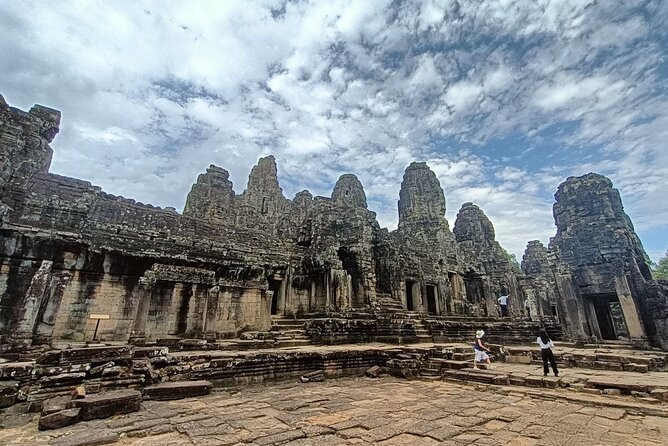
After Ta Prohm, you’ll move to Angkor Thom, and you enter through the South Gate. That gate is a strong transition point because the stone figures act like a threshold: you’re leaving one kind of Angkor and stepping into another.
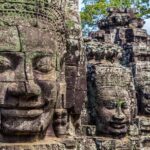
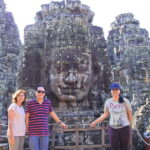
Then comes Bayon. You’ll visit Bayon Temple, famous for the many smiling stone faces. This is one of those temples where your first glance feels like “cool sculptures,” but as you keep moving you start noticing how the faces line up with the structure and what that might have been intended to do—watch you as you walk.
You’ll also walk along the Elephant Terrace, historically used for royal ceremonies. Even if you don’t memorize dates, the terrace gives you a clearer sense of how the space was used for power and public moments. It helps connect the temple stones to human life.
Bayon and Elephant Terrace are less about climbing and more about moving and observing from multiple angles. That makes them a good final stop in a longer day: your legs have worked already, but the walking is still manageable.
You can also read our reviews of more evening experiences in Siem Reap

Getting There Comfortably: Pickup, A/C, and What to Bring
The meeting point is set at 7-Eleven, 212 Sivutha Blvd, Krong Siem Reap. Being near a recognizable spot makes it easier to coordinate, and the tour notes that it’s near public transportation.
The biggest comfort perk is the air-conditioned vehicle. Temple days are long because you’re not just traveling—you’re waiting for the light, waiting for crowd movement, and adjusting pace. A cool ride turns “we still have hours left” into “okay, we can do this.”
What you should bring:
- Comfortable walking shoes (you’ll appreciate support at Angkor Wat steps)
- Light layers for early starts or late evenings
- Sunglasses and sunscreen (stone reflects sun hard)
- A small bottle plan even though you get water—staying ahead helps
Also, keep in mind the tour recommends moderate physical fitness. If you’re fine with stairs and several hours of walking, you’re in the right range.
Tickets, Timing, and the Real Cost Breakdown
The tour price is listed at $49 per person, with the Angkor experience lasting about 8–9 hours. But the main temple entry is not included: the 1-day Angkor ticket is $37 per person.
So the realistic math looks like this:
- Tour: $49 pp
- Angkor ticket: $37 pp
- Total before tipping: $86 per person
That might sound steep at first, but here’s why the value holds up if you care about having your day make sense:
- You’re paying for a licensed English-speaking guide who helps you see more than just the obvious views.
- You get air-conditioned transport and water, so the day stays comfortable enough to enjoy rather than survive.
- It’s private, so you’re not wasting time negotiating your pace inside a large group.
Also, the experience includes mobile ticketing for the tour itself, and confirmation is received at booking. That kind of setup matters when your start time is early (sunrise) or late (sunset), when you don’t want uncertainty.
Tipping isn’t included. If you’ve ever done Cambodia temple tours, you know tips are part of the culture and often expected for both driver and guide. Budget something reasonable when you plan your day.
Who Should Book This Private Angkor Wat Sunrise/Sunset Tour
This tour is a great fit if you want:
- A private, guided Angkor day instead of a crowded queue system
- A guide-led flow across Angkor Wat, Ta Prohm, and Bayon
- Time-friendly pacing for sunrise or sunset sightseeing
- Clear English explanations and practical help with photo locations
It’s probably not the best fit if:
- You want a strictly relaxed, no-climbing visit (Angkor Wat includes a climb)
- You get uncomfortable with uneven stone, stairs, and tight passages at Ta Prohm
It suits couples, families with older kids who can handle walking, and anyone who appreciates structure: you want to see the big sights, but also want context and smarter timing.
One more point I like: the experience runs for most of the day, so it feels like a real Angkor journey. You’re not doing a token half-day where you miss the best light or the best angles.
Should You Book This Tour?
Yes, if you want Angkor to feel guided, not random. The combination of a private format, a licensed English guide named Sarak, and the sunrise/sunset timing is exactly what makes this kind of day feel worth it.
I’d book this when:
- You care about photography and timing, and you don’t want to guess your way through temples
- You want three major stops without rushing
- You’d like the comfort of an air-conditioned ride and water
I might skip it if you’re on a super tight schedule or you already have a plan to hire a guide locally and want a cheaper self-guided setup. But for most people who want the “best day” version of Angkor Wat, this is a solid, well-structured choice.
FAQ
Is the Angkor ticket included in the price?
No. The tour price ($49 per person) does not include the Angkor ticket. A 1-day Angkor ticket is listed separately at $37 per person.
How long is the tour?
The duration is approximately 8 to 9 hours.
What stops are included in the day?
You’ll visit Angkor Wat, then Ta Prohm, and then Bayon Temple in Angkor Thom (including the South Gate and the Elephant Terrace).
Is this tour private?
Yes. It’s a private tour/activity, and only your group participates.
Do I need to be able to walk and climb?
The tour is recommended for travelers with moderate physical fitness. You should expect walking across temple grounds and climbing at Angkor Wat, plus narrow passages at Ta Prohm.
Does the tour include pickup?
Yes. Pickup is offered, and the end point returns you back to the meeting point.
What does the tour include?
It includes a licensed English-speaking guide, an air-conditioned vehicle, and drinking water.
Where is the meeting point?
Meet at 7-Eleven, 212 Sivutha Blvd, Krong Siem Reap. The activity ends back at the meeting point.
What is the cancellation policy?
Free cancellation is available if you cancel up to 24 hours in advance for a full refund. If you cancel less than 24 hours before the start time, the amount paid is not refunded.