REVIEW · SIEM REAP
Private Angkor Wat Temple Tour
Book on Viator →Operated by Travel to Inspire · Bookable on Viator
Four temples, one smooth plan. You’ll get hotel pickup and an air-conditioned car, plus the patient guidance of Thom as you move from Angkor Wat to Bayon and Ta Prohm without feeling rushed. I especially like Thom’s Khmer Empire storytelling and the way he helps you time stops for better viewing, though April heat can slow the day down, and the $37 temple fee isn’t included.
This tour also keeps things practical: you’ll have cold towels and drinking water, and you can wear comfortable clothes while following the temple dress rule (cover knees and shoulders). Do pack walking shoes and skip valuables—temples are busy, and you’ll be moving.
Because it’s private, it’s built for your group only, with a flexible pace across about 5 to 7 hours. That alone can make the difference between a checklist day and a day where you actually notice details.
In This Review
- Key Things That Make This Private Tour Worth It
- Why a Private Angkor Wat Plan Feels Easier
- Price and The Real Cost: $45 Plus Temple Fees
- Pickup, Comfort, and What to Bring (So the Day Doesn’t Fight You)
- Stop 1: Angkor Wat With Outside Views and Inside Learning
- Stop 2: Angkor Thom South Gate (Tonle Oum) and the Five Gates Idea
- Stop 3: Bayon Temple and the Faces That Keep Showing Up
- Stop 4: Ta Prohm Tree Temple (The “Tree Temple” Feeling)
- Heat, Crowds, and Timing: How to Make the Day Work
- What You’re Actually Paying For (Beyond the Ticket)
- Who This Tour Fits Best
- Should You Book This Private Angkor Wat Tour?
- FAQ
- What is the duration of the Private Angkor Wat Temple Tour?
- How much does the tour cost?
- Are temple admission fees included?
- What’s included in the tour price?
- Do I get hotel pickup and drop-off?
- What should I wear to enter the temples?
- Can I cancel and get a full refund?
Key Things That Make This Private Tour Worth It
- Thom’s calm, patient guiding that helps you understand what you’re seeing instead of just taking photos
- Air-conditioned comfort with water and cold towels so you’re not cooked on the drive between sites
- A tight route that hits Angkor Wat, Angkor Thom, Bayon, and Ta Prohm in one day without chaos
- Shorter stop times where it makes sense (like 30 minutes at the South Gate) so the long moments aren’t rushed
- Flexibility built into a private setup, so you’re not trapped in someone else’s pacing
Why a Private Angkor Wat Plan Feels Easier
Angkor is famous for a reason. But it can also feel like a maze of gates, courtyards, and camera angles when you’re trying to translate everything yourself. A private tour helps you get your bearings fast: you’re not waiting on group shuffles, and you’re not stuck timing bathroom stops with a crowd.
The biggest advantage here is pacing. You’re seeing four major temples, not one big museum stop. With a private vehicle and a guide who stays with you through each site, you can slow down when you want photos, speed up when you want to keep moving, and ask questions when something clicks.
I also like that the tour is built around “outside first, inside next” for the key temples. That matters. It gives you context—what the temple looks like in space, what parts you should look for—before you step into the actual structures.
You can also read our reviews of more private tours in Siem Reap

Price and The Real Cost: $45 Plus Temple Fees
The tour price is $45 per person, and it includes the guide, the air-conditioned car, and hotel pickup and drop-off. On paper, that’s a good deal for a private full-day plan.
The catch is the temple entry. You’ll pay a $37 per person temple fee, and admission tickets are marked as not included. So your “ready-to-go budget” is more like $82 per person total (tour + temple fee), before any optional tipping.
Is it still good value? For most people, yes—because you’re paying for time and stress relief. You’re not just buying access to stones; you’re buying guided interpretation, air-conditioned transport, and less wasted time. If you plan to spend a full day at Angkor anyway, paying for a guide is usually the difference between seeing monuments and understanding why they’re arranged the way they are.
Pickup, Comfort, and What to Bring (So the Day Doesn’t Fight You)
This is a hotel pickup and drop-off tour from Siem Reap, which means you start clean—no scrambling for transport. The vehicle is air-conditioned, and you get drinking water and cold towels to help you handle the Cambodian heat.
A few small logistics details make a big difference:
- Wear comfortable walking shoes. You’ll be on temple grounds with uneven surfaces.
- Bring layers that let you cover your knees and shoulders when you enter temples. This isn’t optional; plan your outfit so you’re not stressed on arrival.
- Don’t carry valuables. Temples mean movement, and you’ll likely have more hands-free needs for photos and quick transitions.
The review notes also point to what you already know about Angkor: temperature can be intense, especially in April. If you’re going in hot months, plan to slow your pace slightly and don’t be surprised if your “I’ll finish everything perfectly” plan needs adjusting.
Stop 1: Angkor Wat With Outside Views and Inside Learning
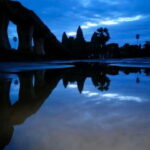
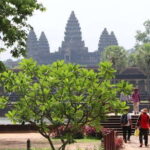
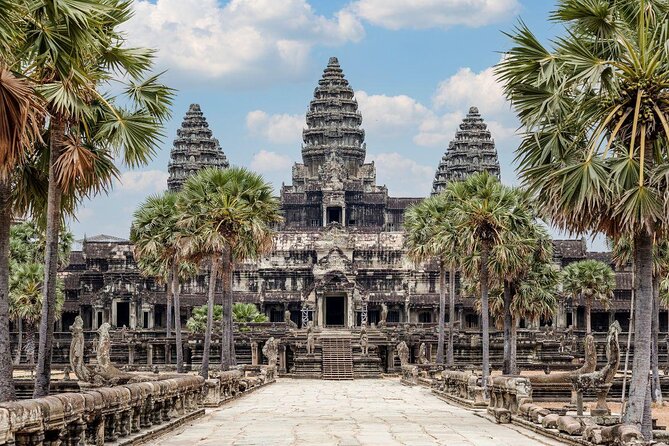
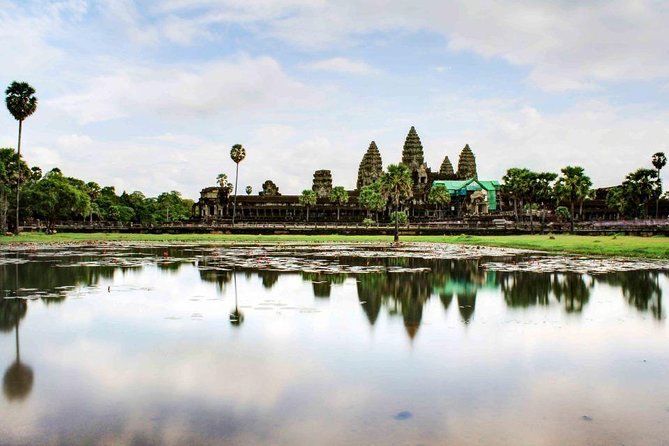
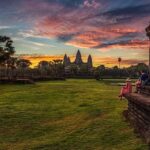
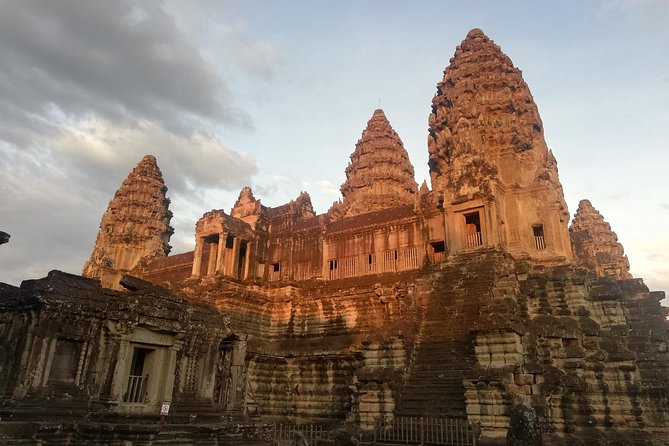
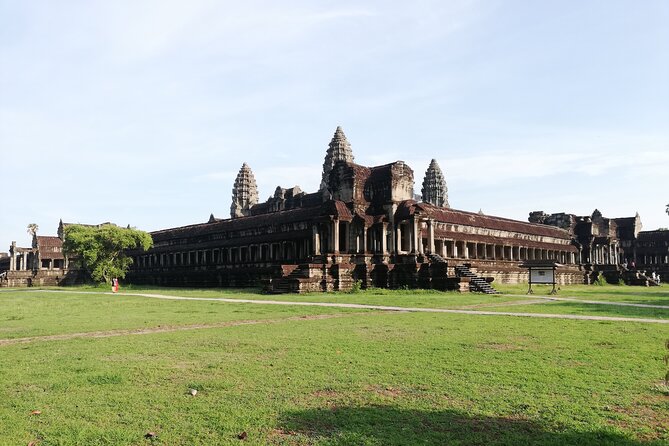
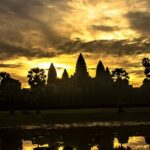
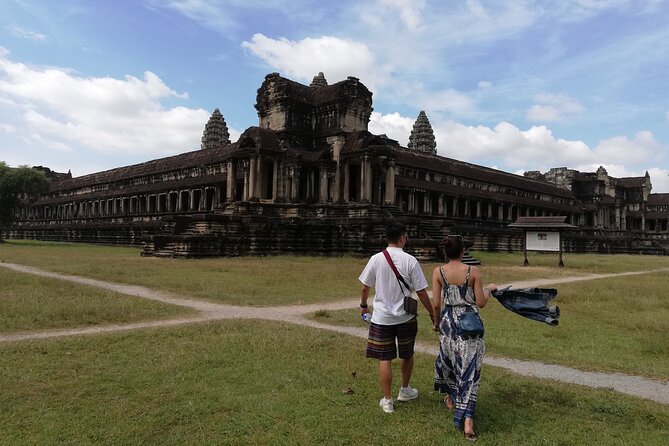
Angkor Wat is the anchor of the day, and it gets the most time—about 3 hours. You’ll see it from the outside, then you’ll step inside for guided history and context.
I like that this tour starts with the outside view before the inside visit. Angkor Wat can feel overwhelming at first glance. Seeing the big layout first helps you understand what you’re about to walk through. You also get photo-worthy angles, which is a big part of why this temple is on everyone’s must-see list.
There’s also a cultural detail worth noting: Angkor Wat is described as representing Cambodia and appearing on the Cambodia flag. That’s not just trivia—it helps explain why this site carries weight beyond tourism.
Potential drawback: since it’s the main site, it can get busy in peak times. The upside is that your guide’s job is to help you see what matters while minimizing frustration.
Stop 2: Angkor Thom South Gate (Tonle Oum) and the Five Gates Idea
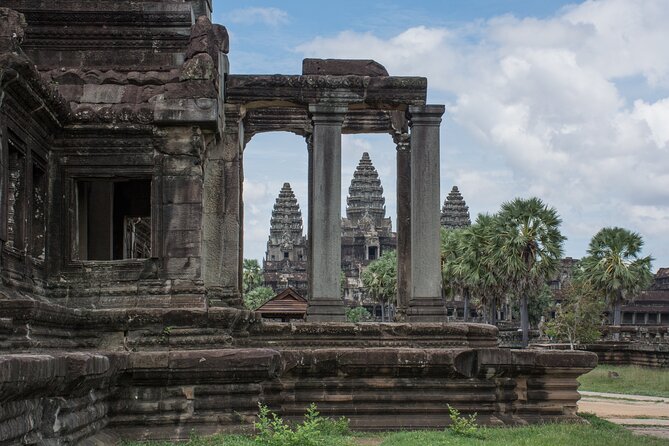
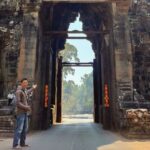
From Angkor Wat, you shift to Angkor Thom South Gate, also called Tonle Oum. This stop is shorter—about 30 minutes—which is smart. It keeps your energy for the temples where you’ll spend longer.
This is also where your guide’s explanation helps. You’ll learn that Angkor Thom is described as a city with five gates: South Gate, Ghost Gate (Gate of the Dead), Victory Gate, Dei Chhnang Gate (North Gate), and Killing Gate. The site is also described as having about three kilometers per side, which gives you a sense of scale.
The South Gate can be a great “mental reset.” Instead of just taking photos, you’re learning the layout and symbolism. That makes the next temple stops easier to follow.

Stop 3: Bayon Temple and the Faces That Keep Showing Up
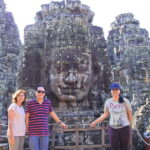
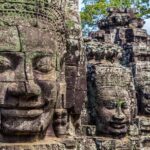
Bayon Temple is where the famous faces take over. You’ll spend about 1 hour, and the tour includes both outside viewing and time inside with guided history.
The faces are the headline, but the real value of a guide is helping you understand how Bayon fits into the broader Khmer Empire story. When you know what to look for, those stone faces stop being just cool visuals and start being a clue to how the temple was meant to communicate.
One practical note: because you’re moving through different spaces inside and around Bayon, pacing matters. A private guide can keep you from feeling like you’re constantly catching up to your own group plan.
Stop 4: Ta Prohm Tree Temple (The “Tree Temple” Feeling)
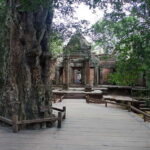
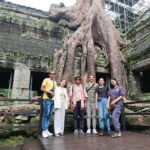
Then you’ll go to Ta Prohm, the “tree temple” known for its intertwining roots and dramatic ruins. Like Bayon, you’ll get about 1 hour, including outside views and guided time inside.
This is the stop where Angkor can feel cinematic. Even if you’ve seen photos before, seeing those stone-and-root combinations in person changes the scale of what you thought you knew. The tour’s guided explanation helps you connect the strange beauty of Ta Prohm to its place in the broader temple network.
Potential drawback: Ta Prohm can be one of the more tiring stops simply because of the ground conditions and the way people like to linger for photos. The private pace helps here—you can linger when you want, and you can move on when your legs start arguing with you.
Heat, Crowds, and Timing: How to Make the Day Work
Angkor can be a long day. Even on a private tour, your body still has limits. One review highlights that April heat can make it hard to finish everything completely. That’s realistic. So here’s how to keep things from going sideways:
- Plan for slower walking in hot months. Your “tempo” will matter more than your optimism.
- Use your included water and cold towels as real breaks, not just extras.
- Let your guide handle the flow. If Thom suggests a route adjustment or a timing change, it’s usually because it improves comfort or viewing.
Also, pay attention to the entry rules. Cover your knees and shoulders. It’s mentioned as required for temple entry, so if you show up underdressed, you risk delays when you’re already trying to move efficiently.
What You’re Actually Paying For (Beyond the Ticket)
On a private Angkor Wat tour, the “value” isn’t just that you get to enter. You’re paying for:
- Interpretation: guided history as you walk through each temple area, not just a generic talk at the start
- Comfort logistics: air-conditioned transport plus water and cold towels
- Time strategy: a route that balances longer stops (Angkor Wat) with shorter ones (South Gate)
- Personal attention: it’s private, so you’re not stuck blending into a group rhythm
And there’s a human factor. Thom’s style is described as patient and flexible—plus he can handle the day as your needs change. That can be as simple as adjusting your pace, or as big as helping with an urgent stop (for example, one account mentions arranging a pharmacy visit after the tour when someone had a cough). That kind of calm support is the difference between a stressful day and a “we got through this” day.
Who This Tour Fits Best
This private tour is a great fit if you want:
- A full Angkor day without organizing transport yourself
- Guided context so the temples make sense beyond pictures
- Comfort-focused planning (AC vehicle, water, cold towels)
- Flexibility for your group, instead of a rigid group schedule
It may be less ideal if you want a totally unstructured day with no guidance at all, or if you’re only interested in one temple and don’t care about the rest of the circuit.
Should You Book This Private Angkor Wat Tour?
I’d book it if you’re the type of traveler who wants to understand what you’re seeing and stay comfortable while doing it. The $45 tour price plus the $37 temple fee sounds like a lot until you factor in private guiding time, air-conditioned transport, and hotel pickup and drop-off. For most people doing a one-day Angkor sprint, it’s a practical way to turn a long, hot day into something that feels organized.
If you’re going in peak hot months, just go in with realistic expectations and a flexible mindset. With the included comfort breaks and Thom’s patient approach, you’ll have a much better chance of enjoying the day even if the weather slows your pace.
FAQ
What is the duration of the Private Angkor Wat Temple Tour?
The tour runs about 5 to 7 hours in total, with time scheduled for each main stop.
How much does the tour cost?
The tour price is $45.00 per person.
Are temple admission fees included?
No. Temples fee is listed as $37.00 per person, and admissions are noted as not included for the stops.
What’s included in the tour price?
You get a local English-speaking tour guide, an air-conditioned car, drinking water and cold towels, and hotel pickup and drop-off.
Do I get hotel pickup and drop-off?
Yes. Hotel pickup and drop-off are included.
What should I wear to enter the temples?
You must cover your knees and shoulders when entering the temples.
Can I cancel and get a full refund?
Yes. You can cancel up to 24 hours in advance for a full refund. If you cancel less than 24 hours before the start time, the amount you paid will not be refunded.