REVIEW · SIEM REAP
Private Angkor Wat Tour & Angkor Park/Heritage With Local Guide
Book on Viator →Operated by Pineapple Cambodia Tours · Bookable on Viator
Eight hours, zero map stress, big temple moments. This private Angkor Wat day is set up to help you see the key sights without getting tangled in logistics, with hotel pickup and drop-off and guided stops for the headliners. I also love that the pace builds in breaks, so you’re not stuck sprinting in the heat between gates.
One thing to plan for: entrance fees to Angkor Archaeological Park are not included, so you’ll still need to budget extra for tickets before you go in.
In This Review
- Key highlights I’d prioritize
- Why a private tuk-tuk day makes Angkor Wat simpler
- The true value of hotel pickup and a guide who can steer your eyes
- Angkor Wat: how to use your two hours well
- Angkor Thom and Bayon: the city block that hits hard
- Ta Nei: the quick jungle breather that feels like a reset
- Srah Srang: lunch plus a reservoir viewpoint break
- Ta Prohm: ruin + trees, and why the angle matters
- Food, timing, and the real pace of a 7 to 8 hour day
- Price and value: is $60 actually a good deal?
- What you’ll get in the end: the whole Angkor story in one day
- Who this tour suits best
- Should you book this Private Angkor Wat tour?
- FAQ
- Is the Angkor Archaeological Park entrance fee included?
- What’s included in the tour price?
- How long is the private tour?
- Do I get hotel pickup and drop-off?
- Which temples are included on this tour?
- Is this tour private or shared with other groups?
- Do I need tickets for the sites?
- Is there a mobile ticket?
- What is the cancellation policy?
Key highlights I’d prioritize
- Private tuk-tuk transport around the major sites, so you spend less time figuring out routes.
- A full meal package with lunch plus snacks and drinks, plus drinking water throughout the day.
- Angkor Wat first, for orientation with a dedicated stop of about 2 hours.
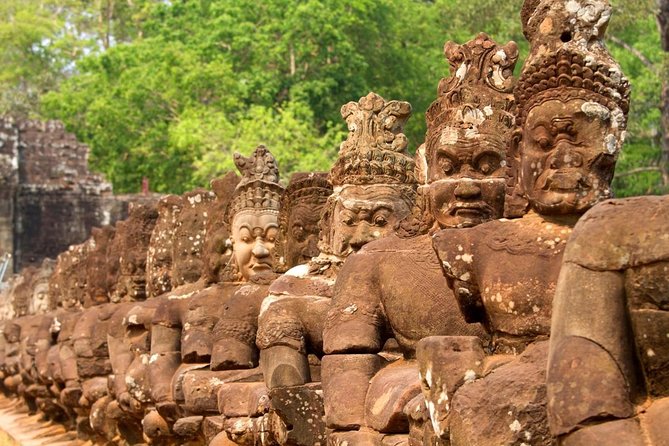
- Angkor Thom and Bayon together in a focused block, including the 54 towers of Bayon.
- Ta Prohm with jungle atmosphere and the famous Tomb Raider connection.
- A quieter breather at Ta Nei and Srah Srang before the final temple push.
Why a private tuk-tuk day makes Angkor Wat simpler
Angkor Wat is not the kind of place where you want to guess. The temple complex is massive, and even if you’re comfortable reading maps, you still have to handle timing, walking routes, and where to pause for photos. A private tour fixes that. You’re not doing a DIY relay; you’re following a route that hits the big monuments in a sensible order.
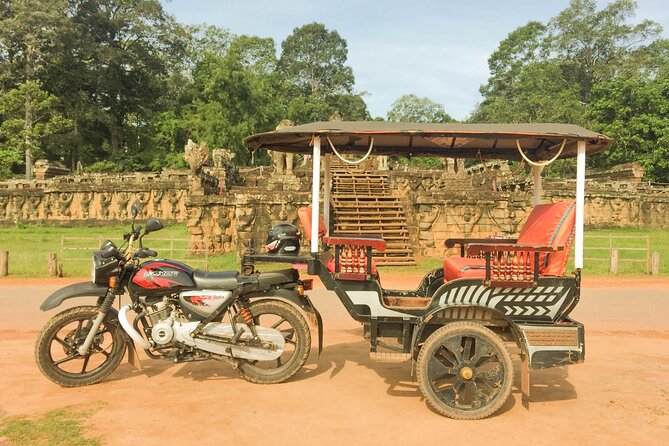
I also like how this tour handles comfort. You get round-trip tuk-tuk from your hotel, plus drinking water throughout the day. That matters when your itinerary includes long stone walks, stairs, and long stretches under open sky.
Finally, this is a true private setup. Only your group joins, so you’re not stuck waiting on strangers or having the schedule bent by someone else’s pace. For a temple day, that kind of control is real value.
You can also read our reviews of more guided tours in Siem Reap
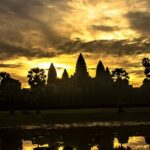
The true value of hotel pickup and a guide who can steer your eyes
Pickup and drop-off are more than a convenience here—they help you keep your energy for the temples. Instead of spending time arranging rides, you’re already in motion when you start the day.
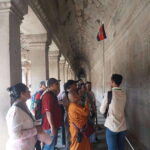
The local guide is the other half of the equation. Angkor Wat can look like a pile of stunning stone from a distance, but a good guide gives you handles: what you’re looking at, what it meant, and what to notice in the carvings and layout. Even with perfect weather, you’ll enjoy the visit more when you understand the “why” behind the angles and details.
If you’re curious about who might be driving or guiding, one English-guide name that shows up for this kind of experience is Ben/Yen, with driving credited to Bo. That’s the sort of pairing that makes the day feel smooth—clear explanations on top, steady tuk-tuk navigation underneath.
Angkor Wat: how to use your two hours well
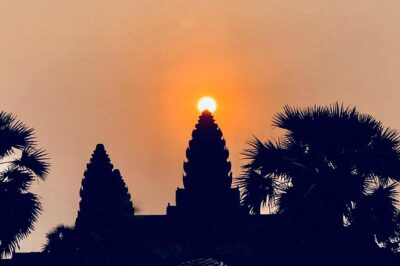
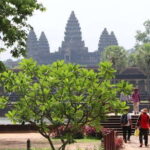
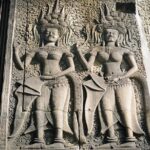
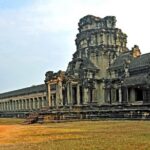
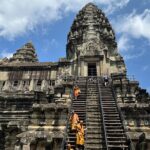
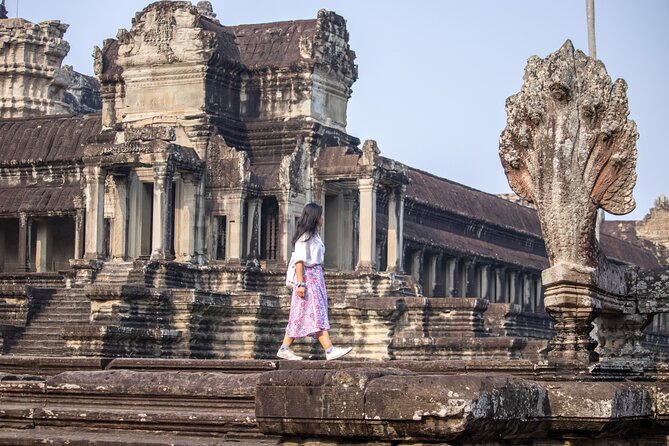
Angkor Wat gets a dedicated stop of about 2 hours, and that’s the right amount of time for doing it properly. It’s the world’s largest and best-preserved monument, and people notice immediately that the composition feels intentional—balanced, symmetrical, and carefully planned.
What you should do during your time there:
- Spend the first part getting the overall geometry. The big wow isn’t just size. It’s how the lines align and how the reliefs and sculptures are arranged across the surfaces.
- Use your guide’s cues for what to look at next. Instead of wandering, you move from one focal area to another with context.
- Plan for photo pauses without losing your place. When you’re with a guide, you can stop when the light and angles matter without slowing the entire route.
A two-hour stop also helps you avoid the common mistake: treating Angkor Wat like a quick checklist item. You’ll see more when you let it land. It’s also easier on your legs. Even if you love temples, the stone surfaces and steps add up fast.
Tip for your comfort: wear something you can move in, and bring a hat or sun protection. Even when you’re taking shade breaks, you’ll still be exposed during key viewpoints.
Angkor Thom and Bayon: the city block that hits hard
After Angkor Wat, the tour shifts to Angkor Thom, with about 1 hour there, followed by about 1 hour at Bayon Temple. This is a smart sequence because Angkor Thom is the Khmer Empire’s last and enduring capital city, founded in the late 12th century and spread across roughly 9 square kilometers. That scale helps you understand why the area feels like a whole world, not just one temple.
Angkor Thom is also known for layers—structures from earlier eras within its larger footprint. If you like reading a site like a puzzle, this stop can feel rewarding because it’s not one single monument. It’s a city inside a city, with temple architecture doing the work of historical storytelling.
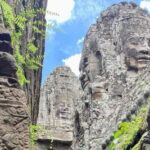
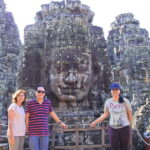
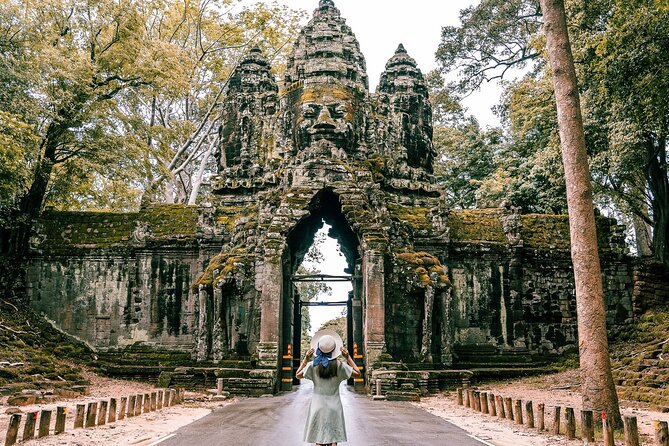
Then Bayon Temple takes over the emotional center. Built in the 12th century as a state temple of King Jayavarman VII, Bayon sits right in the heart of Angkor Thom. The headline feature is the 54 towers, famous for their face towers that seem to follow you around.
How to get the most out of Bayon in 1 hour:
- Start by looking up. Those towers are the defining visual feature.
- Slow down when your guide points out carvings and layout. The more you know what you’re seeing, the less it becomes “just stone.”
- Use the guide to pace you through the densest viewpoints. With one-hour timing, you’ll want to hit the best angles without feeling rushed.
This block is where the guide really pays off. Bayon is visually striking, but the meaning behind the design is what turns it from a photo stop into a genuine experience.
Ta Nei: the quick jungle breather that feels like a reset
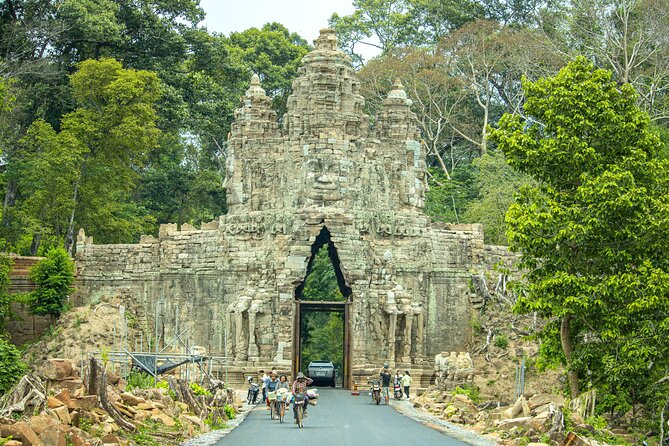
Not every stop in the day is a huge, famous crowd-magnet. Ta Nei is intentionally smaller and quieter, with about 20 minutes built in. It’s described as modest, secluded, and tucked in the jungle.
That short timing is useful because it works like a reset button. After the intensity of Bayon, Ta Nei gives your eyes a different kind of view—less about monumental scale, more about stillness and atmosphere. You also get a chance to breathe and regroup, especially if your feet are starting to protest.
Don’t expect a long wander here. The value is that it’s short, tucked away, and different from the “big stage” temples.
You can also read our reviews of more private tours in Siem Reap



Srah Srang: lunch plus a reservoir viewpoint break
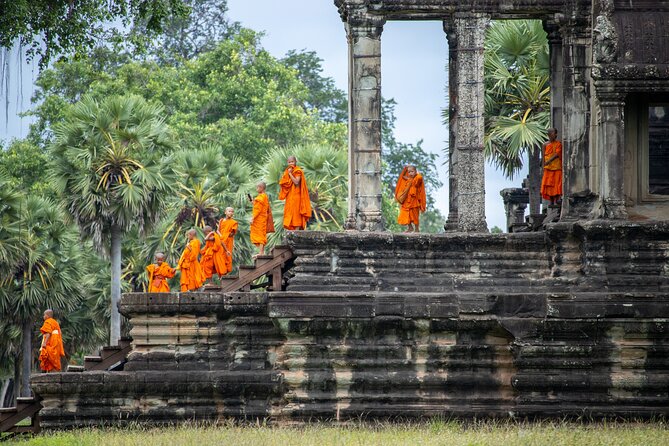
After Angkor Wat, Angkor Thom, and Bayon, the tour takes a break for Cambodian lunch at a restaurant, then spends time at Srah Srang. The total time here is about 1 hour 30 minutes, and the focus is the reservoir—described as having the best view.
This stop matters for two reasons:
- Food and hydration keep the day enjoyable. The itinerary already includes drinking water throughout the day, and adding a proper lunch prevents that afternoon energy crash that ruins temple focus.
- A reservoir viewpoint gives your brain something different. Temples are stone and angles; water and sky add breathing room.
When you’re planning your day, think of Srah Srang as the hinge point. After Bayon, your feet and attention can start to fade. This break keeps the second half of the tour from turning into a stumble.
Ta Prohm: ruin + trees, and why the angle matters
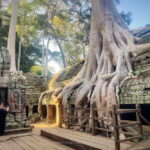
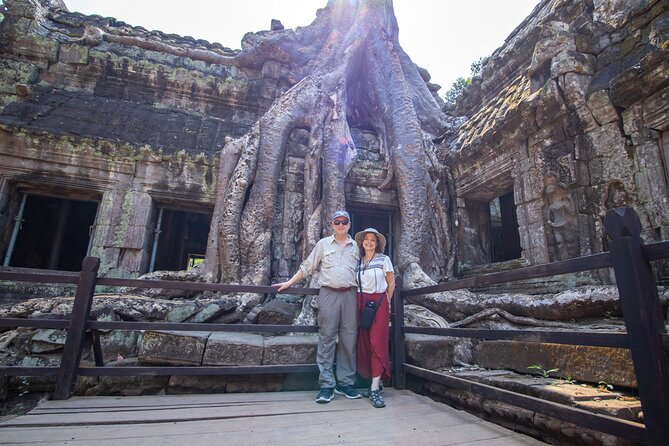
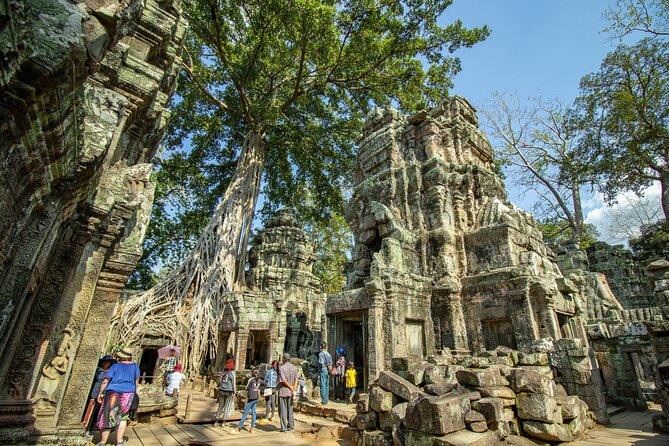
Ta Prohm is the final temple stop, with about 1 hour 30 minutes. It’s widely described as gorgeous, with ruins that feel like they’re growing out of the jungle. Many people associate it with the Tomb Raider Temple nickname from a film connection starring Angelina Jolie.
Even if you’ve seen photos before, Ta Prohm hits differently in person because the scale is weird in the best way. Giant tree roots and trunks interact with the stone structures so closely that it stops being only architecture—it becomes a living composition.
To make the most of your time here:
- Let the trees lead your attention. Don’t start with the stones alone. Follow what the roots and trunks frame.
- Use the guide to spot features you might otherwise miss. Ruins can look similar from far away; direction helps.
- Take your time on the best angles. With 1.5 hours, you can do a slower loop instead of rushing to the first photo spot.
One practical note: Ta Prohm is a ruin, which usually means uneven surfaces and stairs in places. That’s not a reason to skip it. It’s a reason to keep your pacing steady and your footwear comfortable.
Food, timing, and the real pace of a 7 to 8 hour day

A full-day temple route isn’t just about what you see. It’s about how you feel when you get between those stops.
This tour runs about 7 to 8 hours, and it includes lunch plus snacks and drinks, along with drinking water throughout the day. In practice, that package helps you stay in “explore mode” instead of “survive mode.”
The pace also matters. A common frustration on temple tours is feeling like you’re always behind the group or always waiting for everyone else. In this setup, the private nature gives the guide room to manage tempo. One strong point you can expect is frequent resting. That turns the day from a forced march into a guided sightseeing rhythm.
Also, your transport is part of that pacing. Tuk-tuk rides mean shorter transitions than walking the whole time, so you’re not constantly wearing down your energy between highlights.
Price and value: is $60 actually a good deal?
At $60 for a private full-day experience, the price looks like good value when you think about what’s included:
- Round-trip tuk-tuk
- English speaking guide
- Drinking waters throughout the day
- Lunch, plus snacks and drinks
That’s a lot bundled for one price. The catch is simple: entrance fees to Angkor Archaeological Park are not included, so your final cost will be higher once you add tickets. Also, admission tickets for specific sites aren’t included, which means you should plan to handle those fees separately rather than hoping they’re covered.
When $60 is a smart buy:
- You want a private route instead of a big bus day.
- You care about explanations, not just photos.
- You’d rather pay once and let the logistics happen.
When it might feel less ideal:
- If you’re traveling ultra-budget and want to minimize guide and transport costs.
- If you plan to stay flexible and don’t want a structured day with set stops.
Bottom line: the price makes sense when you value comfort, guidance, and a smooth route—especially if you’re sharing with a small group.
What you’ll get in the end: the whole Angkor story in one day
This tour gives you a coherent “Angkor greatest hits” arc:
- Angkor Wat for the masterpiece and core orientation
- Angkor Thom + Bayon for the capital city feeling and face towers
- Ta Nei as a quiet jungle reset
- Srah Srang for a lunch-and-view break
- Ta Prohm as the ruined-jungle finale
That structure is valuable because it avoids the scattershot approach. You’re not just collecting temples; you’re moving through types of space—grand, urban, secluded, watery, then overgrown ruin.
If you like your sightseeing with context and a steady pace, you’ll appreciate how the day is organized to keep your energy and attention intact.
Who this tour suits best
This is a great match if:
- You want private attention and a route that doesn’t leave you guessing.
- You prefer having English commentary so you understand what you’re seeing.
- You want a full day without having to plan meals or transitions.
It’s also a decent fit for many comfort levels because breaks and water are built in. That said, expect walking and stairs at major temple sites. If you have mobility concerns, you’ll want to think about what “1 to 2 hours at major ruins” means for you personally.
Should you book this Private Angkor Wat tour?
Book it if you want a well-paced, guided temple day with transport taken care of and a meal included, and you’re okay paying extra for park entrance fees.
Skip it (or reconsider) if you’re determined to do everything fully on your own, want a less structured route, or you’re trying to keep the total cost as low as possible once ticket prices are added.
If your priority is seeing the big monuments—Angkor Wat, Angkor Thom, Bayon, and Ta Prohm—without stress, this tour is a practical way to do it.
FAQ
Is the Angkor Archaeological Park entrance fee included?
No. Entrance fees to Angkor Archaeological Park are not included.
What’s included in the tour price?
The tour includes round trip tuk-tuk transport, an English speaking guide, drinking waters throughout the day, and lunch with snacks and drinks.
How long is the private tour?
It lasts approximately 7 to 8 hours.
Do I get hotel pickup and drop-off?
Yes, hotel pickup and drop-off are included.
Which temples are included on this tour?
The tour includes Angkor Wat, Angkor Thom, Bayon Temple, Ta Nei Temple, Srah Srang, and Ta Prohm Temple.
Is this tour private or shared with other groups?
It’s private. Only your group will participate.
Do I need tickets for the sites?
Yes. Admission tickets are not included for the stops, so you’ll need to budget for the Angkor Archaeological Park entrance fee.
Is there a mobile ticket?
Yes, a mobile ticket is provided.
What is the cancellation policy?
You can cancel for free up to 24 hours in advance of the experience start time for a full refund.