REVIEW · SIEM REAP
Siem Reap 2-Day Private Angkor Wat Tour with Sunrise
Book on Viator →Operated by Vamos Camboja Turismo · Bookable on Viator
Sunrise at Angkor Wat is worth the alarm. This 2-day private tour strings together sunrise, major Angkor temples, and a classic Phnom Bakheng sunset. You’ll get an English-speaking guide who helps you read what you’re seeing, instead of just wandering in the crowd.
What I like most is how much time you actually get at each site, without rushing. I also appreciate the practical comfort touches—cold water and towels—because you’ll sweat through multiple temple stops, even in the morning.
One consideration: the tour price does not include the Angkor Archaeological Park entrance ticket. You’ll need to budget that extra cost (USD 62 per person for a 2–3 day pass).
In This Review
- Key things that make this Angkor tour tick
- Why Angkor Wat Sunrise Works Better with a Private Guide
- Price and Logistics: What You Pay and What You Still Need to Budget
- Day 1 in Angkor Thom and Angkor Wat: South Gate to Phnom Bakheng Sunset
- Angkor Thom South Gate: Giant faces and immediate atmosphere
- Bayon Temple: The smiling towers and the carving storytelling
- Baphuon Temple: A steep pyramid with old religious roots
- Terrace of the Elephants and Terrace of the Leper King: Ceremonial platforms
- Ta Prohm: Where trees take over the ruins
- Lunch near Srah Srang: Eat well, keep momentum
- Angkor Wat in the afternoon: The big one, seen differently than sunrise
- Phnom Bakheng: Sunset with a classic Angkor view
- Day 2: Angkor Wat Sunrise, Then Pre Rup and the Quieter Temple Circuit
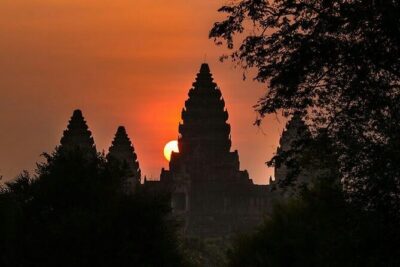
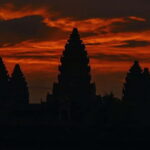
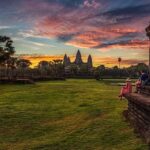
- Angkor Wat at sunrise: Golden light and a calmer rhythm
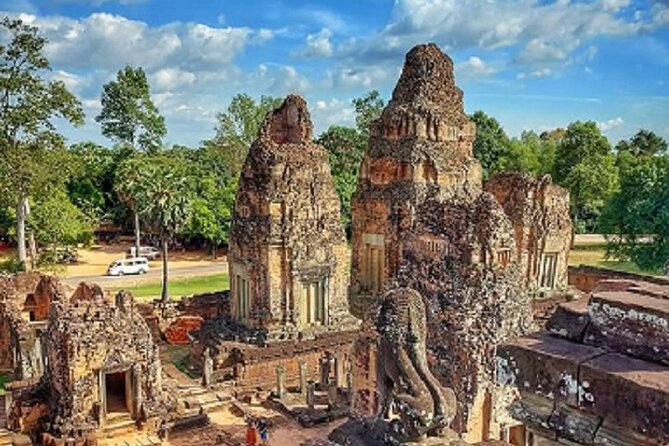
- Pre Rup: Mountain-style views with a peaceful vibe
- Banteay Srei: Pink sandstone and fine carvings
- Banteay Samre: Symmetry and fewer crowds
- Ta Som: Another “jungle has a vote” temple
- Neak Pean: The island temple with tranquil pools
- Preah Khan: A vast complex with corridors and mixed influences
- Getting Around: Tuk-Tuk Day 1, Private Vehicle Day 2
- What to Wear and Bring for Angkor Temple Access
- Who This Tour Suits Best (and Who Should Skip It)
- Should You Book This Angkor Wat Sunrise and Sunset Tour?
- FAQ
- FAQ
- What is the price per person for this 2-day private Angkor tour?
- Are the Angkor Archaeological Park entrance tickets included in the price?
- Where and when does the tour start on Day 1?
- What time is the sunrise pickup on Day 2?
- What transport do I use during the tour?
- Is lunch included?
- What is the dress code for temple visits?
- Can children join this tour for free?
- Is free cancellation available?
Key things that make this Angkor tour tick
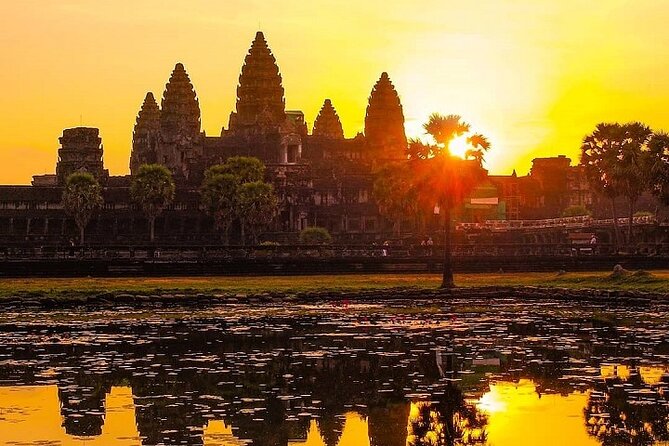
- Angkor Wat sunrise with a very early pickup time (your sleep will hate you, your photos won’t)
- Private pacing with an English-speaking guide who can answer your questions on the spot
- Cold water and towels during the tour, which matters in Siem Reap heat and humidity
- Day 1 hits the big names in Angkor Thom plus Ta Prohm and Angkor Wat
- Day 2 goes slightly quieter after sunrise, with Pre Rup, Banteay Srei, Ta Som, Neak Pean, and Preah Khan
- Dress code guidance (scarves, covered knees/shoulders) so you don’t get turned away
Why Angkor Wat Sunrise Works Better with a Private Guide
Angkor at sunrise isn’t just pretty. It’s strategic. The light softens carvings, faces, and stone textures. It also cuts down the worst of the heat and crowd crush that can build later in the day.
With a private setup, you’re not stuck following a slow group or speeding past what you want to linger on. Your guide can help you connect dots fast—what you’re looking at, why it mattered, and what details are worth noticing (like bas-reliefs and the temple’s layout). In past bookings, guides such as Choub, Sok Chea, and Sovuth Sun have been highlighted for clear English explanations and friendly, attentive energy—so you’re more likely to walk away understanding the place rather than just snapping photos.
You’ll still need to get moving early. The second day pickup is at 5:00 AM, and that’s real commitment. But if you want Angkor Wat without the glare and chaos, sunrise is the right trade.
You can also read our reviews of more private tours in Siem Reap

Price and Logistics: What You Pay and What You Still Need to Budget
The tour is USD 135 per person and runs for about 2 days. That price includes your English-speaking guide, hotel pickup and drop-off in Siem Reap, and transport for your temple day.
Here’s the part you must budget separately: the Angkor Archaeological Park entrance ticket is not included. The pass is listed at USD 62 per person for a 2–3 day ticket, and you’ll need to buy it yourself (either through the ticket booth during the meeting, or online beforehand).
So the best way to judge value is this:
- You’re paying for a guided, timed itinerary across major sites on two days.
- You’re also paying for convenience: towels, cold water, and transfers so you’re not playing transport roulette.
- The big exclusion is the park ticket, so bring that into your math from the start.
If you’re traveling as a small group, you may benefit from group discounts and the tour’s transport options can shift based on headcount (tuk-tuk vs van/AC vehicle). That’s where the per-person value can improve.
Day 1 in Angkor Thom and Angkor Wat: South Gate to Phnom Bakheng Sunset
Day 1 is a full temple day, built around the heart of Angkor Thom and the afternoon centerpiece of Angkor Wat, then finishing with the iconic sunset view.
You start in Siem Reap with hotel pickup at 8:30 AM. First stop is the ticket booth step—either your guide helps you purchase the temple pass there, or you buy it online ahead of time. Then you’re rolling into the ruins.
Angkor Thom South Gate: Giant faces and immediate atmosphere
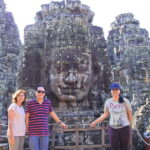
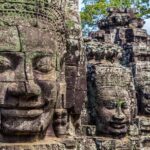
The day kicks off at Angkor Thom South Gate. This is one of those places where you see the scale before you start reading details. Those smiling stone faces make a strong first impression and set the tone for what’s ahead.
It’s a short stop—about 15 minutes—but that works well early, before your legs and patience get tired.
Bayon Temple: The smiling towers and the carving storytelling
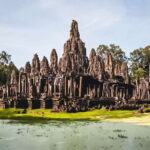
Next is Bayon Temple, the core of Angkor Thom. You’ll spend about 1 hour here. This is where those over-200 smiling faces rise up in towers. Inside, you also get to focus on intricate bas-reliefs—scenes from daily life and Khmer-era storytelling.
This is a good stop to slow down for. If you’re the type who likes to look closely at stonework, Bayon rewards that.
You can also read our reviews of more tours and experiences in Siem Reap
Baphuon Temple: A steep pyramid with old religious roots
From Bayon, you move to Baphuon Temple, a large three-tiered pyramid temple originally dedicated to Shiva. The stop is about 30 minutes.
Baphuon can feel a bit more “structure-focused” than Bayon, which makes it a nice balance. You’re not just seeing carvings; you’re seeing the temple’s geometry and how it dominates the city center.
Terrace of the Elephants and Terrace of the Leper King: Ceremonial platforms
Two quick but fun stops follow: Terrace of the Elephants (about 15 minutes) and Terrace of the Leper King (about 15 minutes).
- The Terrace of the Elephants is known for its carved elephant and garuda figures and its role as a ceremonial platform where kings could view public events.
- The Leper King platform has bas-reliefs and a name tied to a statue once thought to depict a leper king.
These are shorter visits, so treat them like detail breaks between bigger temples. They’re also a reminder that Angkor wasn’t only about religious buildings—it was also about city life and power.
Ta Prohm: Where trees take over the ruins
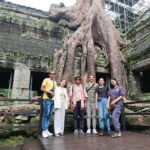
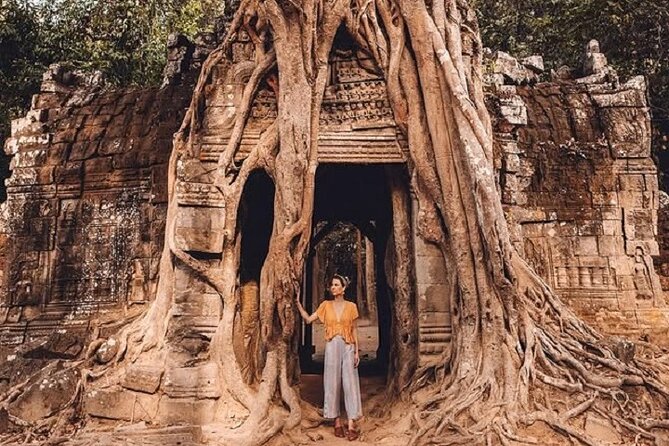
Now you reach Ta Prohm (about 1 hour). This is the famous “tree roots over ruins” temple that many people associate with pop-culture—yet it still works even if you’ve seen photos before.
The main value is how dramatic the setting feels when the light hits the roots and stone. It’s photogenic, yes, but also genuinely eerie and atmospheric.
Lunch near Srah Srang: Eat well, keep momentum
Lunch isn’t included, but you’ll get about 1 hour at Srah Srang where your guide will recommend a Cambodian meal at a nearby restaurant. This is a practical pause inside a long day.
I’d treat this lunch as fuel, not a big dining mission. With a tight temple schedule, you want food that’s filling, not complicated.
Angkor Wat in the afternoon: The big one, seen differently than sunrise
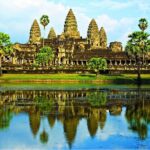
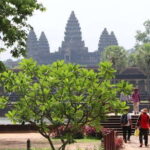
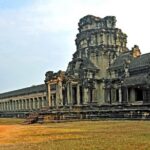
After lunch, you head to Angkor Wat for about 2 hours. This is the world’s largest religious monument, and the architecture and carvings are what you came for—just in different light than the sunrise day.
If sunrise is about softening and silhouettes, the afternoon here can be about clarity—sharp views of stone layers and long sight lines.
Phnom Bakheng: Sunset with a classic Angkor view
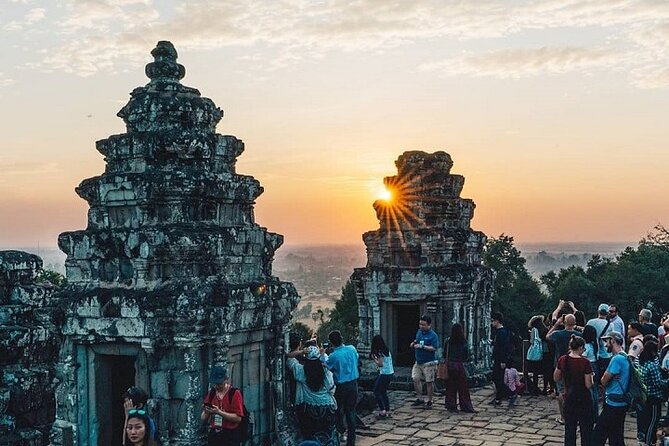
Finally, the day ends at Phnom Bakheng for about 1 hour of sunset time. This is a key payoff moment.
You’re looking over Angkor temples and the surrounding countryside. It’s the kind of finish that makes Day 1 feel like it had a purpose, not just a list of stops.
Day 2: Angkor Wat Sunrise, Then Pre Rup and the Quieter Temple Circuit
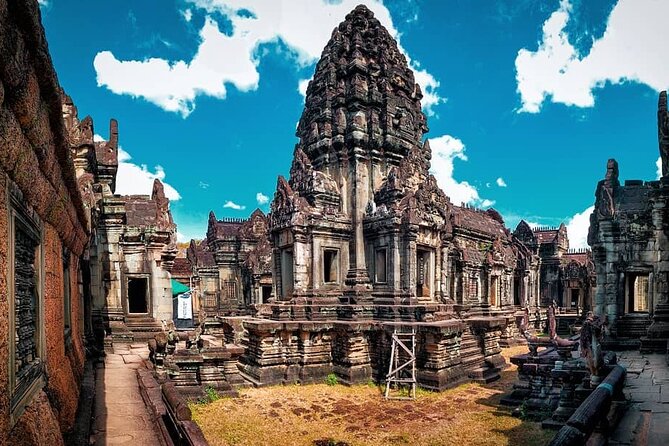
Day 2 is more morning-focused and more varied in temple types. You start with another big moment: sunrise at Angkor Wat.
Your hotel pickup is 5:00 AM, and the tour suggests bringing breakfast from your hotel so you can eat after sunrise. That’s smart, because temple time is active time and you’ll want something simple waiting for you.
Angkor Wat at sunrise: Golden light and a calmer rhythm
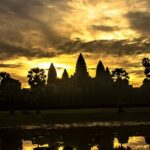
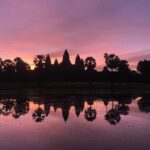
You get about 1 hour 30 minutes at Angkor Wat on the sunrise morning. Here, the goal is to watch the temple transform as the light lifts.
This is also where the guide’s role can really matter. Instead of just wandering, you’ll likely be pointed toward the best viewpoints and told what to look for while everything is still calm.
Pre Rup: Mountain-style views with a peaceful vibe
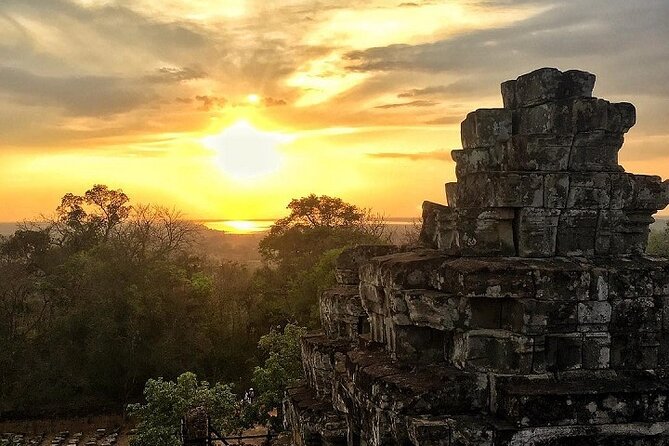
Next stop is Pre Rup (about 1 hour). It’s described as a mountain-style temple known for views and that quiet early-morning atmosphere.
This is a good temple for people who like panoramic moments but don’t want to jump too fast from one photo spot to another.
Banteay Srei: Pink sandstone and fine carvings
Then you head to Banteay Srei, often called the “Citadel of Women.” Expect about 1 hour here. The standout is the pink sandstone and some of Angkor’s most detailed bas-reliefs.
This is one of the best “slow down and look” temples in this itinerary. If you enjoy artistry and smaller-scale details, you’ll like how Banteay Srei feels compared to the massive city-temple sites.
Banteay Samre: Symmetry and fewer crowds
About 45 minutes at Banteay Samre gives you a more serene experience. It’s a 12th-century temple known for detailed carvings and symmetrical design, and it’s positioned as quieter than the headline stops.
This is the kind of temple day won’t feel like a repeat. It refreshes your eyes before you go back into the jungle-root vibe.
Ta Som: Another “jungle has a vote” temple
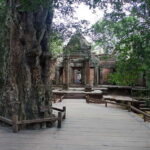
Ta Som is short—about 30 minutes—and it’s known for giant tree roots over the eastern gate. If Ta Prohm was the dramatic movie scene, Ta Som can feel like the supporting character: smaller, still cool, and easier to enjoy without feeling overwhelmed.
Neak Pean: The island temple with tranquil pools
Next is Neak Pean (about 30 minutes). It’s a small island temple surrounded by pools, built in the 12th century as a symbolic representation of the mythical Anavatapta lake, believed to have healing powers.
Even if you’re not chasing legends, the setting helps. You tend to slow your pace here because it feels more restful than the big structures.
Preah Khan: A vast complex with corridors and mixed influences
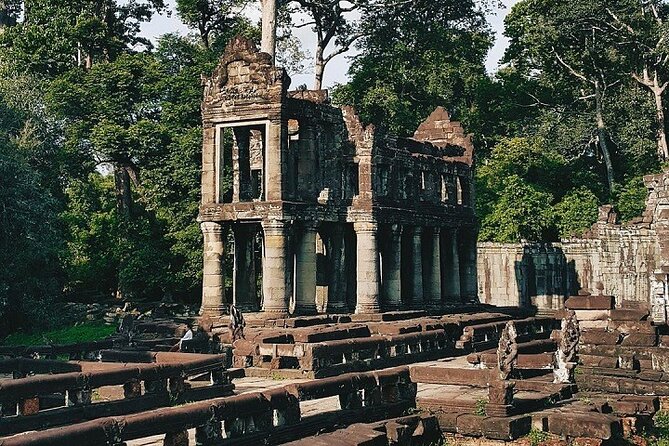
Finally, you reach Preah Khan for about 1 hour. It’s a 12th-century temple complex that originally functioned as a monastery and school, with both Hindu and Buddhist influences noted.
What you’re likely to appreciate is the scale and the atmospheric corridors. This stop is good closure because it feels like a lived-in sacred complex rather than just a single landmark.
After that, you return to Siem Reap to unwind.
Getting Around: Tuk-Tuk Day 1, Private Vehicle Day 2
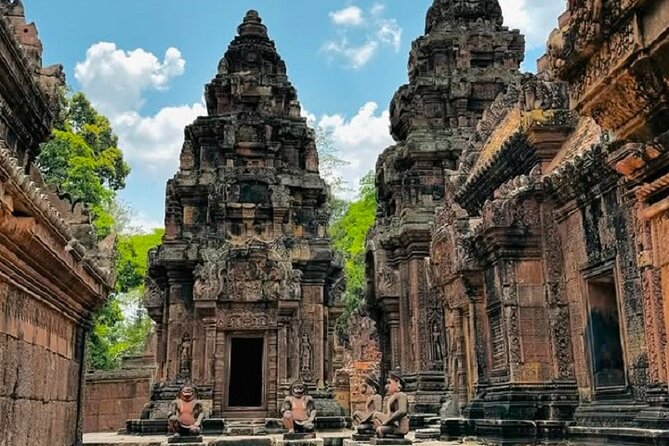
Transport is part of the experience, and this tour does a smart split:
- For 1–2 people, Day 1 uses a tuk-tuk.
- Day 2 uses a private car.
- For 3+ people, you get an A/C van or bus.
A/C matters if you’re going at the hottest parts of the day, and it’s also a morale booster after you’ve been under sun and stone for hours. The tuk-tuk day can feel more local and flexible, but the private car on Day 2 is the “rest your body” move.
Your guide also includes free cold water and towels, which is one of those small logistics things that make a big difference by the afternoon.
What to Wear and Bring for Angkor Temple Access
Angkor temples have a dress code, and it’s not optional. Plan ahead so you don’t lose time at the gate.
You may wear a scarf to cover your knees and shoulders for most temples. But the guidance here is specific:
- Except for Angkor Wat, you must wear pants or skirts that cover the knees, plus shirts that cover the shoulders.
- Short skirts, shorts, tank tops, and other revealing clothing items are not permitted.
Also consider practicality over style. You’ll be walking and climbing in uneven areas, and you’ll be sweating. Bring comfortable shoes and simple clothing you can tolerate early mornings.
Since breakfast is suggested from your hotel on Day 2 sunrise, keep that in mind for your morning logistics too.
Who This Tour Suits Best (and Who Should Skip It)
This is a strong fit if you want:
- A private English-speaking guide and a clear two-day plan
- Sunrise at Angkor Wat plus a classic sunset finish at Phnom Bakheng
- Time at multiple major temples without feeling like you’re sprinting nonstop
It’s also ideal if you like structure—knowing you’ll hit South Gate, Bayon, Ta Prohm, Angkor Wat, then move into Pre Rup, Banteay Srei, and the quieter stops.
I’d think twice if you only want a quick taste of Angkor. With a lot of sites packed in, you might feel it’s too much temple time. Still, if your heart is set on seeing the sunrise, the two-day format makes that possible without cheating yourself on the second day.
Should You Book This Angkor Wat Sunrise and Sunset Tour?
If you care about seeing Angkor Wat in the light that made people fall in love with Angkor, I think you should book. Sunrise access plus a guide who helps you interpret what you’re seeing is a better combo than trying to piece it together alone.
Just go in with two expectations:
- You’ll pay extra for the Angkor Archaeological Park pass (USD 62 for a 2–3 day ticket).
- You’ll earn the early wake-up call. The 5:00 AM start on Day 2 is real.
For most people, that’s a fair exchange.
FAQ
FAQ
What is the price per person for this 2-day private Angkor tour?
The tour is priced at USD 135.00 per person.
Are the Angkor Archaeological Park entrance tickets included in the price?
No. Entrance to the Angkor Archaeological Park is not included. The ticket is listed as USD 62 per person for a 2–3 day pass.
Where and when does the tour start on Day 1?
Your guide meets you in your hotel lobby at 8:30 AM in Siem Reap. You then head to purchase the temple pass (or you can buy it online beforehand).
What time is the sunrise pickup on Day 2?
On Day 2, your guide picks you up from your hotel at 5:00 AM for the Angkor Wat sunrise.
What transport do I use during the tour?
For 1–2 people, Day 1 uses a tuk-tuk and Day 2 uses a private car. For 3 or more people, the tour uses an A/C van or bus both days.
Is lunch included?
Lunch is not listed as included. Day 1 includes a lunch break at Srah Srang, and your guide recommends a nearby Cambodian restaurant.
What is the dress code for temple visits?
You can use a scarf to cover your knees and shoulders for most temples. Except for Angkor Wat, you must wear pants and skirts that cover the knees and shirts that cover the shoulders. Revealing items like shorts, tank tops, and short skirts are not allowed.
Can children join this tour for free?
Yes. Children under 12 can join free of charge, and a passport must be shown as proof. Adults aged 12–90 pay the standard ticket price.
Is free cancellation available?
Yes. Free cancellation is available up to 24 hours in advance for a full refund. If you cancel less than 24 hours before the start time, the amount paid is not refunded.