REVIEW · SIEM REAP
Siem Reap: Angkor Temples Tour – Shared Tours tours guide
Book on GetYourGuide →Operated by Etrip Asia · Bookable on GetYourGuide
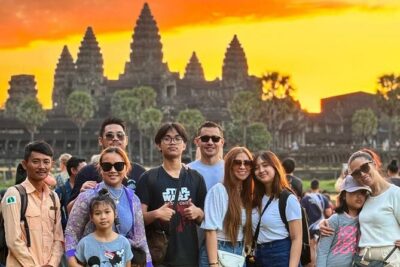
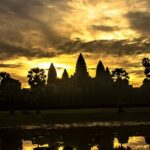
Sunrise at Angkor Wat is worth the early start. This Siem Reap day tour is built around major sights, with Angkor Wat views plus a local English-speaking guide who ties the scenes to Cambodian culture, art, and history. I especially like how it mixes top-name temples with hands-on context, not just photo stops.
One big thing to think about: the tour price does not include the Angkor temple admission pass (and meals aren’t included either), so your total cost will depend on which pass you buy.
In This Review
- What You’ll Get From This 8-Hour Angkor Tour
- Key Highlights at a Glance
- Booking Price and Real Value (It’s $22, but add the pass)
- Pickup at 9am and How the Day Flows in Air-Conditioned Comfort
- South Gate of Angkor Thom: Bayon and the Faces You Can’t Unsee
- Ta Prohm and Bayon Pairing: Jungle Temple Energy, Without the Guesswork
- Angkor Wat After Lunch: Lush Trees, Stones, and Big Views
- Bakheng Hill and King Jayavarman VII: Sunset Views With a Story
- Shared Tour vs Private Group: Pick Your Pace
- Your Guide’s Role: How to Get More Than Photos
- Practical Notes: Passes, Lunch, and Getting Picked Up
- Should You Book This Angkor Temples Tour?
- FAQ
- Do I need an Angkor pass for this tour?
- Is Angkor Wat admission included in the tour price?
- What’s included in the $22 per person price?
- Are meals included?
- What time does the tour start and how long is it?
- What temples are included in the itinerary?
- Do I have a choice between shared and private tours?
- How does hotel pickup work and what information do I need to provide?
- What is the cancellation policy?
What You’ll Get From This 8-Hour Angkor Tour
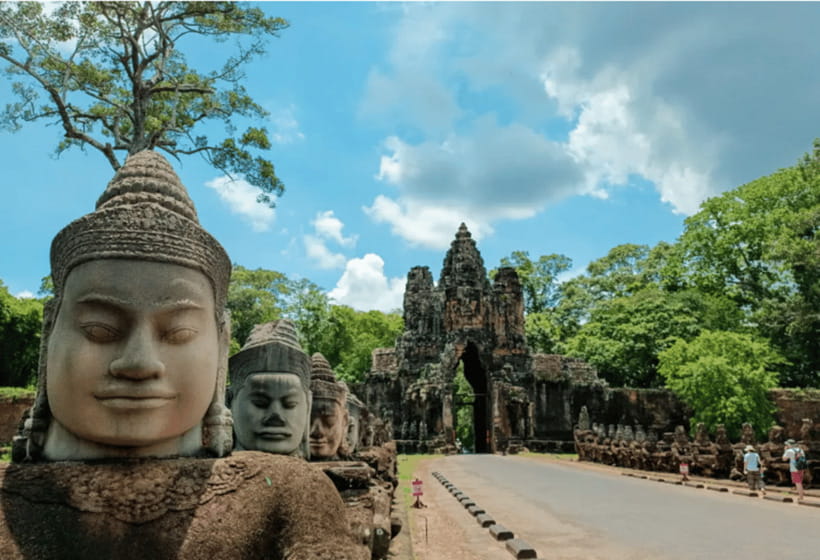
This is a structured day that makes sense if you want the highlights without planning each ticket line and route yourself. You start with hotel pickup (air-conditioned vehicle) and move through the South Gate area, Angkor Thom sights, Angkor Wat, and then up to Bakheng Hill for a sunset look. The tour runs about 8 hours and includes bottled drinking water and a cold towel, plus a guide who explains what you’re seeing as you go.
If you’re short on time in Siem Reap, this type of route is efficient. It’s also a good fit if you want to understand why these places mattered to the Khmer empire, rather than just reading captions on your phone.
One possible drawback is simple budgeting: the ticket system is separate, and meals are not part of the package.
Key Highlights at a Glance
- Sunrise-focused timing with Angkor Wat views built into the day
- Local English-speaking guidance on Khmer history and temple meaning
- South Gate of Angkor Thom loop including Bayon and Ta Prohm
- Angkor Wat visit after lunch with views of stones surrounded by trees
- Bakheng Hill at sunset, linked to King Jayavarman VII
You can also read our reviews of more guided tours in Siem Reap
Booking Price and Real Value (It’s $22, but add the pass)
The published price is $22 per person for an 8-hour shared tour, including an English-speaking guide, round-trip transfers from your hotel, bottled water, and a cold towel. For many first-time visitors, that’s the real value: you pay for transport and a guide who can point out what to notice.
But here’s the part that affects your final cost: Angkor passes are required to enter the temples. The pass options listed are USD37 for one day, USD62 for three days, and USD72 for seven days, and they need to be used on consecutive days. The tour specifically notes that Angkor Wat admission is not included, so you should treat the $22 as the guided-transport day component, then budget the pass on top.
Meals and beverages aren’t included either. That means you’ll still want a plan for lunch timing, especially since the day includes lunch between the Angkor Thom section and Angkor Wat.
Pickup at 9am and How the Day Flows in Air-Conditioned Comfort
You begin with early pickup from your hotel at 9am and travel by air-conditioned vehicle to the temple area. The day is organized around the South Gate entrance and then a sequence of temple neighborhoods, which helps keep things logical instead of hopping randomly around the park.
You’ll visit the main entrance of the south gate first, then move on to the South Gate of Angkor Thom. This matters because the Angkor complex isn’t laid out like a simple city grid. Starting with the gates gives you orientation fast, so later stops feel connected rather than separate.
Included items like bottled drinking water and a cold towel are small but useful. Cambodia’s sun can be relentless, and having cooling support makes a long day feel more manageable.
One note to keep you from getting surprised: the tour highlights sunrise viewing, but the pickup time listed is 9am. Sunrise is usually much earlier than that, so I’d suggest confirming the exact departure time for your pickup day when you message the operator.
South Gate of Angkor Thom: Bayon and the Faces You Can’t Unsee
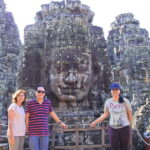
After reaching the main South Gate entrance area, the route continues into the South Gate of Angkor Thom. This is where the tour starts building momentum: you’re not just walking through stone rooms, you’re moving through the symbol system of the Khmer empire.
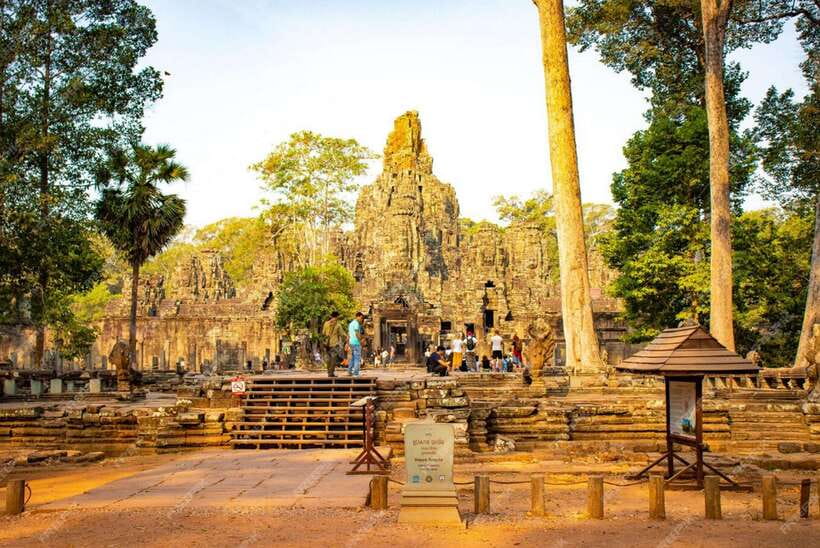
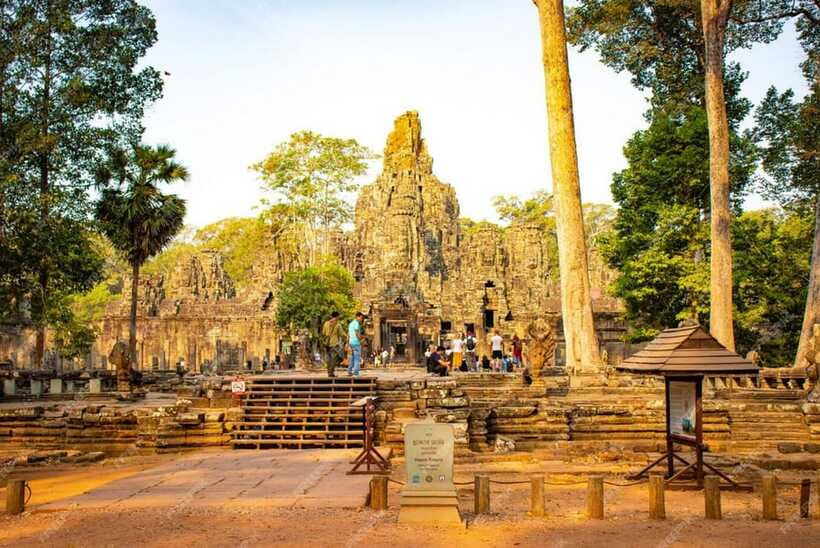
From here, you’ll see Bayon and Taprohm (listed as Taprohm, often associated with the famous Ta Prohm jungle temple experience). A key reason this section is so satisfying is the way the guide frames it. The tour description says you’ll listen to historical facts about the temples and the Khmer empire, which is what turns a crowded temple stop into something you can actually follow.
Bayon is the kind of place that rewards attention. Even if you don’t memorize dates, you can still understand the design idea when someone explains what you’re looking at and why the architecture is the way it is.
For the “watch your time” crowd: this stop is part of a structured flow, so you can enjoy it without spending the whole day trying to figure out your own route.
Ta Prohm and Bayon Pairing: Jungle Temple Energy, Without the Guesswork
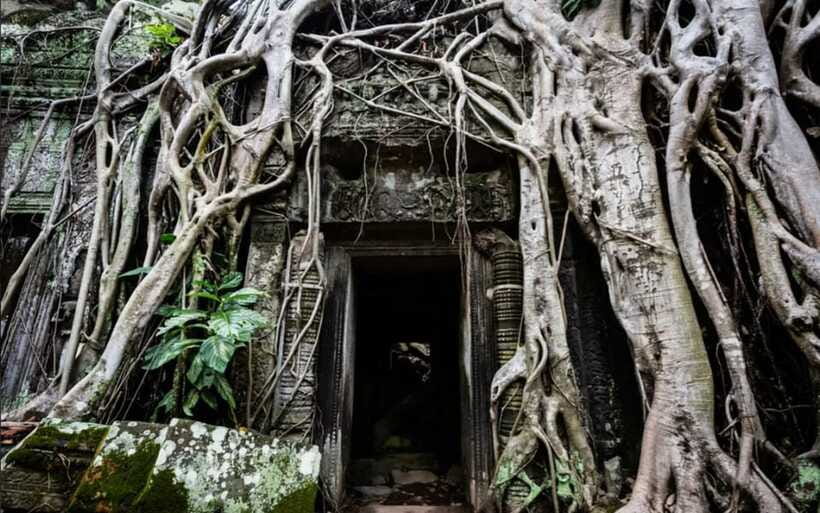
The tour includes both Bayon and Taprohm as part of the South Gate of Angkor Thom segment. That pairing can be a smart way to experience the contrast in Angkor’s temple styles. Bayon’s attention feels more architectural and symbolic, while Taprohm has the “temple swallowed by nature” mood that people come to photograph.
Even if you’re focused on the big names, I like this combination because it gives you variety within the same area. You don’t waste the afternoon only chasing one aesthetic.
The guide’s job here is especially valuable. Without context, it can be easy to treat temples like a checklist. With an English-speaking guide explaining historical facts and cultural meaning, you’re more likely to notice patterns like how stonework is arranged and how the setting affects the experience.
Also, because lunch happens after this segment, you get a clear midpoint in the day. It helps you avoid the “we’ll eat later” trap that ruins temple days for a lot of people.

Angkor Wat After Lunch: Lush Trees, Stones, and Big Views
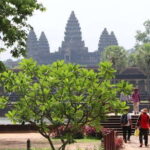
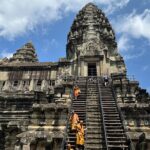
After lunch, the tour heads to Angkor Wat. This is one of those visits where the timing matters because lighting and crowd patterns change throughout the day. The tour specifically calls out a view of lush trees surrounding the temple’s stones, which is one of the visual features that makes Angkor Wat feel alive even when you’re standing still.
What I like about visiting Angkor Wat on a guided schedule is that you don’t have to decide what matters most on your own. You’re guided to a set experience: see Angkor Wat, then take in the tree-filled framing around the stonework.
Angkor Wat is also the place where you start noticing why the Angkor complex has such a strong pull on art and architecture fans. Even when you’re not a history person, the sheer precision and scale start to register. A guide can keep you from turning this into just another impressive building.
One practical reminder: Angkor Wat admission is not included, so make sure your pass is ready before you enter.
Bakheng Hill and King Jayavarman VII: Sunset Views With a Story

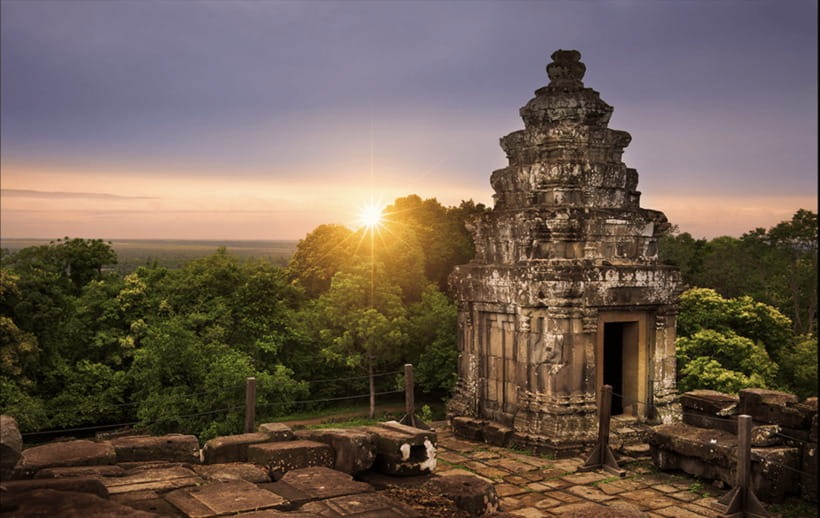
The day ends with a visit to Bakkheng Hill and the temple there. This stop is tied to King Jayavarman VII and is described as being built in the late 12th century, which gives the sunset view a little extra meaning beyond the photo moment.
The tour also mentions returning to your hotel after this, so Bakheng is essentially your final “big light” experience before you’re back in Siem Reap.
A hilltop sunset can be a different kind of reward than a main temple. Instead of focusing on carvings or doorways, you’re thinking in terms of distance, layout, and atmosphere. The guide’s historical context helps too, because it connects the view to the era that created the site.
If you’re the type who likes endings that actually feel like an ending, Bakheng is a strong closer. It gives you a moment to stop moving, look around, and process what you’ve seen.
Shared Tour vs Private Group: Pick Your Pace
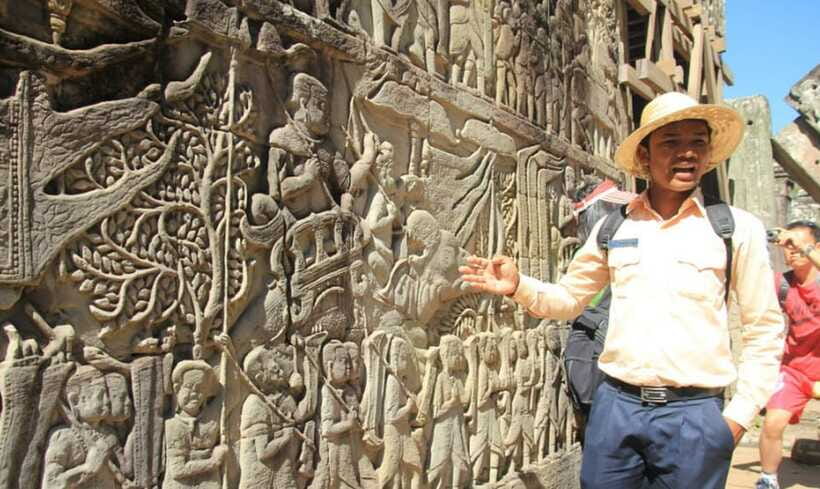
You can choose between a shared group tour or a private tour. The data doesn’t list group sizes, but the difference in your day is usually about pace and attention.
A shared format tends to be better value if you’re flexible and don’t mind following the group flow. It’s also ideal for meeting other people doing similar sightseeing and keeping costs lower.
Private tours are often for travelers who want control: more questions, more time at key points, and fewer timing compromises. If you’re traveling with a small group or you know you’ll want extra explanation on Khmer history and art, private is often the smoother choice.
Either way, the guide is English-speaking, and the day is structured around the same main sites.
Your Guide’s Role: How to Get More Than Photos
The tour includes an English-speaking guide, and the description specifically says you’ll learn about Cambodian culture, art, and history, plus historical facts about the temples and the Khmer empire. That’s the difference between “I saw Angkor” and “I understood Angkor.”
When you arrive at a temple, ask yourself what you’re looking at: the symbolism, the layout, or the setting. A good guide helps you decide where to focus so your brain isn’t just buffering images.
Also, because the itinerary moves through several major stops, the guide’s explanations help connect dots you might miss if you’re just walking from one landmark to the next. Bayon, the South Gate, Angkor Wat, and Bakheng all feel different, but they belong to the same story arc. The guide is what stitches that story together.
If you care about culture and history as much as the views, this is where the tour justifies its guided component.
Practical Notes: Passes, Lunch, and Getting Picked Up
Here’s what you should handle before the day starts.
First, get your Angkor pass sorted. Passes are required to enter temples, and your options are USD37 for one day, USD62 for three days, and USD72 for seven days. The passes must be used on consecutive days, so don’t buy longer than you can realistically use.
Second, remember meals and beverages are not included. The day includes lunch in the middle of the route, but you’ll still need to cover food separately.
Third, the meeting point is tied to your hotel. The guidance says to advise your hotel name, and pickup is optional based on your preferences. The operator contact provided is Peddykeo via email ([email protected]) or WhatsApp, and it mentions room number as well. If your hotel pickup matters to you, message them with your hotel name and room details in advance.
Lastly, confirm the exact timing if sunrise is a top priority for you. The highlights say sunrise viewing at Angkor Wat, while the pickup time listed is 9am, so a quick confirmation can save you stress.
Should You Book This Angkor Temples Tour?
I think you should book this tour if you want a guided highlights day that covers Angkor Wat, Bayon, Ta Prohm/Taprohm, and a Bakheng sunset finale without spending your time on route math. The $22 price makes it approachable, and the included guide, water, cold towel, and transfers add real day-of convenience.
You might skip it or switch approach if you’re on a strict budget after accounting for the Angkor pass and meals. The tour doesn’t include temple admission, and it doesn’t include food, so your total will be higher than the headline price.
If you’re new to Angkor and you like learning as you go, this route is a solid, efficient way to see the main scenes and understand the Khmer story behind them.
FAQ
Do I need an Angkor pass for this tour?
Yes. Angkor passes are required to enter the temples. You can choose a one day pass (USD37), three day pass (USD62), or seven day pass (USD72), and they must be used on consecutive days.
Is Angkor Wat admission included in the tour price?
No. Angkor Wat admission is not included, so you’ll need to purchase the required pass.
What’s included in the $22 per person price?
The tour includes an English-speaking guide, bottled drinking water, round-trip transfers to and from your hotel, and a cold towel.
Are meals included?
No. Meals and beverages are not included.
What time does the tour start and how long is it?
The tour begins with pickup from your hotel at 9am and the duration is listed as 8 hours.
What temples are included in the itinerary?
You’ll visit the main entrance of the south gate area, the South Gate of Angkor Thom (including Bayon and Taprohm), Angkor Wat, and Bakkheng Hill and temple.
Do I have a choice between shared and private tours?
Yes. A private group option is available, and you can choose a shared group or private tour.
How does hotel pickup work and what information do I need to provide?
You should advise your hotel name. Pickup is optional, and the operator asks for your room number as well. You can contact them via email ([email protected]) or WhatsApp.
What is the cancellation policy?
Free cancellation is available up to 24 hours in advance for a full refund.