REVIEW · SIEM REAP
Siem Reap: Angkor Wat Private Tour by Tuk Tuk
Book on GetYourGuide →Operated by Tour Guide Team in Siem Reap · Bookable on GetYourGuide
Angkor by tuk tuk feels like time travel with gears. This private Siem Reap tour strings together the big Angkor icons plus a few calmer temples, all with a local tuk tuk ride and a driver who keeps things moving at your pace. I especially like how it gives you the freedom of private transportation without the hassle of navigating everything alone.
I also love the care details that matter in the heat: cold drinking water is included, and the plan uses short walks and smart temple sequencing so you’re not stuck burning hours in the wrong places. The only drawback to consider is that the temple ticket is not included, so you’ll need to budget extra for entry fees on top of the tour price.
In This Review
- Quick Hits Before You Go
- Why This Tuk Tuk Day Feels More Personal Than a Big Bus
- Morning Pickup in Krong Siem Reap: The Day Starts Easy
- Angkor Wat: Vishnu’s Temple and the Icon You Can Finally See Up Close
- Angkor Thom Through the South Gate: Walls, Moat, and Bayon’s 216 Faces
- Baphuon and Phimeanakas: Causeways, a Giant Reclining Buddha, and a Steeper Climb
- The Royal Palace Esplanade and Shaded Breaks Near Preah Palilay
- Lunch Timing: A Breather Before the Movie-Famous Stones
- Thommanon and Chau Say Tevoda: Smaller Temples With Strong Meaning
- Ta Prohm: The Roots, the Stones, and the 21st-Century Attention
- Price and Value: What $13 Gets You for a Full Private Day
- Who Should Book This Tour (and Who Might Want a Different Option)
- Should You Book This Private Angkor Wat Tuk Tuk Tour?
- FAQ
- What’s included in the tour price?
- Is the temple ticket included?
- How long is the tour?
- Is it a private tour or shared with other people?
- Where does the tour start?
- What temples are visited in the day?
- Does the tour provide drinking water?
- Can I cancel for a refund?
Quick Hits Before You Go
- Private tuk tuk from your hotel with an English-speaking, licensed driver
- Skip-the-line entry via a separate entrance at the temples
- Angkor Wat + Angkor Thom + Ta Prohm in one full day without running a marathon
- Cold drinking water included, so dehydration is less of a worry
- A friendly, patient driver experience is repeatedly praised (names like Rachou, Sona, and Pholla show up in reviews)
Why This Tuk Tuk Day Feels More Personal Than a Big Bus

Angkor is famous, but it can also feel crowded. The value of this tour is that it’s 100% private, so you’re not squeezed into the same schedule as a pack of strangers. When you can pause for photos, switch viewpoints, or linger a bit longer at a carvings-heavy spot, Angkor becomes more readable.
The tuk tuk also changes the vibe. A car feels like transportation. A tuk tuk feels like you’re traveling inside the scene, not just getting to it. In a place with temples, walls, gates, and long sightlines, that local rhythm helps you notice the details.
And the driver side matters more than you’d think. The reviews I saw repeatedly praised patient attitudes and clear communication, with people naming drivers and guides like Rachou, Sona, and Pholla. That’s a strong sign you’re not getting a rushed, scripted experience.
You can also read our reviews of more private tours in Siem Reap

Morning Pickup in Krong Siem Reap: The Day Starts Easy
You’re picked up from the hotel lobby in Krong Siem Reap, then transferred into Angkor for the first major stop. The practical win here is simple: you don’t waste your morning coordinating transport or trying to read schedules before your first temple.
The tour is also set up with hotel drop-off at the end, so you get a clean one-day loop. That’s especially helpful if you’re staying a bit outside the central area or you’d rather not spend extra time figuring out return logistics after a long day of walking.
Angkor Wat: Vishnu’s Temple and the Icon You Can Finally See Up Close
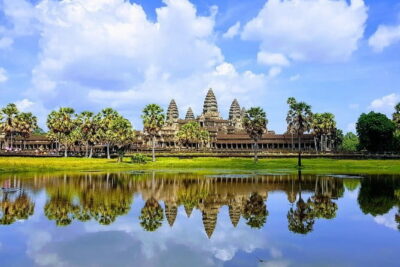
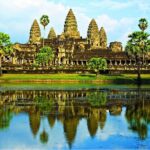
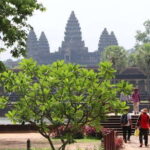
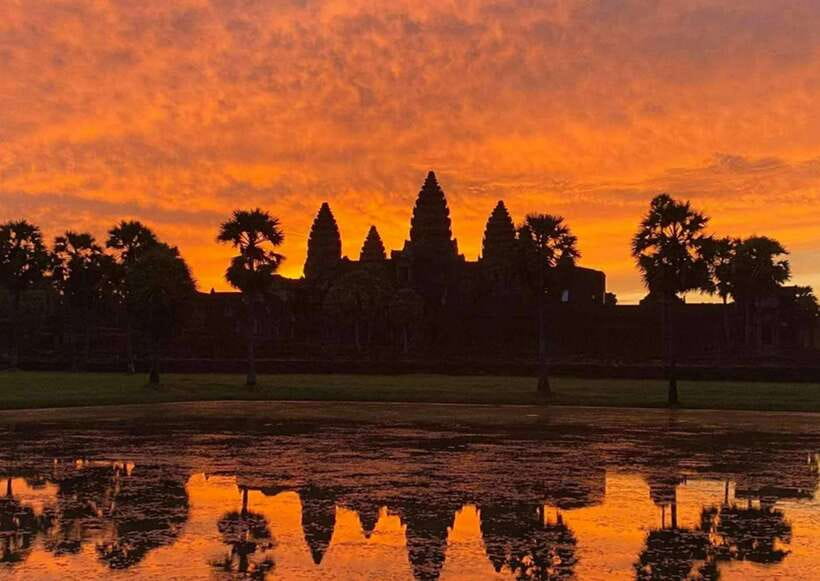
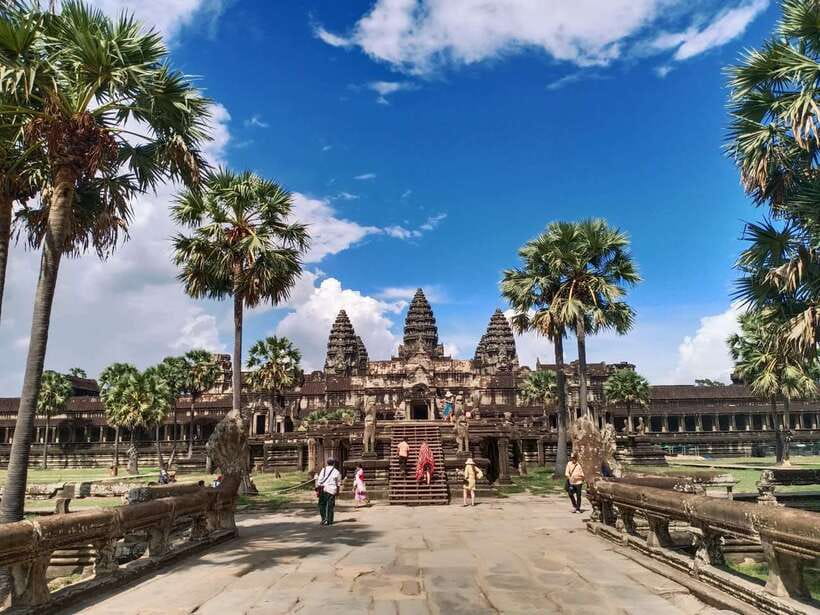
Angkor Wat is the reason many people come to Cambodia. It’s also the temple that sets the tone for everything else you’ll see. You visit in the morning, and you’ll have about 3 hours for sightseeing and walking.
Angkor Wat’s story is part of the awe: built in the early 12th century by King Suryavarman II in Yasodharapura (the Khmer capital, Angkor), it was dedicated to Vishnu. That’s a meaningful shift from earlier kings’ traditions. It’s not just a pretty monument; it’s a statement of how Khmer kings wanted their power and religion to connect.
Here’s what I’d focus on while you’re there:
- The scale and symmetry. Angkor Wat is famous for being well preserved, and that matters because you can trace the design without it becoming guesswork.
- The way it works visually from different angles. The temple isn’t a single view—it’s a sequence.
- The symbolism. Angkor Wat even appears on Cambodia’s national flag, which makes the whole complex feel like more than tourism.
The tour includes skip-the-line entry through a separate entrance. That won’t make the day shorter, but it can make your experience smoother when crowds are heavy.
Angkor Thom Through the South Gate: Walls, Moat, and Bayon’s 216 Faces
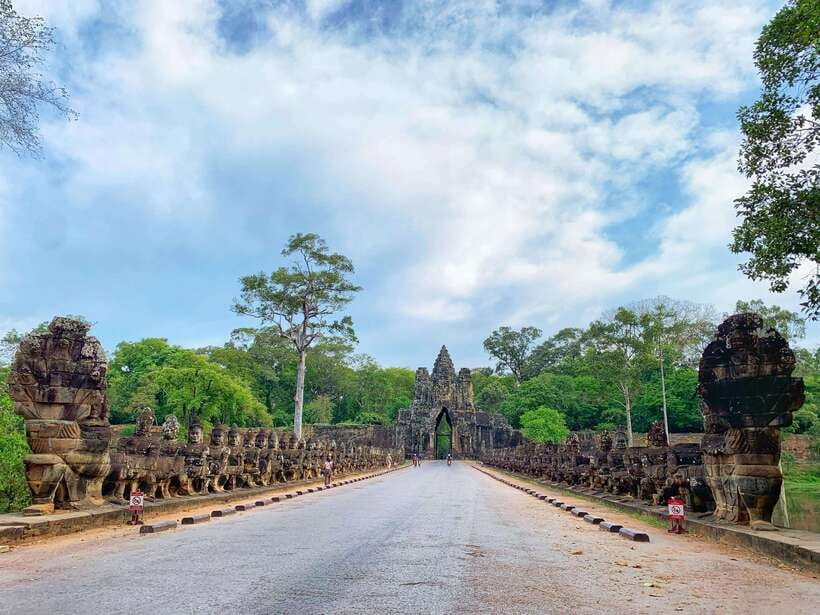
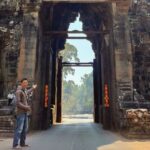
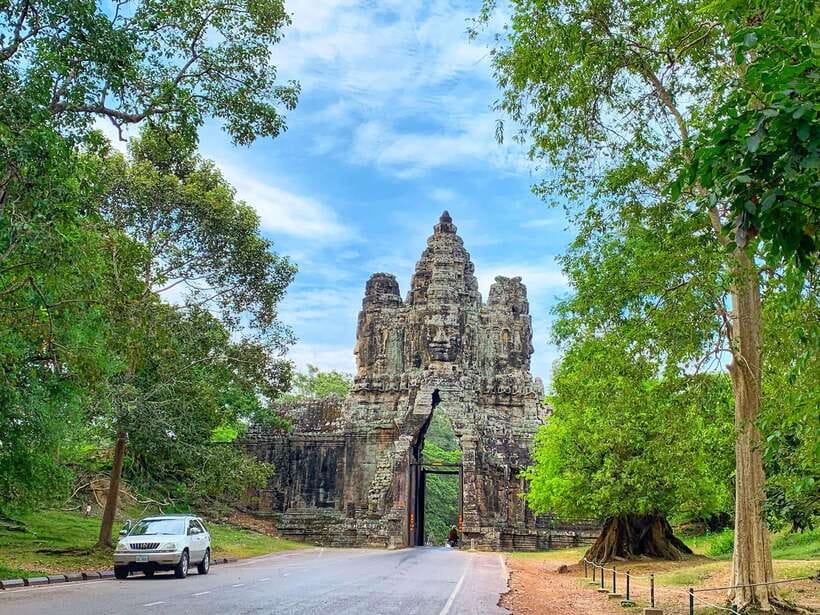
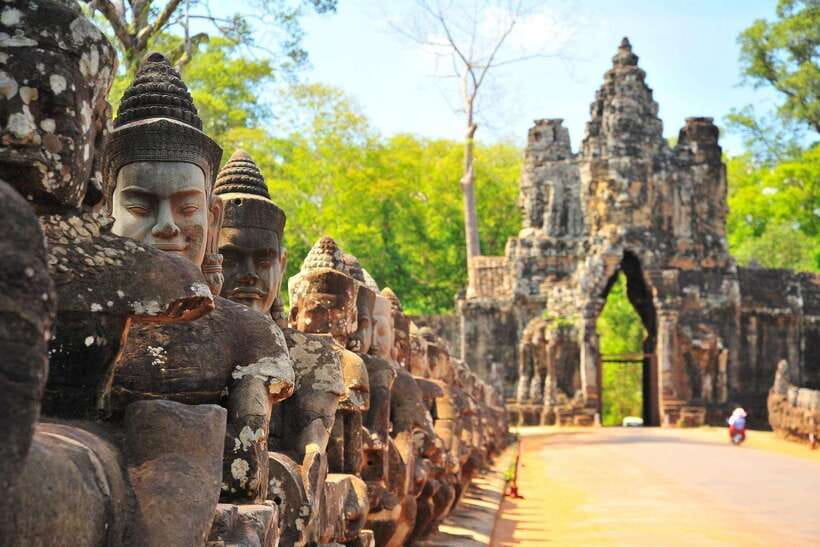
After Angkor Wat, you head to Angkor Thom, entering through the South Gate (Tonle Om Gate). There’s a short photo stop and a brief walk time here, about 15 minutes, which is enough for orientation without dragging you away from the main sights.
Angkor Thom is defined by its defensive scale. The wall rises about eight meters, and it measures roughly 3 x 3 km, designed to guard treasures inside. A moat still holds water, which is a reminder that Angkor wasn’t only about religion and kings—it was also a fortified city.
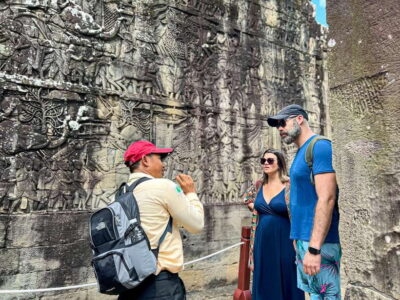
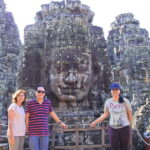
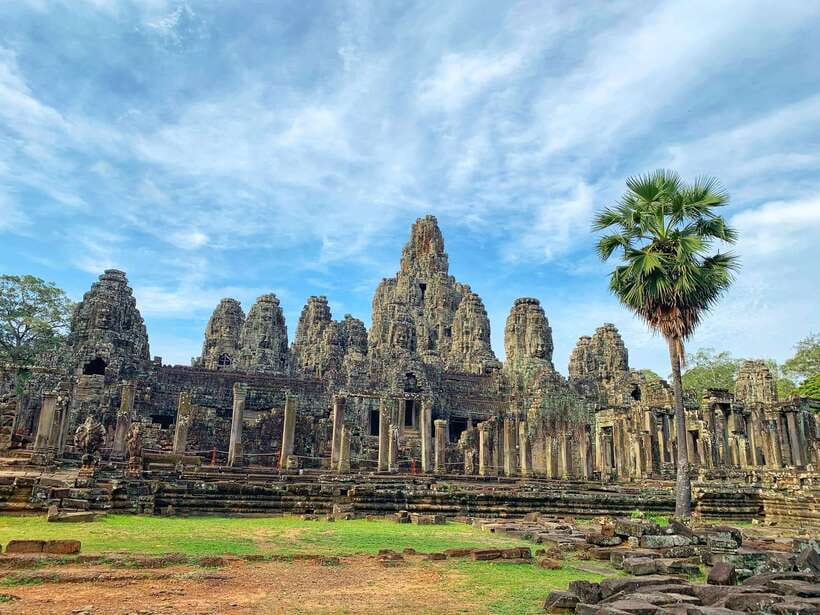
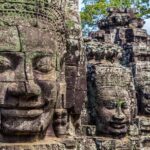
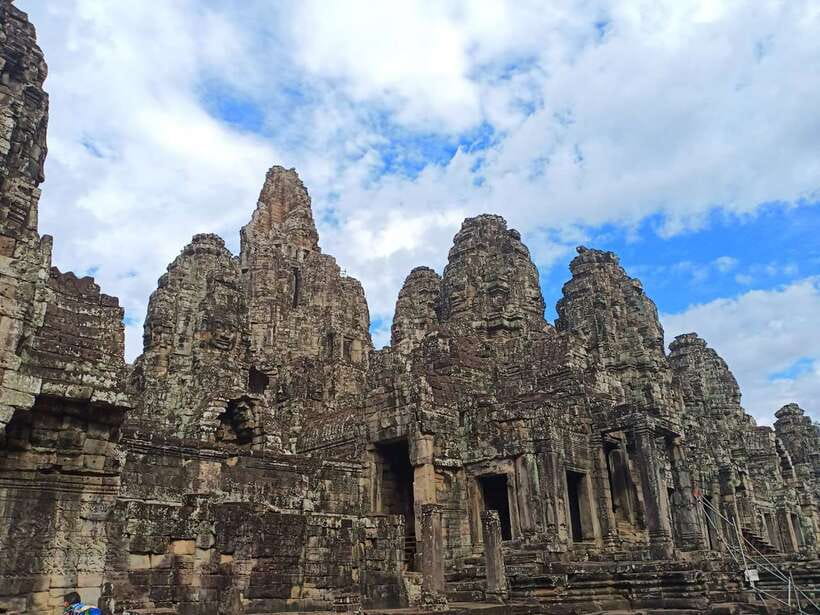
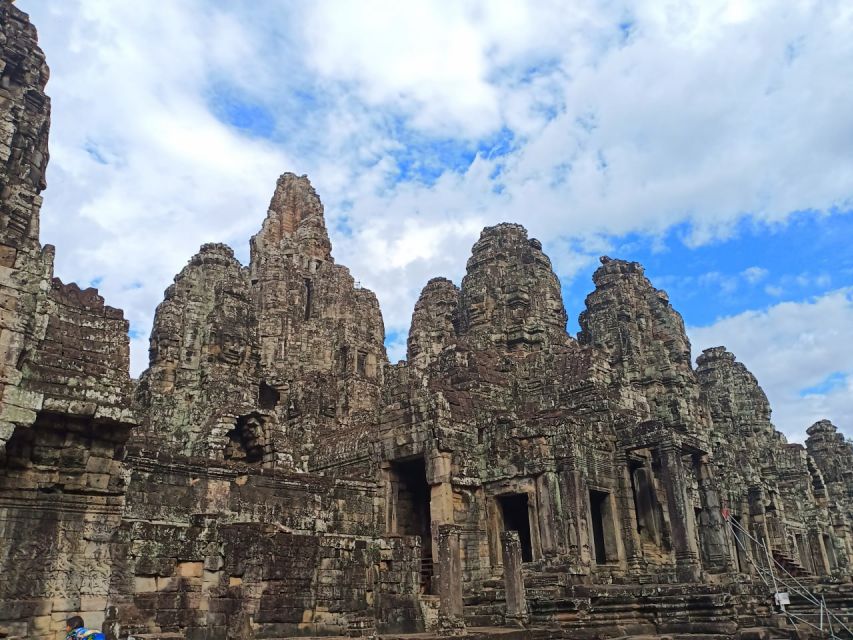
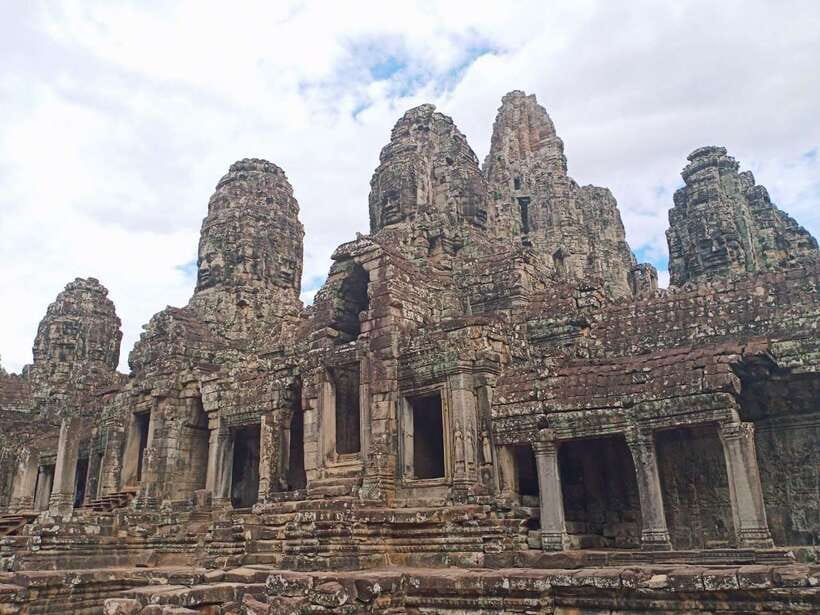
Then you reach the center: Bayon Temple. Expect around 1.5 hours here, including photos and time to walk. Bayon is known for the face towers—216 enigmatic faces—and they make a strange kind of sense as you move. From certain angles they feel steady and watchful; from others they look like they’re changing with you.
What makes Bayon special is how it sits in the middle of everything. You’re not viewing a distant monument—you’re inside the city core, surrounded by the architecture that once supported civic life.
Baphuon and Phimeanakas: Causeways, a Giant Reclining Buddha, and a Steeper Climb
From Bayon you continue to Baphuon. The tour gives about 30 minutes for photos and walking. Baphuon is tied to the long causeway approach, and it’s famous for a giant Reclining Buddha. One detail that gives this temple extra weight: the Buddha was put back together in 2011 after a long disruption from the war period.
Even with limited time, Baphuon helps you understand how Angkor’s art and reuse worked over the centuries. It’s less about one perfect icon and more about how the Khmer world kept revisiting meaning through rebuilding.
Next comes Phimeanakas, also about 30 minutes. This one is famous for being tucked into shaded jungle and for the reward at the top. The steep steps aren’t for everyone, but if you can handle the climb, the payoff is a view from the height. If you tend to feel rushed during tours, this stop can be a good reset because it naturally forces you to slow down and choose where to look.

The Royal Palace Esplanade and Shaded Breaks Near Preah Palilay
From Phimeanakas, you continue along the Esplanade of the Royal Palace, often called the Terrace of the Elephants, then wind up near Preah Palilay, where the tour aims for shaded time.
There are several quick photo-and-walk stops here, each about 30 minutes:
- Prasat Preah Palilay
- Preah Ponlea Sdach Komlong (Terrace of the Leper King)
- Terrace of the Elephants
These are the stops that help you avoid the common Angkor mistake: only seeing the headline temples. The palace area gives you context—how Angkor used long, ceremonial pathways to shape movement and power.
It also helps with pacing. By the time you reach this section, most people appreciate shade and shorter walks. You don’t need to sprint from stop to stop to feel like you’re getting value.
Lunch Timing: A Breather Before the Movie-Famous Stones
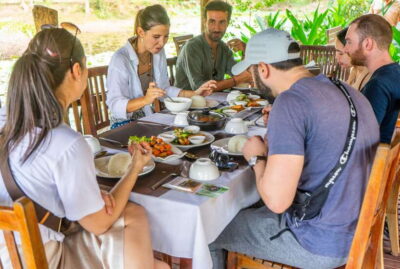
Lunch is built into the day after the Preah Palilay area. You’ll likely be ready for it by then. Angkor days get hot, and the walking adds up faster than you expect—especially if you’re taking photos every time the light hits the stone.
You should also plan for simple hydration habits. Since cold drinking water is included, use it. Sip regularly instead of waiting until you feel tired. In humid heat, that’s the difference between enjoying the afternoon and feeling flat.
Thommanon and Chau Say Tevoda: Smaller Temples With Strong Meaning
The afternoon starts with Thommanon, another temple linked to Suryavarman II, and known as one of a pair of Hindu temples at Angkor. The name ties to the idea of Buddhist teachings and supreme wisdom, so it carries a different tone than the big headline stops.
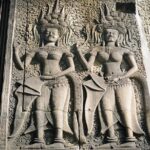
Then you visit Chau Say Tevoda. It sits just east of Angkor Thom, directly south of Thommanon across the Victory Way. Dating to the mid-12th century, it’s dedicated to Shiva and Vishnu and has unique female sculpture styles (devatas). This is the kind of stop that rewards you if you like details, because you can slow down and actually look at how the sculptures are placed and framed.
These two temples are valuable because they make the day feel more layered. You’re not only chasing famous shots—you’re also learning how different temples relate to each other in the broader religious landscape.
Ta Prohm: The Roots, the Stones, and the 21st-Century Attention
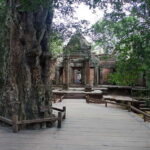
After Thommanon and Chau Say Tevoda, you go to Ta Prohm, one of the most recognizable Angkor temples today. It became widely known through the movie Tomb Raider starring Angelina Jolie as Lara Croft, and Ta Prohm’s fame is deserved.
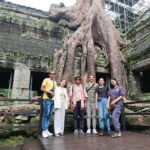
You get about 1 hour here, with time for photos and walking. What makes Ta Prohm special is the visible relationship between living nature and ancient stone. Many corners feature intricate interactions where spung tree roots (Tetrameles nudiflora) spread across ancient structures covered in moss. It’s the kind of scene where every turn looks slightly different.
A practical tip: when the light shifts, the shadows in the ruins change fast. If you’re serious about photos, give yourself permission to pause longer than you planned. One good angle often takes a minute of waiting for the right balance of light and crowd movement.
Price and Value: What $13 Gets You for a Full Private Day
At $13 per person for a 1-day private tour, the value is mainly in three places: transport, time efficiency, and included basics.
You’re getting:
- Private tuk tuk
- Private driver with a license (English speaking)
- Hotel pickup and drop-off
- Toll roads and fee parking
- Cold drinking water
- Gasoline
- Skip-the-line entry via a separate entrance
- 100% private tour for the number of people you book (not a join tour)
The one thing not included is meals and the temple ticket. So your real “all-in” cost depends on entry fees and where you choose to eat. Still, even with ticket cost added, a private day like this can be a strong deal because it saves you from coordinating multiple transfers and dealing with crowded group pacing.
The private part matters most for Angkor. You’re not just buying a ride—you’re buying control over your day.
Who Should Book This Tour (and Who Might Want a Different Option)
This tour is a great fit if:
- You want a private Angkor day without the stress of planning every route
- You enjoy photos and like having time blocks that aren’t too short
- You’d rather ride in a local tuk tuk than sit in a car all day
- You prefer an English-speaking driver who can help with flow and pacing
It may be less ideal if:
- You’re trying to see Angkor at a super-early pace with almost no walking. The itinerary is built around multiple temple stops with real walking time.
- You want meals included. Lunch is on your own plan.
Should You Book This Private Angkor Wat Tuk Tuk Tour?
If you want a day that feels structured but not stiff, I think this is a smart choice. The combination of private tuk tuk, cold water, and skip-the-line entry means you spend your energy on temples, not logistics. And the repeated praise for drivers like Rachou, plus guides like Sona and Pholla, suggests you’re likely to get a calm, accommodating attitude rather than a rushed checklist.
Book it if you’re planning one Angkor day and you want both the big names (Angkor Wat, Bayon, Ta Prohm) and the supportive context temples (Thommanon, Chau Say Tevoda, palace-area stops). It’s the kind of plan that helps you leave with a clearer sense of what you actually saw.
If you want my quick decision rule: if private transport and comfort details matter to you, this is worth it. If you’re trying to go ultra-budget and don’t care about separate entrance and included water, you might compare options—but you’ll likely give up some convenience.
FAQ
What’s included in the tour price?
The tour includes a private tuk tuk, a private licensed driver (English speaking), toll roads, fee parking, cold drinking water, gasoline, and hotel pickup and drop-off. It also includes skip-the-line entry via a separate entrance.
Is the temple ticket included?
No. Temple tickets are not included.
How long is the tour?
This is a 1-day tour.
Is it a private tour or shared with other people?
It’s a private tour. It’s 100% private with the number of people you book, not a join tour with other guests.
Where does the tour start?
You’re picked up from the hotel lobby in Krong Siem Reap.
What temples are visited in the day?
The day includes Angkor Wat, Angkor Thom (including the South Gate and Bayon), Baphuon, Phimeanakas, Preah Palilay, the Terrace of the Elephants area, Thommanon, Chau Say Tevoda, and Ta Prohm.
Does the tour provide drinking water?
Yes. You get cold drinking water during the tour.
Can I cancel for a refund?
Yes. Free cancellation is available up to 24 hours in advance for a full refund.