REVIEW · SIEM REAP
Siem Reap: Angkor Wat with German or English Guided Tour
Book on GetYourGuide →Operated by Journey Cambodia · Bookable on GetYourGuide
Stone temples and jungle trees, plus real guidance. I like how this day trip bundles the big hitters—Angkor Wat and Ta Prohm—into one smooth circuit, with an expert guide in English or German to point out what you’d otherwise miss. I also love the comfort factor: hotel pickup, private air-conditioned transport, and plenty of cold drinks to make the heat manageable.
One thing to plan for is the extra cost at the gates. The $49 tour price does not include the $37 temple entrance fee, and meals are not included either, so bring cash and don’t expect lunch to be part of the deal.
In This Review
- Key highlights worth your attention
- Why this Angkor small-circuit day just makes sense
- Pickup and transport: getting to Angkor without burning your whole morning
- Angkor Wat for 2 hours: how to focus on bas-reliefs and symmetry
- Ta Prohm in the jungle: getting the best “tree on stone” views
- Srah Srang break: a real pause before the Angkor Thom push
- Angkor Thom and Bayon: south gate gods and the faces that follow you
- The guide factor: what you’re really paying for
- Price and value: what $49 really buys you
- What to bring (and what to avoid) for a smoother Angkor day
- Best fit: who should book this tour
- Should you book this Angkor Wat guided tour?
- FAQ
- What’s included in the tour price?
- What entrance fees do I need to pay separately?
- Are meals included?
- How long is the tour?
- What languages are the guides?
- Does the tour help with ticket lines?
- Where is the pickup point?
- What should I bring?
- Is this tour wheelchair accessible?
- What isn’t allowed during the tour?
Key highlights worth your attention
- Skip-the-line temple entry so you lose less time waiting and more time looking.
- Two-language guiding (English or German) with clear explanations of Khmer architecture and temple layout.
- Angkor Wat’s bas-reliefs and classical design covered with enough time to actually see details.
- Ta Prohm’s tree-and-stone maze so you can slow down and find your bearings.
- Angkor Thom’s south gate + Bayon faces giving you the story of gods, demons, and the fortified city.
- Frequent comfort touches during hot stops like bottled water and cold refreshments.
Why this Angkor small-circuit day just makes sense
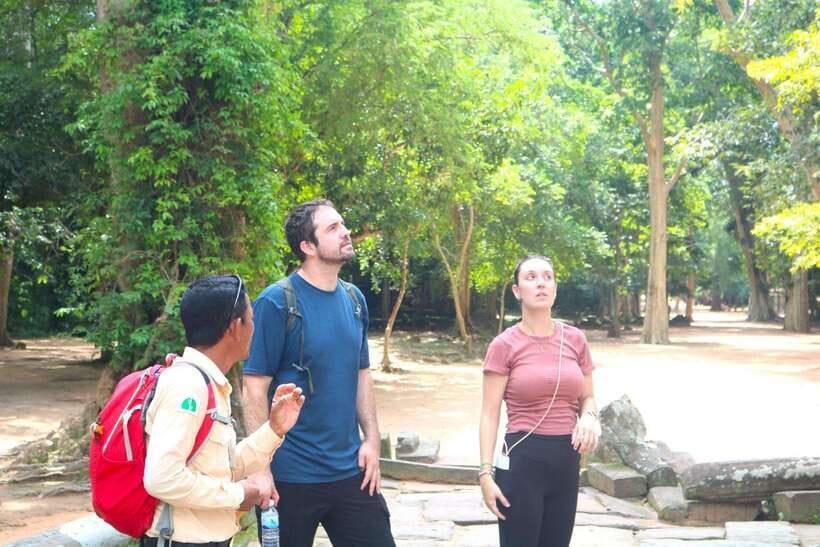
Angkor can feel like one giant blur if you only show up, take photos, and leave. What I like about this 8-hour format is that it’s built around the temples most people actually came for, without turning your day into a marathon of random stops.
You’re covering the classic core in a logical flow: Angkor Wat first, then Ta Prohm, and later Angkor Thom and Bayon. That order matters. It helps you build context as you go, so the carvings and religious symbolism start to click instead of staying cryptic.
Also, you’re not stuck relying on a map while everyone else is sprinting. With a live guide, you get pacing and priorities. That’s the difference between seeing temples and understanding why they were designed the way they were.
You can also read our reviews of more guided tours in Siem Reap
Pickup and transport: getting to Angkor without burning your whole morning
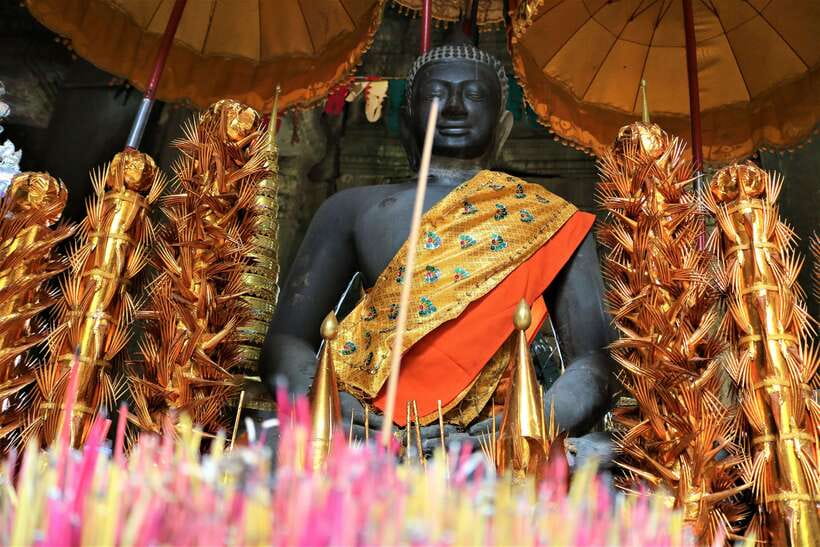
This tour starts with hotel pickup in Siem Reap and uses a private air-conditioned vehicle. There’s even a short van ride (about 20 minutes) to get you into the Angkor Wat area so you start sightseeing sooner, not later.
Practically, private transport is one of the best upgrades in Siem Reap. You can sit back, keep your water handy, and avoid the hassle of hopping between tuk-tuks as the schedule tightens.
The other comfort piece is bottled water included in the tour. In Cambodia’s heat, that small detail can save your energy for walking and climbing steps that aren’t exactly gentle.
Angkor Wat for 2 hours: how to focus on bas-reliefs and symmetry

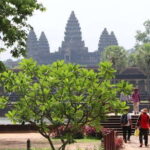
Angkor Wat gets a lot of hype, but hype isn’t the same as good viewing time. Here, you get a guided walkthrough for about 2 hours, which is enough to slow down and actually notice the temple’s language of stone.
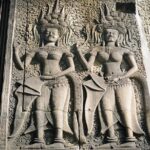
You’ll explore a classic Khmer layout, then spend time looking at intricate bas-reliefs from the 12th century. The guide’s job is to translate what you’re seeing: scenes, patterns, and the way the carvings connect to religious stories and royal power.
If you’re the kind of person who likes structure, Angkor Wat is satisfying. It’s orderly. It’s symmetrical. And when you know where to look—edge details, repeating motifs, and major story panels—the whole place stops being just “pretty ruins” and becomes a living artwork.
A heads-up: wear comfortable shoes. Even with a guide, there’s walking, uneven stone, and plenty of standing in sun.
Ta Prohm in the jungle: getting the best “tree on stone” views
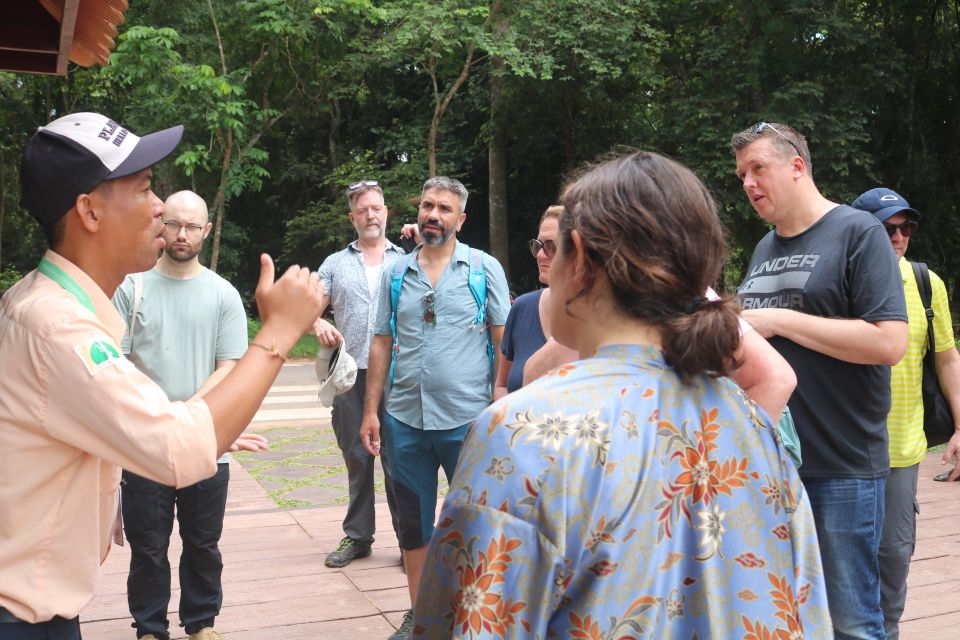
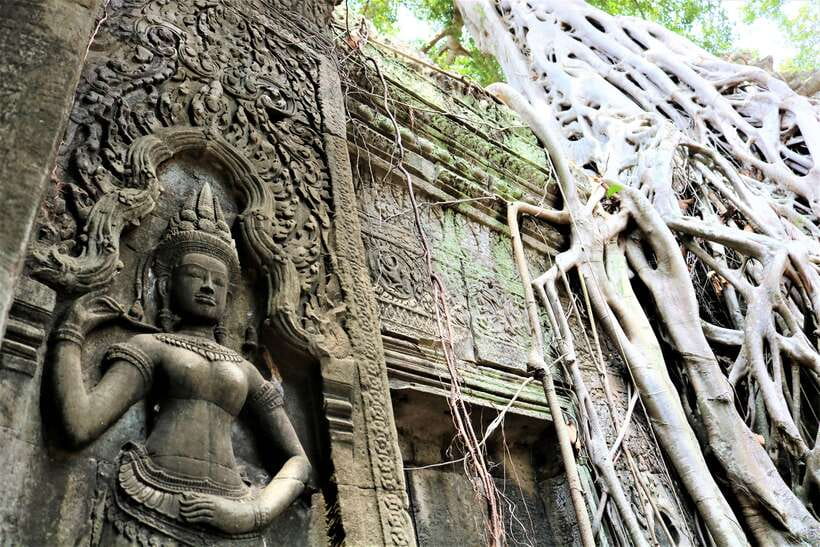
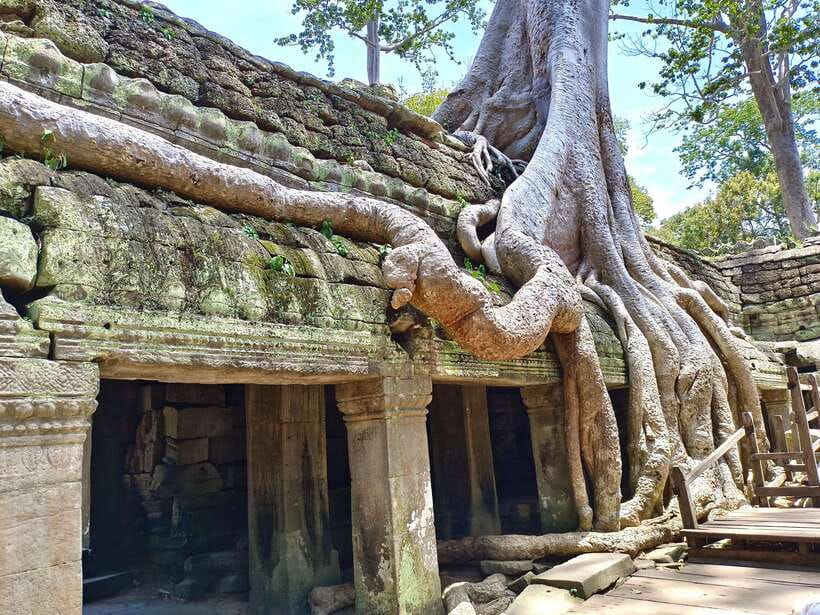
Ta Prohm is the temple where the jungle seems to have swallowed the buildings on purpose. You’ll have about 1 hour here with a guided tour and time to walk through the maze-like interior.
This is where good guiding really helps. Without context, it’s easy to wander in circles. With a guide, you can orient yourself, learn what to watch for, and find the angles that make the famous tree roots and collapsed walls look like the showpiece they are.
The best part of Ta Prohm is the texture. You’re not only looking at carvings now; you’re watching how stone, roots, light, and shadow interact. If it’s hot when you arrive (it usually is), that hour goes faster when you pace yourself.
Also, this is one of the most photogenic stops, so expect plenty of people around key photo spots. Go where your guide directs you, not just where the crowd funnels you.
Srah Srang break: a real pause before the Angkor Thom push
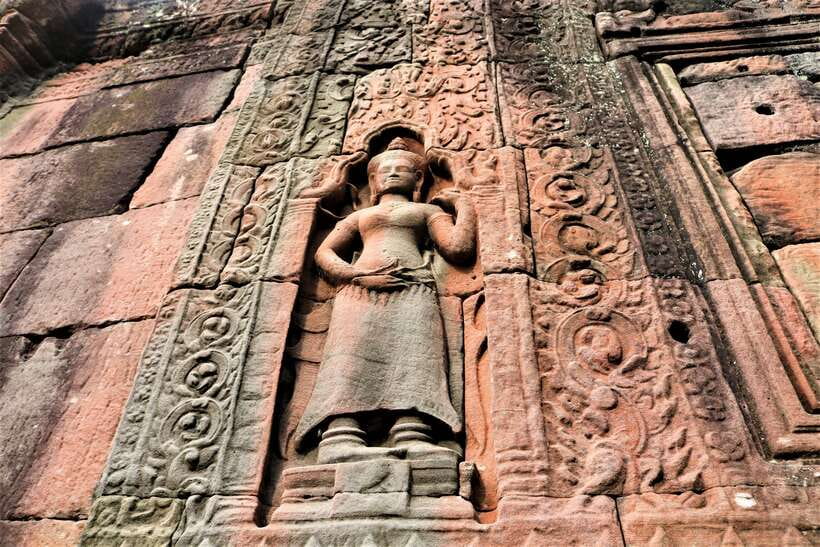
After Ta Prohm, you get a break and free time at Srah Srang for about 1 hour. This stop is useful even if you don’t love “water temple views.” It gives you a chance to reset—use the restroom, rehydrate, and adjust your plan for the afternoon.
Because meals aren’t included, this break matters. You can handle snacks, coffee, or a simple lunch on your own schedule. Just remember: the tour itself does not provide meals, so keep some cash and plan for what you’ll eat.
In hot weather, having a built-in pause can be the difference between enjoying the temples and feeling fried by the time you reach Bayon.

Angkor Thom and Bayon: south gate gods and the faces that follow you
Angkor Thom is a fortified city, not just another temple stop. Here you’ll start with the southern gate, famous for the 54 stone figures of gods and demons. Those figures aren’t random decoration. They set the tone for the whole complex, so you’ll understand the “myth meets stone” vibe before you step deeper into the city.
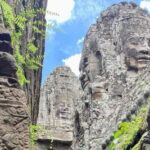
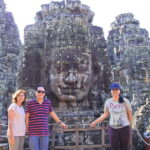
Then you move toward Bayon Temple, including about 30 minutes in the Angkor Thom portion and around 1 hour specifically at Bayon. Bayon is where the mood shifts. Instead of long, continuous walls of carvings, you get repeated faces watching from towers.
The guide’s explanations help you connect those faces and symbolism to what the Khmer rulers were trying to project: authority, religion, and cosmology all at once. Without that layer, Bayon can feel like a cool photo site. With it, Bayon becomes more than a backdrop—it becomes a statement.
You’ll also pass by the Terrace of the Leper King and the Terrace of the Elephants during the Angkor Thom segment. Those terraces reward slow viewing. If you rush, you miss what makes them memorable: the storytelling in the stone and the way the terraces function as stages for ceremonies and movement through space.
The guide factor: what you’re really paying for
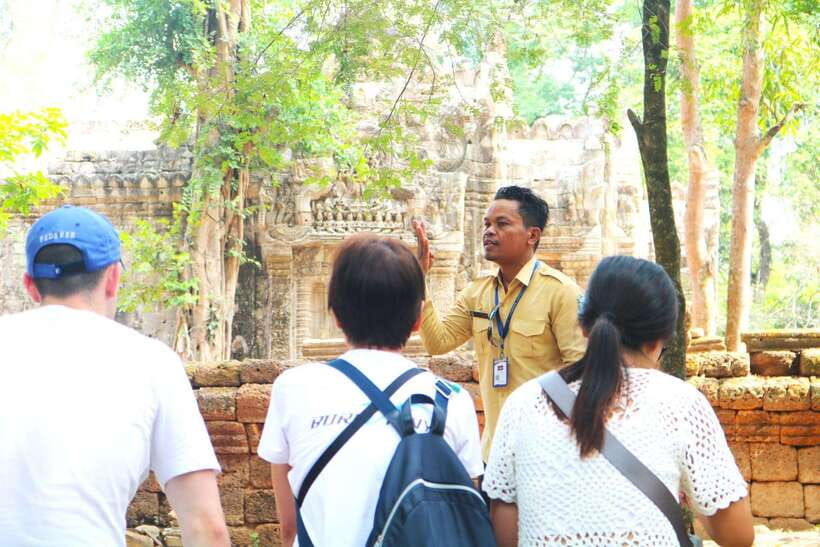
At Angkor, a good guide doesn’t just describe history. They point you to details that make the day make sense. This matters because many temple visitors leave with the same complaint: I saw it, but I didn’t really get it.
Here, guides in English or German often do two things extremely well:
1) They explain Khmer architecture in plain terms
2) They help you find strong photo angles, not just random snapshots
In the real-world experience of this tour, guides you may encounter include Sak, Sam, Sopheap Rath, Pi, Sokhuoch, Setha, Chen, Bun, Seng, and Noy. Different personalities, same focus: turning stone into story.
You also tend to get practical support on comfort and pacing. People mention cold water and wet face towels during hot stops, plus drivers who take careful routes and keep the day running on time. Those details may sound small, but they’re huge on a 8-hour temple day.
One more perk: flexibility. If you want to stick to the strongest trio (Angkor Wat, Bayon, Ta Prohm) or you want an extra stop idea, your guide can often help you shape the day around what you care about most, as long as timing works.
Price and value: what $49 really buys you
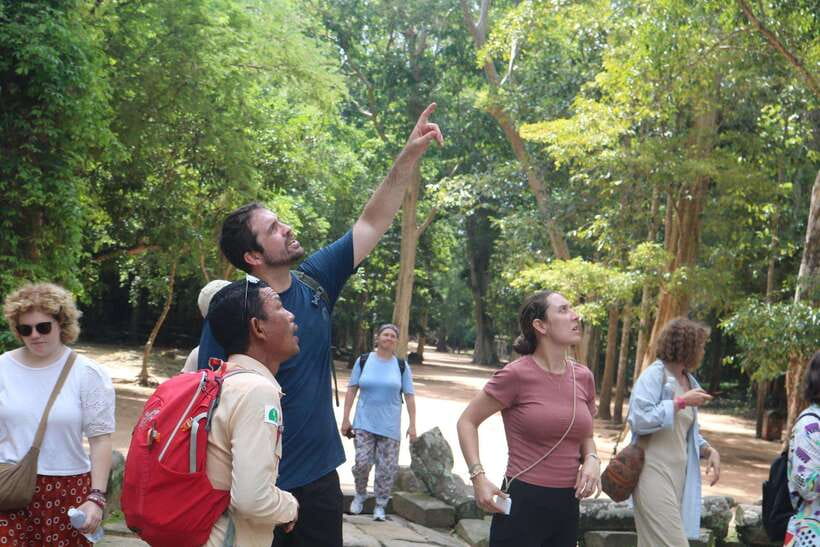
Let’s talk math without fluff.
- Tour price: $49 per person
- Temple entrance fee: $37 per person (not included, covers all the temples)
- Meals: not included
So your “all-in” expectation is roughly $86 plus meals, assuming one person and the standard entrance fee.
What makes that value reasonable is what’s wrapped into the $49:
- hotel pickup and drop-off
- a live guide (English or German)
- private air-conditioned transport
- bottled water
- skip-the-ticket-line advantage
If you’ve ever tried to cobble together a temple day on your own, you know how quickly the cost rises and how easily time gets eaten by logistics. Paying for the guide and organized routing is what buys you time on the temples themselves.
Also, the tour runs about 8 hours. That’s an efficient length for most people who want major sites without spending the entire day lost in planning.
What to bring (and what to avoid) for a smoother Angkor day
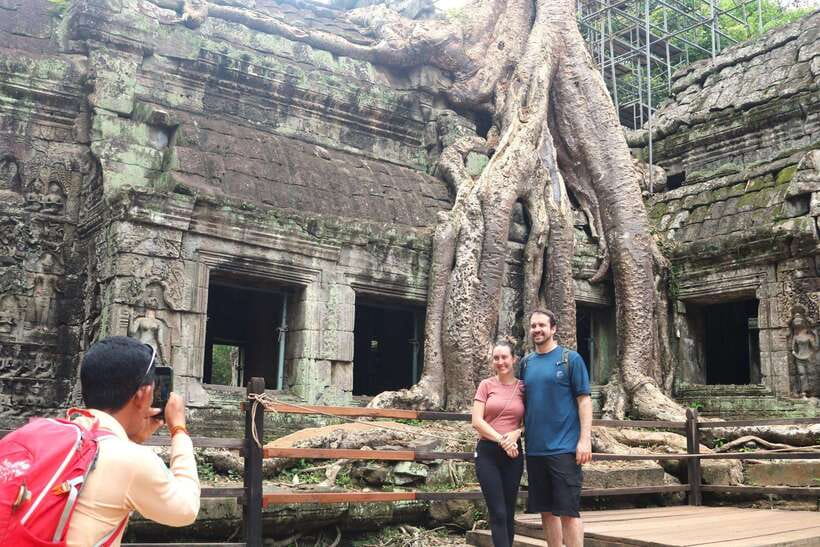
Angkor is worth dressing for. Use this list like your checklist before you leave Siem Reap.
Bring:
- comfortable shoes (you’ll thank yourself later)
- sunglasses and a hat
- camera (with charged batteries)
- insect repellent
- cash (especially since the entrance fee and meals aren’t included)
Not allowed:
- shorts
- smoking
- pets
- luggage or large bags
Two more reality notes:
- This tour isn’t suitable for wheelchair users.
- Most people can do it, but it’s still a temple day with walking and sun exposure.
Best fit: who should book this tour
This tour is a good match if you:
- want the main Angkor hits in one day
- prefer a guide explanation instead of guessing your way through carvings
- like photo help with good angles and less crowd chaos
- want private transport with air-conditioning and included bottled water
It’s less ideal if you need wheelchair access, or if you strongly dislike walking in heat.
If you’re the type who loves deep architectural detail, you’ll appreciate the bas-reliefs time at Angkor Wat and the structured look at Bayon and the terraces. If you’re more of a “show me the must-sees” visitor, the small-circuit approach keeps the day from feeling random.
Should you book this Angkor Wat guided tour?
If you want a clear plan for one full day, this is a smart booking. The combination of Angkor Wat + Ta Prohm + Angkor Thom/Bayon hits the big visual and story landmarks people come to see, and the guide experience is a major part of why the day feels organized instead of stressful.
The decision hinges on two things:
1) You’re okay paying the extra $37 entrance fee and handling meals on your own.
2) You’re comfortable with a walking-heavy 8 hours in warm weather.
If both are true for you, book it. You’ll get a well-paced temple circuit, strong guiding in English or German, and a day that keeps you focused on the places that matter most at Angkor.
FAQ
What’s included in the tour price?
Hotel pickup and drop-off, a live guide, transportation by private air-conditioned vehicle, and bottled water are included.
What entrance fees do I need to pay separately?
The temple entrance fee is $37 per person, and it covers all the temples. This fee is not included in the $49 tour price.
Are meals included?
No. Meals are not included in the tour.
How long is the tour?
The duration is 8 hours.
What languages are the guides?
Guides are available in English and German.
Does the tour help with ticket lines?
Yes. The tour includes skip the ticket line.
Where is the pickup point?
The pickup location is listed as 57 2 Thnou St.
What should I bring?
Bring comfortable shoes, sunglasses, a hat, a camera, insect repellent, and cash.
Is this tour wheelchair accessible?
No. It’s not suitable for wheelchair users.
What isn’t allowed during the tour?
Shorts, smoking, pets, and luggage or large bags are not allowed.