REVIEW · SIEM REAP
Siem Reap: Floating Village Half-Day Tour
Book on GetYourGuide →Operated by Tara Riverboat · Bookable on GetYourGuide
The lake moves, and so does life. On this Siem Reap half-day boat tour, you’ll cruise Cambodia’s Tonle Sap and see floating village life firsthand, with a guide explaining the famous twice-yearly river reversal. It’s a small-group trip that trades temple crowds for real daily rhythms on the water.
Two things I really like are how the day blends land and lake—rice paddies and lotus farms on the way, then real time on the water—and the quality of the guiding. I’ve heard English that’s clear and practical from guides like Mr. Friday and Mr. Mony, who translate what you see into human stories you can actually use.
One possible drawback: the tour runs on Tonle Sap water levels, so the route and how much you do at certain stops can vary. If you’re very uncomfortable with animals being used for tourism, the crocodile-and-fish-farm portion is the one place you may want to mentally prepare.
In This Review
- Key highlights you should care about
- Why Tonle Sap’s floating villages feel different from temple tours
- Getting from Siem Reap to the lake: tuk-tuk rides and a lotus farm that makes sense
- Queen Tara on Tonle Sap: why this boat stop is the real heart of the trip
- Floating village life: what you’ll actually see from the boat
- The crocodile and fish farm stop: local trades with an ethical heads-up
- Lotus farm to lunch: the timing that keeps the day enjoyable
- Price and value: is $55 for 4 hours on Tonle Sap a good deal?
- Who should book this, and who should skip it
- Should you book the Siem Reap floating village half-day tour?
- FAQ
- How long is the Siem Reap Floating Village half-day tour?
- How much does the tour cost?
- What’s included in the tour?
- Is lunch included, and do I get drinks?
- Does the tour depend on conditions?
- Are there age limits or rules for children?
Key highlights you should care about
- Small-group boat time (11 people max), so you’re not shouting over a crowd while the guide points things out
- Tonle Sap river reversal explained, wet season north and dry season south, so you understand why the lake looks the way it does
- Queen Tara lunch stop in the heart of the floating village, which slows the whole trip down in the best way
- Lotus farm stop on the route from Siem Reap, with practical explanations of how lotus is used
- Crocodile and fish farm visit, tied to local livelihoods, with a side of ethical realism
- Scenic breaks built in, including onboard viewing and photo chances during calmer moments
Why Tonle Sap’s floating villages feel different from temple tours
Siem Reap is famous for temples, but this is the day you swap marble and stone for water, wood, and work. Tonle Sap is the biggest freshwater lake in Southeast Asia, and it changes shape with the seasons. When you’re standing or sitting on a boat, that change becomes obvious—what’s “shore” one time of year is open water another time.
The standout concept your guide will work into the trip is the Tonle Sap river system that flows backwards. In the wet season, the water system pushes north; in the dry season, it reverses and heads south toward the South China Sea. That’s not a trivia fact. It’s the reason floating communities can exist where roads don’t.
I also like that you’re not just staring out the window. You’re learning what you’re seeing: how families live and work on platforms, how goods move by raft or boat, and how daily routines tie into the lake’s shifting boundaries. The floating village portion is built for understanding, not just photography.
Finally, this half-day format makes it realistic. You don’t need a full day to feel the difference. Four hours is enough to feel the pace change, eat well, and head back to town without losing your evening plans.
You can also read our reviews of more tours and experiences in Siem Reap
Getting from Siem Reap to the lake: tuk-tuk rides and a lotus farm that makes sense
You’ll get pickup and drop-off at your hotel or guesthouse in Siem Reap, and then transfer toward the port area near Phnom Krom. The ride is by air-conditioned vehicle or a tuk tuk, depending on your group setup. Either way, it’s short enough that you won’t feel like you’re spending your whole tour stuck on the road.
On the way, your guide points out what matters locally: rice paddies and fields of lotus flowers. The tour notes that what you see depends on the time of year—so don’t expect the same colors and blooms in every month. Still, even without “peak lotus,” the route gives you the right context for why lotus is important here.
Then comes the lotus farm stop. You’ll have a quick visit where your guide explains the many uses of the flower and plant itself. That matters because lotus often shows up in travel photos as pretty scenery. Here, it’s framed as part of daily life—something people use, not just something they admire.
One practical tip: if you can choose a morning slot, I’d do it. Siem Reap heat can be draining fast, and you’ll enjoy the lake cruise more if you start cooler. Even though the tour runs in all weather, mornings usually feel more comfortable.
Queen Tara on Tonle Sap: why this boat stop is the real heart of the trip
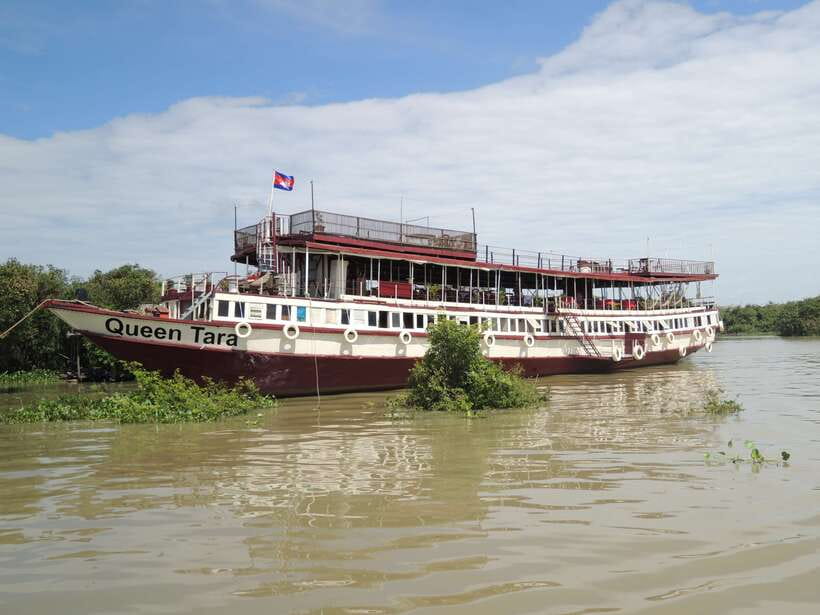
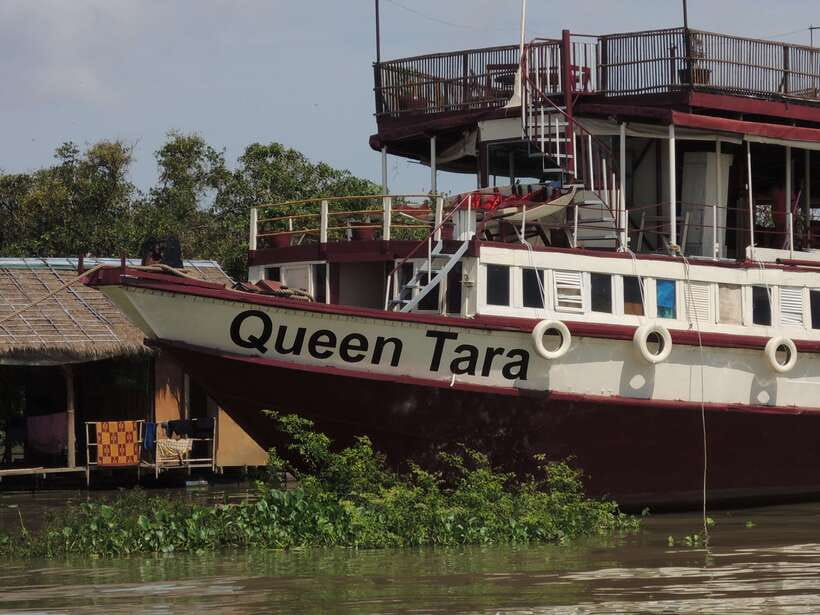
Once you arrive at the port area, the boat portion begins. Your ride goes out toward the Great Lake, and you’ll dock at the Queen Tara, described as the biggest boat on the lake and a central spot inside the floating-village area.
What I like about anchoring lunch here is simple: it gives you a stable base. Earlier in the day, you’re moving through canals and water passages. At Queen Tara, you get that pause that makes the whole experience feel like a full half-day, not a fast circuit.
The Queen Tara is also more than a ferry. The tour frames it as an old cargo-style vessel—an example of the kind of boat that plied these trade routes in the past, with the story going back to the 1920s and movement along Vietnam and the Mekong before reaching Cambodia. Even if you don’t care about boat history, it changes the mood. You’re eating on a working-lake craft, not on a generic sightseeing boat.
Your group is limited to 11 people. That small cap makes a difference when the guide is pointing out details like water structure, houses, and fishing setups. You don’t lose the guide every time someone shifts position.
And yes, there’s onboard downtime built in. After lunch, you’ll take a seat on the viewing deck and watch life go by at lake pace—calmer than most land tours, and often surprisingly peaceful.
Floating village life: what you’ll actually see from the boat
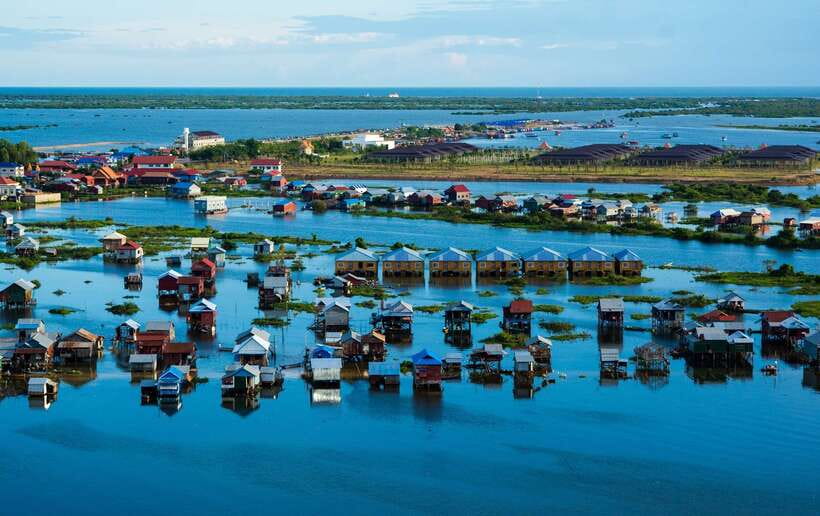
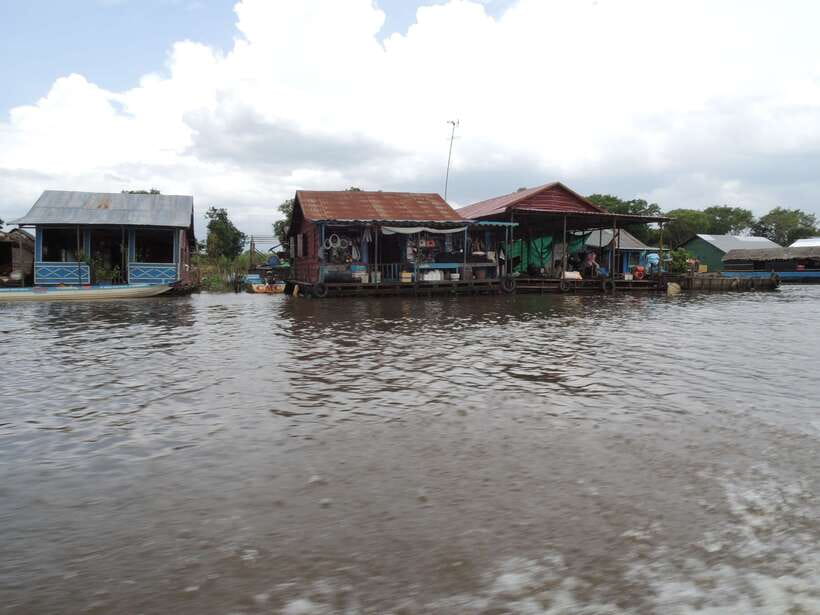
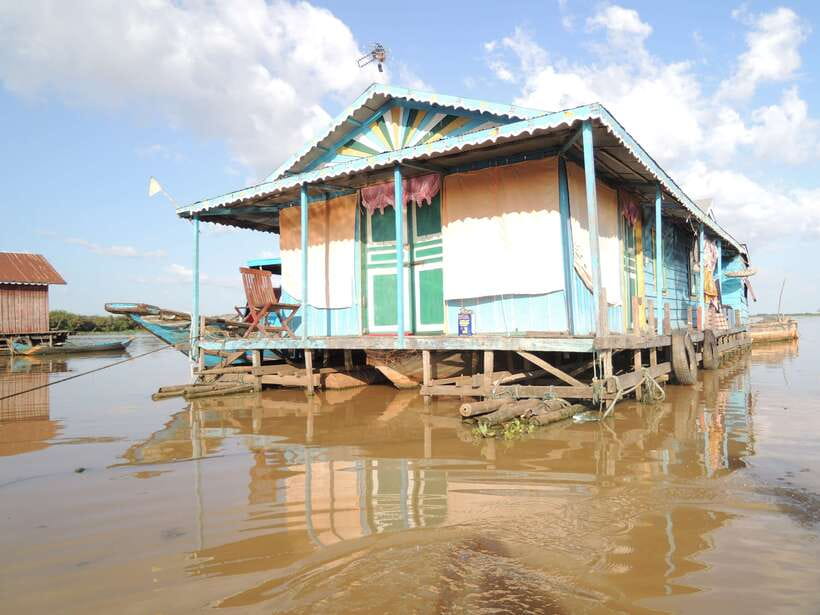
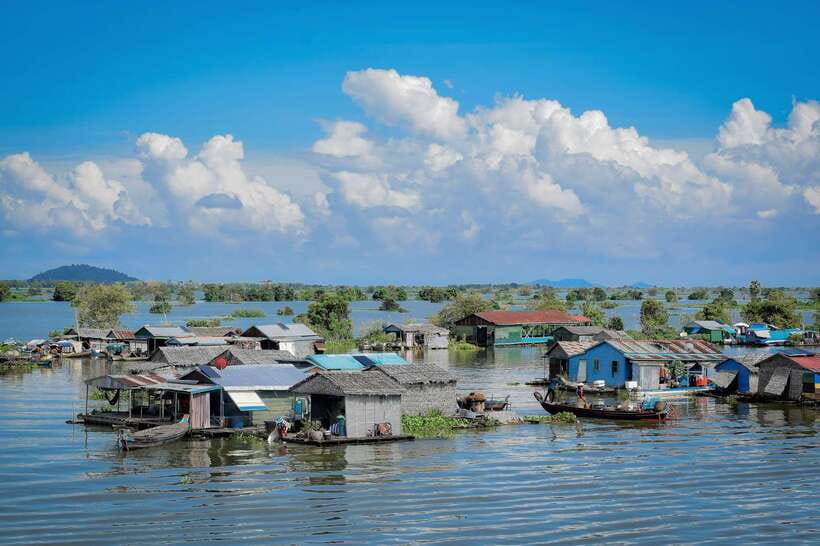
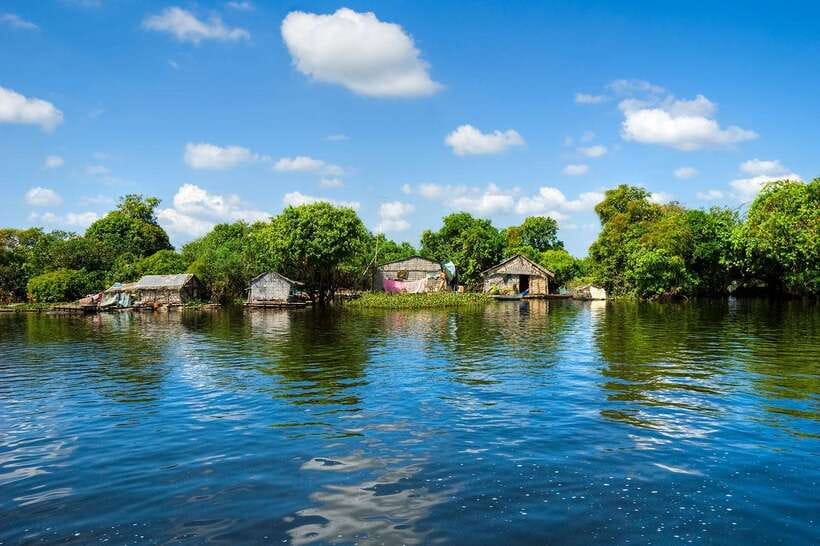
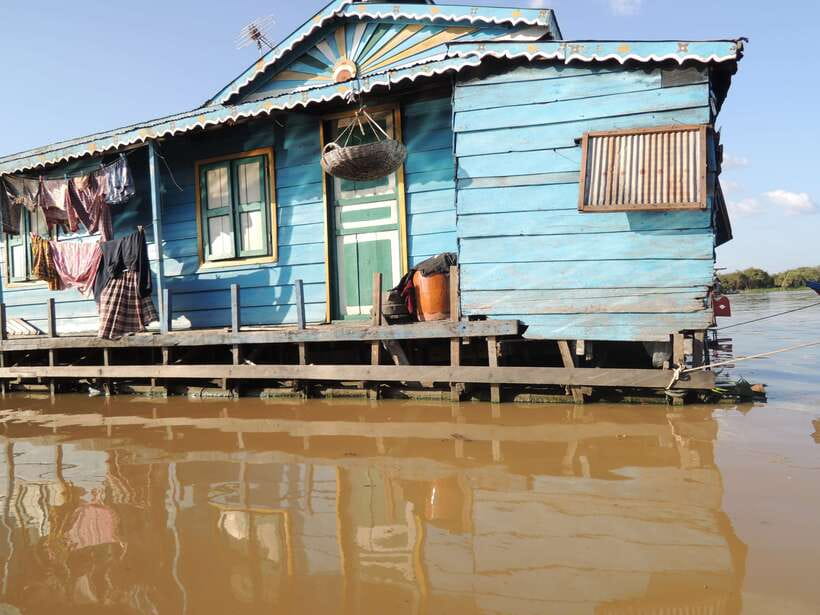
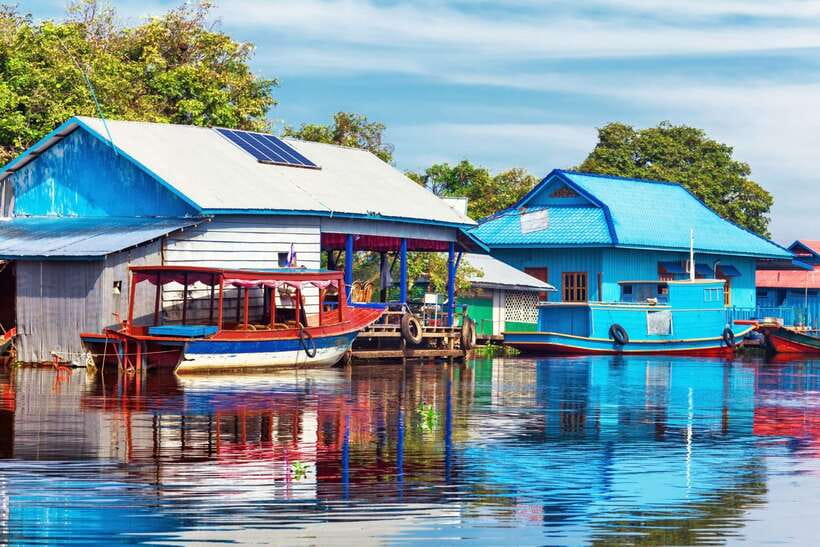
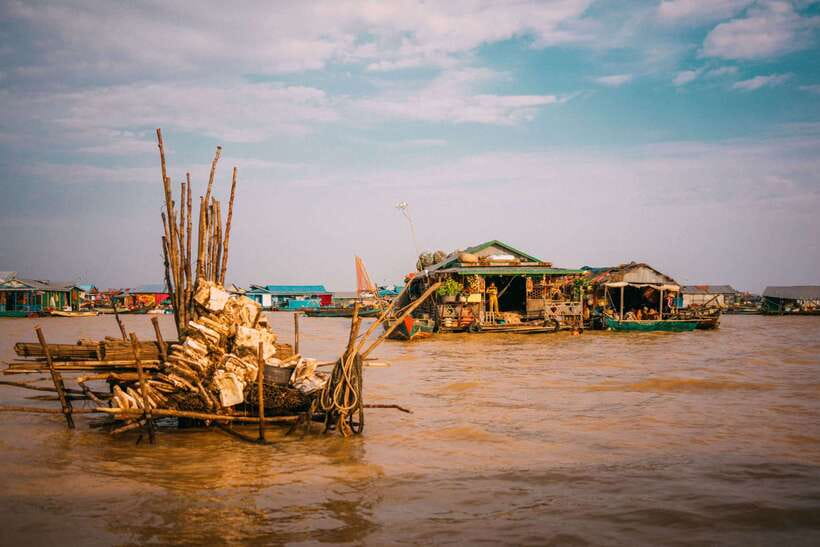
This is where the tour earns its reputation. You cruise into a world with fewer assumptions. There are no roads in the way you’re used to. People transport goods and move between homes by raft or boat. Families live and work on the water, and from the boat you can see the whole logic of that system.
As you ride through the floating village, your guide will explain daily life and what you’re seeing along the route. You’ll notice how homes are arranged for practicality—where space is for living, working, and storing what needs to move with the seasons. You’ll also see the lake economy in motion: fishing and related trades.
One thing I recommend you do mentally before you go: treat this as a functioning place, not a set. The more you focus on routines—nets, lines, boats, movement of people—the more the cruise becomes a lesson you can carry into other parts of Cambodia.
It’s also a good reality-check day after temple tourism. Temples are impressive, but they’re not everyday survival. Tonle Sap is survival, adapted with skill. The floating-village experience helps you understand that Cambodia’s countryside isn’t just “scenery.” It’s livelihoods.
The crocodile and fish farm stop: local trades with an ethical heads-up
After the floating-village cruise, you’ll go to a crocodile and fish farm on the lake. This portion depends on current water levels, so it may look a little different depending on conditions.
The tour’s angle here is livelihoods. In communities tied to Tonle Sap, fish and related trading are huge. Seeing a fish farm makes the lake’s ecosystem feel practical. Then the crocodile farm adds another layer of how lake-based businesses operate and how visitors fit into that economy.
There’s also a built-in option if you’re not into the animal side. The tour notes that there’s a souvenir shop and a viewing deck on board, so you can spend that time in a calmer spot and come back ready for lunch.
Now, a balanced note. One traveler flagged concerns about how the crocodiles are housed, describing cramped conditions. I can’t verify the specifics beyond what the tour is presenting, but if you’re sensitive to animal welfare, expect the crocodile stop to feel uncomfortable. If that’s you, plan to keep your mind on the broader goal of understanding local trades—and use the onboard waiting time to take a breather.

Lotus farm to lunch: the timing that keeps the day enjoyable
A big reason this tour works for many people is how it spaces the energy. You start with pickup and transfer. You stop briefly at the lotus farm. Then you get the lake portion, where you’re mentally “working” just enough to stay interested. After that, you eat.
Lunch happens on the Queen Tara. The included meal comes with two drinks—soft drinks, beer, spirits, cocktails, or wines. The drinks choice can make the lunch feel like a true break rather than just fueling up.
In practice, this is the moment when you stop being a visitor rushing between highlights and start being someone who can sit and look. After lunch, you’ll move to the viewing deck and watch life continue on the lake.
Is the food going to be a five-star dining experience? Most boat lunches aren’t. But that’s not the point. The value is that you’re eating in the setting you came for, not in a random restaurant back on land. If you care most about the scenery and the cultural context, lunch-on-boat hits the sweet spot.
There’s also a vegetarian option available if you book ahead, which is helpful if you don’t want to improvise at the last minute.
Price and value: is $55 for 4 hours on Tonle Sap a good deal?
At $55 per person for about 4 hours, this is not a bargain in the “cheap” sense. But it also isn’t overpriced when you count what’s included and what you’re doing.
You’re paying for:
- hotel pickup and drop-off within Siem Reap
- air-conditioned transfer or tuk tuk to the port
- an English-speaking guide (Cambodian and English are stated for the tour)
- entrance/checkpoint fees included
- guided time through the floating village
- the lotus farm stop
- the crocodile and fish farm visit
- a meal plus two drinks on the Queen Tara
- small-group handling (max 11)
For a half-day tour that places you on the lake—where time and logistics cost more than land trips—that total adds up. You’re also reducing friction: you skip ticket-line style hassles, and the guide handles the flow between land and water.
My suggestion is to treat it as a “culture-through-livelihoods” day. If you’re only going for photos, you might be tempted to compare it to cheaper options. If you want an explanation-driven experience—why the water system reverses, how lotus fits into local use, what the floating village supports—then $55 starts feeling fair.
Who should book this, and who should skip it
This tour is a strong match if:
- you want a real-life countryside experience beyond temples
- you prefer guided context over self-guided sightseeing
- you like boats and want a day that’s calmer than temple-hopping
- you’re traveling in a small group and value personal guide attention
It’s also a good pick if you’re with kids old enough to enjoy the sights. The tour notes that children 10 and under pay half price, and children younger than 5 can join for free (with adult accompaniment). Unaccompanied minors aren’t allowed, so make sure an adult is with them.
You might want to reconsider if:
- you strongly dislike animal-themed stops like the crocodile and fish farm
- you have tight mobility needs tied to boats and boarding steps (the tour does run in all weather, so conditions can change)
- you’re booking without flexibility, because the whole experience is dependent on water levels of Tonle Sap
Should you book the Siem Reap floating village half-day tour?
If you want one day in Siem Reap that doesn’t feel like another temple queue, I’d book it. This tour gives you Tonle Sap’s most important idea—seasonal water reversal—and ties it to how people actually live. The Queen Tara lunch stop helps make the whole thing feel complete, and the small-group size keeps the guiding personal.
My final advice: go in expecting a guided cultural day, not a luxury cruise. The lunch is included and satisfying, but the real payoff is the lake system, the floating village routines, and the way your guide turns scenery into understanding. If the crocodile stop sounds like it might upset you, plan to use the onboard viewing and keep your focus on the livelihoods side of the experience.
If all that fits your travel style, this is one of the better ways to spend a half-day around Siem Reap.
FAQ
How long is the Siem Reap Floating Village half-day tour?
It lasts about 4 hours.
How much does the tour cost?
The price is $55 per person.
What’s included in the tour?
You get hotel pickup and drop-off in Siem Reap, transfer to the port area, an English-speaking guide, a meal with 2 drinks on the Queen Tara, floating village tour, crocodile and fish farm visit, and a lotus farm tour. All checkpoint fees are included too.
Is lunch included, and do I get drinks?
Yes. Lunch is included on the Queen Tara, along with 2 drinks.
Does the tour depend on conditions?
Yes. The tour is dependent on the water levels of Tonle Sap, and the crocodile and fish farm stop can vary based on current conditions.
Are there age limits or rules for children?
Unaccompanied minors are not allowed. Children aged 10 and under pay half price, and children younger than 5 can join for free, but children must be accompanied by an adult.