REVIEW · SIEM REAP
2-Day Angkor Wat with Temples On Small Circle & Kulen Waterfall
Book on Viator →Operated by Happy Angkor Tour · Bookable on Viator
Two sunrises and a waterfall day. This 2-day plan strings together the Small Circle temples at Angkor Park plus a mountain day in Kulen National Park, with a Phnom Bakheng sunset climb to wrap up Day 1. You’ll get hotel pickup by a licensed English guide, plus a private A/C vehicle and the little comforts that matter when you’re out all day.
What I like most is the timing. You’re set for an early Angkor Wat sunrise on Day 2 and also a late-afternoon Phnom Bakheng sunset on Day 1, so you’re not just looking at stone—you’re catching Angkor in different light. I also appreciate how the guide experience sounds from real-world service, including one standout name: Chhay, described as informative, friendly, and the kind of person who happily helps with photos (especially handy if you’re solo).
One key consideration: the big ticket admissions are not included. You’ll add Angkor + All Temples fees (listed as $62 per person) and Phnom Kulen park fees ($20 per person), and the schedule is early both days (8:00am pickup Day 1, 5:00am pickup Day 2), so you’ll want your energy saved for the walking and climbing.
In This Review
- Key points worth knowing before you go
- Price and logistics: what your $181.75 really buys
- Day 1: Angkor Wat, Ta Prohm roots, and the Angkor Thom circuits
- Angkor Wat (morning visit)
- Ta Prohm: giant tree roots + movie fame
- Ta Nei: smaller, quieter, and more “away from it”
- Angkor Thom basics: Victory Gate and Bayon’s face towers
- Baphuon, Phimeanakas, and the Royal Enclosure area
- Terrace of the Elephants + Terrace of the Leper King
- Phnom Bakheng: sunset climb (or skip it)
- Day 2: Angkor Wat sunrise, then 60+ km to Kulen
- Phnom Kulen National Park: 1000 Lingas and the reclining Buddha
- Banteay Srei (Pink Sand, Lady Temple)
- Banteay Samre: smaller scale, Angkor-like idea
- Pre Rup: “turn the body” and funerary beliefs
- Small Circle done right: why this temple mix works
- Guide quality and comfort: the private vehicle makes a difference
- Who should book this (and who might rethink it)
- Should you book this 2-day Angkor Wat and Kulen tour?
- FAQ
- FAQ
- What’s the starting location for pickup?
- What time does pickup happen on Day 1?
- What time does pickup happen on Day 2?
- Is this tour private?
- Are admission fees included in the tour price?
- Does the tour include lunch?
- How far is Phnom Kulen from Angkor Park?
- What comfort items are included during the tour?
- What is the cancellation policy?
Key points worth knowing before you go
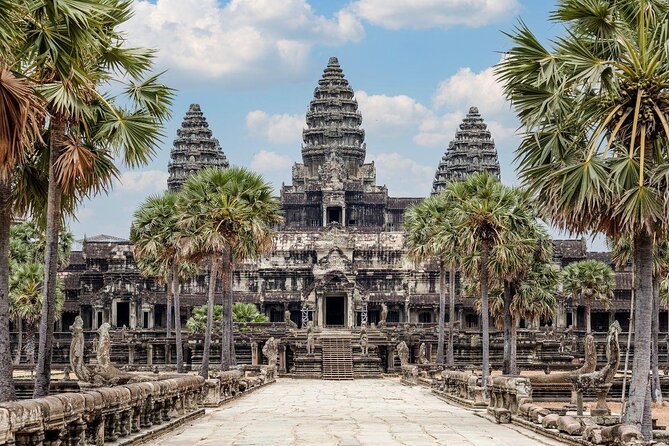
- Sunrise at Angkor Wat plus sunset at Phnom Bakheng means both early mornings and late-day reward views
- Licensed English guide with real attention to photos and practical temple navigation (Chhay is one example)
- Small Circle temple flow keeps you focused instead of zigzagging around Angkor Park
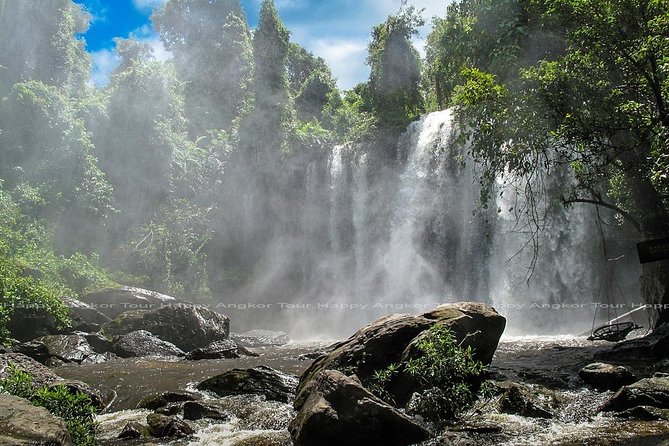
- Kulen National Park day includes the 1000 Lingas riverbed carvings, a big reclining Buddha, and a waterfall stop
- Budget for admissions separately (Angkor pass + Kulen park fee), since meals and tickets aren’t bundled in the base price
- Private A/C vehicle with driver plus cool drinking water and wet towels helps the long days feel manageable
Price and logistics: what your $181.75 really buys
The tour price is $181.75 per person for a 2-day private experience in Siem Reap. What you’re paying for here is not just the temple sightseeing—it’s the full comfort and time-saving package: private A/C vehicle with a driver, an English-speaking licensed guide, parking and road tolls, plus pickup from your hotel and drop-off back at the end.
Then there’s the part people often underestimate: admissions. On this plan, the Angkor admissions (listed as Angkor + All Temples $62 per person) and the Phnom Kulen National Park admissions (listed as $20 per person) are separate. Lunch is also not included; lunch is listed as about $5 per person, depending on what’s on the menu.
So an easy “all-in” way to think about it:
- Tour price: $181.75
- Angkor admissions: $62
- Kulen park fee: $20
- Lunch: $5 (estimate based on the listing)
That puts you around $268.75 per person before any extra snacks or beverages. For a private, early start, two-day route that covers sunrise, sunset, and a 60+ km mountain park day, that can be good value—especially if you’re tired of negotiating tuk-tuks and chasing opening times on your own.
One more practical note: you’re scheduled to start early both days, and the Day 2 drive to Kulen is more than 60 km from Angkor Park. That’s not a dealbreaker, but it does affect how you should pack your day—plan for sleep, water habits, and slower pacing during the hottest hours.
You can also read our reviews of more tours and experiences in Siem Reap

Day 1: Angkor Wat, Ta Prohm roots, and the Angkor Thom circuits
Day 1 begins with hotel pickup at 8:00am. Your guide meets you at your accommodation, and you’ll handle the temple pass purchase along the way before you step into the main sites. This matters because Angkor days can become a hassle if you’re trying to sort tickets and transport on the fly while everyone else is already headed toward the gates.
Angkor Wat (morning visit)
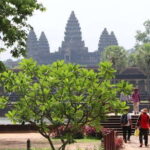
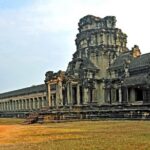
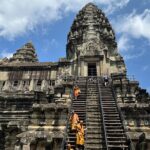
You start at Angkor Wat, with a time window listed at about 2 hours 30 minutes. This isn’t the sunrise version of Angkor Wat—that one comes on Day 2—but it’s still the heart of the experience. The upside of doing Angkor Wat in the daytime on Day 1 is simpler: easier pacing, less scramble, and more time to slow down and take in the setting without racing for dawn crowds.
Ta Prohm: giant tree roots + movie fame
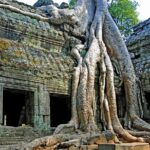
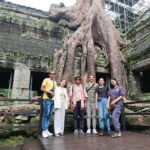
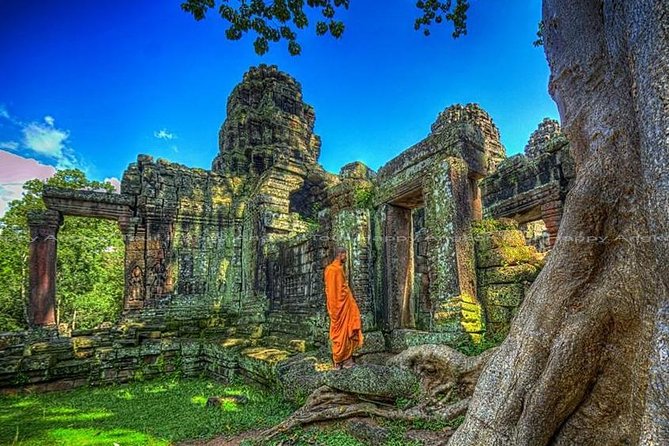
Next is Ta Prohm. The highlights are clear: you’re walking among massive tree roots that have grown into the ruins, and it’s the filming location that made many people think of Tomb Raider. The listed time is about 2 hours. That’s a good block because this stop works best when you don’t rush—roots and collapsed structures make great photo angles, and the light changes as you move through different paths.
Practical tip: if you like photos, this is a strong day to lean into them. The guide style described in one account (Chhay being happy to take photos) lines up perfectly with a stop like Ta Prohm where you’ll want a few different compositions.
Ta Nei: smaller, quieter, and more “away from it”
After Ta Prohm, you’ll go to Ta Nei, described as small and with less restoration. It’s also a helpful antidote to crowd pressure: the way it’s positioned means you can spend time without feeling like you’re constantly stepping around tour flows. Time on this stop is listed at about 45 minutes.
Angkor Thom basics: Victory Gate and Bayon’s face towers
Then the plan moves into Angkor Thom highlights.
- Victory Gate (about 10 minutes): you stop by the east side for photos.
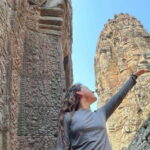
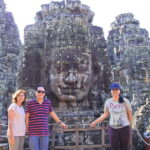
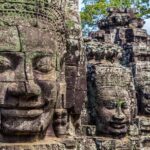
- Bayon Temple (about 45 minutes): this is the one with 49 towers, each tower showing four faces. The listing connects those faces to the Buddhistate Avalokiteshvara.
This is a stop where a guide helps you make sense of what you’re seeing. Without explanation, you can still enjoy it. With explanation, the repeating faces and angles start to feel like a system instead of a random wall of carvings.
Baphuon, Phimeanakas, and the Royal Enclosure area
After Bayon, you’ll hit a cluster of shorter stops, each with its own role in the royal story:
- Baphuon (about 15 minutes): a Hindu temple built before Angkor Wat in the 11th century, with a large reclining Buddha added in the 16th century.
- Phimeanakas (about 15 minutes): a Hindu pyramid temple from the 10th century, located in the center of the old royal palace area.
These short windows can be a positive thing. You get context without burning half the day in one spot.
Terrace of the Elephants + Terrace of the Leper King
Two more platforms round out the circuit:
- Terrace of the Elephants (about 10 minutes): described as a platform used by kings to view triumphant returning armies, with elephant carvings on the walls.
- Terrace of the Leper King (about 10 minutes): another nearby platform.
If you want the “Angkor city” feel, these terraces do it. They’re not only about looking upward at towers; they’re about understanding how power and storytelling worked through architecture.
Phnom Bakheng: sunset climb (or skip it)
Day 1 ends at Phnom Bakheng, with about 2 hours scheduled. The purpose is waiting for the sunset view from the hill. The listing also mentions you can skip waiting for sunset if you don’t want to be stuck waiting in place.
This is where you should decide what you want from the day. If you’re okay with the climb and the waiting, Phnom Bakheng adds a finishing “wow” moment. If you’re already tired from the earlier walking, skipping the sunset portion can keep the trip enjoyable instead of turning it into a long grind.
Day 2: Angkor Wat sunrise, then 60+ km to Kulen
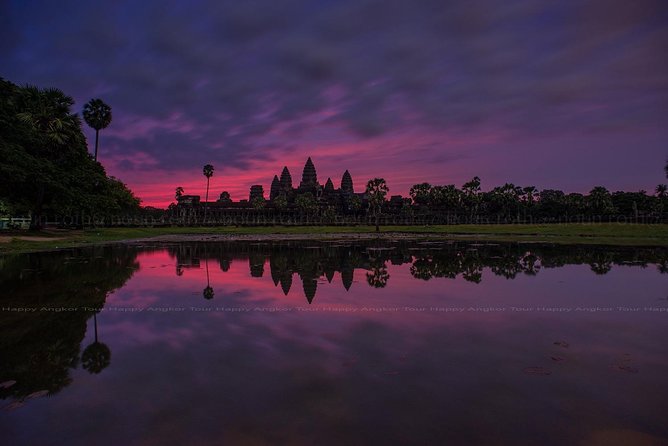
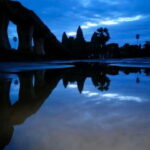
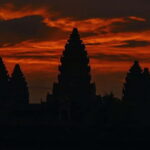
Day 2 is built around the early start. You’ll be picked up at 5:00am to catch the sunrise at Angkor Wat. The time listed for this is about 1 hour 45 minutes.
I like this design because it gives you the best payoff for the effort. Sunrise is one of those things that either becomes magical or becomes exhausting, depending on whether the timing is handled well. Here, the plan is clearly built for that early departure and controlled pacing with a guide.
Phnom Kulen National Park: 1000 Lingas and the reclining Buddha
After sunrise and breakfast, you drive to Phnom Kulen National Park, located more than 60 km from Angkor Park. The time block listed is about 5 hours, which tells you this is a real adventure day, not just a quick temple stop.
Inside Kulen, the stops mentioned are specific:
- 1000 Lingas: a riverbed covered with Lingas carvings, tied to the symbol of Shiva’s supreme essence.
- Big Reclining Buddha: built from a big stone.
- A waterfall stop as part of the outing.
Kulen is a great day to step outside the temple-only mindset. Even if you’re here for Angkor, the shift to natural surroundings and sacred carvings in a riverbed changes the emotional tone. You’re not just looking at architecture—you’re seeing how belief, water, and stone connect.
One consideration: this is a long drive plus several on-site elements, so you’ll want to pace yourself and stay hydrated. The tour includes cool drinking water and wet towels, which helps a lot on humid Cambodian days.
Banteay Srei (Pink Sand, Lady Temple)
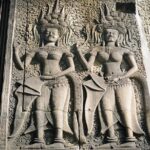
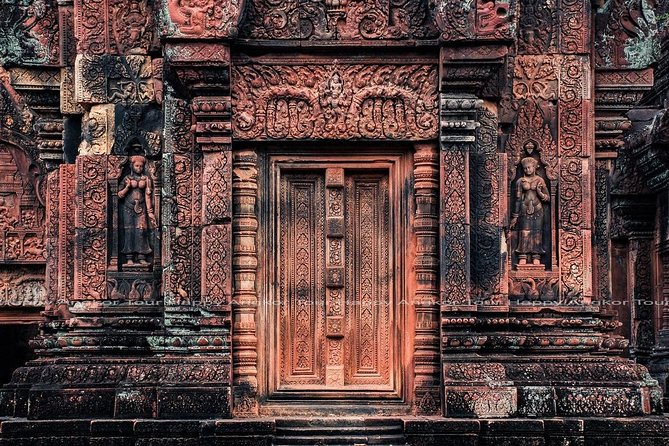
In the afternoon after lunch, you go to Banteay Srei, often called the Lady temple. It’s built from pink sandstone, in the 10th century, and the listing attributes it to Hindu King Rajendravarman II, dedicated to the trinity gods with a focus on Shiva.
Time listed is about 1 hour. That’s the right length here. This is a temple that rewards careful looking, and a shorter stop helps you keep your attention without feeling like it drags.
Banteay Samre: smaller scale, Angkor-like idea
Next is Banteay Samre, about 45 minutes. This is described as a 12th-century Hindu temple. The listing says the architecture doesn’t show much evidence, but it’s believed to follow a similar model to Angkor Wat.
If you like collecting “patterns” across different temple styles, this one is for you. It’s less about major crowds and more about noticing how Khmer temple design ideas evolve.
Pre Rup: “turn the body” and funerary beliefs
You finish with Pre Rup (about 30 minutes). The listing notes the name meaning relates to turning the body, and it’s constructed in the late 10th century, dedicated to Hindu gods. It also mentions the Cambodian belief that funerals were conducted at the temple on the most distant juncture (the phrasing is partial, but the core idea is there).
Pre Rup is a good final stop because it gives you a different kind of Angkor atmosphere—more solemn, more ritual, less “photo set,” depending on the moment.
Small Circle done right: why this temple mix works
This route is built around the Small Circle idea rather than trying to swallow the entire Angkor Park in two days. That matters. With Angkor, “more” isn’t always “better.” A smaller, better-planned circle helps you:
- understand what you’re seeing across connected sites in a logical order,
- avoid getting travel-fatigued,
- and spend enough time at each temple to actually look at details instead of passing through.
Day 1 does the emotional peak of Angkor’s core, from Angkor Wat to Ta Prohm roots, into Angkor Thom’s face towers and terraces. Day 2 pivots to nature and then returns to refined temple craft with Banteay Srei’s pink sandstone.
If you only have two days in Siem Reap, this balance is the main reason this tour is worth considering.
Guide quality and comfort: the private vehicle makes a difference
You’re traveling with a private A/C vehicle with driver and a licensed English guide. That changes your day in small but important ways.
First, you don’t spend mental energy on logistics. Your guide handles the temple pass purchase along the way and keeps the day moving through timed sightseeing blocks. Second, you get the kind of guide assistance that matters in temple complexes: not just “what is this,” but how to move through them without losing your head.
The guide name Chhay comes up in one account as especially helpful—informative, friendly, and good about photography. Even if you don’t get the same guide, that gives you a sense of what the operator prioritizes.
Also, the tour includes cool drinking waters and wet towels. When you’re dealing with early mornings and midday heat, those small comforts can keep fatigue from snowballing.
Finally, the “private tour” setup means it’s only your group. In practice, that often translates to better pacing for people who want photos, slower looks, or straightforward explanations.
Who should book this (and who might rethink it)
This fits best if you:
- want a two-day structure that covers major Angkor Park highlights and adds Kulen,
- like early-morning temple views (sunrise at Angkor Wat, sunset at Phnom Bakheng),
- want the comfort of private transport and a licensed English guide,
- and care about seeing both temple stone and sacred nature at Kulen.
You might rethink it if you:
- hate early starts and climbing (both Day 1 sunset viewing and Day 2 sunrise require getting moving very early),
- don’t want to pay separate admissions and lunch on top of the tour price,
- or prefer a slower, unstructured trip where you can stay as long as you want at one site.
Should you book this 2-day Angkor Wat and Kulen tour?
Book it if you want a tight, well-ordered plan that hits Angkor’s biggest moments plus Kulen’s riverbed carvings and waterfall day. The private vehicle, licensed guide, and included water and wet towels make the early mornings and long drive feel more manageable.
I’d pass or look for a different option if you’re hoping for a fully packaged price that includes all admissions and meals, or if you’d rather avoid sunrise/sunset climbs.
If you’re deciding, here’s the simplest rule: if early starts don’t scare you and you’re okay paying the Angkor and Kulen fees separately, this tour has a strong “value per day” rhythm.
FAQ
FAQ
What’s the starting location for pickup?
Pickup is offered from your hotel or guest house in Siem Reap, and the tour includes a guide meeting you in the lobby.
What time does pickup happen on Day 1?
Pickup on Day 1 is listed for 8:00am.
What time does pickup happen on Day 2?
Pickup on Day 2 is listed for 5:00am to watch sunrise at Angkor Wat.
Is this tour private?
Yes. It’s a private tour/activity, and only your group participates.
Are admission fees included in the tour price?
No. Admission fees are not included. The listing states Angkor + All Temples $62.00 per person and Phnom Kulen National Park $20.00 per person.
Does the tour include lunch?
Meals are not included. Lunch is listed as about USD 5.00 per person, depending on the menu.
How far is Phnom Kulen from Angkor Park?
Phnom Kulen National Park is listed as more than 60 km from Angkor Park.
What comfort items are included during the tour?
The tour includes cool drinking waters and wet towels, plus parking fees and road tolls.
What is the cancellation policy?
Free cancellation is allowed. You can cancel up to 24 hours in advance for a full refund.