REVIEW · SIEM REAP
2 Days Discover Angkor Wat Complex and Cambodia’s Villages Tours
Book on Viator →Operated by Angkor Visitor · Bookable on Viator
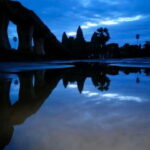
Angkor at dawn is worth the alarm. This two-day private tour strings together Angkor Wat and countryside village riding, then adds quieter ruins and life on Tonle Sap, so you get more than the usual temple checklist. I love how the day is paced by real site time (not rushed photo stops), and I also like the way your guide keeps history clear and practical. One consideration: temple entrance fees and the Tonle Sap boat ride are added on top, and the start time is early.
You’ll travel in an air-conditioned SUV or mini van, with an English-speaking guide, plus cold drinking water and cold towels to help you power through the walking. If you care about explanations and comfort at the same time, the guide quality is a big deal here, and names like Praim and Khim come up for exactly that reason.
The tour is private for your group (up to 10 people), and it uses a mobile ticket. That matters because it keeps the day smoother when you are bouncing between sites that all run on their own rules.
In This Review
- Key highlights worth planning around
- Two days that mix Angkor icons with daily Cambodian life
- Starting at 5:00am and how the Angkor day gets organized
- Angkor Wat: what to focus on when you have real time
- Ta Prohm: the jungle temple look, and why it matters
- Ta Keo and the mini-stops that add meaning
- Angkor Thom, Terrace of the Elephants, and Bayon’s faces
- Day 2: Beng Mealea’s rugged ruins feel like real exploration
- Kompong Phluk and Tonle Sap: a floating village day with real seasonal context
- Price and value: how $235 per group really shakes out
- Guides you can learn from: what Praim and Khim do well
- What to pack for temple walks and lake time
- Should you book this 2-day Angkor Wat and villages tour?
- FAQ
- What is the tour duration?
- What time does the tour start?
- Is pickup included?
- What is included in the tour price?
- Are meals included?
- How much are the entrance fees?
- Is this a private tour?
- What group size does the price cover?
- What fitness level is needed?
- What is the cancellation policy?
Key highlights worth planning around
- A full Angkor Thom circuit plus Angkor Wat and Ta Prohm on Day 1, with sensible time at each stop
- Beng Mealea as the rugged, less-restored temple stop that feels more like exploration than sightseeing
- Kompong Phluk and Tonle Sap for a different view of Cambodia beyond temples
- Pickup, English guide, cold water and towels, so you are not scrambling between sites
- A private setup that lets your guide adjust if you move slower or want to spend a bit longer somewhere
Two days that mix Angkor icons with daily Cambodian life
This is the kind of Angkor tour that makes you feel like you actually understand the place, not just that you collected stamps. Day 1 is all about the big Khmer heavy-hitters: Angkor Wat, Ta Prohm, and the Angkor Thom complex with Bayon and its iconic faces. Day 2 shifts gears into two very different experiences: a rougher ruined temple stop in the Beng Mealea area, then village life at Kompong Phluk on the Tonle Sap Great Lake.
What makes this combo smart is the contrast. Angkor can overwhelm you if it stays purely visual. Adding countryside village roads and a floating village day gives your brain somewhere to rest and then refocus. You will still be in temple mode, but you will also see how people live with the landscape.
You can also read our reviews of more tours and experiences in Siem Reap

Starting at 5:00am and how the Angkor day gets organized
The tour starts at 5:00am, and that early departure is not random. It’s how you fit a full Angkor schedule into one morning and keep the day moving while you still have energy for walking.
Your Day 1 timing is built around about a dozen hours of temple time across multiple sites, with clear stop durations. Here is how the flow works in plain terms:
- Angkor Wat gets about 2 hours
- Ta Prohm about 1 hour
- Ta Keo about 30 minutes
- Angkor Thom about 30 minutes
- Terrace of the Elephants about 30 minutes
- Bayon about 1 hour
Those time blocks matter because they help you see each place properly. Angkor Wat and Bayon are the big emotional hits, so having longer time there lets you notice details you might miss if you are only burning through for a picture.
Also, plan for the early-morning reality: you will be up, dressed, and moving fast. If you like a calm start, bring your best game to the first hour. If you hate alarms, you might want to negotiate with your phone now.
Angkor Wat: what to focus on when you have real time
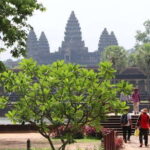
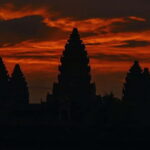
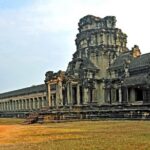
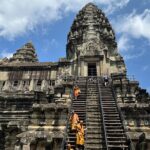
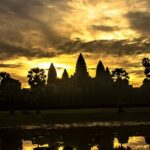
Angkor Wat is one of the largest religious monuments in the world, and it sits on a massive site. On this tour, you get about two hours, which is the difference between standing in front of it and actually understanding the layout and what you are looking at.
Even if you know the basics, a guide makes the difference in how you read the temple. You will likely orient yourself quickly to the structure and the purpose of the complex, then move through the key views at a comfortable pace. The admission fee is not included in the tour price, so you will want to have your budget ready for the Angkor Wat ticket portion.
Ta Prohm: the jungle temple look, and why it matters
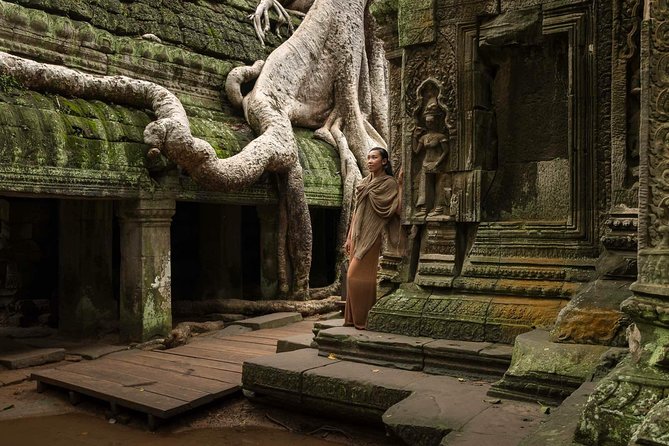
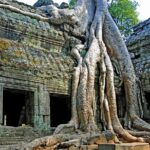
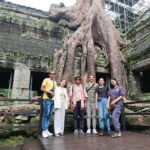
Ta Prohm is where the tour earns its most cinematic feel. You get about one hour here, and the main visual hook is the huge trees and massive roots growing out of the temple walls. It is famous for that look, including its pop-culture presence, but the real value is what the guide helps you notice: how the temple and the forest interact, visually and historically.
This is also one of the stops where timing helps. You can take your time looking up, scanning the stonework, and catching the angles that show the roots wrapping around architecture. If you rush here, you lose the best part of the experience.
Ta Keo and the mini-stops that add meaning
Ta Keo is a shorter stop at about 30 minutes, but it is not just a quick photo break. It is one of the taller monuments at Angkor, and it is described as a mountain temple built by Jayavarman V. The temple’s placement east of Angkor Thom gives you a sense of how the Angkor landscape was planned, not just built randomly.
Because the stop is shorter, it helps to have the guide set you up with a few focus points early. That way, you can enjoy it even if you are moving on before you feel fully settled. If you enjoy quick architectural hits, this one fits.
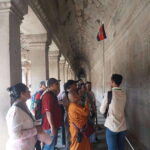
Angkor Thom, Terrace of the Elephants, and Bayon’s faces
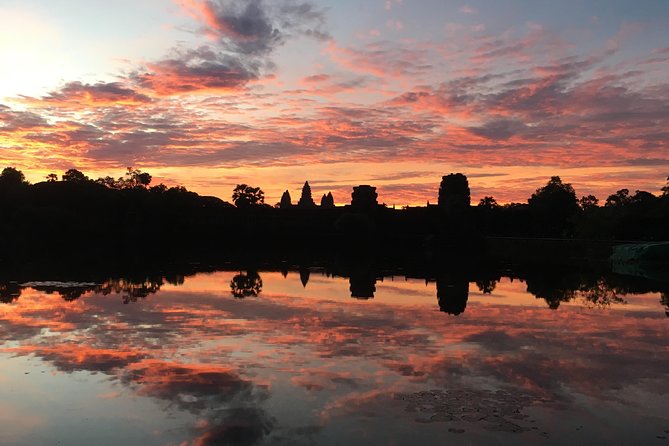
The Angkor Thom stop starts with the walls and the scale of the ancient city. You spend about 30 minutes in the area, then you get two more targeted looks:
- Terrace of the Elephants for about 30 minutes
- Bayon Temple for about 1 hour
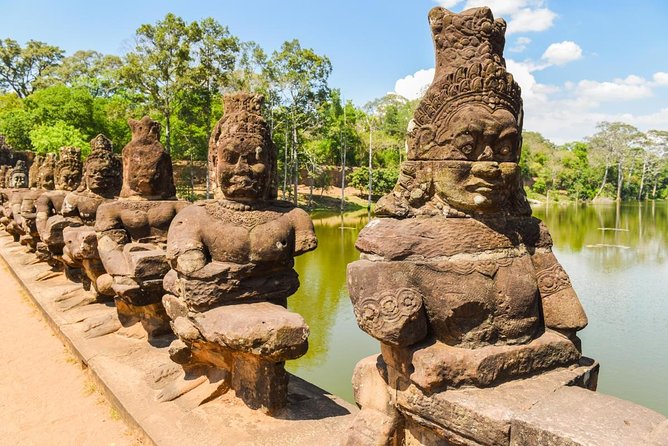
Angkor Thom was built around 1181 AD under Jayavarman VII, and the tour helps connect the big story to what you can physically see on the ground. The Terrace of the Elephants is part of that walled city complex and was used as a platform for viewing victors and activity—so it’s not only decorative. You are seeing a place built for power and ceremony.
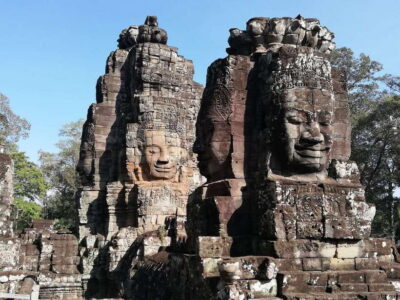
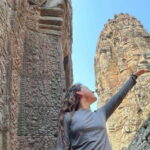
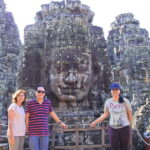
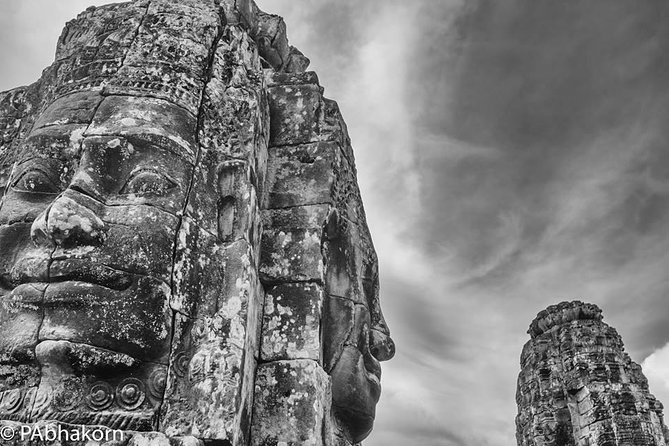
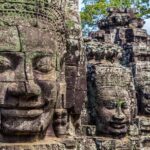
Then comes Bayon, and it’s the one most people remember. Bayon is known for four stone smiling faces, and it is tied to Khmer identity and state temple purpose from the late 12th or early 13th century. You get about one hour, which is enough time to appreciate both the repeating face motif and the surrounding decoration.
Day 2: Beng Mealea’s rugged ruins feel like real exploration
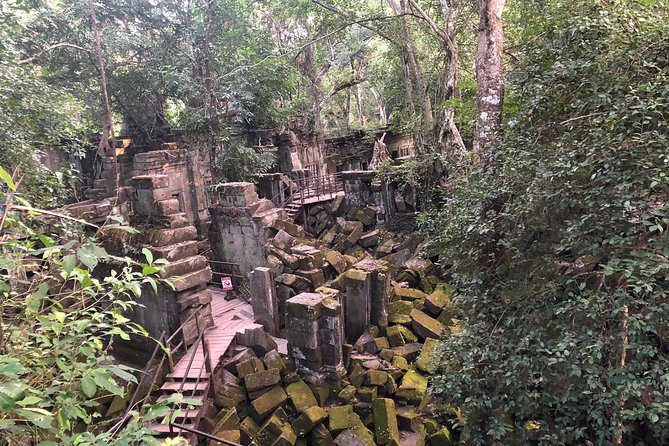
After a full Day 1, Day 2 starts with Prasat Beng Mealea, about two hours. This is your “less touristy ruined temple” moment, and it is exactly why the tour earns its value.
Beng Mealea is largely unrestored, with thick brush and trees thriving among sandstone structures. That matters because it changes how you experience the ruins. Instead of a manicured site, you get something more in-between nature and architecture. You will also hear that it was originally Hindu, but it has carvings with Buddhist motifs. That blend gives you a more layered view of what Khmer religious life looked like over time.
There’s a practical side, too: because it is more overgrown and less restored, you should wear shoes that can handle uneven ground. Your tour fits travelers with a moderate physical fitness level, so if you are comfortable walking for extended periods, you are in the right lane.
Kompong Phluk and Tonle Sap: a floating village day with real seasonal context
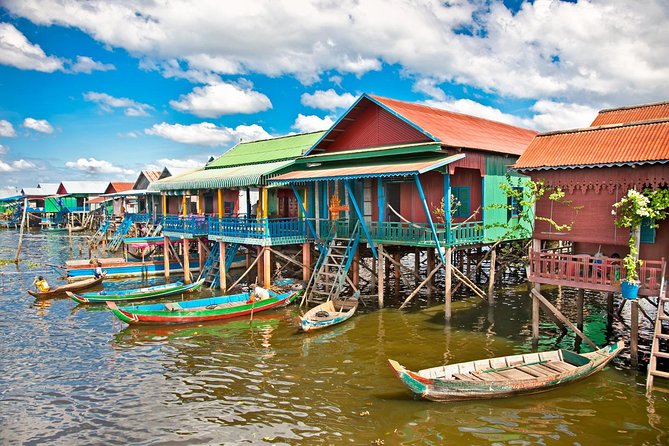
Day 2 continues with Kompong Phluk, about two hours, then ends with Tonle Sap Lake for about one hour.
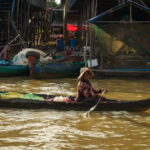
Kompong Phluk is a village built on stilts on the Tonle Sap. It’s described as a commune and village in Siem Reap Province, and the name is translated as Harbor of the Tusks. The key idea is that the community’s life ties closely to the lake. When the guide explains that relationship, the visit feels more grounded than a simple boat ride.
Then you get the lake itself. Tonle Sap is the biggest fresh water lake in South-East Asia, and it is seasonally inundated. That seasonal flooding changes what is land, what is water, and how people move and live. Even in a short time, having that context helps you understand what you are seeing.
One important cost note: the admission fee and private boat ride to the floating village area are listed as $22 per person and are not included in the tour price. So yes, the lake day adds money, but it also adds a whole other kind of Cambodia that you cannot replicate by staying in the temple zone.
Price and value: how $235 per group really shakes out
The tour price is $235.00 per group, for up to 10 people. That includes:
- Air-conditioned SUV or mini van
- English-speaking tour guide
- Cold drinking water and cold towels
- Pickup offered
- Mobile ticket
Temple and lake access cost extra. Entrance fees listed are:
- $37 per person for Angkor Wat and other temples
- $10 per person for Beng Mealea Temple
- $22 per person for the admission fee and private boat ride to Tonle Sap Great and Kompong Phluk Floating Village
If you add those up from the listed amounts, you are looking at $69 per person in ticket-type costs on top of the tour fee.
So your total cost depends on your group size:
- With a full group of 10, the $235 tour fee is about $23.50 per person, plus roughly $69 in site fees, so you are around $92.50 per person all-in.
- With only 2 people, the $235 tour fee becomes about $117.50 per person, plus about $69, putting you around $186.50 per person all-in.
That’s why the group cap matters. If you are traveling with friends or family and can fill a small cluster, this format can feel like a great value. If you are solo or a couple, the guide + vehicle are still good, but your ticket costs make the math less dramatic.
The other value angle is time and comfort. You are not dealing with multiple transfers, and you have cold water and towels. In Siem Reap heat, those small logistics add up.
Guides you can learn from: what Praim and Khim do well
This tour seems to hit a sweet spot with its guides. People consistently highlight the same traits: professional service, clear English, and teaching that feels like the right amount, not a lecture you can’t follow.
Names you may see in guide experiences include Prai(m) and Khim. One account praises how their guide kept the group comfortable the whole time and explained things in just the right amount. Another notes that Khim guided for both days, and that the temple and history knowledge was impressive.
That matters because Angkor can go two ways: either you feel lost in a maze of stone, or you feel you actually understand what you are seeing. A strong guide helps you:
- connect temple forms to what they were built to do
- recognize why certain carvings and layouts matter
- ask questions without feeling rushed
There’s also a practical, human side. Some people specifically mention that the guide takes great photos if you want that. Even if you are not planning to hand your camera over, it’s still a sign the guide knows the angles and the timing.
What to pack for temple walks and lake time
The tour is meant for people with moderate physical fitness. That doesn’t mean you need to be an athlete, but it does mean you should expect real walking and some uneven terrain, especially at Beng Mealea.
Here’s what usually keeps Day 1 and Day 2 comfortable:
- Comfortable, grippy shoes for temple paths and rougher ruins
- Light layers for early morning and warmer daytime hours
- A hat and sunglasses for sun exposure at open temple spaces
- A small water buffer beyond what is provided, if you sweat easily
For the lake day, wear something you don’t mind getting a little damp, and plan for boat ride motion. The tour includes cold drinking water and cold towels, which helps, but you’ll still want your basics handled before you step out.
Should you book this 2-day Angkor Wat and villages tour?
Book it if you want an Angkor visit that feels guided, organized, and not purely rushed. The mix of Angkor Wat + Ta Prohm + Angkor Thom on Day 1, then Beng Mealea + Kompong Phluk + Tonle Sap on Day 2, gives you both the famous masterpieces and a more local, landscape-connected side of Cambodia.
I would skip it or at least double-check your priorities if:
- you are very price-sensitive, because the ticket costs add up fast ($69 per person on the listed fees)
- you hate early starts, since the tour begins at 5:00am
- you prefer fully restored, easy-to-walk sites only, since Beng Mealea is largely unrestored
If you are flexible, enjoy learning as you walk, and want the lake and villages in the same trip as Angkor, this is a strong match. The private format also helps because your guide can adapt to your pace without waiting on strangers.
FAQ
What is the tour duration?
The tour runs for about 2 days.
What time does the tour start?
The meeting/start time is 5:00am.
Is pickup included?
Yes. Pickup is offered, and you travel by an air-conditioned SUV or mini van.
What is included in the tour price?
Included features are an English-speaking guide, air-conditioned vehicle, cold drinking water, and cold towels, plus mobile ticket use.
Are meals included?
No. Meals and beverages are not included.
How much are the entrance fees?
Entrance fees are listed as $37 per person for Angkor Wat and other temples, $10 per person for Beng Mealea, and $22 per person for the admission and private boat ride for Tonle Sap Great and Kompong Phluk.
Is this a private tour?
Yes. It is described as a private tour/activity, and only your group participates.
What group size does the price cover?
The price is $235 per group with a maximum of up to 10 people.
What fitness level is needed?
The tour notes that travelers should have moderate physical fitness.
What is the cancellation policy?
There is free cancellation. You can cancel up to 24 hours in advance for a full refund.