REVIEW · SIEM REAP
Angkor Full Day Tour All The Main Temples
Book on Viator →Operated by Angkor Temple Private Full Day Tour · Bookable on Viator
A long temple day, but organized. What makes this tour click is the rhythm: you get hotel pickup, a cool A/C SUV, and an English/French speaking guide who can steer you between major sights with practical photo breaks. I especially like the private car comfort and the fact that the guide team connects the ruins to stories—Mr. Hua is specifically praised for temple knowledge and smooth day-of flexibility.
One key thing to consider: the $45 tour price doesn’t include the Angkor park fee, which is listed as $37 per person for 1 day, and meals aren’t included either. Plan for a full 8–9 hours in total, with most stops built around set visiting blocks, so you’ll want to manage heat and energy.
In This Review
- Key Highlights at a Glance
- A Full Day Angkor Loop: What 8–9 Hours Actually Includes
- Price and Logistics: What the $45 Covers (and What It Doesn’t)
- Hotel Pickup and the Ride Comfort Advantage
- Angkor Enterprise Ticket Stop: Get the Pass Before You Move
- Angkor Thom South Gate: Buddha Faces, Snake Causeway, and Quick Orientation
- Bayon Temple and Photo Moments with Monkeys
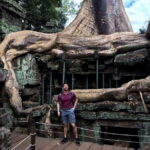
- Preah Khan Temple to Ta Prohm: Jungle Covered Ruins and Route Options
- Srah Srang Lunch Break: Timing Your Meal at the Royal Bath Area
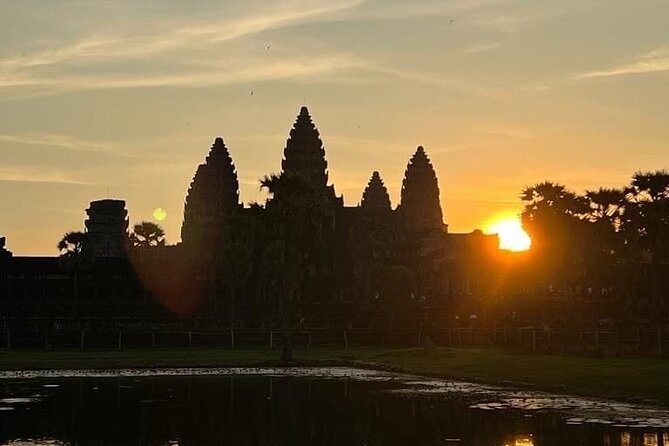
- Angkor Wat: The Main Temple Block You’ll Remember
- Phnom Bakheng Sunset View: A Late-Day Payoff
- Your Guide Can Make or Break the Day: Why Mr. Hua Stands Out
- What to Pack and How to Survive the Angkor Heat
- Who This Tour Fits Best
- Should You Book This Private Angkor Full-Day Tour?
- FAQ
- How long is the Angkor full-day temple tour?
- Does the tour include hotel pickup and drop-off?
- What’s included in the tour price?
- What costs are not included?
- Is there a separate ticket purchase during the tour?
- Is this a private tour and what if weather changes?
Key Highlights at a Glance
- Private A/C SUV with cold towels and drinks keeps the long day from feeling miserable
- English and French speaking driver/guide helps you understand what you’re seeing
- Angkor park ticket is handled on Day-of at Angkor Enterprise (but it’s extra)
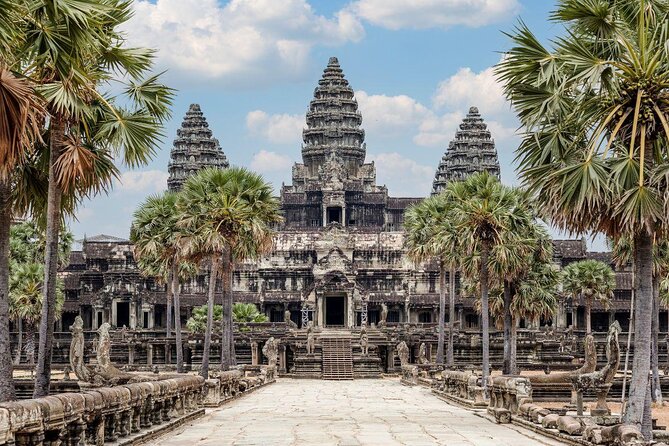
- Main-temple circuit hits Angkor Thom, Bayon, Preah Khan, Ta Prohm, Angkor Wat, and Phnom Bakheng
- Photo stops between temples make it easier to grab great angles without rushing
- Mr. Hua’s guide style gets strong repeat mentions for reliability and temple storytelling
A Full Day Angkor Loop: What 8–9 Hours Actually Includes
This is built as a straight, classic Angkor day: you start early with pickup, then you move temple to temple through the Angkor area. The pace is “comfortable but full,” meaning you’re not stuck at one site for half your vacation—but you also get enough time to see the main landmarks without your brain turning into a blur of stone.
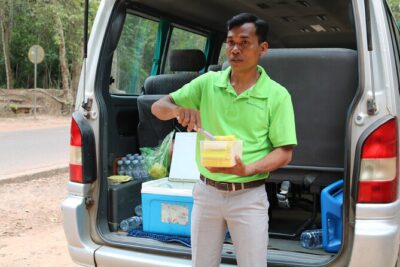
You’ll also get a steady support setup: an A/C SUV, cold hand towel, bottled water, and soft drinks (coke and sprite are listed). That matters because Angkor days can feel long, even when the walking breaks are reasonable. The tour is structured so you’re constantly moving toward the next highlight, with time blocks like about an hour at Bayon, an hour at Preah Khan, about an hour at Ta Prohm, two hours at Angkor Wat, and around an hour for Phnom Bakheng sunset viewing.
Because it’s private, you’re not fighting for position in a crowded van. If your group wants extra minutes for photos at one stop, a private setup usually makes it easier to adjust on the fly.
You can also read our reviews of more tours and experiences in Siem Reap
Price and Logistics: What the $45 Covers (and What It Doesn’t)
Let’s do the math the practical way. The tour price is $45, and what you get in that base price is private transportation, an English/French speaking driver & guide, plus refreshments (water, coke, sprite) and cold towels.
What’s not included is the big-ticket “do I have to pay again?” item: the Angkor park visit fee is $37 per person for a 1-day pass, and it’s something you pay yourself on the day. Admission tickets are explicitly marked as not included for the temple stops, which is why the itinerary includes a ticket purchase point first.
Meals aren’t included either. The schedule includes a lunch stop area around Srah Srang (Royal Bath), but you’ll be choosing and paying for your own lunch. If you’re budgeting, I’d treat this as: tour fee + park pass + lunch (and any snacks/drinks you want beyond what’s provided).
Hotel Pickup and the Ride Comfort Advantage
Pickup and drop-off are offered, with the flexibility to end at your restaurant if you prefer. That sounds small, but in Siem Reap it can be a big deal. You don’t want to waste time finding your own ride before a long day of temple walking and heat.
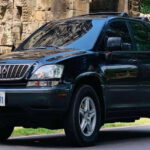
In the car, the tour lists an SUV with cool A/C, plus cold towels and drinks. This kind of inclusion isn’t just “nice.” It can help you keep your energy steady, especially before the most time-consuming part of the day—Angkor Wat—plus when you’re dealing with the late-afternoon build-up toward Phnom Bakheng.
Also note the format: it’s a private tour/activity, so only your group participates. That tends to reduce the friction of timing, bathroom stops, and photo priorities.
Angkor Enterprise Ticket Stop: Get the Pass Before You Move
Your first stop is Angkor Enterprise, where you’ll buy the Angkor visit ticket. The schedule gives a short window (about 15 minutes) for that step, and the park fee is stated as $37 per person for 1 day.
A couple of practical points:
- Bring cash or be ready for how the site prefers payment that day (the tour only says you pay yourself, so don’t assume card).
- Think of this as “administrative setup time,” not a sightseeing stop. Use it to confirm your timing so you don’t lose momentum later.
The reason I like the tour including this step is simple: you’re not scrambling at the last minute to figure out ticket logistics. You start the day knowing you’ll be able to enter the sites.
Angkor Thom South Gate: Buddha Faces, Snake Causeway, and Quick Orientation
From the ticket area, you pass toward Angkor Thom South Gate. The schedule notes you’ll also pass by Angkor Wat and Phnom Ba Kheng along the way, which can act like a moving “preview” of the day’s endpoints.
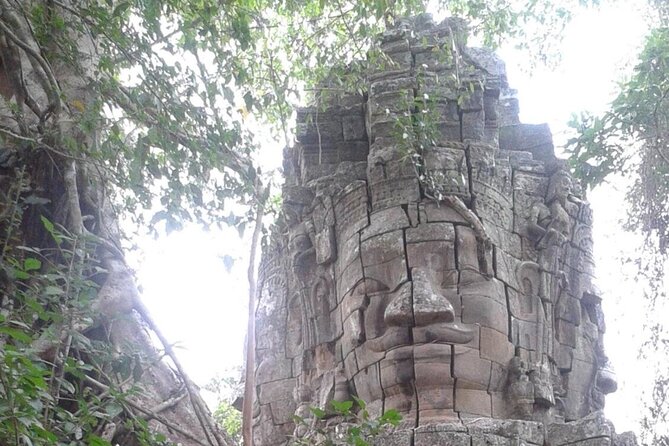
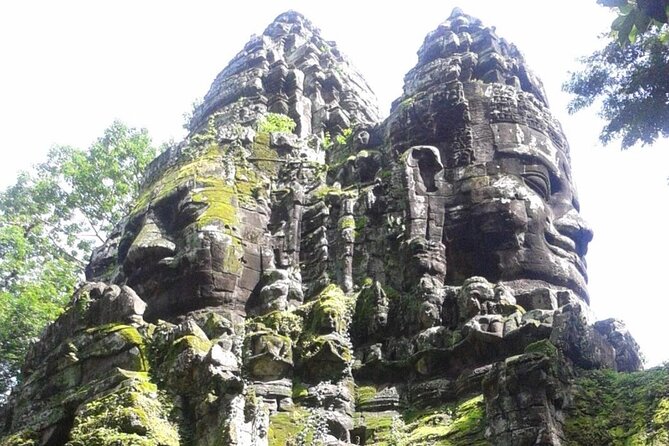
At the South Gate, you get time to stop and look at the Buddha faces and the dramatic sides of the causeway where gods and demons pull a snake. Even if you’re not a “detail-spotter,” that kind of imagery helps you connect what you’re seeing with why the gate is such a recognizable symbol.
The stop is around 20 minutes, so it’s not meant to be an all-day study session. Instead, it’s a fast way to get your bearings inside the Angkor world, before you move to the big highlight inside Angkor Thom.

Bayon Temple and Photo Moments with Monkeys
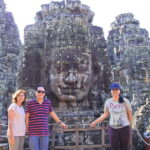
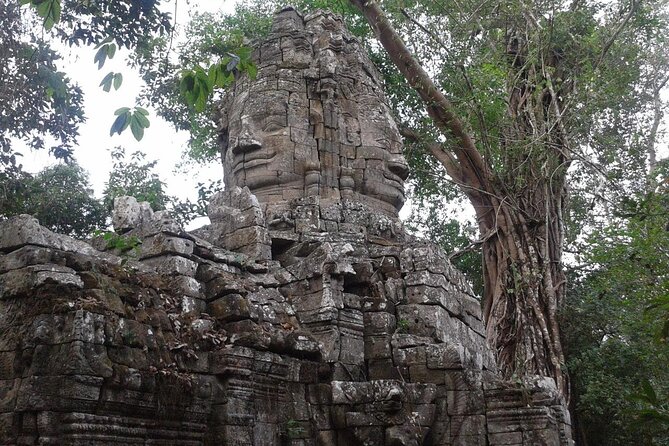
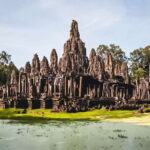
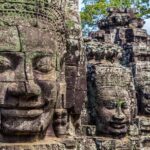
Next up is Bayon Temple, with about an hour allocated. Bayon is described as a main temple in Angkor Thom city, with many smiling faces of Buddha. That’s exactly the sort of visual feature that makes Bayon feel different from the more single-focused, central compositions you’ll see elsewhere.
There’s also a practical “camera friendly” angle here: on the way in, there’s a note about stopping for pictures of monkeys enjoying the jungle. Whether you love wildlife photos or not, this kind of detour can add variety so the day doesn’t feel like a checklist.
A small balancing thought: Bayon’s “faces” are best when you’re looking up and letting your eyes adjust to the scale. That can mean a bit more time tilting your head than you expected. Wear sunglasses if you can, and keep an eye on the sun.
Preah Khan Temple to Ta Prohm: Jungle Covered Ruins and Route Options
After Bayon, the route continues to Preah Khan Temple. You get time on the way for additional stops and passing sights, including Ba Puon, the Elephant Terrace, a Royal palace, and the Lepper King terrace, plus viewpoints around the North gate of Angkor Thom.
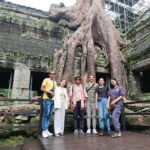
Preah Khan itself is described as a temple covered by jungle, which is one of those visual descriptions that instantly tells you what the experience will feel like: more shadow, more texture, and that “ruins reclaimed by nature” atmosphere you came for.
Then the tour moves to Ta Prohm Temple, where about an hour is allocated. Ta Prohm is described as being connected to a king (the text is cut off in the details you provided), but the key practical point is that Ta Prohm is a major stop on any Angkor day because it’s visually distinctive and usually a crowd magnet.
This is also where photo breaks between temples matter. The tour notes you can stop to take pictures that interest you between one temple and another. That’s often when a private guide really helps: you can ask for a viewpoint that matches your group’s style, without waiting for a larger group schedule.
Srah Srang Lunch Break: Timing Your Meal at the Royal Bath Area
The tour includes Srah Srang (Royal Bath) as a lunch-time stop, with about 1 hour for food. That’s a smart placement in the day, because it breaks up the “temples nonstop” rhythm. It also gives you a change of pace: you’re not just walking from entrance to entrance—you’re resetting.
The itinerary says lunch is at a local delicious food restaurant around the temple areas. Since meals aren’t included in the tour price, you’ll be paying yourself. The upside is choice. You can pick something that fits your appetite and energy level after several hours of temple time.
Practical tip: if you know you get stomach issues in hot weather, this is where you’ll want to go for simpler options rather than chasing “new” dishes. You’ll be thankful once you’re back out toward Angkor Wat.
Angkor Wat: The Main Temple Block You’ll Remember
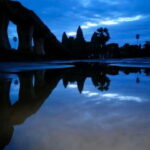
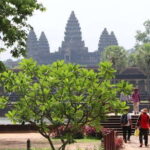
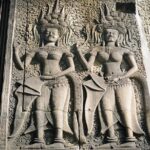
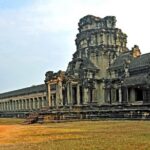
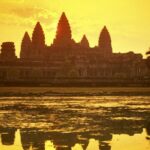
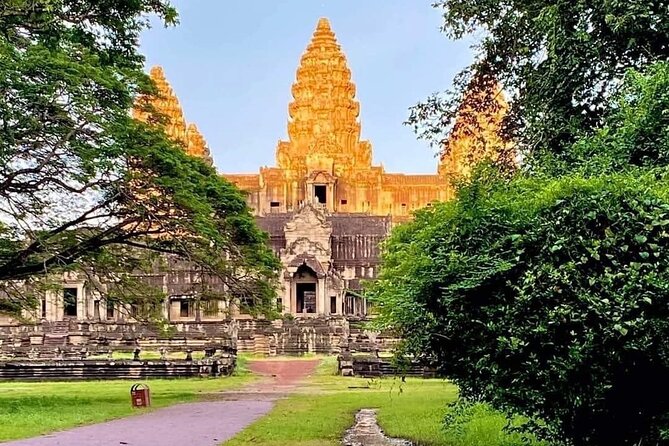
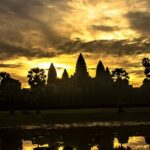
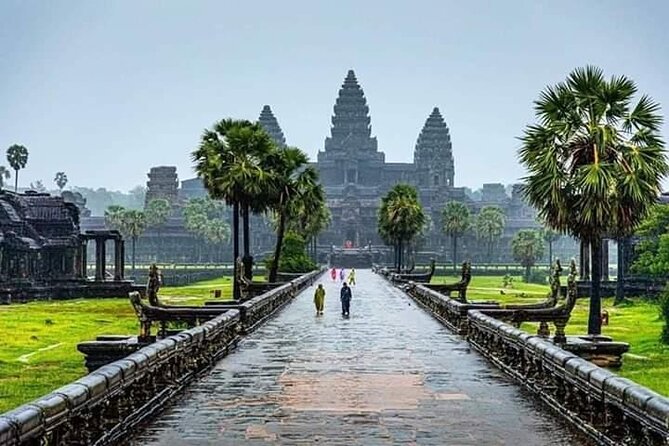
After lunch, you head to Angkor Wat, with about two hours on site. The description is clear about what makes Angkor Wat special in this tour’s framing: it’s one of the biggest temples in the Angkor area, it’s a Hindu religion center, and it’s known for lots of carving.
This is the stop most people plan their Angkor trip around, so two hours is a helpful amount. It gives you time to see the main viewpoints and carvings without feeling like you’re constantly rushing.
Also note a route detail: the itinerary says there’s around 15 minutes after lunch on the way to enjoy local activity daily life. That won’t be a long “cultural stop,” but it can soften the transition from temple-focused time to the big centerpiece.
If you’re trying to get the best balance of photos and understanding, I’d suggest you do one round focusing on the big structures first, then a second pass slower for carvings and textures. A good guide can point out what you should look for at each step, which tends to make even the “same view” feel new.
Phnom Bakheng Sunset View: A Late-Day Payoff
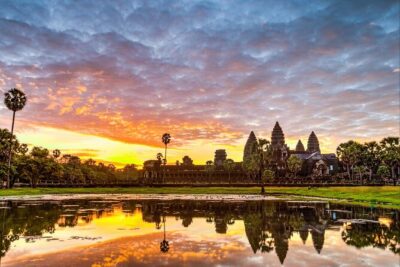
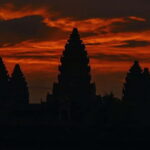
The final major temple stop is Phnom Bakheng, reached about 10 minutes after Angkor Wat by the tour schedule. Time allotted is about 1 hour, and it’s specifically positioned as a sunset view.
That’s a key reason to take this as a full-day tour: you’re not just collecting temples. You’re ending on the kind of viewpoint that turns stone into scenery. Sunset lighting can also help you see details more clearly than you might at midday, especially if you’ve spent hours dealing with bright glare.
One planning reality: you’ll want to pace yourself. Late in the day, even short walking can feel longer. If your group is sensitive to heat, take advantage of the cold towel/water availability and don’t try to “power through” just to get one extra photo.
After the sunset viewing, you return back to your hotel area. There’s a stop noted as Siem Reap Province after sunset viewing, then drop-off.
Your Guide Can Make or Break the Day: Why Mr. Hua Stands Out
This tour’s strongest theme in the included feedback is the guide experience—especially a guide named Mr. Hua. He’s repeatedly described as extremely knowledgeable about temple histories and able to handle the day smoothly, including offering cool towels and working with families.
That matters because Angkor can feel overwhelming. The difference between “seeing temples” and “getting it” often comes down to how someone translates the visuals into meaning. In this case, the tour overview also says the service works with National Geography teams and professional photographers to produce an Angkor Histories Guidebook. Even if you don’t flip through anything during the day, that background suggests the guiding style is built around explaining what you’re looking at, not just driving from gate to gate.
If you book specifically for a guide’s storytelling, this tour looks like it does that well.
What to Pack and How to Survive the Angkor Heat
Even with an A/C car and refreshments, you’re still outdoors for most of the day. Keep your comfort simple:
- Comfortable shoes for uneven stone steps
- A hat and sunglasses for sun glare
- A light layer for breezy moments in the late day
- Refillable water plan in mind, even though the tour includes water in the car
Also, use the private structure to your advantage. If you need a quick break during a transition, ask. The itinerary already includes multiple built-in stop blocks, but you’ll enjoy the day more if you don’t wait until you’re wiped out.
Who This Tour Fits Best
This is a strong match if you:
- Want a main-temple Angkor day without complicated planning
- Prefer a private setup with English/French guidance
- Like clear time blocks (you get defined time at Bayon, Preah Khan, Ta Prohm, Angkor Wat, and Phnom Bakheng)
- Appreciate photo breaks rather than constant rushing
It may feel less ideal if you’re the kind of visitor who wants to linger for long periods at one temple for hours of deep study. This route moves more efficiently across multiple icons, so it’s better for “see it all in one day” travelers.
Should You Book This Private Angkor Full-Day Tour?
If you’re aiming to cover the big hitters—Angkor Thom South Gate, Bayon, Preah Khan, Ta Prohm, Angkor Wat, and Phnom Bakheng sunset—while staying comfortable in an A/C SUV, I think this tour is worth serious consideration. The value case is strongest when you factor in what’s included: private transport, bilingual guiding, and on-the-day comfort items like cold towels and drinks.
Book it if you want a smooth day with a guide you can rely on—especially if you might be looking for someone like Mr. Hua based on the strong mention of his temple knowledge and flexibility.
Skip it or compare alternatives if you’re trying to minimize total spend, because you’ll still need to budget for the $37 per person Angkor park pass plus lunch costs on your own.
FAQ
How long is the Angkor full-day temple tour?
It runs about 8 to 9 hours total, depending on timing and how the day moves.
Does the tour include hotel pickup and drop-off?
Yes. Pickup is offered from your hotel, and drop-off can be at your hotel or at the end of the tour at a restaurant, based on your preference.
What’s included in the tour price?
The included items are private transportation, an English and French speaking driver & guide, and refreshments such as cool hand towel, water, coke, and sprite.
What costs are not included?
The Angkor park visit fee is not included (listed as $37 USD per person for a 1-day pass). Admission ticket fees and meals (breakfast, lunch, dinner) are also not included.
Is there a separate ticket purchase during the tour?
Yes. You stop at Angkor Enterprise to buy the Angkor visit ticket, and the admission ticket cost is paid by you.
Is this a private tour and what if weather changes?
It’s private, meaning only your group participates. The experience notes free cancellation up to 24 hours in advance for a full refund, and it requires good weather; if canceled due to poor weather, you’ll be offered a different date or a full refund.