REVIEW · SIEM REAP
Siem Reap Angkor Private Tour Guide in English and Spanish
Book on Viator →Operated by Angkor wat guía en español · Bookable on Viator
Angkor clicks when you have the right guide. This private Siem Reap route is built around seeing Angkor clearly, not just ticking temples off a list, with a guide who can explain what you’re looking at as you walk. You start early (5:00 am), ride in comfort, and spend real time at Angkor Wat, Bayon, and Ta Prohm.
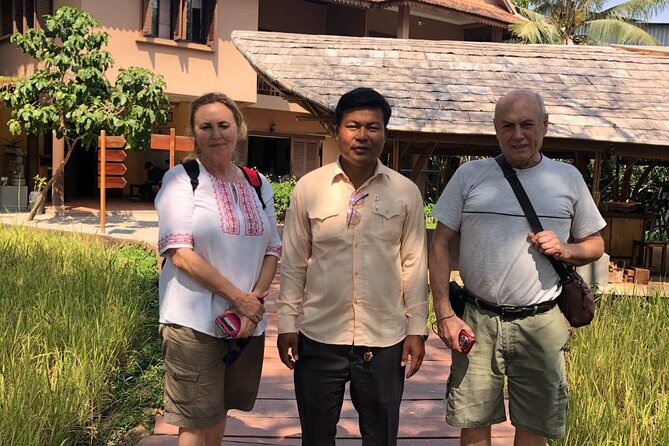
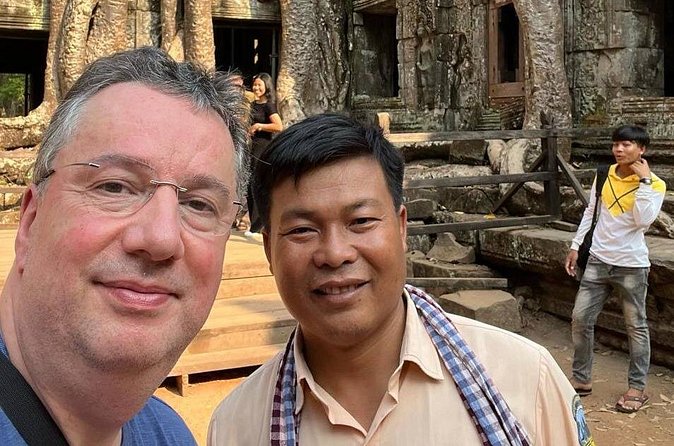
I especially like the depth your guide brings. The tour is led by Son, who took part in the Greater Angkor Project work connected to the University of Sydney, researching the decline of Angkor civilization and studying dams, canals, and lost-temple locations hidden in jungle. I also love how Son’s Spanish is said to be excellent, and how he answers questions about both temple details and Cambodian culture.
One drawback to plan for: temple costs and extras are not included. You’ll need to budget a temple pass (and potentially add the boat ticket and museum fee), and the early start means you’ll want to be ready to move.
In This Review
- Key Highlights You’ll Feel Right Away
- Why an Expert, Bilingual Guide Matters at Angkor
- Getting Started at 5:00 am: Logistics That Actually Help
- Angkor Wat: Moat Views, the 700-metre Bridge, and 3 Hours to See It Properly
- Bayon Temple’s Smiling Faces: 54 Towers and Three Levels
- The Ancient City Context: 9th to 14th Century and Why the Jungle Took Over
- Ta Prohm: The 19th-Century Discovery Model and Those Tree Roots
- Price and Value: What $65 Covers, and What to Budget Extra
- What the Day Feels Like (And Who It Fits Best)
- Practical Tips to Make This Tour More Comfortable
- Should You Book This Angkor Wat Private Guide?
- FAQ
- How long is the Siem Reap Angkor private tour?
- What time does the tour start, and where is the meeting point?
- What’s included in the price of $65 per person?
- Are temple entrance fees included?
- Which temples are included on the route?
- Does the tour offer English and Spanish?
Key Highlights You’ll Feel Right Away
- Son’s Greater Angkor Project experience: context for why Angkor looks the way it does, not just dates and names
- Bilingual guide, English and Spanish: fewer misunderstandings when you’re asking questions
- Angkor Wat time with the moat-and-bridge approach: a 700-metre bridge crossing sets up the best views
- Bayon Temple’s 54 tower faces: three levels and wide sightlines up at the tops
- Ta Prohm as-found-in-the-19th-century: huge trees and roots still growing through the structures
Why an Expert, Bilingual Guide Matters at Angkor

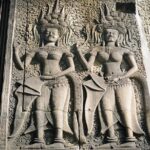
Angkor can feel like a maze of stone if you only have guidebooks. A good guide helps you read the carvings, understand the layout, and connect what you see to how the city worked in its time. That’s where this tour becomes more than transportation plus tickets.
Here, the guide is not just a talking-head. Son participated in the Greater Angkor Project linked to the University of Sydney, focused on the decline of Angkor civilization and research tied to dams, canals, and finding temples in jungle areas. When you’re standing among ruins, that kind of explanation turns scattered facts into a bigger picture.
And because the tour is offered in both English and Spanish, you can ask follow-up questions without feeling like you’re simplifying everything. In the Spanish reviews, people specifically praised Son for strong Spanish and for answering questions about temples and Cambodian culture. If you’re traveling with Spanish speakers, that’s a real quality-of-life upgrade.
You can also read our reviews of more guided tours in Siem Reap
Getting Started at 5:00 am: Logistics That Actually Help

This tour starts at 5:00 am and returns you to the meeting point. The pickup point is the Hard Rock Cafe Angkor area on King’s Road, near the Old Market Bridge in Siem Reap, so you’re not stuck trying to find a random pickup corner.
The schedule is early, but there’s a reason for that kind of timing. At dawn, the day feels cooler and the temple areas are easier to navigate. You’ll also be less drained for the full 5 to 7 hours, since you’re not starting when the sun is already high.
You also get private transportation and cold water. That matters here because the route covers multiple temple zones and you’ll want to stay comfortable while walking between sights.
Angkor Wat: Moat Views, the 700-metre Bridge, and 3 Hours to See It Properly
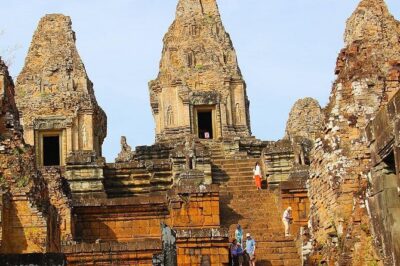
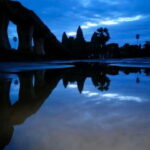
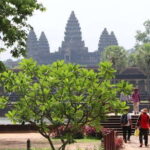
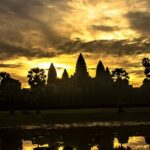
Your day anchors at Angkor Wat, the most visited temple in the Angkor complex. It’s located about 6 km north of Siem Reap and sits within a broad moat, so the experience begins with the approach. A key moment is crossing the bridge that stretches about 700 metres, which is described as one of the best ways to frame the temple view.
You’ll spend about 3 hours here, and that time slot is what separates a guided visit from a quick walk-through. With a guide, you can slow down and focus on how the temple’s layers and spaces feel as you move through them. You can also ask why certain features are placed the way they are instead of guessing.
A practical note: since admission isn’t included, you’ll want your temple pass ready. The tour clearly states the temple ticket cost, so treat it as part of your planning rather than an afterthought. If you arrive without the right pass, your day can lose momentum right at the start.
The other thing to watch for is your stamina. Angkor Wat is vast, and even with a plan, you’ll still be walking and standing for viewpoints. If you’re the type who likes to photograph slowly or read every detail the guide points out, you’ll use the full time well.
Bayon Temple’s Smiling Faces: 54 Towers and Three Levels
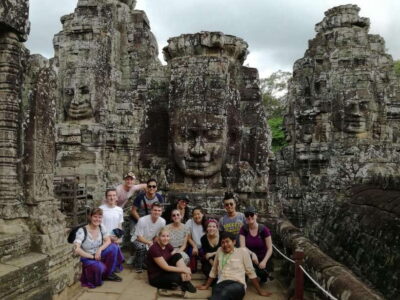
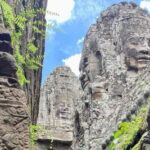
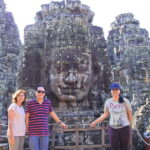
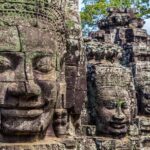
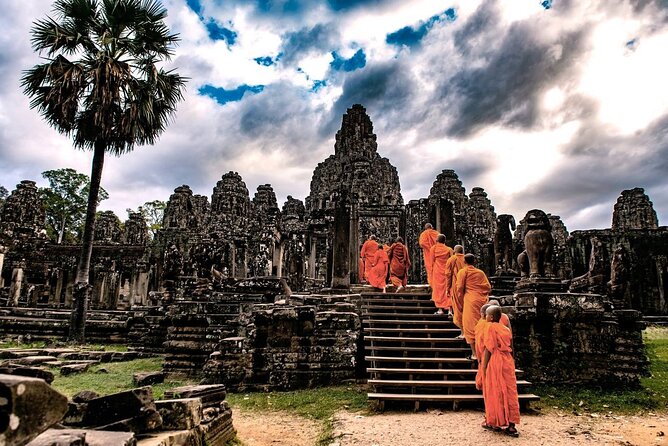
Next comes Bayon Temple, known for its faces—often called the smiling faces temple. The temple structure is described as having three levels and 54 towers rising into the sky. That’s a lot of vertical visual information, and it can be hard to take in on your own.
With a guide, you get the map for what to look at and where. The info shared for Bayon emphasizes that from the highest peaks, you can view the faces of the king. That’s the kind of direction that turns Bayon from “cool faces” into a more complete understanding of how the temple was designed to dominate the space.
You’ll spend about 1 hour here. That hour is short enough that you’ll want to focus, but long enough to circle key viewpoints and hear explanations instead of rushing. If you’re sensitive to crowds, the early start helps because you’re not trying to absorb Bayon when everyone else is arriving.
Admission for Bayon also isn’t included, so keep one eye on your pass. If you’ve budgeted correctly, this stop feels smooth and focused.
The Ancient City Context: 9th to 14th Century and Why the Jungle Took Over
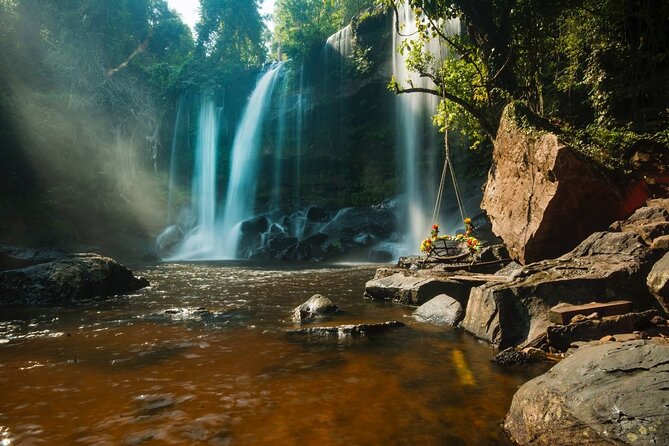
This next stretch is where the tour’s research background really pays off. The route includes time for the ancient city area, described as a settlement populated around one million people over many generations. The city’s historic period is given as the 9th to 14th century, and the explanation connects the decline with why you now see the area reclaimed by jungle and hidden temple structures.
You can experience Angkor Wat and Bayon as stunning monuments. But without context, it’s easy to miss the story of how a large urban system could fade—and how the landscape and vegetation shaped what survives. The guide’s background in studying dams and canals ties directly to how cities like this depended on water and infrastructure, even if you don’t see every detail with your own eyes.
The itinerary shows about 2 hours here, which is a good amount of time to move at a human pace. You’ll likely spend time walking, looking, and learning how to interpret ruins as part of a whole city rather than isolated buildings.
If you’re the kind of person who likes “why did it happen” questions, you’ll probably enjoy this portion most. It’s not just pretty stones; it’s a lesson in how a civilization worked—and what happens when systems break down.
You can also read our reviews of more private tours in Siem Reap


Ta Prohm: The 19th-Century Discovery Model and Those Tree Roots
Finally, you’ll head to Ta Prohm, described as a model temple of how it was found when the city was discovered in the 19th century. This is the stop that most people recognize immediately, because it’s the one where nature looks like it’s actively claiming the ruins.
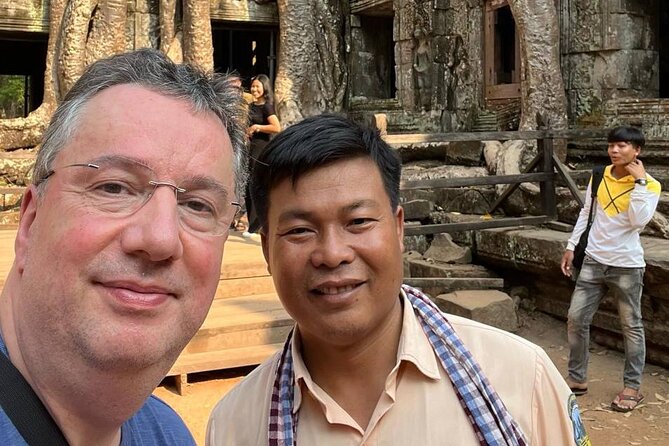
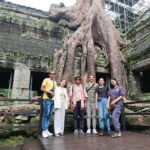
The key image is the vegetation and the trees. The information you’re given highlights that big trees and gigantic roots are still growing on the temple of Ta Prohm. It’s not just scenic; it’s a reminder that the jungle didn’t quietly wait in the background. It moved in, and it shaped what the site looks like today.
You’ll spend about 1 hour at Ta Prohm. That’s usually enough time to see the most famous angles and also hear what to notice while you walk. If you enjoy photography, this is the moment where you’ll want to slow down even more, because the roots and stonework create layers of textures.
One watch-out: Ta Prohm’s atmosphere can feel more humid because of the dense vegetation. Your best strategy is simple—stay hydrated, keep moving, and don’t let your pace get too frantic. You’ve already got cold water from the start, so use it.
Price and Value: What $65 Covers, and What to Budget Extra
The price is $65.00 per person, and it covers the parts that keep the day easy: private transportation, a private tour guide, and cold water. For Angkor, that’s meaningful, because you’re not only buying access to temples—you’re buying time, planning, and interpretation.
The trade-off is that major costs are not included. Temple entrance fees are listed clearly: $37 for 1 day and $50 for 3 days. Meals and tips aren’t included either. Also, there’s an extra boat ticket listed at $20 per person, and the Angkor National Museum fee is $15 per person.
So what’s the real value? You’re paying for a structured route with a guide who brings specialized research context and bilingual language help. If you’d otherwise hire a guide piecemeal, or you’re not comfortable navigating temple areas alone, this setup can work out better than trying to assemble everything yourself.
If you want a quick budgeting sanity check: your temple pass will likely be the biggest add-on. If you’re also interested in the boat option or the museum, factor those in early so the day doesn’t feel like surprises.
What the Day Feels Like (And Who It Fits Best)
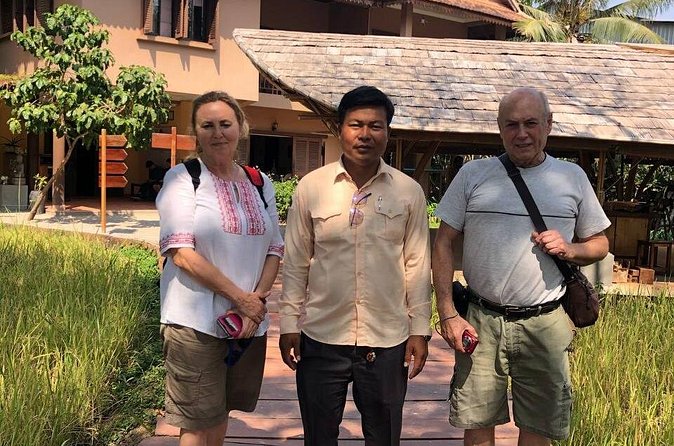
This is a private tour, meaning it’s just your group. That’s ideal if you want to set your own pace and ask questions without worrying about stopping the flow for other people. It also helps if your group has mixed ages or different levels of interest in temple architecture versus cultural context.
It’s also a good choice if you want a guided route that hits the major sights in a half-day-ish window. With 5 to 7 hours, you get a complete loop: Angkor Wat first, then Bayon, then the broader city context, and ending with Ta Prohm.
Where it may not fit as well: if you hate early mornings, the 5:00 am start could be rough. If you’re traveling with extremely limited time, the early start is still long enough to make you feel like you’re working through a checklist. But for most people, the payoff is a more comfortable and less rushed experience.
Practical Tips to Make This Tour More Comfortable
This kind of day has one job: keep you moving so you can enjoy the sights. Start with practical basics—comfortable walking shoes and sun protection, because you’ll be outside and exposed for stretches.
Bring your questions. If you’re curious about the decline of Angkor or how water systems like dams and canals might have mattered, ask. The guide’s background is tied to exactly those topics, and it’s the fastest way to turn a tour into a learning experience you’ll remember.
Plan your wallet too. Since temple admission, the museum fee, and the boat ticket are separate line items, you’ll enjoy the day more if you’re not doing math on the spot.
Should You Book This Angkor Wat Private Guide?
I’d book it if you want more than a photo tour. The biggest selling points here are the private guide with specialized Angkor research background, and the ability to switch languages with confidence through Son’s English and Spanish. If you like asking questions and getting clear answers, this is the kind of day that will reward your curiosity.
I’d hesitate only if your budget can’t stretch to temple admissions and possible add-ons, or if waking at 5:00 am is a deal-breaker. If those two things are under control, this is a smart way to see the core temples while learning how the whole Angkor story fits together.
FAQ
How long is the Siem Reap Angkor private tour?
It runs about 5 to 7 hours, depending on the pace of your group.
What time does the tour start, and where is the meeting point?
The start time is 5:00 am, and the meeting point is at Hard Rock Cafe Angkor on King’s Road Angkor, near the Old Market Bridge.
What’s included in the price of $65 per person?
The price includes private transportation, cold water, and a private tour guide.
Are temple entrance fees included?
No. Temple entrance fees are listed as $37 for 1 day and $50 for 3 days.
Which temples are included on the route?
The tour includes Angkor Wat, Bayon Temple, an additional stop in the ancient city area, and Ta Prohm.
Does the tour offer English and Spanish?
Yes. The tour is described as an Angkor private tour guide in English and Spanish.