REVIEW · SIEM REAP
Two Day Angkor Temples Tours
Book on Viator →Operated by Angkor Heritage Tours · Bookable on Viator
Angkor temples in two days, with smart pacing. This tour strings together Banteay Srei-level artistry and full-on Angkor icons like Angkor Wat, then connects it all with a guide who listens to what you want to see and how long you want to linger.
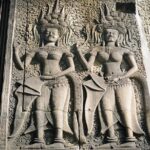
Two things I really like: first, the guides focus on both the temple story and the real-world vibe—history in a way that you can actually picture. Second, you get a strong photography angle, including practical tips on where to stand and how to frame carvings and faces without feeling rushed.
One consideration: temple admission tickets are not included, so you’ll need to budget for entry. Also, it’s a full two-day walk-and-stairs schedule, so moderate fitness helps.
In This Review
- Key highlights you’ll feel right away
- The Route: Why This Two-Day Angkor Plan Works
- Day 1 in Angkor: Banteay Srei, Samre, Preah Khan, and the In-Between Temples
- Banteay Srei: Pink stone Hindu artistry
- Banteay Samre: Suryavarman II and a strong state of preservation
- Preah Khan: Sacred Sword and a less-crowded maze
- Neak Pean: A Buddhist temple on an artificial island
- Ta Som: Quick satellite stop with big head details
- Eastern Mebon: Hindu temple on what used to be water
- Pre Rup: Pyramid-temple-mountain views
- Day 2 at the Main Events: Angkor Wat, Angkor Thom, and Ta Prohm
- Angkor Wat: Suryavarman II’s monumental statement
- Phnom Bakheng: Temple-mountain roots
- Angkor Thom: Great City and the Bayon zone
- Ta Prohm: The atmospheric, tree-engulfed ruin
- Transport and Comfort: What Air-Conditioned Pickup Changes
- Guides: The Real Secret Sauce in Siem Reap
- Price and Value: Is $102.57 a Good Deal?
- What to Pack and How to Pace Yourself
- Who This Tour Fits Best
- Should You Book This Two-Day Angkor Temples Tour?
- FAQ
- Are temple admission tickets included?
- How long is the tour?
- Is pickup included?
- What’s included in the price besides the guide?
- Is GST included?
- Is this a private tour or a shared group tour?
- What’s the cancellation situation?
Key highlights you’ll feel right away
- Guide flexibility with schedule pivots: If your group wants more time at a specific site, the plan can shift.
- Hinduism and Buddhism explained in plain terms: You don’t just look—you understand what you’re seeing.
- A route that mixes famous and quieter stops: You get both crowd magnets and calmer ruins.
- Photography-forward temple stops: Many structures are framed for angles, details, and “where do we stand?” moments.
- Air-conditioned transport for the hot stretches: It matters more than you think in Siem Reap heat.
The Route: Why This Two-Day Angkor Plan Works
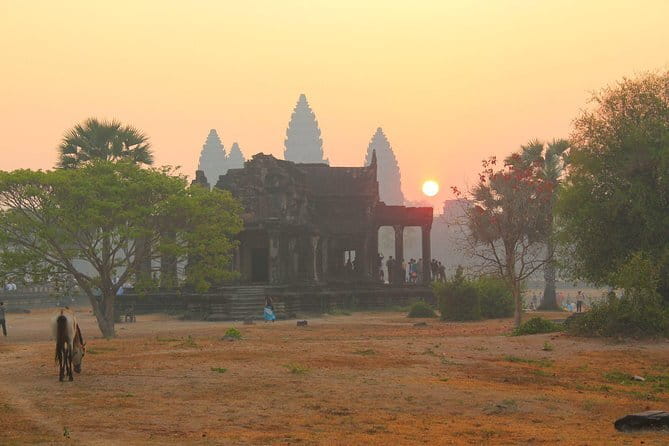
Angkor can be overwhelming. Too much information, too many crowds, and not enough time to actually look. This two-day structure helps because it doesn’t just hit the biggest names back-to-back. It builds from smaller, detail-heavy temples on Day 1, then shifts to the big ceremonial center on Day 2.
Day 1 is about texture and craftsmanship—pink sandstone at Banteay Srei, preserved carvings at Banteay Samre, and the maze-like feel of Preah Khan. Day 2 then lands you at Angkor Wat and Angkor Thom, with Ta Prohm’s famous tree-choked atmosphere near the end. If you like the feel of progressing from “wow, details” to “wow, scale,” this timing makes sense.
Also, the tour is run as a private experience for your group. That’s a big deal at Angkor. It means you can move at a pace that fits your energy level and interests, instead of getting dragged along to match everyone else’s photo speed.
You can also read our reviews of more tours and experiences in Siem Reap

Day 1 in Angkor: Banteay Srei, Samre, Preah Khan, and the In-Between Temples
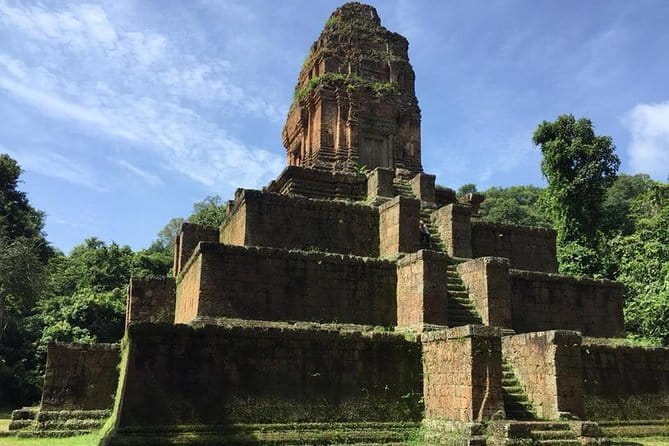
Day 1 is a classic “day of art and atmosphere.” You’re not stuck in a single monument. You’re moving through different temple types, different religious links, and different preservation levels.
Banteay Srei: Pink stone Hindu artistry
Banteay Srei is often treated like the standout for Angkorian carving work. It’s a Hindu temple dedicated to Lord Shiva, built in the 10th century, and it’s cut from a pinkish stone. That color matters because it makes carvings pop in different light.
Why I think this stop is a smart start: you train your eyes early. After this, later temples look less like random ruins and more like specific design choices—stonework, icon placement, and layout.
Time on-site: about 1 hour. If you’re the type who likes close-ups, this is the day to slow down.
Banteay Samre: Suryavarman II and a strong state of preservation
Banteay Samre dates from the same general era as Angkor Wat, built by Suryavarman II in the 12th century and dedicated to Lord Vishnu. One practical advantage here is its fairly healthy state of preservation. That means fewer “guessing games” and more “I can actually see what they did.”
Expect a quieter rhythm than the most famous Angkor icons. It’s a good place to practice your temple viewing style: step back for the layout, then step in for the carvings.
Time on-site: about 1 hour.
Preah Khan: Sacred Sword and a less-crowded maze
Preah Khan—sometimes called Sacred Sword—can feel like a labyrinth of vaulted corridors, fine carvings, and lichen-clad stonework. It’s one of the largest complexes at Angkor. The vibe here is different from the more open temples: you’re constantly turning corners and noticing new angles.
It also tends to attract slightly fewer visitors than Ta Prohm, which can make it easier to enjoy the space without constant shoulder-to-shoulder interruptions.
Time on-site: about 1 hour. If your group loves exploring ruins like a puzzle, this stop is a great mid-day anchor.

Neak Pean: A Buddhist temple on an artificial island
Neak Pean is a Buddhist temple built by Jayavarman VII, dedicated to Preah Neak Poan (Intertwined snake). The location is the story: it sits on an artificial island in the middle of the manmade lake Jayatataka, also referred to as North Baray.
This is one of those places where the setting changes the experience. Even if the temple structures aren’t huge, the “island-in-water” idea helps you see why it was designed this way.
Time on-site: about 40 minutes.
Ta Som: Quick satellite stop with big head details
Ta Som is the satellite temple of Preah Khan, built by Jayavarman VII in the late 12th century. It’s small, but it still has that satisfying Angkor moment—especially the eastern gate featuring a large face/heads detail (the kind you’ll want to photograph from more than one angle).
Time on-site: about 30 minutes. This is a good “stretch your legs, get a few great shots, keep energy for the next site” stop.
Eastern Mebon: Hindu temple on what used to be water
Eastern Mebon is a Hindu temple erected by Rajendravarman II (from 944–68). Originally, it would have been on an islet in the center of Eastern Baray, but it’s now much more on dry land. That change is part of why the site feels a little different when you’re standing there.
It’s still worth the visit because it shows how Angkor water engineering shaped religious layouts, and how time changes the relationship between temple and water.
Time on-site: about 50 minutes.
Pre Rup: Pyramid-temple-mountain views
Pre Rup was built by Rajendravarman II in the 10th century. Like a lot of Angkor religious architecture, it’s temple-mountain style, with three tiers leading up to the uppermost level.
Even without a long hike, these tiered temples give you the “stand above the world” feeling—great for photos and for seeing how the complex sits in its surrounding zone.
Time on-site: about 40 minutes.
Day 2 at the Main Events: Angkor Wat, Angkor Thom, and Ta Prohm
Day 2 is where Angkor does its biggest flex. You’ll hit the most recognizable monuments, but the schedule also gives you enough time to understand what you’re seeing rather than just sprinting for the next photo.
Angkor Wat: Suryavarman II’s monumental statement
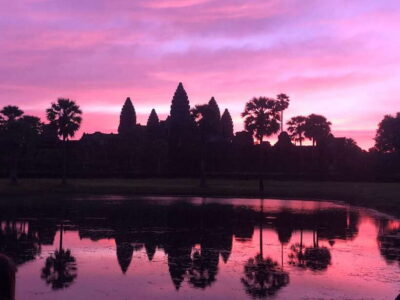
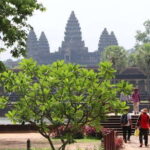
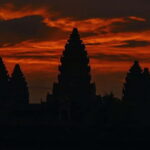
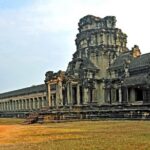
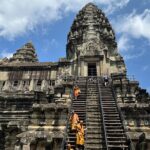
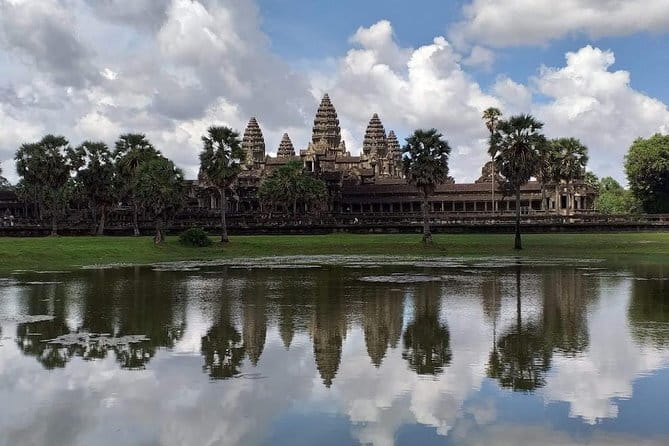
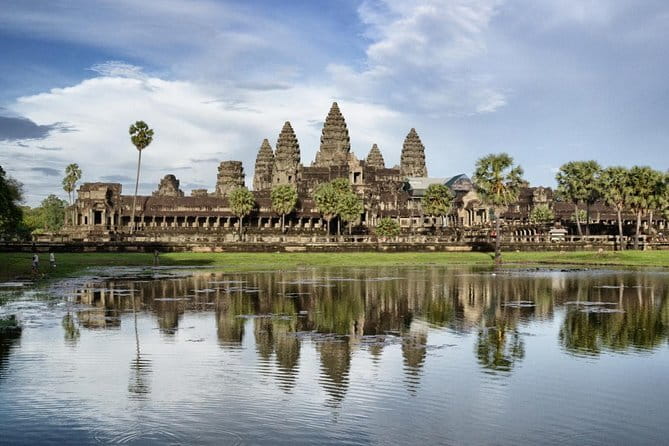
Angkor Wat was built by Suryavarman II in the 12th century in honor of Lord Vishnu. It’s the largest monument at Angkor and often considered the visual centerpiece of the entire Angkor complex.
This stop is about scale and symbolism. With time to settle in—about 2 hours on-site—you can do a proper viewing rhythm: grand views first, then shift toward carved details and the feel of the structure.
If you’re hoping your guide will connect dots between Hindu origins and later Buddhist context, this is the place where that explanation lands hardest.
Phnom Bakheng: Temple-mountain roots
Phnom Bakheng was built by Yasovarman I in the early 10th century and is tied to the concept of temple-mountains in the area. The structure has five tiers, with seven levels mentioned in the description.
The itinerary lists this stop as extremely short (about 1 minute). I’d treat that as a “quick look / quick positioning” kind of stop rather than a long exploration. Still, it can be useful to connect what you saw at Angkor Wat with earlier mountain-temple ideas.
Angkor Thom: Great City and the Bayon zone
Angkor Thom (the Great City) was built by Jayavarman VII as the last major city of Angkor. At its height, the region supported an enormous population—described here as up to one million people in the surrounding area.
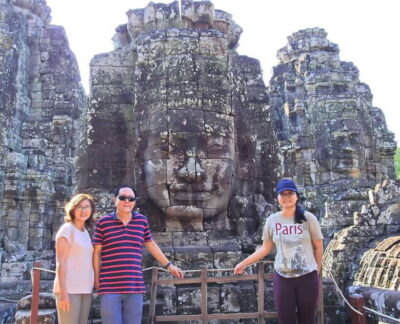
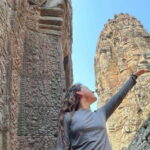
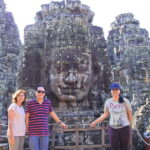
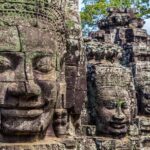
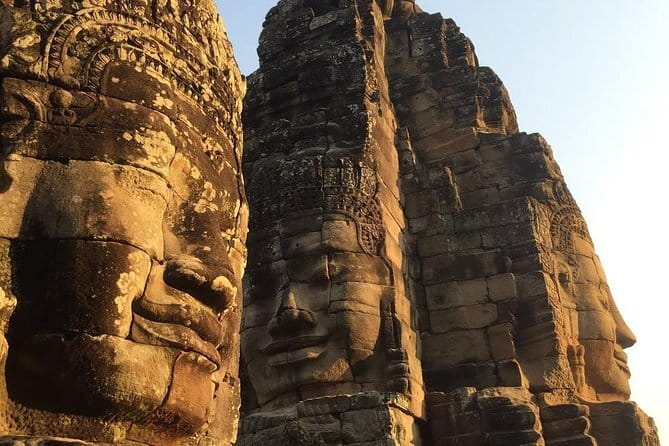
Angkor Thom centers on the Bayon, with massive faces and a strong sense of city planning. The stop is about 2 hours, which is enough to feel like you’re inside a plan, not just walking through an open-air museum.
Practical note: keep some patience for crowd movement. With a private group, you’ll have an easier time than shared tours.
Ta Prohm: The atmospheric, tree-engulfed ruin
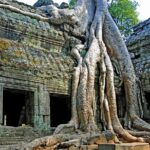
Ta Prohm is the final major emotional hit. It’s often considered the most atmospheric ruin at Angkor, partly because it has been swallowed by trees in a way that feels immediate and human-sized. It’s the kind of site where you don’t just look up—you look around and notice how the roots and stone interact.
The itinerary gives about 1 hour here. That time is just enough to enjoy the “here’s why it looks like this” feeling and still get solid photos without running out of daylight too quickly.
Transport and Comfort: What Air-Conditioned Pickup Changes
A big part of Angkor comfort is not the temples—it’s the getting between them. This tour includes an air-conditioned vehicle, which you’ll appreciate when you’re moving during the warmer parts of the day.
Pickup is offered, and the meeting point is listed at Angkor Enterprise on Apsara Road in Siem Reap. Translation: you’re not dealing with random drop-offs in the middle of nowhere. You start from a known spot, then get organized transit between sites.
Value angle: paying for decent transport is what keeps your energy for walking and looking. Angkor isn’t a “sit on a bench” activity.
Guides: The Real Secret Sauce in Siem Reap
The strongest theme in the guide feedback is how personal the experience feels. Multiple guides on this tour route are described as honest, reliable, flexible, and responsive to what you want. That doesn’t sound flashy on paper, but it’s exactly what makes Angkor feel enjoyable instead of exhausting.
Names that came up include Borey Hang, Mr. Kim, Kimhoeun, and Mr. Bunleat. Across these accounts, the common thread is that guides explain not only the temples, but also the cultural and religious context—especially the crossover between Hinduism and Buddhism.
That matters because Angkor architecture can look confusing if you only see it as decoration. When your guide connects carvings and layout to the religious story, the stones start making sense.
Another very practical advantage: they’re into photography. You don’t have to be a pro with a camera. A guide who knows good angles and when to reposition you will save you from the classic Angkor problem: you take pictures, but they’re all from the same side.
And yes, flexibility came up directly. One guide suggestion involved pivoting the plan based on how much the group enjoyed Ta Prohm. That’s the right kind of “make it fit your interests” thinking.
Price and Value: Is $102.57 a Good Deal?
At $102.57 per person for a 2-day tour, this isn’t “cheap bargain basement,” but it also doesn’t look inflated for what you’re getting. You’re paying for:
- an organized two-day route through major Angkor zones
- private group handling
- an air-conditioned vehicle
- guides who focus on history, photography, and responsiveness
The catch is that temple admission tickets are not included. So your final spend depends on entry costs for each site. Also, GST (Goods and Services Tax) is listed as not included. So read your final quote carefully and budget for those add-ons.
If you’re comparing value: the biggest “win” here isn’t just the number of temples. It’s the combination of guiding style (history + context + photo help) with comfort between stops. For many people, that’s what turns a tour into a trip.
What to Pack and How to Pace Yourself
You don’t need special gear, but Angkor will punish sloppy planning. Here’s what to think about, based on the kind of sites and time blocks you’ll face.
- Water and sun protection: you’ll be outside for long stretches across multiple monuments.
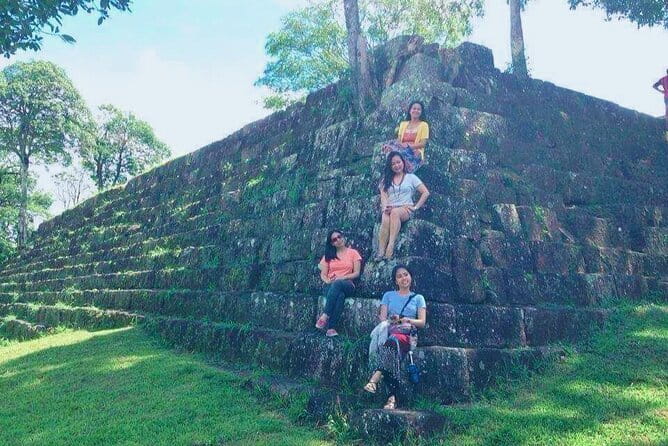
- Comfortable shoes: tiered platforms and uneven stone are part of the deal.
- Bring a camera plan: if you like photos, ask your guide where to stand and what time of day to focus on certain details.
- Keep some buffer energy: Day 1 has multiple 30–50 minute stops plus walking between them. Day 2 then adds the big hitters.
Moderate physical fitness is recommended. That’s not a dramatic limitation, but it’s honest: you’ll be moving a lot.
Who This Tour Fits Best
This is a strong match if:
- you want a two-day Angkor plan without trying to DIY the logic of all the temples
- you like understanding the “why,” not just the “what”
- you care about photography help and not spending half your time wandering for angles
- you want private pacing so you can linger where your group enjoys it most
It’s especially good for short stays in Siem Reap—if you only have a few days and you want maximum meaning from limited time.
Should You Book This Two-Day Angkor Temples Tour?
If you want Angkor without the chaos of figuring out every stop, I’d say yes. The structure makes sense: craft-heavy temples on Day 1, major icons and emotional ruins on Day 2. The guides’ reputation for flexibility and explanations—plus their photography focus—sounds like the difference between seeing temples and understanding them.
Before you hit book, do two reality checks:
- Budget for temple tickets, since they’re not included.
- Be ready for a couple of full days of walking and stairs, since moderate fitness is suggested.
If that works for you, this is a solid way to experience Angkor temples with fewer headaches and more “I get it now” moments.
FAQ
Are temple admission tickets included?
No. The itinerary lists admission tickets as not included for the stops.
How long is the tour?
It runs for 2 days (approximately).
Is pickup included?
Pickup is offered, and the listed meeting point is Angkor Enterprise on Apsara Rd in Siem Reap.
What’s included in the price besides the guide?
An air-conditioned vehicle is included.
Is GST included?
GST (Goods and Services Tax) is listed as not included.
Is this a private tour or a shared group tour?
It’s described as a private tour/activity, meaning only your group participates.
What’s the cancellation situation?
Free cancellation is available. You can cancel up to 24 hours in advance for a full refund, and cancellations within 24 hours aren’t refunded. The experience also requires good weather, with a different date or full refund if it’s canceled due to poor weather.