REVIEW · SIEM REAP
2-Day ‘Angkor & Village’ Tour
Book on Viator →Operated by Asia Voyage Tour · Bookable on Viator
Angkor in two days is a sprint. What makes it workable is the air-conditioned car with pickup and drop-off plus an English-speaking guide who keeps the day moving. One thing to plan for up front: the temples involve real walking and lots of steps, so the pace can feel tough if your legs aren’t used to climbing.
I like that this is a true two-day route, not a half-day highlight grab. You get the big recognizables, but also several temples that many short tours skip, and you’re not stuck figuring anything out on your own. Even better, the small comforts are included—cold towels and bottled water—which matters in Cambodia’s heat.
Budget check: the price does not cover temple passes. You’ll need to buy the 2-day Angkor pass (and your tour materials also mention other pass lengths at the ticket office), and meals are on you. If you’re the type who hates extra charges, this is the one line item you’ll want to handle early so Day 1 stays smooth.
In This Review
- Key things to know before you go
- Price and passes: what $130 covers (and what costs extra)
- The private car and guide: how you stay sane at Angkor
- Day 1 at Angkor Park: Bayon faces, Ta Prohm roots, and a long Angkor Wat day
- Phnom Bakheng: the climb, the views, and the timing risk
- Day 2 sunrise at Angkor Wat: early light plus breakfast back in town
- Banteay Srei and the smaller circuit: why these temples feel special
- Kompong Phluk on Tonlé Sap: boat included, and it’s a different kind of Angkor
- If you swap the village: the Preah Khan–Neak Poan alternative day
- What to pack and how to handle the steps without ruining your trip
- Should you book this 2-Day Angkor & Village tour?
- FAQ
- What time does the tour start?
- Is hotel pickup and drop-off included?
- Is the tour private?
- Do I need to buy Angkor temple passes?
- Are meals included?
- Is a boat ride included for the village visit?
- Can children join?
Key things to know before you go
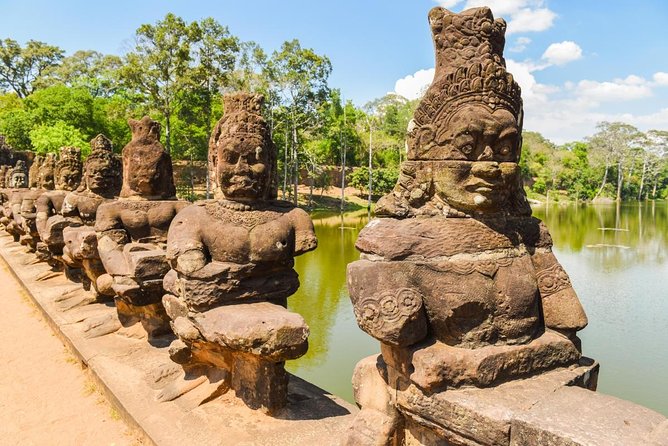
- Private, door-to-door service: pickup and drop-off at your accommodation in a top-quality air-conditioned vehicle.
- Sunrise slot at Angkor Wat: Day 2 starts with a revisit timed for the famous early light.
- Stilt village boat time included: the motorised boat fee is part of the floating village visit.
- Passes are extra: temple entry requires buying the Angkor pass separately.
- Choose your Day 2 village/temple balance: Kompong Phluk is the default plan, with an alternative temple circuit if you swap it.
Price and passes: what $130 covers (and what costs extra)
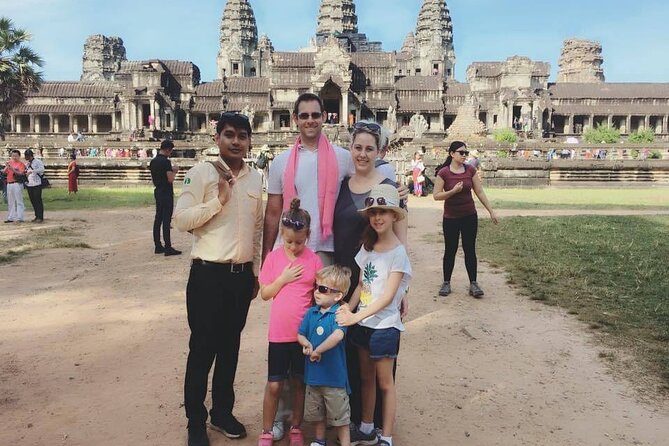
This tour costs $130 for about two days, and it includes the things that usually eat up time and energy: hotel pickup/drop-off, a professional English-speaking guide, an air-conditioned vehicle, bottled water, and cold towels. It also covers the motorised boat fee connected to the village visit—one less thing to haggle for.
The catch is temple passes. You’ll need to purchase your own Angkor Archaeological Park pass for at least two days. Your info specifically calls out a 2-day pass listed at USD 67 per person, and it also shows other pass options at the ticket office (like 3-day and 7-day options). Since prices can change, I’d treat the ticket office as the final word and buy on Day 1 so you don’t lose morning time.
Value-wise, this is best if you want:
- fewer logistics headaches (you’re driven, guided, and fed information),
- a compact route in 48 hours,
- and an experience that balances major temples with slightly quieter ones.
If you’re traveling with your own tuk-tuk driver already planned, you might do the math and save money. But if you hate negotiating routes at dawn, the guide + car package is where the value lands.
You can also read our reviews of more tours and experiences in Siem Reap

The private car and guide: how you stay sane at Angkor
At Angkor, the hard part isn’t learning where things are. It’s managing crowds, heat, and the sheer effort of moving between temple groups. This tour tackles that with a/c transportation and an itinerary built for a steady rhythm across two days.
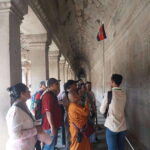
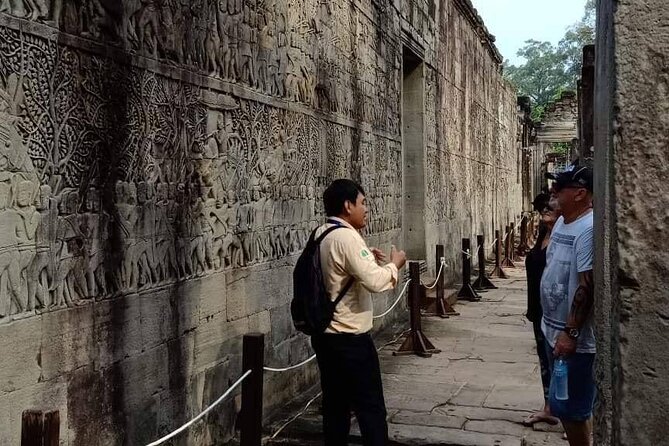
Your guide is part history teacher, part time manager. You’ll spend serious time at standout temples like Bayon, Ta Prohm, and Angkor Wat, and the guide’s job is to help you understand what you’re looking at—temple names, who built them, and why certain features matter.
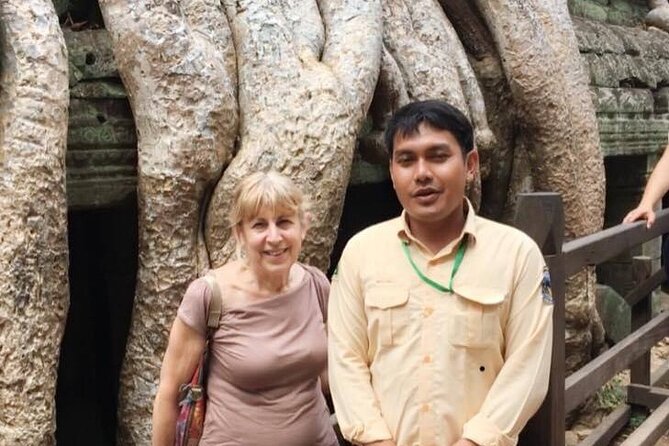
From the feedback I was given, guides like Choup and Seng are especially praised for making the trip enjoyable and even adjusting details to what you want to see. That kind of flexibility is practical at Angkor, where wind, crowds, and daylight can change your best plan.
Day 1 at Angkor Park: Bayon faces, Ta Prohm roots, and a long Angkor Wat day
Day 1 is classic Angkor pacing: you start with the Angkor Archaeological Park ticket office, then move into Angkor Thom and the wider complex. This is the day where your brain starts connecting names to stone.
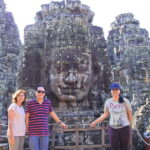
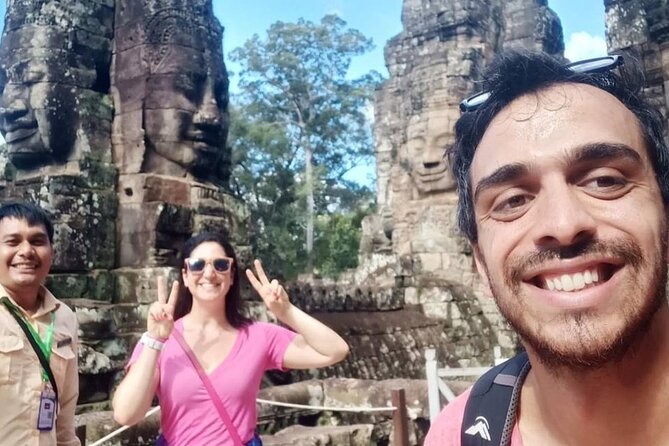
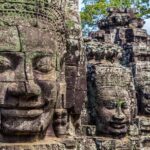
You’ll first hit Bayon, the temple built as the state temple of King Jayavarman VII (late 12th to early 13th century). Bayon is known for its dense sculpted faces, and the guide helps you read the temple as a political and religious statement, not just a photogenic stop.
Next comes Baphuon, a three-tiered temple mountain in Angkor Thom, built mid-11th century and dedicated to Shiva. It’s a good match after Bayon because the feel changes: you’re shifting from one royal-era temple style to another, and you get a better sense of how Khmer rulers used architecture to project power.
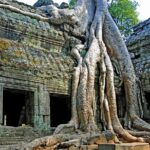
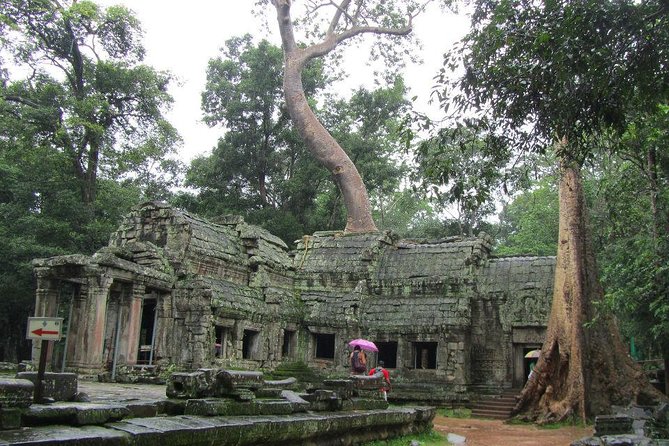
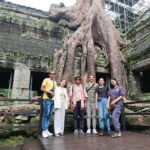
Then you’ll get Ta Prohm, originally called Rajavihara and built in the Bayon style. The famous tree roots are part of what makes Ta Prohm cinematic, but it’s also a chance to see how temples evolve when nature and tourism intersect.
You also make time for the Terrace of the Elephants, part of the royal palace grounds along the parade areas. It’s short on time compared to the biggest temples, but it’s a useful reminder that Angkor was built for ceremony and processions—this wasn’t a private garden.
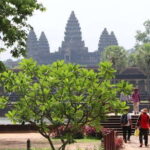
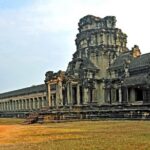
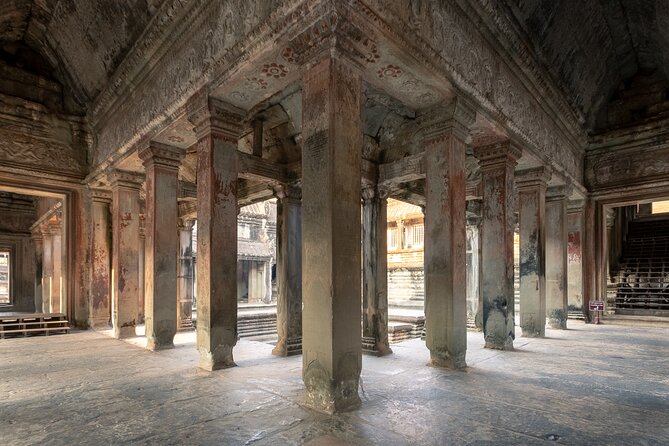
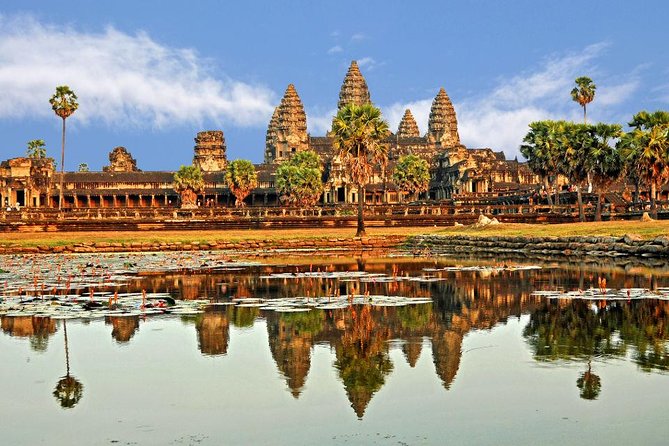
Finally, Day 1 ends with major-weight stops: Angkor Wat and Phnom Bakheng. Angkor Wat is the big one—largest religious monument in the world on a huge site. It’s easy to think you know it from photos; in person, the scale hits harder than you expect. Then Phnom Bakheng brings a different angle: it’s a temple mountain dedicated to Shiva, built at the end of the 9th century and now reached via stairs up the hill.
Big-picture advice: Day 1 is where your legs earn their souvenir t-shirts. If you can’t comfortably climb steps, plan slower breaks and expect fatigue.
Phnom Bakheng: the climb, the views, and the timing risk
Phnom Bakheng is the stop that can make or break your experience. It’s not just the stairs—it’s also the fact that you’re going up near the end of a busy day. The reward is the viewpoint energy: you’re higher above the complex, and the temple mountain layout makes you feel the whole site at once.
The drawback is straightforward. If you’re already tired, this is where the day can feel steep. Your tour notes say it’s not suitable for people with less than average fitness or who can’t walk normally, and Phnom Bakheng is the kind of place where that limitation becomes real fast.
My practical tip: wear shoes you trust. No slick soles. Bring a bottle you can keep sipping from, and use the cold towels when you get them. Small comfort choices make a long day feel manageable.
Day 2 sunrise at Angkor Wat: early light plus breakfast back in town
Day 2 is where the tour gives you the payoff most people chase: sunrise at Angkor Wat. You’ll revisit Angkor Wat in the morning, then return to your hotel so you can have breakfast. This split matters because it protects you from the most common mistake—trying to do dawn + long temple blocks without any real recovery.
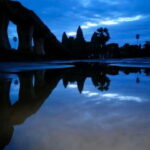
Sunrise changes how the temple reads. At night and in low light, Angkor Wat’s geometry feels more graphic. In daylight, it’s more detailed and busy. Either way, the early timing is a real advantage because it helps you enjoy the temple without treating it as a race against the midday crowd.
After sunrise, the tour shifts away from the largest monuments and toward temples with more intimate textures and carvings.
Banteay Srei and the smaller circuit: why these temples feel special
After breakfast, you head to Banteay Srei, often nicknamed the ladies temple. It’s a 10th-century temple dedicated to Shiva, located near Phnom Dei and about 25 km northeast of the main temple group. In practical terms, it’s a change of pace: the drive plus a smaller-feeling site helps you reset after Angkor Wat’s scale.
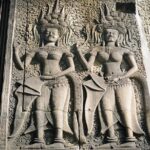
You’ll also visit Banteay Samre, a Hindu temple in the Angkor Wat style, built in the early 12th century during the reigns linked to Suryavarman II and Yasovarman II. The value here is variety. You’re not only looking at one architectural “look.” You’re comparing styles and seeing how Khmer designers repeated and adjusted motifs across time.
Then comes Pre Rup, a temple mountain built as the state temple of King Rajendravarman, dedicated around 961 or early 962, using brick, laterite, and sandstone. Pre Rup is a good stop for understanding the layered evolution of the complex—what rulers built, how they dedicated it, and what survives.
This stretch is where the tour balances effort with reward. It’s still temple walking, but you’re not stuck only in the headline zones.
Kompong Phluk on Tonlé Sap: boat included, and it’s a different kind of Angkor
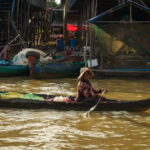
The tour then moves into the real-world Cambodia that sits just beyond the temple parks: Kompong Phluk, a village built largely on stilts on the Tonlé Sap. The name means Harbor of the Tusks. The focus is everyday life tied to the lake—especially during Cambodia’s wet season (May–October), when fishing becomes the livelihood.
The key practical point: the motorised boat fee is included, so you can actually do the water-side experience without paying extra at the last second. Boat time also changes your perspective. You’re not viewing ruins; you’re watching how people live with the landscape and the water levels.
That said, this part of the day can feel more “touristy” simply because it’s a set visit. The best way to enjoy it is to treat it as human geography: ask your guide what changes in the seasons, and watch the routines around you.
If you swap the village: the Preah Khan–Neak Poan alternative day
On Day 2, there’s an option. Instead of Kompong Phluk, you can visit a temple cluster: Preah Khan, Neak Poan, Ta Som, and East Mebon, and then you return to town about 5:00pm.
This swap is useful if:
- you’d rather stay in temples than switch into a lake/village day,
- you’re trying to reduce time on the water,
- or you simply want more of the classic Angkor temple rhythm.
If you like variety, Kompong Phluk is the bigger contrast to temples. If you prefer staying in the stone world, the alternative keeps you in temples and saves you from another transport change.
What to pack and how to handle the steps without ruining your trip
This tour is doable for most people, but it isn’t a sit-and-stroll plan. Your tour info warns it’s not suitable for those who have less than average fitness or can’t walk normally. Even if you’re generally active, the combination of heat, uneven stones, and stairs adds up.
Here’s what I’d prepare for:
- Comfortable closed-toe shoes for steps and stone surfaces.
- A refillable water bottle (the tour provides bottled water, but you’ll still want easy sips).
- Sunscreen and a hat, since you’ll spend time outdoors between temples.
- A mindset that breaks are part of the plan, not a failure.
If you’re traveling with someone who struggles with climbing, you can use the vehicle ride time to recover. And you can tell your guide how you’re feeling; the better guides adjust pacing.
Should you book this 2-Day Angkor & Village tour?
Book it if you want a well-paced two-day Angkor experience that mixes the big names with additional temples, plus a stilt village boat outing. It’s a strong choice if you like having an English-speaking guide and you prefer not to wrestle with logistics while you’re trying to see everything.
I’d think twice if:
- you know you struggle with stairs and long climbs (Phnom Bakheng and several major temples can be demanding),
- you hate budgeting for extra line items (temple passes are not included),
- or you’d rather travel slower and deeper in fewer spots.
Given the total package—private door-to-door comfort, a guide, and the boat fee included—it’s good value for the time you get. Just buy your pass early, wear shoes that handle steps, and treat Day 1 like the workday and Day 2 like the payoff day.
FAQ
What time does the tour start?
The tour starts at 8:30 am.
Is hotel pickup and drop-off included?
Yes. Pickup and drop-off at your accommodation are included.
Is the tour private?
Yes. It’s a private tour, so only your group participates.
Do I need to buy Angkor temple passes?
Yes. Temple passes are not included, and you’ll need to buy an Angkor pass (the tour info lists a 2-day pass at USD 67 per person).
Are meals included?
No. Meals are not included.
Is a boat ride included for the village visit?
Yes. The tour includes the fee for the motorised boat.
Can children join?
The tour is not available for children under 3 years old.