REVIEW · SIEM REAP
2 Day private tour: Small tour, Big tour, sunrise and sunset,floating village.
Book on Viator →Operated by Angkor Special Tours · Bookable on Viator
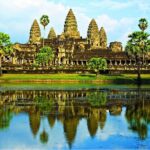
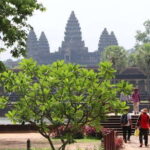
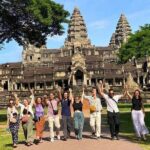
Sunrise at Angkor can change your whole mood. This private 2-day plan in Siem Reap mixes sunrise and sunset temple time with a Tonle Sap floating village outing, all with air-conditioned comfort and a guide who handles the moving parts. You’ll see the big icons like Angkor Wat, then move through the carved-face drama at Bayon and the jungle-covered ruins that made Angkor famous.
I like the way this tour balances must-see temples with breathing room. You get a real private guide experience, not a cattle-car schedule, and the tour includes cold water and cold towels so the day stays workable in the heat. In the reviews, guides such as Mr. Pin Vannak and Thean get singled out for clear English and history you can actually use while you walk the stones.
One thing to budget for: the tour price does not include the main entry fees. You’ll pay $62 per person for Angkor tickets and $20 per person for the private boat, and that can change the final total fast.
In This Review
- Key Things That Make This Tour Worth Your Time
- The Real Value: Private, Small-Group Temple Days
- Your First Temple Day: Angkor Wat and the Angkor-Wide Context
- Angkor Wat at Sunrise and Why Your Wake-Up Is Worth It
- Sunset at Angkor Wat: Different Light, Different Crowd Feel
- Bayon and Ta Prohm: The Faces and the Jungle Roots
- Banteay Srei and Preah Khan: Carving Detail vs. Temple Atmosphere
- Tonle Sap Floating Village: What You’re Really Buying
- Price and Logistics: What the $225.65 Actually Means
- How to Get More From Your Guide (and Fewer Headaches From Heat)
- Should You Book This 2-Day Private Angkor + Tonle Sap Tour?
- FAQ
- What is included in this 2-day private tour?
- What is not included in the price?
- How much are the Angkor admission tickets and the boat ticket?
- How early do you start for sunrise?
- Is this a private tour?
- What fitness level is required?
Key Things That Make This Tour Worth Your Time
- Sunrise at Angkor Wat plus an end-of-day sunset gives you two totally different lighting moods for the same temples
- Air-conditioned transportation with cold water and cold towels keeps you functional between stops
- Guide-led temple storytelling matters here; it turns Bayon and Ta Prohm from photos into places with context
- Preah Khan and Banteay Srei on the route means you’re not only chasing the obvious headline sites
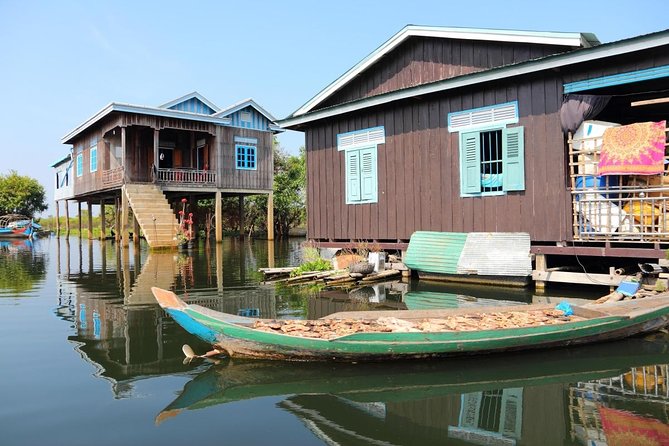
- Tonle Sap floating village and flooded-forest views add a different side of Cambodia beyond temple walls
- A small group size (up to 6) makes the experience feel more personal and easier to adjust day-to-day
The Real Value: Private, Small-Group Temple Days
This is sold as a private tour for your group, with a small cap of up to 6 people. In practice, that matters because Angkor isn’t just sightseeing. It’s timing, heat management, and figuring out where to be when crowds swell. With your own guide and driver, you’re not stuck waiting on other groups or losing time to confusion.
The comfort package is also a real quality-of-life win: you get an A/C car, plus cold water and cold towels during the tour. That sounds minor until you’re walking stone steps in full sun and you realize your energy is the limiting factor, not your enthusiasm.
The guides in the reviews come up repeatedly, especially Mr. Pin Vannak and other guide names like Thean. The common thread is practical English and the ability to explain what you’re seeing without turning it into a lecture. You’ll get history, yes, but also guidance for how to look at the carvings and read the temple layouts.
You can also read our reviews of more private tours in Siem Reap

Your First Temple Day: Angkor Wat and the Angkor-Wide Context
The schedule is built around Angkor Wat as the anchor. On day 1, you meet your guide and driver at your hotel lobby at 8:00 am, and you’ll get help buying the Angkor tickets before you start temple time.
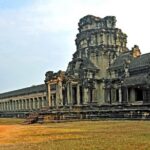
From there, you’re on the Angkor track: huge architecture, dense details, and a lot of walking. The tour is structured so you’re not just seeing one temple and calling it a day. The overview includes Bayon and Ta Prohm as well, and those two sit in your mental checklist right away because they’re the emotional contrast to Angkor Wat’s grandeur: Bayon with its large Buddha faces, then Ta Prohm with the tree roots and jungle atmosphere.
What I like about this day’s design is the sequencing logic. Angkor Wat and the broader Angkor zone works best when you start with the big idea first (what the whole complex is trying to communicate), then move into temples where the sculpture and atmosphere steal your attention. That approach helps you understand why people obsess over the small carvings and doorways after they’ve already seen the big courtyards.
One small consideration: bring a plan for energy. Temples here involve sun, steps, and uneven paths. The tour asks for moderate physical fitness, so it’s smart to wear grippy shoes and not treat this like a gentle stroll.
Angkor Wat at Sunrise and Why Your Wake-Up Is Worth It
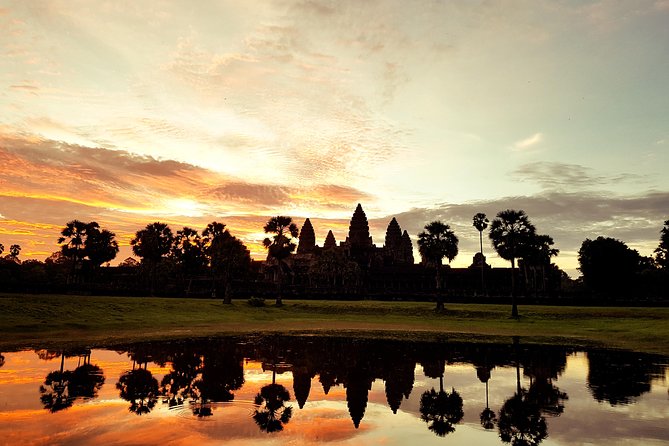
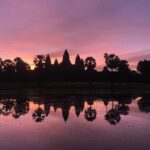
This tour includes sunrise, with a very early pickup for day 2. Your guide meets you in your hotel lobby at 4:45 am for Angkor Wat sunrise. That’s not a typo. Expect the night-before chaos: setting alarms, double-checking pickup time, and trying to convince yourself you’re excited about leaving the room before the sun.
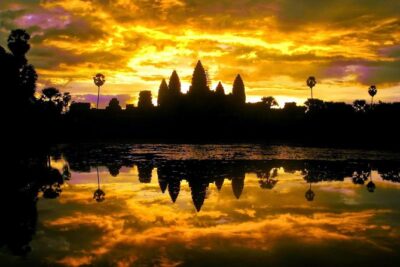
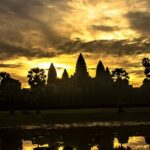
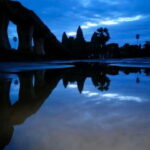
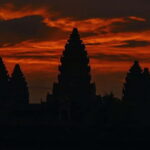
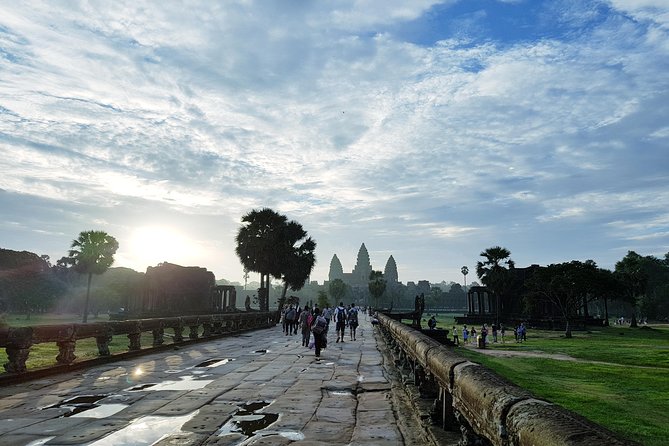
Here’s the payoff. Sunrise at Angkor Wat is not just for the Instagram glow. Early light changes how the stone reads, and it cuts the harsh midday glare that flattens details. It also gives you a more relaxed temple mood before the day fully loads up.
The tour then continues after sunrise with a packed breakfast. That’s practical. You’ll be working on temple time, not restaurant time, so eating early keeps you from turning your second half into a dehydration headache.
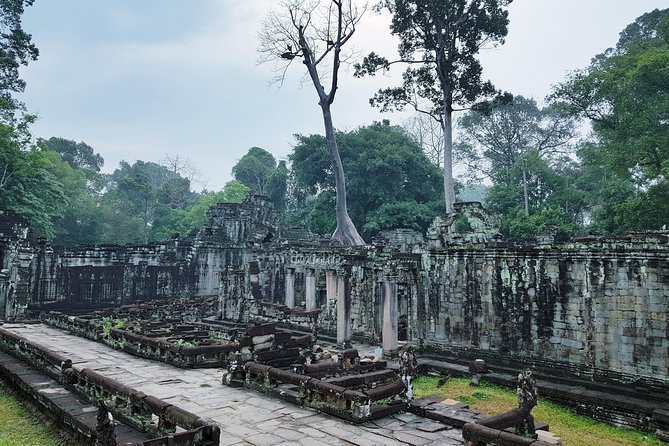
You’ll also be guided through more temples after sunrise, including Preah Khan (listed as included). Preah Khan fits well after Angkor Wat because it feels more human-scale and more textured—less about the iconic silhouette and more about atmosphere, carvings, and the sense of a working sacred space.
Sunset at Angkor Wat: Different Light, Different Crowd Feel
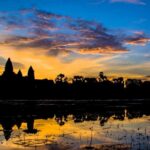
If sunrise is about clarity, sunset is about mood. This tour is sold as featuring both sunrise and sunset, and multiple reviews highlight sunset at Angkor Wat as truly memorable.
I recommend treating sunset as a slow-down moment. The temples can be intense when you’re sprinting from gate to gate. At sunset, your brain gets a second chance to absorb shapes and surfaces. The stone darkens slightly, and the contrast makes carvings easier to pick out from a distance—especially if your guide points out specific sculpture areas to look for.
Also, sunset is a good time to ask questions. Guides like Mr. Pin Vannak and Thean are the kind who can turn what you’re seeing into a story you’ll remember later, like how the temple design reflects belief and power, not just artistic taste.
If you’re the type who hates waiting, give yourself permission to stay put. The best sunset viewing isn’t always the moving shot. It’s the moment you understand the temple’s geometry.
Bayon and Ta Prohm: The Faces and the Jungle Roots
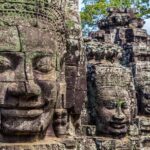
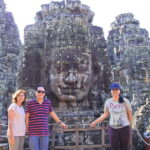
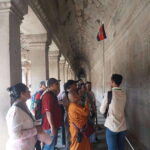
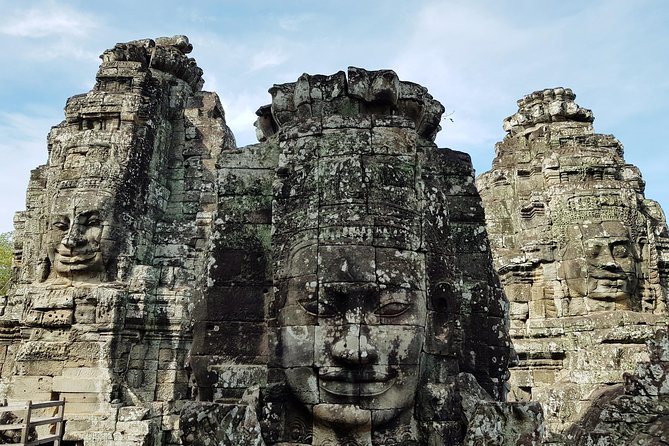
Bayon is the temple with big carved Buddha faces, and it hits hard because it’s not subtle. The faces look out from multiple levels, so it feels like the temple is watching you back. With a good guide, you stop seeing it as a single photo spot and start understanding it as a set of viewpoints and symbolic placement.
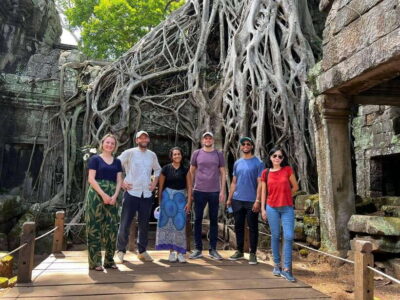
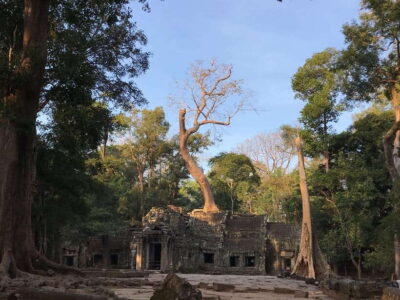
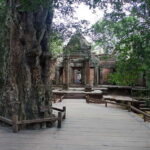
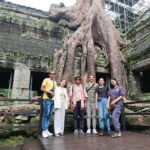
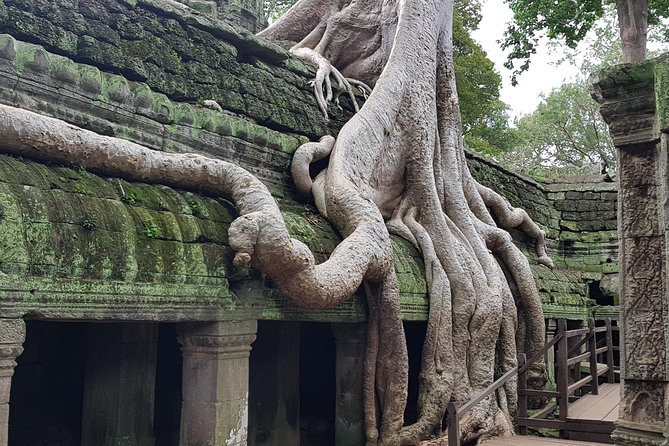
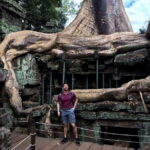
Then comes Ta Prohm, the jungle temple linked with the movie Tomb Raider. Even if you’re not chasing the pop-culture connection, Ta Prohm is special because it looks alive—trees and roots are part of the architecture’s story. You’ll notice how the stone frames nature, not the other way around.
The value here isn’t only the visual wow. It’s that this tour keeps you moving with interpretation. Without guidance, Ta Prohm can turn into a blur of “cool ruins.” With the guide, you’ll learn what to look for: where carvings survive, how passageways are laid out, and why the temple feels different from more open-plan sites.
If you’re sensitive to humidity and sun, plan to hydrate early. Your A/C car helps between stops, but walking time is walking time.
You can also read our reviews of more evening experiences in Siem Reap

Banteay Srei and Preah Khan: Carving Detail vs. Temple Atmosphere
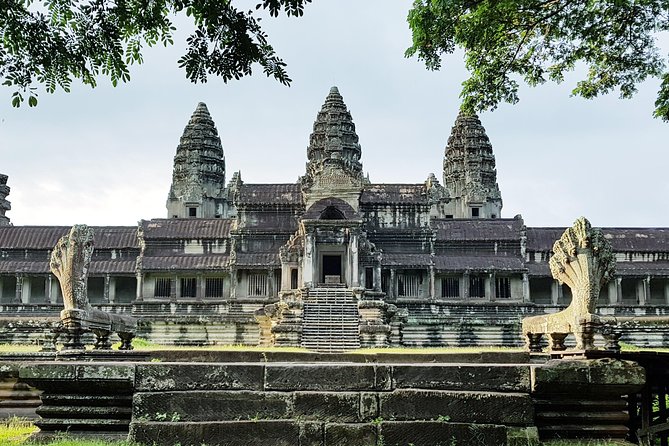
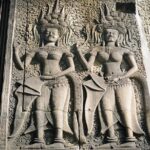
Banteay Srei is included in the overview and is often described as a standout for temple carvings. This is one of those temples where looking closely pays off. The details tend to reward a slower pace—standing back to see the whole composition, then leaning in when your guide shows you where the sculpture language hides.
Preah Khan is also included, and it’s a smart addition because it shifts the vibe. Angkor Wat is a showpiece. Preah Khan feels like a place with layers of movement and meaning. You’ll likely notice how the setting and layout create a different kind of flow as you walk through the grounds.
Together, Banteay Srei and Preah Khan balance your Angkor day. One gives you delicate carving beauty. The other gives you a bigger sense of how temples functioned in daily and ceremonial life.
Tonle Sap Floating Village: What You’re Really Buying
Day 2 doesn’t only repeat temples. It heads to Tonle Sap Lake for the floating village experience. Your tour guide and driver meet you very early for the sunrise first, and then after that you shift gears toward the lake world.
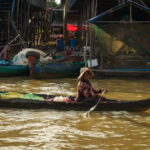
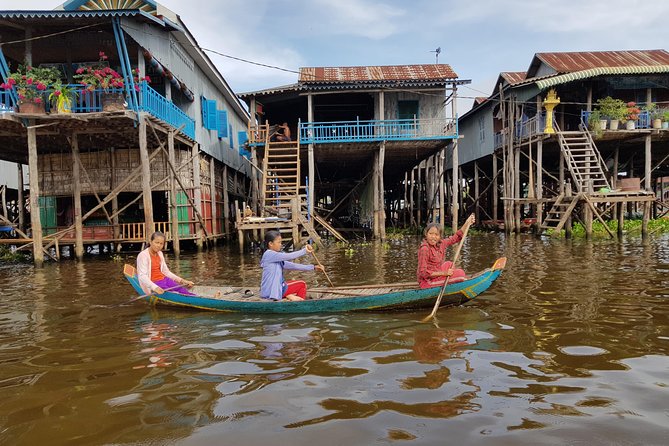
You’ll enjoy the floating village, plus views of the flooded forest and the floating market. This part is valuable because it shows another Cambodian reality: life shaped by water levels, not by stone walls and temple gates.
You also have to plan for the boat cost. The tour notes a private boat ticket is $20 per person, and it’s not included. If you’re comparing value, treat this as a major cost item on top of the base tour price.
One more practical note: the floating experience can be affected by timing and water conditions. If you’re going during a period when access is limited, you might find the experience feels less like a full-day outing and more like a shorter viewing moment. It’s not something you can control as a traveler, but it’s smart to keep expectations flexible.
Price and Logistics: What the $225.65 Actually Means
The price is listed as $225.65 per group for up to 6 people. That’s the service cost: guide, A/C transportation, and the basics like cold water and cold towels.
If you fill the group size, your base tour cost becomes roughly:
- About $38 per person for the guide/driver/vehicle (at 6 people)
Then you add the big separate fees:
- Angkor ticket: $62 per person
- Private boat ticket: $20 per person
- Meals are not included (food starts from $6 on request/order)
- Tips
So even with a full group, you’re still looking at a meaningful total once entry fees are added. This tour is usually best value if:
- You have a group of friends or family to split the base cost
- You care about private guiding (it’s not a barebones temple drop-off)
- You want sunrise and sunset without doing the logistics yourself
If you’re a solo traveler, it can still be worth it for the guide quality and the packed schedule, but the separate entry fees will dominate the math.
How to Get More From Your Guide (and Fewer Headaches From Heat)
A private guide can either be a bonus or a wasted opportunity. Here’s how to make it feel like a smart purchase.
First, use your guide for timing and focus. Ask where to stand for sunrise and sunset so you’re not just wandering. With guides like Mr. Pin Vannak, the point isn’t only where to go, but what to notice when you’re there.
Second, lean into the storytelling. When a guide can connect temple carvings to meaning, you’ll remember more than the silhouette photo. That’s the difference between checking boxes and actually understanding the place.
Third, protect your body. Wear shoes you can walk in all day. Start hydrating before you feel thirsty. The A/C rides plus cold towels help, but they don’t replace good pacing.
Finally, bring a flexible mindset for the floating village. If conditions change, your guide can help adjust what you can realistically do and what you’ll see that day.
Should You Book This 2-Day Private Angkor + Tonle Sap Tour?
Book it if you want the classic Angkor highlights with real guidance, plus a Tonle Sap day that goes beyond a quick photo stop. The private setup, small group size, and included comfort items (A/C car, cold water, cold towels) make it easier to handle the intense temple rhythm. If sunrise and sunset matter to you, this is a strong fit because you’re not piecing together transportation and entry logistics alone.
Skip this one—or at least double-check your priorities—if you’re trying to minimize total costs. The entry fees for Angkor and the boat fee for Tonle Sap are big add-ons, and the final total can climb quickly.
If you do book, decide ahead of time what you want most:
- more temple depth (slower looking, better explanation), or
- more contrast between temple Cambodia and lake Cambodia
Then tell your guide. A well-run private tour gets better when the guide knows your preference from the start.
FAQ
What is included in this 2-day private tour?
The tour includes a guide for the main temples, air-conditioned transportation, and cold water plus cold towels.
What is not included in the price?
Angkor admission tickets, the private boat ticket for Tonle Sap, meals (food/drink starting from $6 based on your order), and tips are not included.
How much are the Angkor admission tickets and the boat ticket?
Angkor ticket cost is listed as $62.00 per person, and the private boat ticket is listed as $20.00 per person.
How early do you start for sunrise?
On day 2, you’re picked up very early at 4:45 am for Angkor Wat sunrise.
Is this a private tour?
Yes. It’s a private tour/activity, and only your group participates.
What fitness level is required?
The tour indicates a moderate physical fitness level is recommended.