REVIEW · SIEM REAP
Siem Reap Private Day Tour: Angkor Wat Sunrise, Bayon & Ta Prohm
Book on Viator →Operated by Siem Reap Guide · Bookable on Viator
Sunrise at Angkor changes your whole morning. The big win here is a hassle-free Angkor Wat sunrise with an AC ride and a professional historian guide so you can focus on the temples instead of figuring out logistics. You get a guided, first-time-friendly route across Angkor’s main sites, with just enough structure to keep the day flowing.
My second favorite part is that the guide is there to make the place make sense. You’ll get historical context and on-the-spot photography help, which is huge when you’re standing in front of carvings that took centuries to build. One consideration before you lock it in: the Angkor Park admission fee is not included in the tour price, so you’ll want to budget for that.
In This Review
- Key things to know before you go
- The morning plan: why sunrise at Angkor Wat works
- Private AC transport and hotel pickup that save you brain cells
- Angkor Wat: sunrise, scale, and what to look for
- Bayon Temple: the smiling faces moment
- Ta Prohm: jungle overgrowth and the movie-ruin vibe
- Angkor Thom South Gate: a short stop that matters for photos
- Baphuon and the Terrace of the Elephants: less frantic, more texture
- Baphuon Temple
- Terrace of the Elephants
- Price and value: $100 per group, plus the park fee
- Timing, pacing, and comfort on a 7–9 hour temple day
- What to wear and bring for Angkor’s heat and rules
- When the guide is great, the day feels effortless
- Who this tour suits best in Siem Reap
- FAQ
- FAQ
- What time does the tour start?
- Is hotel pickup and drop-off included?
- How long is the tour?
- Is this a private tour?
- What’s included in the price?
- Are meals included?
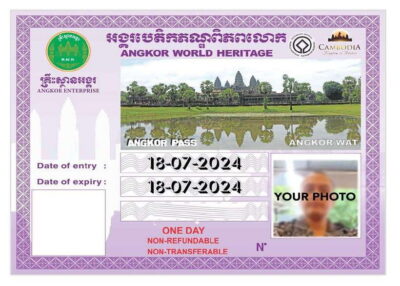
- Is the Angkor Park admission fee included?
- What should I wear for the holy sites?
- What if the weather is bad?
- Should you book it?
Key things to know before you go
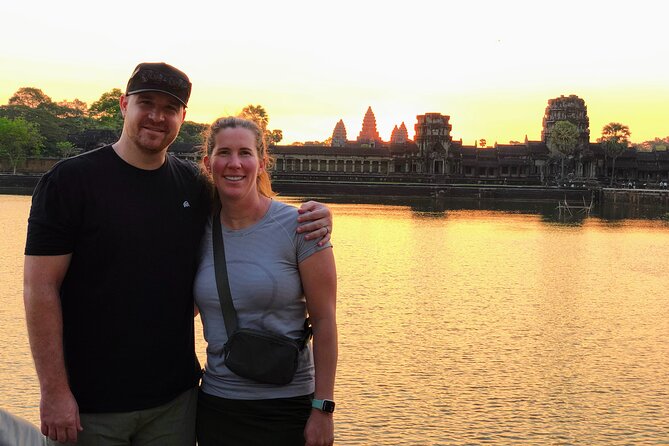
- 5:00 am start with hotel pickup, built around getting the sunrise timing right
- Private group experience (up to 12) in an AC SUV or minivan, with water and wipes included
- A historian guide plus a photographer, so you’re not just sightseeing from point A to point B
- Major hits in one day: Angkor Wat, Bayon, Ta Prohm, Angkor Thom’s gates, and more
- Flexible photo breaks, including a quick stop at Angkor Thom South Gate for shots
The morning plan: why sunrise at Angkor Wat works
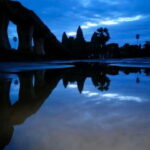
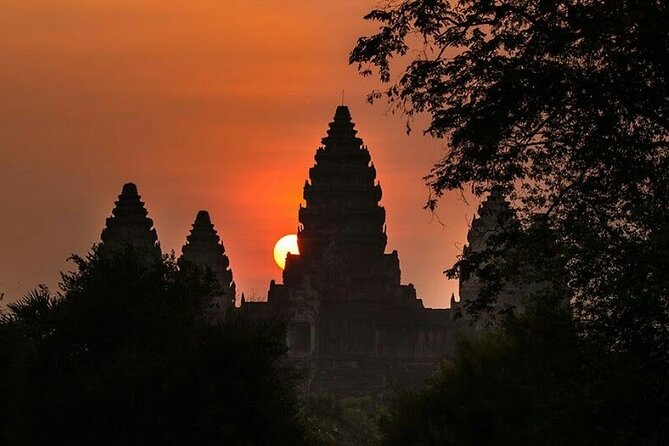
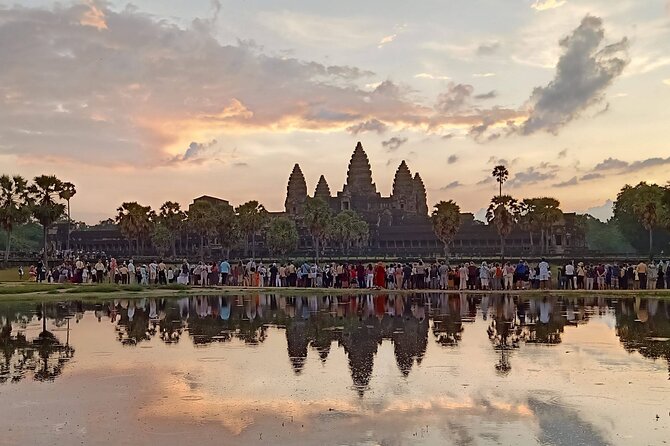
If you’ve only got one day in Siem Reap, sunrise at Angkor Wat is the move. It’s not just about beating crowds. Early light brings out the temple’s shape and gives the carvings and towers a different look than midday. It also sets a calmer tone for the rest of your day, because you start with the moment everyone came for.
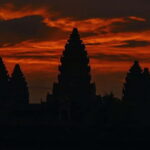
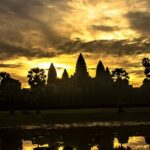
On this tour, you’re not left to guess timing or transportation. Pickup starts early (the tour starts at 5:00 am), and you spend a full chunk of time at Angkor Wat—about three hours. That’s important. If you’re rushed through the sunrise, you miss the slow build: first the sky, then the silhouettes, then the temple details as the light warms up.
You can also read our reviews of more private tours in Siem Reap

Private AC transport and hotel pickup that save you brain cells
Angkor is spread out. Even if you’re an organized planner, you still have to manage routes, parking, and heat. What I like about this setup is that it takes the stress out of getting between sites. You’ll ride in an AC SUV or minivan with hotel pickup and drop-off, plus gasoline, parking, and tolls are covered.
That comfort matters on a day that can run roughly 7 to 9 hours. The temples are a mix of walking, stair climbs, and uneven stone paths. Between stops, having a/c and cold water can turn a long day into a doable one.
Also, this is a private tour for your group only. With a group size up to 12, the pace is easier to manage than you’d get on a big group bus. If you want to linger for photos or move at your own walking rhythm, you’re less likely to feel like you’re sprinting with 30 strangers.
Angkor Wat: sunrise, scale, and what to look for
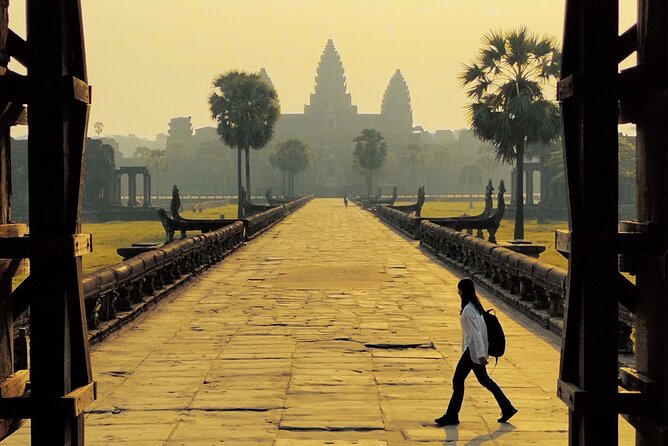
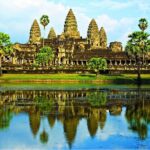
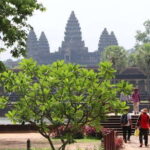
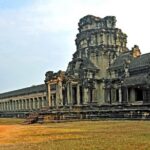
You’ll start at Angkor Wat, the largest Hindu temple in the world, and then watch the sunrise from there. The tour sets aside about three hours at this stop, which gives you time to settle in before the light show fully kicks in and still have room for sightseeing after.
Here’s how to make your time count:
- Look for how the central towers and galleries line up as the light changes. Early mornings make the temple’s geometry stand out.
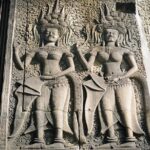
- Pay attention to the stonework details around entrances and pathways. Even when you’re walking quickly, the carvings catch the light differently as the sun rises.
- Don’t ignore your guide’s context. Angkor Wat isn’t just a big structure; it’s a planned complex. Understanding what you’re seeing helps you avoid the feeling of staring at random corners.
One practical note: admission for Angkor Park is not included. Your tour covers transport and guiding, but you’ll need to add the park entry fee separately. It’s easy to overlook until the moment you arrive, so plan for it up front.
Bayon Temple: the smiling faces moment
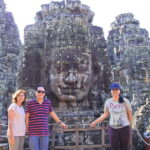
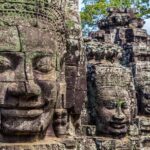
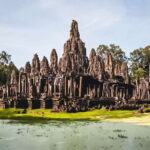
After Angkor Wat, you head to Bayon Temple for about one hour. Bayon is famous for its Buddha-like faces, often described as smiling. Even if you’ve seen photos, seeing them in person hits differently. The stone faces are positioned so they feel like they’re watching as you move around the temple spaces.
What I like about the way this stop is timed is that it doesn’t eat the whole day. About an hour is a sweet spot for Bayon: long enough to wander the main areas and take photos, but not so long that you lose energy for Ta Prohm and the later stops.
Drawback to consider: because it’s such a well-known temple, the vibe here can be more energetic. You’ll still have time with a guide to orient yourself and get good angles, but if you prefer quiet ruins with no foot traffic at all, Bayon might feel busier than some of the other sites on your route.
Ta Prohm: jungle overgrowth and the movie-ruin vibe
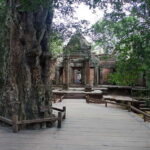
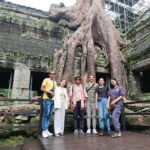
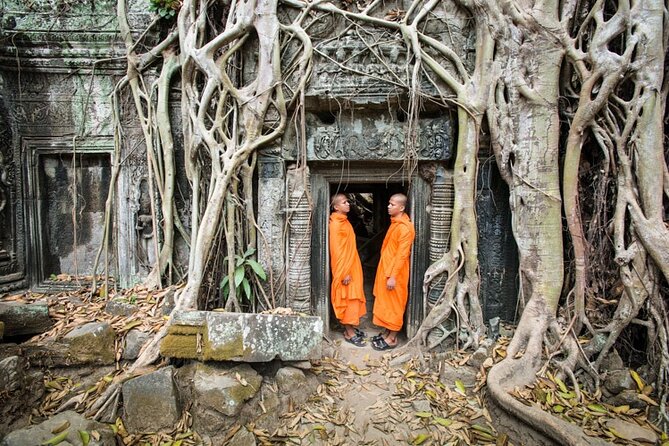
Next comes Ta Prohm for about two hours. This is the temple people talk about when they mention the jungle, because the structure is famously overgrown—part temple, part nature takeover. The tour calls it the tomb raider temple, which is basically shorthand for why so many visitors recognize the place instantly.
Ta Prohm is special because the atmosphere feels alive. Sun filters through the trees and frames parts of the ruins in a way that’s hard to replicate in a photo. Two hours is a good amount of time here. You can slow down for visuals, walk a few routes at different angles, and still have energy to move on.
What to watch out for: Ta Prohm can be a bit uneven, and the ground around roots and stones isn’t always smooth. Wear walking shoes you trust. You’ll be happiest if you go in expecting more “wander and notice” than “march and finish.”
You can also read our reviews of more tours and experiences in Siem Reap
Angkor Thom South Gate: a short stop that matters for photos
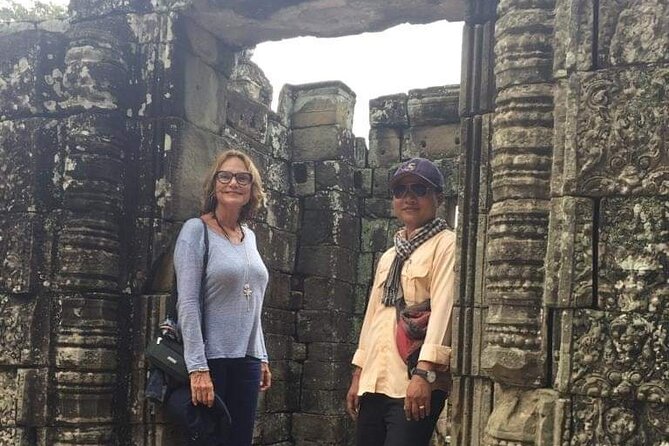
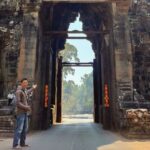
You’ll also stop at Angkor Thom South Gate for about 10 minutes. It’s quick, but those gates are dramatic, and the route is planned to capture that photo opportunity without wasting half a morning.
Use the short window strategically:
- Take a few wide shots first to lock in the full gate view.
- Then do close-ups of details—carvings and stone textures often look better in late morning light than you expect.
- Don’t spend the entire 10 minutes fiddling with one photo spot. This is a timed break by design.
If you’re the type who loves architecture details, you might want a bit more time here. Still, the short stop keeps the day balanced so you don’t sacrifice the next temple.
Baphuon and the Terrace of the Elephants: less frantic, more texture
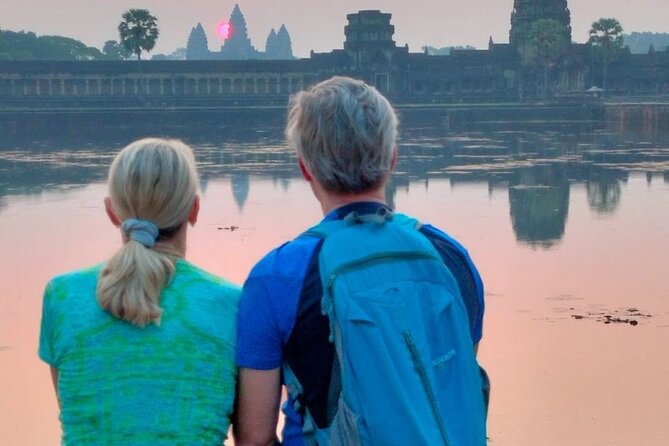
Two of the later stops are a welcome shift from the biggest-ticket temples: Baphuon Temple and the Terrace of the Elephants.
Baphuon Temple
Baphuon is an 11th-century Hindu temple and it’s described as a less crowded option. That matters. It often feels easier to take in the carvings and climb up because you’re not fighting for space.
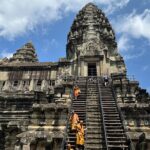
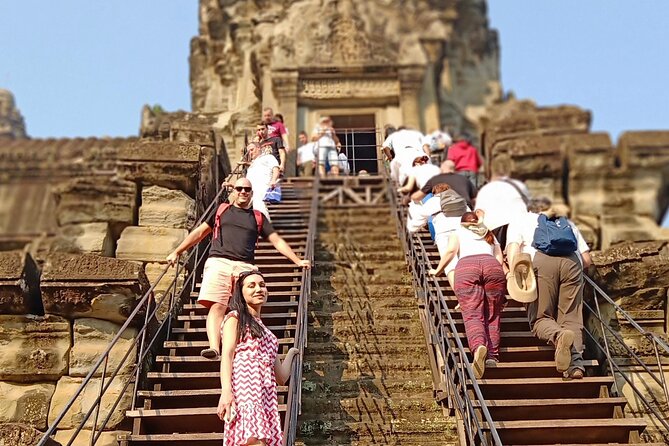
It also includes amazing climbs to the top, with views around the temple grounds. If you like panoramas and don’t mind a bit of stair action, Baphuon can be a highlight.
There’s also a big reclining Buddha carving mentioned here, dated to the 16th century. That time-jump is part of what makes Angkor so interesting: different eras leave their marks in the same complex world.
Terrace of the Elephants
Next is the Terrace of the Elephants for about 25 minutes. This stop is about details. You’ll see elephant sculptures along the walls and learn about ancient arena activities that included kick boxing, polo, and horse racing.
Even if you’re not a sports history person, it’s a fun reframing. You stop thinking of temples as frozen stone and start thinking about how ceremonies, performances, and social life likely worked around these spaces. The time here is long enough to see the main sculptural areas without turning into a fatigue-fest.
Price and value: $100 per group, plus the park fee
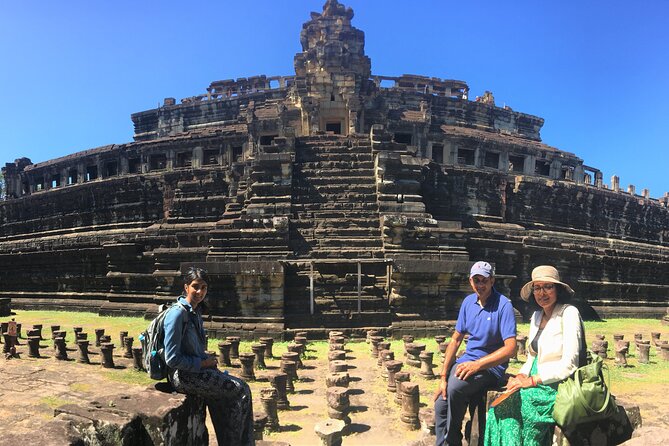
The tour price is $100 per group (up to 12). That’s the part to compare with what you’d pay for transport and a guide on your own. Here, you’re getting hotel pickup and drop-off, an AC vehicle, and a professional historian guide and photographer, plus cold waters and wipes.
So what you’re really paying for is not just movement—it’s guidance and convenience. Angkor is the kind of place where a good guide changes your experience from I saw temples to I understood what I was looking at. That’s why the historian and photography support are included.
But here’s the reality check: admission to Angkor Park is not included, and it’s listed as $37 per person. That additional fee can change the total cost depending on your group size and how many people are in your booking. Add it in early so you don’t hit any last-minute budget surprises.
Alcoholic drinks are available to purchase, but they’re not included. Meals are also not included, so plan for food either before the tour, during breaks you arrange around your own schedule, or after you’re done.
Timing, pacing, and comfort on a 7–9 hour temple day
The day is long enough that you’ll feel it. Expect a packed sequence: Angkor Wat (about 3 hours), Bayon (about 1 hour), Ta Prohm (about 2 hours), then South Gate (10 minutes), Baphuon (1 hour), and Terrace of the Elephants (25 minutes). Transit time is what pushes it toward a 7–9 hour total.
The pacing is designed to hit the big three—Angkor Wat, Bayon, Ta Prohm—without turning every stop into an hour-long struggle. That’s a value point for first-timers: you get the signature temples plus a couple extras that round out the day.
The biggest comfort wins:
- AC transport between sites
- cold water and wipes
- a route that avoids getting lost
The biggest energy drains:
- early wake-up (start is 5:00 am)
- formal dress expectations for holy sites
- walking and stairs, especially at places like Baphuon
What to wear and bring for Angkor’s heat and rules
This tour has a formal dress code for holy sites: covers shoulders and knees. That means tank tops, short shorts, and scandalously short skirts aren’t the plan. If you don’t have the right clothes, you might need to solve that quickly when you arrive.
Bring sunblock and mosquito repellent. Even with an AC ride, you’ll spend meaningful time outside in open-air temple zones. And wear walking shoes or sneakers that grip well—because stone can be uneven, and you’ll likely climb more than you expect.
The tour also suggests a moderate physical fitness level. If you’re comfortable with stair climbs and long walks, you’ll be okay. If you know stairs are a deal-breaker for you, you’ll want to think carefully before booking.
When the guide is great, the day feels effortless
The tour is built around a historian guide and a photographer, and the overall record is very strong: 98% recommend it, with an average rating of 5 from 48 reviews.
That kind of rating usually points to two things that matter on temple days: timing and communication. When the guide is organized and explains clearly, you understand what you’re seeing and you take better photos because you know what angles matter. When the guide talks less, you can end up feeling like you’re rushing through stone without context.
In a private setting, you can fix a lot of that by asking direct questions. If you want history, ask for it. If you want photo guidance, ask where to stand for the best composition. This format gives you the chance to steer the experience in real time.
Who this tour suits best in Siem Reap
This is a strong fit if you:
- are visiting Angkor for the first time and want a clear, guided route
- want sunrise at Angkor Wat without wrestling with transportation
- like having historical context while you walk through temples
It’s also a good option if you don’t want to spend your day with maps, app directions, and parking stress.
You might think twice if:
- you hate early starts and want a late-morning schedule
- you have strict limits on formal dress requirements
- you want a totally self-paced experience with no guiding prompts
FAQ
FAQ
What time does the tour start?
The start time is 5:00 am, built around seeing Angkor Wat at sunrise.
Is hotel pickup and drop-off included?
Yes. The tour includes hotel pickup and drop-off, plus gasoline, parking, and toll roads.
How long is the tour?
It’s listed as about 7 to 9 hours.
Is this a private tour?
Yes. It’s private, and only your group participates. The group size can be up to 12.
What’s included in the price?
Included items are the private tour with a local guide/driver in an AC SUV or minivan, a professional historian guide and photographer, cold waters and wipes, and hotel pickup/drop-off. Also included is a mobile ticket.
Are meals included?
No. Breakfast, lunch, and dinner are not included.
Is the Angkor Park admission fee included?
No. Angkor Park admission is listed separately at $37.00 per person.
What should I wear for the holy sites?
You’ll need formal attire that covers shoulders and knees. Walking shoes or sneakers are recommended.
What if the weather is bad?
This experience requires good weather. If it’s canceled due to poor weather, you’ll be offered a different date or a full refund.
Should you book it?
If you want your first day in Angkor to feel organized, you’ll probably love this. The combo of Angkor Wat sunrise, a historian guide, and AC transport is exactly what makes a one-day temple plan work. Just don’t ignore the extra Angkor Park admission fee and the formal dress rule. If you plan for those two items and wear comfortable shoes, you’ll be set up for a memorable morning and a strong, efficient day across the most important Angkor sites.