REVIEW · SIEM REAP
Siem Reap 2 Days Private Tour Angkor Wat and Floating Village
Book on Viator →Operated by About Cambodia Travel & Tours · Bookable on Viator
Two days here are a smart shortcut through Siem Reap. You’ll get a licensed guide for clear context at Angkor plus a private cruise for Tonle Sap and Kampong Pluk. I like that it’s built around an efficient route and comfort (private, air-conditioned vehicle), but keep in mind the Angkor Pass, meals, and tips are extra.
What makes this tour feel worth it is how the stops connect: Day 1 is about moving through the Angkor core—gates, towers, terraces, and the temples people came for—while Day 2 shifts to water life, stilt homes, and calmer backdrops around the lake.
In This Review
- Key highlights worth planning around
- Two Days That Connect Angkor Wat to Tonle Sap Life
- Price and Logistics: What the $170.05 Really Covers
- Day 1 at Angkor: From Angkor Thom Gates to a Phnom Bakheng Sunset View
- Angkor Thom (2 hours): Where the layout starts making sense
- South Gate of Angkor Thom (30 minutes): Restored faces at the main entrance
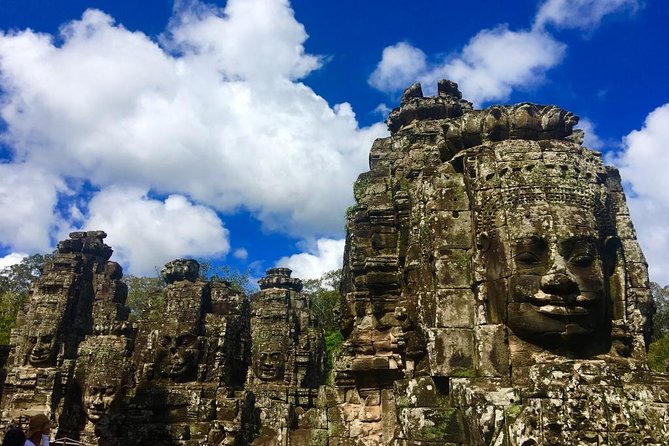
- Bayon Temple (1 hour 20 minutes): The famous face towers
- Baphuon Temple (50 minutes): Structured levels and a different vibe
- Phimeanakas Temple (30 minutes): Palace-zone feel
- Terrace of the Elephants (30 minutes): A carved stage in stone
- Ta Prohm (1 hour 30 minutes): The kingdom of trees
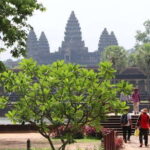
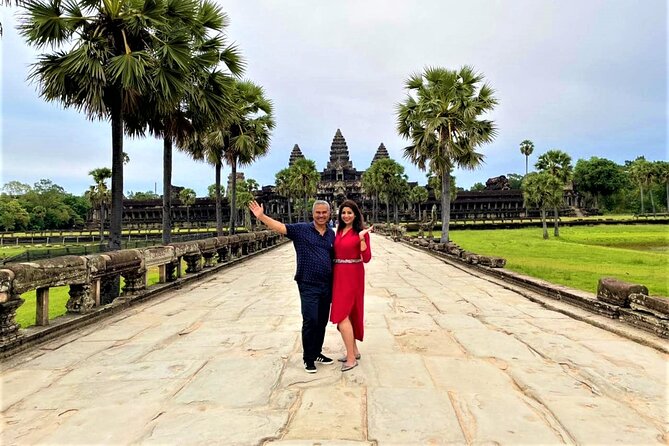
- Angkor Wat (2 hours): The masterpiece that holds your day together
- Phnom Bakheng (1 hour): Sunset viewpoint over Angkor Wat
- Day 2 on Tonle Sap: Lake Life, Kampong Pluk, and Calm Temple Stops
- Tonle Sap Lake (2 hours): Big water that changes with the seasons
- Kampong Phluk Floating Village (3 hours): Stilt homes and real Khmer daily life
- Wat Preah Prom Rath (45 minutes): Old pagoda with 17th-century wall paintings
- Artisans Angkor (1 hour): Craftwork with a social mission
- West Baray (30 minutes): Man-made lake and a legend
- Svay Romiet Pagoda (30 minutes, free): A lakeside finale
- Comfort That Matters in Siem Reap: Private Vehicle, Guide Time, and Cooling Breaks
- Dress Code and Etiquette: Small Rules That Keep You Comfortable
- Who This Tour Fits Best (and Who Might Reconsider)
- Should You Book This Two-Day Private Angkor Wat and Floating Village Tour?
- FAQ
- FAQ
- What’s included in the $170.05 per person price?
- What isn’t included, and what should I budget for?
- Do I need to buy an Angkor Pass for this tour?
- How does hotel pickup and drop-off work?
- Is this tour private or shared?
- Will I ride a boat on Day 2?
- When do you visit Phnom Bakheng?
- What should I wear to the temples?
- Can I cancel for free?
Key highlights worth planning around
- Licensed English-speaking guide with in-depth commentary so you’re not just looking at stone
- Hotel pickup and drop-off plus a private, air-conditioned vehicle between sites
- Angkor Pass assistance at the entrance before you start the temple route
- Tonle Sap Lake cruise and Floating Village visit by private boat on Day 2
- Time at photogenic temples: Bayon, Ta Prohm, Angkor Wat, and the Phnom Bakheng sunset viewpoint
- Included cooling basics like drink water and cool fresh towels during the trip
Two Days That Connect Angkor Wat to Tonle Sap Life
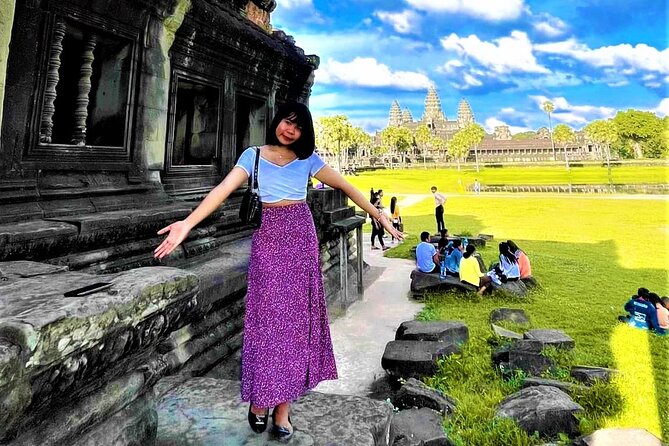
This is the kind of Siem Reap plan I recommend when you want both the big-name temples and the local water-world—without spending your limited vacation time chasing tickets, routes, or timing.
Angkor can feel overwhelming. You arrive, you see temples, you take photos, and then the meaning slips away. Here, your guide’s job is to slow the experience down with commentary about Cambodia’s past as you move through the circuit. That makes the famous carvings and layouts easier to read, not just easier to photograph.
Then Day 2 changes the mood. Instead of stone and courtyards, you’re on Tonle Sap Lake and then out toward Kampong Pluk, where daily life rises on stilts. It’s a strong contrast, and it’s exactly why fitting both in one 2-day private tour works.
You can also read our reviews of more private tours in Siem Reap
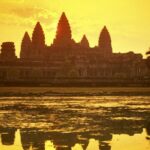

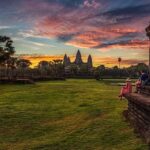
Price and Logistics: What the $170.05 Really Covers
At $170.05 per person for a 2-day private setup, the value comes from bundling several expensive-to-fix pieces: a licensed guide, private transport, hotel pickup/drop-off, and a private cruise portion.
Here’s what’s included:
- Hotel pickup and drop-off
- Professional English-speaking license tour guide
- Private transfer by a comfortable, air-conditioned vehicle
- Private cruise to Tonle Sap Lake and floating village
- Drink water and cool fresh towels during the whole trip
Here’s what’s not included:
- Tips for guide and driver
- Entrance fees: the Angkor Pass (needed for the temples in the itinerary)
- Meals (lunch options at local restaurants, typically $3–$10 per dish)
- Any extra costs you choose during stops
For budgeting, the big thing to pencil in is the Angkor Pass. The good news: your guide helps you purchase it right at the Angkor Park entrance before starting the temple day, so you’re not stuck figuring it out in the field.
Day 1 at Angkor: From Angkor Thom Gates to a Phnom Bakheng Sunset View
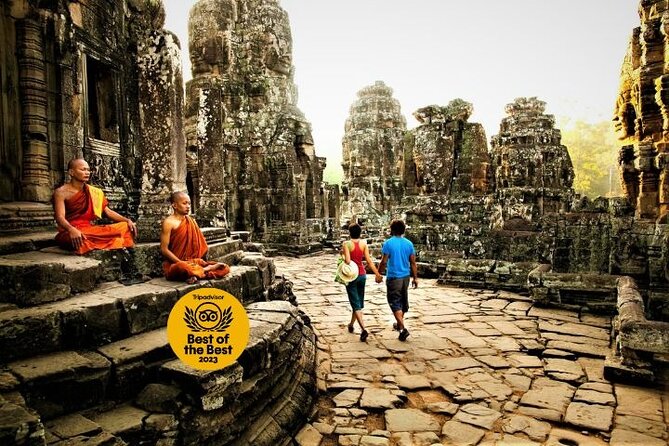
Day 1 is temple-dense by design. The route is meant to move you through the Angkor “story” in a way that keeps you oriented—gate to center, center to key temples, then out to the sunset viewpoint.
Also, note that all the temple stops listed for Day 1 say admission tickets aren’t included. That’s consistent with how the Angkor Pass works: it covers the temples in your itinerary, and your guide assists with it before you begin.
Angkor Thom (2 hours): Where the layout starts making sense
Angkor Thom is your big orientation stop. It’s massive, and it’s built in a way that feels intentional—from the way the complex is organized to how different zones pull you in different directions.
You’ll spend enough time here to take it in without feeling rushed, which matters because the scale can trick you. When you understand the function of the city space, the temples stop looking random and start looking like a plan.
South Gate of Angkor Thom (30 minutes): Restored faces at the main entrance
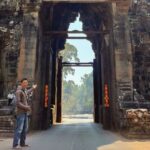
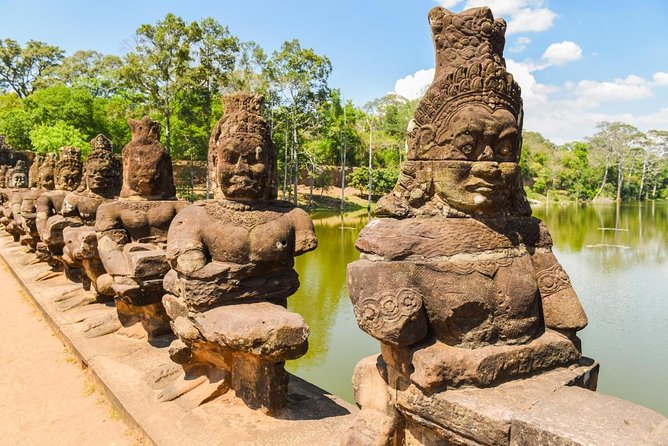
The South Gate is popular for a reason: it’s fully restored and many of the heads remain in place. It’s also conveniently placed as part of the main road into Angkor Thom from Angkor Wat, which makes it feel like a natural “arrival moment” in the day.
This is one of those stops where you’ll want a quick photo setup and then a slow look. The restoration detail is part of why it’s such a strong first impression.
You can also read our reviews of more tours and experiences in Siem Reap
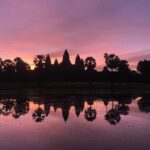
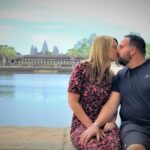
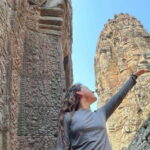
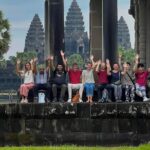
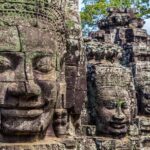
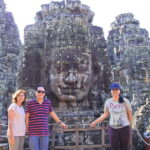
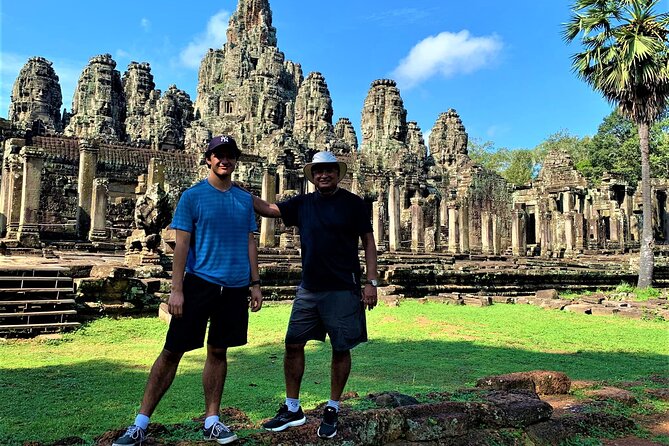
Bayon Temple (1 hour 20 minutes): The famous face towers
Bayon comes up nearly on cue after Angkor Thom. It was built about 100 years after Angkor Wat, which gives you a useful timeline shift in your head.
What to focus on here is how Bayon functions as the center of a royal city. The temple’s placement and structure make it feel like the “eyes” of the complex—so plan to spend a bit longer than you think you need, especially if you like photos from multiple angles.
Baphuon Temple (50 minutes): Structured levels and a different vibe
Baphuon sits on a rectangular sandstone base with five levels. Unlike temples that step down in increasingly smaller tiers, this one’s layout is more uniform—so it reads differently as you walk around it.
It’s shorter than Angkor Thom or Bayon, but it’s a nice break from the face-tower focus. If you’re the kind of person who likes details, look closely at the way the levels change your perspective.
Phimeanakas Temple (30 minutes): Palace-zone feel
Phimeanakas is near the center of the palace area enclosed by walls. Even in a short stop, it helps you picture what “royal center” might have meant in daily terms—power, ritual, and architecture all in one zone.
This is also a good pause point. If your feet are starting to complain, take the time here to rest your legs and then reset for the more visually dramatic temples ahead.
Terrace of the Elephants (30 minutes): A carved stage in stone
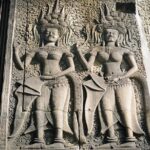
This terrace is known for its elephant imagery and the way the carvings suggest movement and ceremony. The idea that elephants are ridden by servants and princes helps you read the terrace as more than decoration—it feels like a ceremonial stage.
It’s brief but memorable, especially if you’re paying attention to the storytelling carved into the stone.
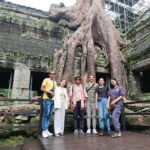
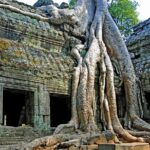
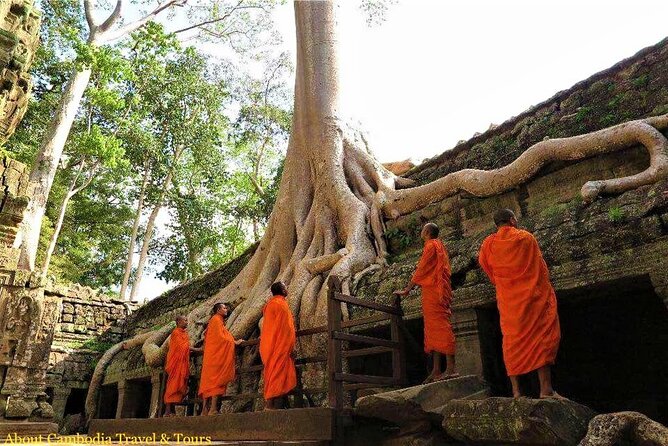
Ta Prohm (1 hour 30 minutes): The kingdom of trees
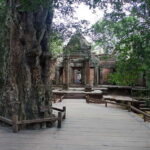
Ta Prohm is the one many people recognize instantly, and it earns the hype. It’s often described as the kingdom of the Trees because the site has been left largely untouched by archaeologists, except for paths for visitors and structural strengthening.
That’s a big deal in how it feels on the ground. You don’t just see ruins—you see a living relationship between stone and roots. If you like photos, this is the best place to take extra time and get your angles right.
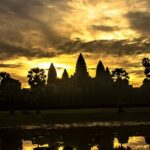
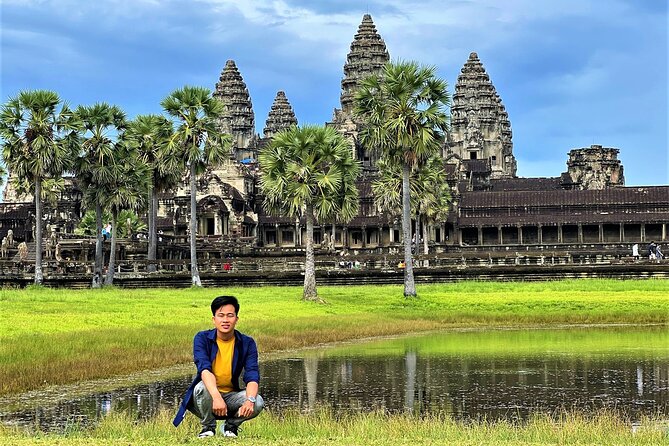
Angkor Wat (2 hours): The masterpiece that holds your day together
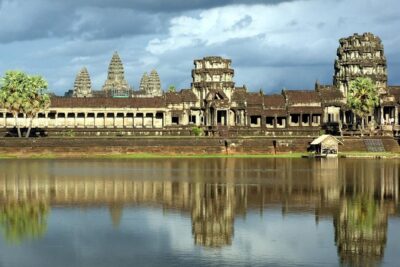
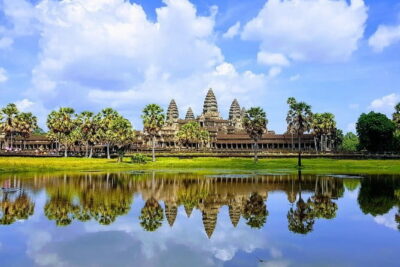
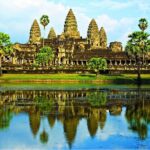
Angkor Wat is the largest monument in the Angkor group and one of the best preserved. It’s famous for its balance—composition, proportions, and sculpture all working together.
This is the stop where your earlier context matters most. If your guide explained the setting and you watched the sequence of temples through the day, Angkor Wat won’t just feel like a single big temple. It’ll feel like the anchor the whole complex revolves around.
Phnom Bakheng (1 hour): Sunset viewpoint over Angkor Wat
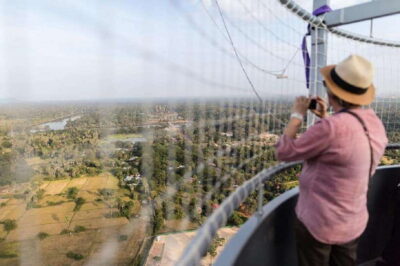
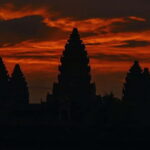
Phnom Bakheng is the temple you come to for the sun going down over Angkor Wat. The viewpoint aspect turns it from a “just another temple” stop into a time-based experience.
Plan for a slower pace here. The point is to watch the light shift. If you’re also taking photos, you’ll appreciate having that time window rather than feeling like you need to sprint.
Day 2 on Tonle Sap: Lake Life, Kampong Pluk, and Calm Temple Stops
Day 2 is quieter in structure but still packed—just with a different kind of scenery. You’ll start with Tonle Sap Lake, then shift to Kampong Phluk floating village by cruise, and finish with a mix of pagodas, a workshop-style cultural stop, and lakeside heritage spots.
Tonle Sap Lake (2 hours): Big water that changes with the seasons
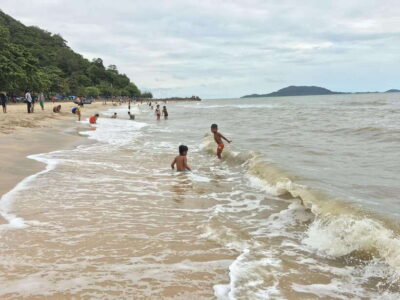
Tonle Sap Lake is described as the largest fresh water in South East Asia, and its dimensions change depending on monsoon and dry season. That seasonal change is key because it helps explain why floating and stilt living exist where they do.
If you like landscape and nature, you’ll enjoy this stop even if you’re not a “nature person.” It gives your trip a sense of place beyond ruins.
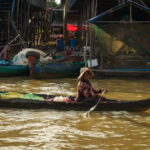
Kampong Phluk Floating Village (3 hours): Stilt homes and real Khmer daily life
Kampong Pluk is about 30 km southeast of Siem Reap town. The floating village has more than 3,000 inhabitants and is described as being home to real Khmers, with households built of wood and bamboo on stilts.
You’ll spend a solid chunk of time here, long enough to actually see how the village functions rather than just passing through. This is the stop that turns the word floating into something practical.
Practical note: this is a cruise day and involves being out on the water. Bring a mindset for moving with the day’s conditions and pace. This isn’t a quick photo drive-by.
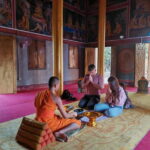
Wat Preah Prom Rath (45 minutes): Old pagoda with 17th-century wall paintings
This pagoda is one of the oldest in Siem Reap and includes well-preserved wall paintings from the 17th century. That’s a different kind of “wow” compared to Angkor: instead of massive temple architecture, you’re looking at preserved details.
It’s short enough to stay fresh, but focused enough to feel meaningful.
Artisans Angkor (1 hour): Craftwork with a social mission
Artisans Angkor is a Cambodian social business creating job opportunities for young people in rural areas while reviving traditional Khmer craftsmanship. It was founded in 1992 and is located on Stung Th… (address details aren’t fully provided here), but the mission is clear.
What makes this worthwhile is that it shifts you from seeing heritage only as something old to seeing it as something people are actively maintaining through work. If you enjoy watching craftsmanship or learning how traditions persist, you’ll likely like this stop.
West Baray (30 minutes): Man-made lake and a legend
West Baray is a vast man-made lake with an earthen levee that forms a dyke. It also comes with a legend about a young daughter of a ruler being grabbed by an enormous crocodile.
Even if you only catch the legend side, West Baray is a strong visual break after the village area. It also helps you connect the day’s theme: water as a defining feature across the region.
Svay Romiet Pagoda (30 minutes, free): A lakeside finale
Svay Romiet Pagoda is located directly on the banks of West Baray. It’s listed as free entry, so it’s a low-pressure final stop—time to slow down, take in the river-and-lake vibe, and end without feeling like you need to squeeze in a final ticketed attraction.
It’s also a good “cool-down” when your temple energy has already been used up.
Comfort That Matters in Siem Reap: Private Vehicle, Guide Time, and Cooling Breaks
Siem Reap days can move fast once you include getting between sites, managing the heat, and keeping your eyes on where you’re supposed to be next. This tour is built around reducing that stress with a private setup.
What I like here is the combination:
- Air-conditioned vehicle between stops when you need it
- A professional licensed guide who handles the flow and gives context while you walk
- Drink water and cool towels during the trip, which sounds small until you’re sweating and grateful for it
That organization is more than convenience. It changes how you experience Angkor. When you’re not constantly trying to solve logistics, you can actually look at what’s in front of you.
The guide mentioned in one set of feedback, Sokmeng (spelling may vary), is described as very informative, professional, and helpful, and the overall day-by-day flow was praised as well organized. That lines up with the tour’s biggest strength: you’re not just getting transportation, you’re getting an explanation-driven experience.
Dress Code and Etiquette: Small Rules That Keep You Comfortable
This tour notes a straightforward dress approach for religious grounds:
- Wear a shirt that can cover your shoulders
- Trousers or knee-length pants or skirts are permitted
I treat this as practical, not fussy. When you dress with shoulder coverage and appropriate bottoms, you avoid awkward last-minute fixes at temple entrances. It also makes you feel more settled as soon as you step onto sacred grounds.
Who This Tour Fits Best (and Who Might Reconsider)
This is a great match if:
- You want a 2-day plan that covers Angkor Wat’s core highlights and adds the Tonle Sap floating village
- You’d rather have a guide handle the narrative and pacing than build everything yourself
- You value comfort with a private vehicle on hot travel days
- You like both monument viewing and everyday life on the water
You might want to reconsider if:
- You hate structured itineraries. Day 1 is especially packed with major stops.
- You’re trying to travel ultra-budget and can’t add the Angkor Pass, meals ($3–$10 per dish), and tips.
Should You Book This Two-Day Private Angkor Wat and Floating Village Tour?
If you have two days in Siem Reap and you want your time to count, I think this one is a strong booking choice. The mix of Angkor’s big temples (Angkor Thom, Bayon, Ta Prohm, Angkor Wat) plus the Tonle Sap cruise and Kampong Pluk village gives you both the iconic and the local in a single tight window.
Book it if you’ll appreciate a licensed guide’s commentary and want the comfort of a private, air-conditioned vehicle plus hotel pickup/drop-off. Skip it if you want a totally free-form schedule or you’re not willing to budget for the Angkor Pass and on-the-go meals.
FAQ
FAQ
What’s included in the $170.05 per person price?
You get hotel pickup and drop-off, a professional English-speaking licensed guide, private air-conditioned vehicle transfers, drink water plus cool fresh towels during the trip, and a private cruise to Tonle Sap Lake and the floating village.
What isn’t included, and what should I budget for?
Tips for the guide and driver aren’t included. You also pay entrance fees separately via the Angkor Pass for the Day 1 temple sites, and meals during the tour are at your own expense (with lunches available at local restaurants, typically $3–$10 per dish).
Do I need to buy an Angkor Pass for this tour?
Yes. Entrance fees for the temples in the itinerary are covered by the Angkor Pass, and your guide will help you purchase it at the entrance of Angkor Park before starting.
How does hotel pickup and drop-off work?
Pickup and drop-off are included, and you’ll need to provide your hotel details so the provider can arrange the pickup.
Is this tour private or shared?
It’s a private tour/activity. Only your group participates.
Will I ride a boat on Day 2?
Yes. Day 2 includes a private cruise to Tonle Sap Lake and the floating village (Kampong Phluk).
When do you visit Phnom Bakheng?
Phnom Bakheng is included as the sunset viewpoint spot, known for seeing the sun go down over Angkor Wat.
What should I wear to the temples?
Dress appropriately: wear a shirt that covers your shoulders, and trousers or knee-length pants or skirts are permitted.
Can I cancel for free?
Yes. Free cancellation is available up to 24 hours in advance for a full refund. If you cancel less than 24 hours before the experience starts, the amount paid won’t be refunded.