REVIEW · SIEM REAP
Angkor Region & Rainforest Bike Tour
Book on Viator →Operated by Angkor Cycling Tour · Bookable on Viator
Two wheels cut the stress fast. This Angkor region and rainforest bike tour takes you past the worst crowds using quieter routes, then stacks in temple highlights without a day-long bus ride. You’ll ride into areas most visitors don’t see, guided by an English-speaking leader who keeps the pace fun and clear.
I love how the ride mixes rainforest trails with classic temple stops, so the day feels like more than just standing in lines and snapping photos. I also like the practical setup: a well-kept Trek mountain bike and helmet are included, which means you’re not burning time or money on gear.
One heads-up: the temple pass is not included. Plan on paying the day-entry ticket separately before you go inside the temples.
In This Review
- Key points to know before you book
- The $50 value: what you get, what costs extra
- Morning logistics at 7:30: bikes that fit and a small crew
- Rainforest ride first: why the quiet trails matter
- Angkor Wat and the defensive edges of Angkor Thom
- Bayon’s faces and the strategy of riding between temples
- Preah Khan in the jungle: a calmer kind of awe
- Ta Prohm and Tanei: mixing iconic views with lesser-explored structures
- Lunch, coconut juice, and staying comfortable through the heat
- What to wear at Angkor’s active temples
- Pace and terrain: who this tour fits best
- A quick sanity-check on guides and group energy
- Should you book the Angkor Region & Rainforest Bike Tour?
- FAQ
- What time does the Angkor Region & Rainforest Bike Tour start?
- Where is the meeting point for the tour?
- Is the temple pass included in the tour price?
- What bike and safety gear are included?
- What food and drinks are included?
- Do I need hotel pickup or drop-off?
- How many people are in a group?
Key points to know before you book
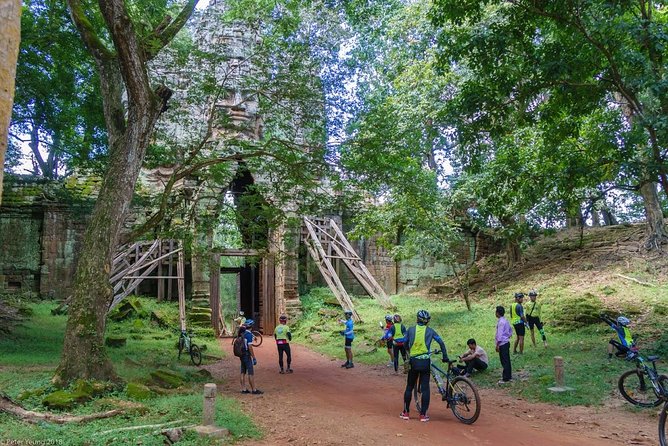
- Included bike and helmet means you can show up and ride, not hunt for rentals
- Small group (max 10) keeps the pace comfortable on uneven ground
- Rainforest trail time gives you a break from temple crowds and city bustle
- Five major temples are built into the day: Angkor Wat, Bayon, Preah Khan, Tanei, and Ta Prohm
- Lunch plus coconut water and drinking water keep you powered for a long morning
The $50 value: what you get, what costs extra
At $50 per person for about 8 hours, this tour is a strong value if you want active sightseeing with real logistics handled for you. The day includes an English-speaking guide, a premium Trek mountain bike, a helmet, lunch, and bottled drinking water plus coconut juice to cool down during the heat.
The big extra cost is the temple pass. Admission is not included, and you should budget $37 for a one-day entry. If you’re the type who likes to avoid surprises, buying or planning the pass early will make your morning smoother.
Also note: hotel pickup and drop-off aren’t included. You’ll meet at the cycling tour meeting point on Taphul Rd, so plan an easy way to get there and back.
You can also read our reviews of more cycling tours in Siem Reap
Morning logistics at 7:30: bikes that fit and a small crew
The tour starts at 7:30am and returns to the same meeting point. That early start matters in Siem Reap: it helps you get temple time before the biggest waves and still have energy left for the longer riding portion.
You’ll meet at Taphul Rd, Krong Siem Reap. The group size is capped at 10, so you’re not squeezed into a long conga line of riders. Before you go, you’ll also need to provide passenger height so the bike fit can be set up properly.
The staff is organized, and the bikes are kept in good working order. You’ll notice it on ride days—when your bike shifts smoothly and the tires feel solid, you spend more brainpower on the scenery and less on your gear.
Rainforest ride first: why the quiet trails matter
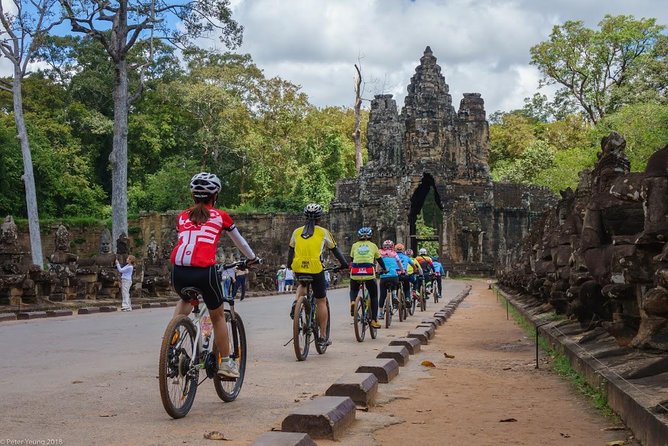
The best part of a cycling tour in Angkor isn’t only the temples. It’s the transition from road travel into the kind of footpath-and-tree shade that makes the area feel older and bigger than the postcard view.
You’ll start with an adventure through rainforest trails, including natural paths that are less disturbed than the main visitor routes. On a bike, you move at a human speed: fast enough to cover ground, slow enough to notice how the vegetation changes and where the trail opens up toward structures.
This portion also sets your rhythm for the day. If you pace yourself at the start, you’ll feel steadier later when the route loops back into the Angkor complex area and you shift between riding sections and temple exploring.
Angkor Wat and the defensive edges of Angkor Thom
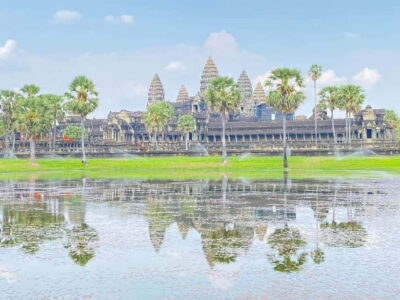
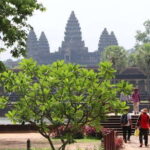
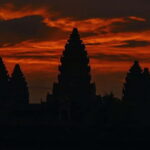
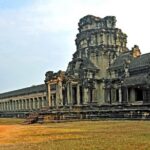
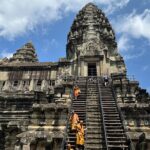
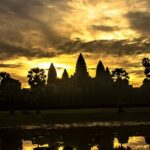
Once you roll toward the main temple zone, you’ll hit Angkor Wat, the famous icon that many people come to see. On a bicycle tour, the difference is you’re not just arriving at a single viewpoint; you’re approaching the site as part of a route, with context.
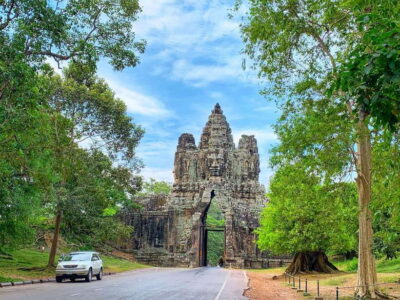
After Angkor Wat, you’ll work into Angkor Thom, starting with the South Gate. Then you’ll ride into the heart of the complex’s defensive layout, including the West Gate and North Gate. These gates are more than photo stops. They show you how the whole place was designed as a walled, controlled world.
One of the most memorable segments is the chance to climb and venture on the protection wall area connected with the Angkor Thom capital, with a viewpoint at Prasat Chrung. You don’t need special skills, but you do need comfort with short uphill effort and watching your footing.
Bayon’s faces and the strategy of riding between temples
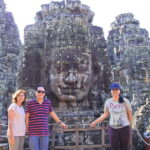
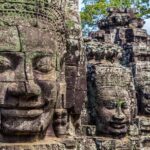
Next comes Bayon, famous for its towers with 54 towers and 216 smiling faces. If you’ve only ever seen Bayon from one crowd-filled angle, this tour’s pacing helps. You’re able to approach and move through key areas as part of a route, so you’re not trapped in just one narrow viewing moment.
Riding between stops also changes what you notice. Instead of thinking only about architecture, you’re seeing how pathways connect sacred spaces. In a place like Angkor, that matters because many buildings are positioned with relationships—line-of-sight, approach routes, and boundaries—meant to be experienced, not just photographed.
The group stays guided and intentional. Your leader helps you find the best ways to move and when to slow down for a proper look, not sprint through like a checklist.
Preah Khan in the jungle: a calmer kind of awe
After Bayon, you’ll reach Preah Khan, a temple that feels swallowed by greenery and supported by shade. The “jungle temple” reputation isn’t just marketing here—it’s part of why cycling works so well. You enter this area already warmed up by the ride, and then the temple atmosphere hits in a different way.
This stop is a great contrast to the more open areas. When you’re cycling off major routes and moving through less crowded spaces, Preah Khan feels like a living site rather than a stage set.
You’ll still have guidance to help you understand what you’re looking at, but you’ll have enough time to slow down and observe details you’d likely miss when your day is all buses and ropes.
Ta Prohm and Tanei: mixing iconic views with lesser-explored structures
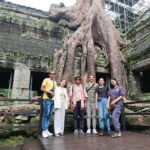
Ta Prohm is on the schedule too, one of the most recognizable temple names in Cambodia. It’s also the type of place where crowds can overwhelm the experience fast if you’re not prepared. The advantage of this bike tour format is that you’re moving through the complex with a plan, plus the day structure helps you keep your energy for real exploring.
Then you’ll also visit Tanei, described as an ancient hospital site that isn’t as closely studied by archaeologists. That’s valuable because it gives you variety. Even if you’re big on famous temples, having a stop that feels more quiet and out of the limelight is how you end the day with more than the same five postcard angles.
This is where you’ll feel the “less beaten route” approach most. You’re seeing the complex as a system of places—some famous, some less visited—connected by paths that make sense on a bike.
Lunch, coconut juice, and staying comfortable through the heat
You’re not just riding and walking temple halls without breaks. Midday includes lunch, plus coconut water and pure drinking water throughout the day. In a hot climate, those included drinks are more than a nice perk. They help keep your energy steady so you don’t fade halfway through.
I like that this tour plans hydration into the experience rather than tossing it into your responsibility pile. Coconut juice is a very Siem Reap kind of refreshment, and it makes the “long day” feel more manageable.
Practical tip: bring sunscreen and sunglasses. The tour encourages it, and it’s the simplest way to stay in good spirits after a couple of hours in sun and shade switching back and forth.
What to wear at Angkor’s active temples
Angkor isn’t frozen in time. It’s an active spiritual site for Buddhists and local citizens who worship, pray, and meditate daily. That means clothing rules aren’t just formalities.
For sacred palace areas, shorts and skirts above the knees are prohibited, and bare shoulders are also not allowed. You’ll want lightweight clothing that covers shoulders and falls below the knee.
If you’re visiting in the hot season, think breathable and respectful. A light shirt that covers your shoulders plus long-enough shorts or a long skirt makes the rules easy to follow without turning your day into a sweat marathon.
Pace and terrain: who this tour fits best
Most people can participate, but this is still a real bike day with off-road trail sections. If you’re comfortable riding on uneven ground and handling occasional bumps, you’ll likely enjoy it a lot.
The tour is also a good match if you like your sightseeing active. You’ll cover several major temple areas in one day, while still getting the benefit of fewer crowds on the travel sections between temples.
If you’re dealing with knee issues, balance concerns, or you’re hoping for a mostly flat, easy cruise, you might find the off-trail nature challenging. The good news is the group size stays small, so you’re not forced into a huge crowd dynamic.
A quick sanity-check on guides and group energy
This tour is led by an experienced English-speaking team. One guide name you’ll hear tied to the operation is Bo Bo, and the leadership style is matter-of-fact and organized—exactly what you want when the day includes gates, wall climbs, and shifting between riding and temple walking.
I also like that the experience encourages repeat bookings. When someone returns for a second ride, it usually means the day feels worth doing more than once, not just a one-time stamp.
For you, that likely translates into a tour that’s run with care: bikes maintained, the schedule respected, and instructions clear enough that you can focus on the sights.
Should you book the Angkor Region & Rainforest Bike Tour?
Book it if you want Angkor in a format that feels practical and alive: mountain biking on included gear, quieter trail segments, and five temple stops packed into a full day. The $50 price works especially well because lunch and drinks are included, and you won’t spend your morning renting equipment.
Only book if you can handle a couple of extra realities: you’ll pay for the temple pass separately, and you’ll be riding through outdoor terrain where comfort depends on what you wear and how you prepare for sun and uneven ground.
If you want Angkor the typical way—slow walking on the same crowded routes—this might feel different. But if you prefer moving at a human pace with a small team and a guide who knows how to connect stops, this is a smart choice.
FAQ
What time does the Angkor Region & Rainforest Bike Tour start?
It starts at 7:30am and runs for about 8 hours.
Where is the meeting point for the tour?
You’ll meet at Taphul Rd, Krong Siem Reap 17252, Cambodia.
Is the temple pass included in the tour price?
No. The tour does not include admission. A one-day temple pass is $37.
What bike and safety gear are included?
The tour includes a premium TREK mountain bike and a helmet.
What food and drinks are included?
You’ll get lunch, coconut water, and pure drinking water.
Do I need hotel pickup or drop-off?
No. Hotel pickup and drop-off are not included, and the tour ends back at the meeting point.
How many people are in a group?
The tour has a maximum of 10 travelers.