REVIEW · SIEM REAP
Siem Reap: Bike the Angkor Temples – Full-Day 30km Tour
Book on Viator →Operated by Discova Southeast Asia · Bookable on Viator
Angkor looks different at bike speed. This full-day Siem Reap tour trades the usual traffic grind for back roads and village paths, then delivers the big three temple hits: Angkor Wat, Bayon, and Ta Prohm. I like that it feels built for exploring, not racing. One watch-out: you’ll pedal about 25–30 km total, and while much of it is flat, some dirt stretches can be rough if you’re new to riding.
The other thing I really like is the rhythm of the day: you get mountain bikes and helmets, plus bottled water, fruit, and snacks to keep you going in the heat. If you choose the lunch option, you’ll also get Khmer food arranged in advance. Many guides (including people named Wich, Moon, Mun, Chen, and Pat) are praised for clear explanations and keeping the group safe and moving at a comfortable pace.
In This Review
- Key Highlights You’ll Actually Feel During the Ride
- Why Cycling Angkor Feels Smarter Than Relying on a Bus
- Meeting at ផ្ទះគ្រូ Café: Fast Start, Real-Time Setup
- Angkor Wat Morning Stop: The First Big Wow, Plus Time to Wander
- Angkor Thom and Bayon: Smiles, Stonework, and Short Switches Between Sites
- Srah Srang and Lunch: Where the Day Levels Out
- Ta Prohm in the Afternoon: Roots, Moss, and That Slow-Gaze Moment
- The Village Side of the Ride: Real Life Between Temple Stops
- Bike Route Reality Check: Flat-ish, But Not Always Smooth
- Dress Code and Day Comfort: How to Avoid Temple Entry Problems
- Price and Value: $35 for the Bike Day, Plus the Angkor Pass
- Safety and Group Management: The Stuff That Makes It Feel Easy
- Should You Book This Bike Tour of Angkor Temples?
- FAQ
- What time does the tour start?
- Where do I meet the guide?
- How far will I cycle during the day?
- What’s included in the tour price?
- Do I need to buy the Angkor Pass?
- Is lunch included?
- What clothing is required for temple entry?
- Is this tour suitable for beginners?
- How big is the group?
- Is free cancellation available?
Key Highlights You’ll Actually Feel During the Ride
- Small-group feel (max 10 travelers) that makes it easier to ask questions and pause for photos
- A morning start (7:30am) that helps you beat some of the midday heat
- Temple stops paired with real road time, so Angkor doesn’t feel like one long queue
- Bikes, helmets, water, fruit, and snacks included, with lunch if you pick the option
- Ta Prohm’s roots and jungle corridors viewed after an afternoon ride, when the scene feels extra atmospheric
- A safe, supported ride approach, with leaders positioned at the front and back in many days
Why Cycling Angkor Feels Smarter Than Relying on a Bus
Angkor is huge, and getting around by car can turn your day into sitting and waiting. On a bike tour, you move with the place. You’re out on smaller roads and back routes that make the area feel lived-in, not just museum-like.
You also get something practical: you’re not stuck in a single transport method. You’ll go from big, iconic temple gates to quieter stretches that pass through village yards and fields. That mix is what makes the day feel like more than just temple photos.
Just be honest about your stamina. This is an active day, not a casual stroll. If you’re comfortable riding a bike for hours in warm weather, you’ll have a great time.
You can also read our reviews of more cycling tours in Siem Reap
Meeting at ផ្ទះគ្រូ Café: Fast Start, Real-Time Setup
You meet at ផ្ទះគ្រូ Café in Siem Reap. The start time is 7:30am, so you’re already rolling before the sun climbs too high.
At the bike shop, you’ll get fitted with a quality mountain bike and a helmet after introductions and a safety briefing. The tour is designed to get you moving quickly, so you spend less time waiting around and more time cycling.
If you’re choosing seats for kids, note that child seats are available on request and can accommodate a child up to 14 kg. If you have dietary needs, you should share them at booking, especially if you’re selecting the lunch option.
Angkor Wat Morning Stop: The First Big Wow, Plus Time to Wander
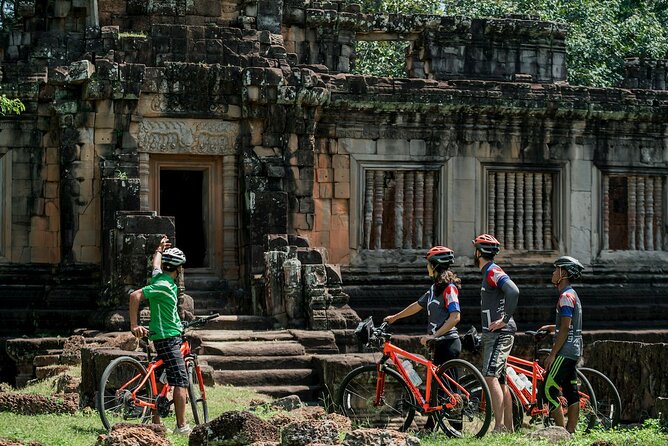
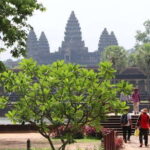
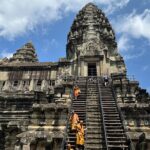
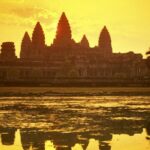
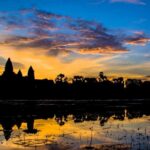
Your first temple stop is Angkor Wat for about 1 hour with entry handled through an Angkor Pass process at the park entrance.
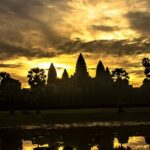
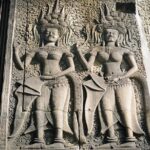
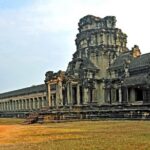
This is the classic opening act for a reason. You get morning light, wide temple galleries, and bas-reliefs that are much easier to appreciate when you’re not rushing between crowded transport drops.
On foot, it’s easy to feel like you’re being pushed along a route. On a bike tour, you can pause when something catches your eye—an inscription detail, a viewpoint angle, a carved scene on a wall—then continue when you’re ready.
Angkor Thom and Bayon: Smiles, Stonework, and Short Switches Between Sites
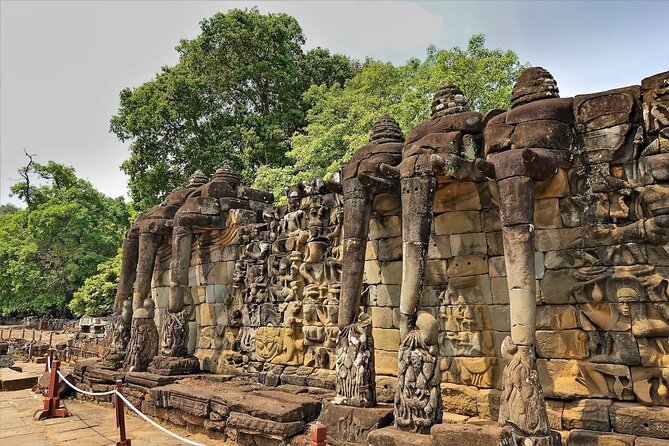
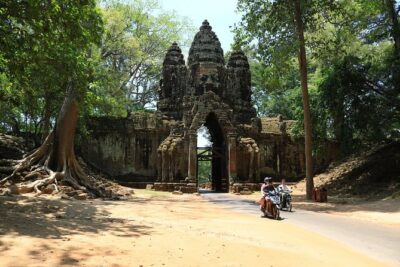
From Angkor Wat, you cycle toward Angkor Thom, then roll into Bayon Temple. Bayon is another 1 hour stop, and it’s where the day starts to feel less like a checklist and more like a guided story.
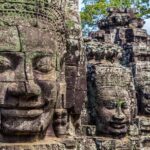
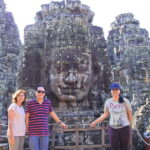
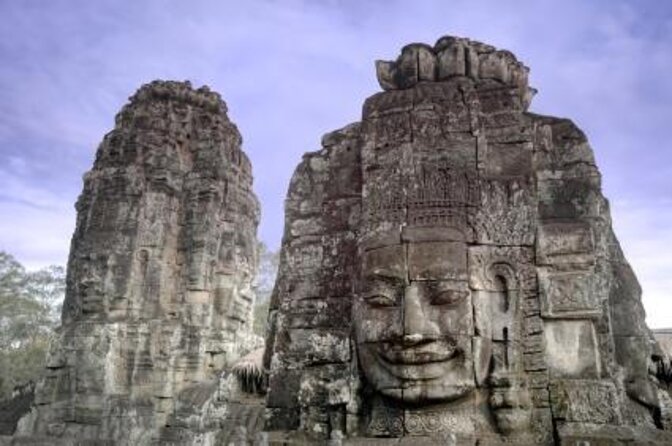
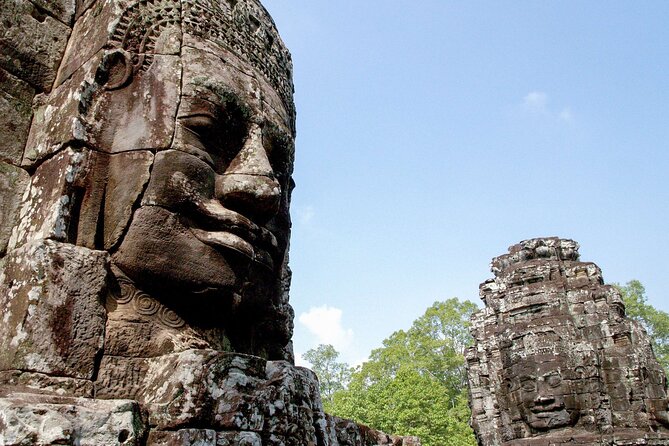
You’ll pass through areas framed by large trees and approach hidden corners of the complex. Bayon’s signature feature—its many stone towers topped with smiling faces—hits hard in person. The scale also feels more manageable when you approach it from different angles during a bike-and-walk rhythm.
You’ll also cover important nearby features along the way, including terraces such as the Elephant Terrace, plus other parts of the royal enclosure area (the day is designed so you see more than just the single most famous viewpoint).
Srah Srang and Lunch: Where the Day Levels Out
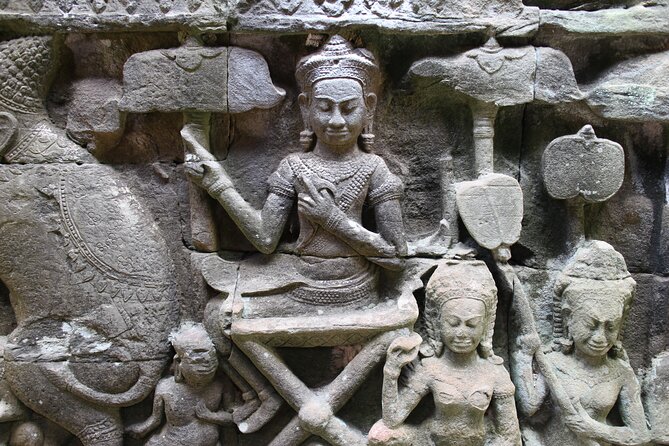
After the main temple cluster, the tour heads to Srah Srang for about 2 hours. This is where the day’s energy gets balanced with food and cultural context.
If you chose the lunch option, this is also where Khmer lunch fits in. The meal is arranged in advance, and you’ll get snacks and fruit support during the day as well. In practice, this stop matters because it gives you a clear midpoint: fuel up, cool off a bit, then return to temples with less fatigue.
You’ll also get explanations that help you connect what you’re seeing—how the spaces relate to the wider Angkor story and what certain sites symbolize. Even if you’re not a deep-history person, this kind of guide talk changes the way carved stone and temple layouts land in your brain.
You can also read our reviews of more tours and experiences in Siem Reap
Ta Prohm in the Afternoon: Roots, Moss, and That Slow-Gaze Moment
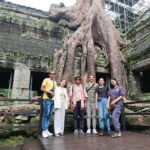
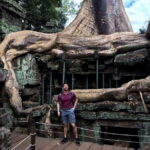
The last temple highlight is Ta Prohm for about 1 hour. This is scheduled for the afternoon, which is smart. The light and the jungle feel tend to make Ta Prohm feel even more otherworldly than it does in rushed morning visits.
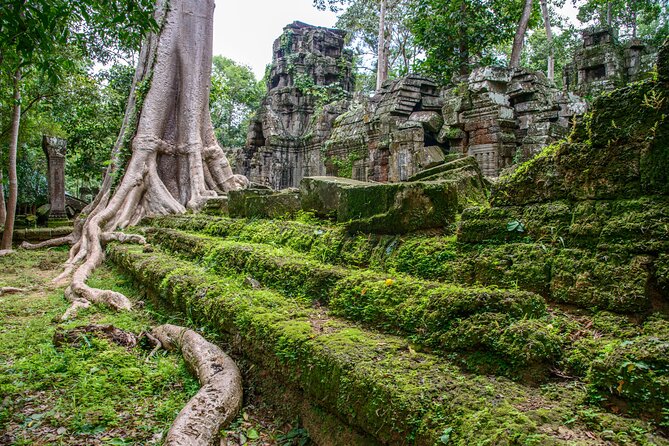
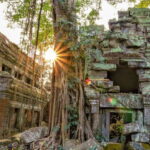
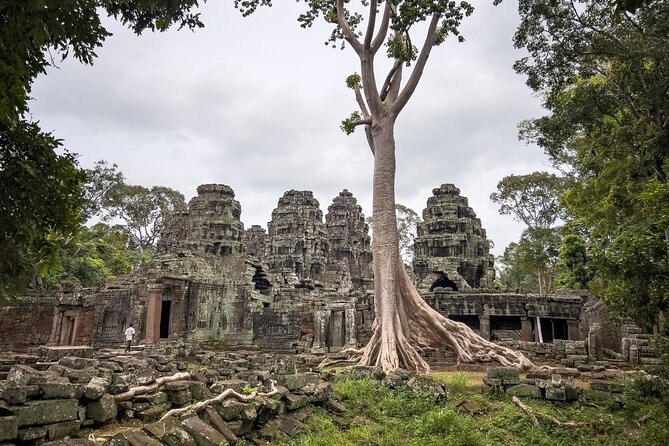
Ta Prohm is famous for the way tall trees and sprawling roots grow over and through temple ruins. The ride leading into it includes calmer stretches—peaceful, shaded corridors—so you arrive in a mood that matches the scene.
This is also one of the best places for photos, because you can’t really fake the effect of roots wrapping stone. Take your time here. It’s the kind of stop where walking two extra minutes can change the whole picture.
The Village Side of the Ride: Real Life Between Temple Stops
One reason people love this tour is that it doesn’t treat Angkor as an isolated island. Cycling through small villages is part of the point.
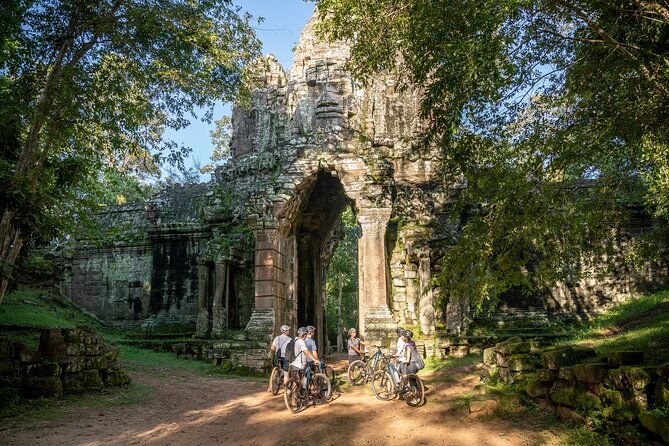
You’ll pedal along local routes on the way back, which means you see housing styles, roadside life, and everyday routines you’d never notice from a bus window. It’s still within the Angkor orbit, but it feels more human.
This is also where the bike format helps with comfort. You can keep a steady pace, slow down whenever you want, and take short breaks without losing the whole group to a vehicle schedule.
Bike Route Reality Check: Flat-ish, But Not Always Smooth
Here’s the honest breakdown. The tour covers about 15–18 miles (25–30 km). Most of the roads are mostly flat, including small roads and park paths.
But the day also includes dirt trails. The tour information is clear that some dirt trails aren’t ideal for beginning riders. In reviews, people note the road can include sand or bumpy sections between temple areas.
So bring the right expectation: this is not a spinning-class ride. It’s an outdoor bike day with variable surfaces. If you go in expecting smooth pavement all day, you’ll be annoyed. If you’re ready for a real ride, you’ll enjoy it.
Dress Code and Day Comfort: How to Avoid Temple Entry Problems
Angkor temples have a dress code, and the tour follows it. Sleeveless shirts and see-through shirts aren’t allowed. For pants and shorts, you need at least knee-length coverage to enter temple areas.
Plan for heat. Many guides and past riders call out the warm weather. I’d treat it like a “no excuses” day: sunscreen, hat, and comfortable shoes that can handle dusty or uneven ground.
Also, if your knees aren’t thrilled by bumpy terrain, take it seriously. The route includes some rough patches, and your body will tell you if it’s not used to that kind of bike ride.
Price and Value: $35 for the Bike Day, Plus the Angkor Pass
The tour price is $35 per person and it includes the bike and helmet, an English-speaking cycling guide, and snacks, fruit, and bottled water. If you choose the lunch option, lunch is included too.
Your biggest extra cost is the temple entry. Entrance fees to the Angkor temple complex are not included; the Angkor Pass is USD $37 for a single day (the guide helps with the purchase at the park entrance).
So what do you get for your money? You’re paying for a full guided circuit plus transport that actually gets you around the park. A bike day with a guided temple experience is usually better value than paying for separate temple entries plus private transport. Still, you should budget for the pass and for lunch only if you want it.
Safety and Group Management: The Stuff That Makes It Feel Easy
This isn’t a “go fast” ride. It’s a guided day with structure. The tour runs with a maximum of 10 travelers, so you’re not stuck in a huge churn of people.
In reviews, you’ll see consistent praise for how guides manage safety with pacing and positioning. Some mentions include leaders at the front and back, plus support staff and maintenance checks so bikes stay usable throughout the day.
That safety piece matters for two reasons: (1) you’re cycling in public areas at times, and (2) uneven surfaces can catch you off guard if the group spreads out. Here, you’re meant to stay together and move smoothly.
Should You Book This Bike Tour of Angkor Temples?
Book it if you want Angkor to feel like a day outdoors. If you like the idea of starting early, cycling between temple clusters, and seeing the countryside around Angkor Wat, Bayon, and Ta Prohm, this tour matches that vibe.
Skip it if you’re expecting a gentle, mostly paved ride. The distance is real at about 25–30 km, and some dirt trails may be uncomfortable for brand-new riders. Also, be ready for a hot day and follow the temple clothing rules.
If your goal is to understand the sites while still getting movement and fresh air, this one is a strong pick.
FAQ
What time does the tour start?
The tour starts at 7:30am.
Where do I meet the guide?
You meet at ផ្ទះគ្រូ Café (9VH7+X7G, Krong Siem Reap, Cambodia).
How far will I cycle during the day?
You’ll cycle about 15–18 miles (25–30 km) on mostly flat roads and small paths.
What’s included in the tour price?
The tour includes a bike and helmet, an English-speaking cycling guide, plus snacks, fruits, and bottled water. Lunch is included only if you select the lunch option.
Do I need to buy the Angkor Pass?
Yes. Angkor Pass/temple entrance fees are not included. The single-day entry cost listed is USD $37, and your guide helps you purchase it when you reach the park entrance.
Is lunch included?
Lunch is included only if you choose the with lunch option at booking.
What clothing is required for temple entry?
Sleeveless and see-through shirts are not allowed. Shorts and pants must be at least knee length to be permitted entry into temples.
Is this tour suitable for beginners?
Most travelers can participate, but the route includes some dirt trails that are not suitable for beginning riders.
How big is the group?
The tour has a maximum of 10 travelers, making it small-group style.
Is free cancellation available?
Yes. You can cancel for a full refund if you cancel at least 24 hours before the experience start time.