REVIEW · SIEM REAP
Angkor Wat 2-Day Tour
Book on Viator →Operated by Cambodia Golden Tours · Bookable on Viator
Angkor in two days is totally doable. This private 2-day Angkor tour from Siem Reap starts at 8:00am with a tuk-tuk and English-speaking guide that keep the circuits moving; I love the practical comfort, cold towels and water, after each temple walk. I also love that you get both Angkor Thom’s dramatic Bayon faces and Ta Prohm’s famous tree in the same trip. One catch: temple tickets are not included, and you’ll still need to follow the temple dress code while doing a lot of steps in the heat.
The day ends with a sunset choice at Angkor Wat or on top of Bakheng Mountain. Your plan uses a mobile ticket, so you spend less time on paperwork and more time on stone, carvings, and big views.
In This Review
- Key moments worth circling
- 8:00am in Siem Reap: how the day starts
- Day 1: Angkor Wat, then Angkor Thom’s South Gate to Baphuon
- Bayon Temple: the faces that follow you
- Baphuon and the palace terraces: stone drama up close
- Day 2: outer temples, Ta Prohm, and Banteay Kdei’s calm
- Banteay Kdei: restored but still quiet
- Srah Srang: water views for sunrise or sunset timing
- Sunset at Angkor Wat or Bakheng Mountain: pick your vibe
- Price and logistics: what $360 really buys
- Dress code and comfort: the part people forget
- Your guide matters: English explanations and on-the-ground flexibility
- Who should book this two-day Angkor circuit?
- Should you book this Angkor Wat 2-Day Tour?
- FAQ
- What time does the tour start?
- How long is the Angkor Wat 2-day tour?
- Is this a private tour?
- What’s included in the price?
- Are temple tickets included?
- Is lunch included?
- Do I need to follow a dress code?
- Can I get a full refund if I cancel?
Key moments worth circling
- A true private setup with only your group, so the route feels less like a cattle shuffle
- 8:00am starts that help you see more before the day gets too hot
- Angkor Thom core hits: South Gate, Bayon, Baphuon, and both palace terraces
- Ta Prohm’s tree-and-stone chaos—the Tomb Raider temple spot for photos
- Banteay Kdei and Srah Srang for quieter, greener-feeling stops and big water views
- Sunset either at Angkor Wat or Bakheng Mountain to match your style
8:00am in Siem Reap: how the day starts
This tour begins in Siem Reap Province with a set start time of 8:00am. Transportation is included, and it’s designed for getting you out to the park quickly and efficiently.
You’ll also get the small comforts that matter in Cambodia heat: drinking water and cold towels after temple walking. That’s not a fancy perk. It’s the difference between feeling okay for the next stop and feeling wrecked by mid-afternoon.
Because it’s private, your guide can pace your group. If you want extra photo time at a doorway or you need a slower climb, you can usually work it in without derailing everything.
You can also read our reviews of more tours and experiences in Siem Reap

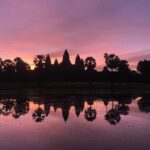
Day 1: Angkor Wat, then Angkor Thom’s South Gate to Baphuon
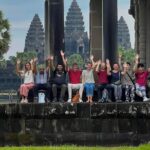
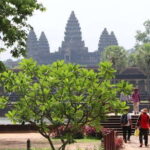
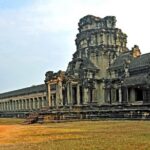
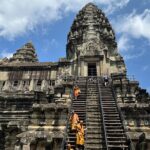
Day 1 is built around the big hitters in the Angkor Archaeological Park. You start with Angkor Wat, the largest religious building in the world, and you work through a temple circuit that feeds right into Angkor Thom.
At Angkor Wat, don’t rush the first minutes. I like to pause and look at how the spaces are laid out—then you start noticing details: carvings, doorways, and how the design guides your eye toward the center. Even if you’ve seen photos, seeing it in person helps you understand why this place keeps showing up on every “best of Angkor” list.
Next comes Angkor Thom, and the star entrance is the South Gate. It’s a popular entry because it’s dramatic right away: two rows of devas and asuras from the Hindu myth of Churning of the Sea of Milk flank the causeway. It’s the kind of mythology that feels more real when you’re walking right through it instead of reading about it later.
Bayon Temple: the faces that follow you
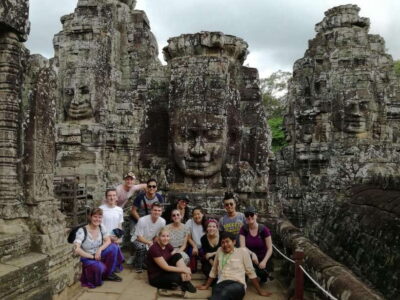
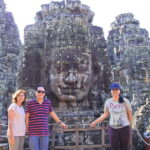
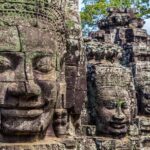
About 1km from the South Gate is Bayon Temple, described as the heart of Angkor Thom and the state temple of King Jayavarman VII. The most unforgettable feature is the 54 towers decorated with 216 smiling faces of Avalokiteshvara.
These faces can feel almost otherworldly. The best way I’ve found to enjoy Bayon is to stop trying to photograph everything and instead pick a few towers to circle slowly. You’ll start noticing how the expressions shift depending on where you stand.
Baphuon and the palace terraces: stone drama up close
Then you move to Baphuon, the second biggest temple in Angkor Thom. It’s a pyramid-shaped temple built in the mid-11th century for King Udayadityavarman II for Shiva. It’s worth going a bit slower here to take in the tiers and the way the temple shape stacks up visually as you climb around it.
After Baphuon, you hit two terraces near the Royal Palace area: the Terrace of Elephants and the Terrace of the Leper King. The Terrace of Elephants stretches about 350m long and served as a viewing stage for public ceremonies and also as a platform for the king to watch military training.
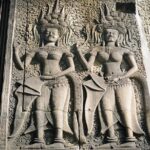
Right beside it, the Terrace of the Leper King features carvings inside that can make your jaw drop. The carvings don’t just sit there for decoration. They help you picture what the royal world felt like in stone—formal, staged, and intensely controlled.
Day 2: outer temples, Ta Prohm, and Banteay Kdei’s calm
Day 2 pushes beyond the Angkor Thom core to the outer temple area. You’ll visit Chau Say Tevoda, Thommanon, and Takeo, which are outside Angkor Thom’s capital and are known for being impressive stops you shouldn’t skip if you want the full Angkor feel.
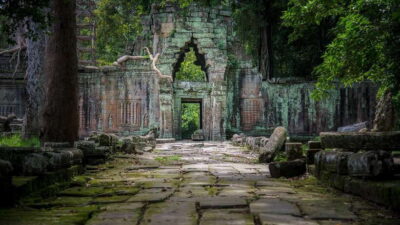
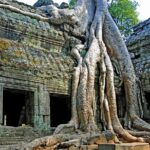
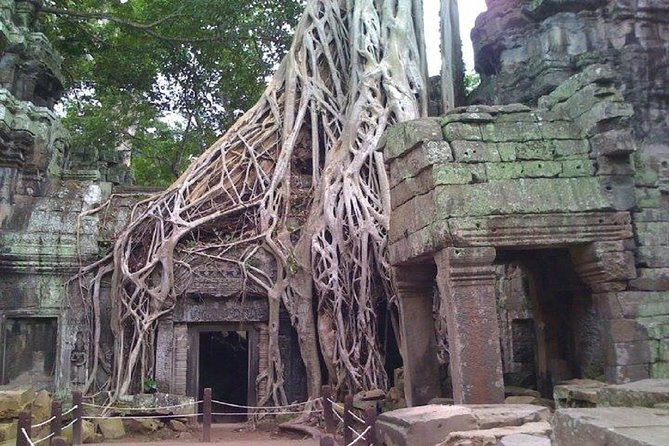
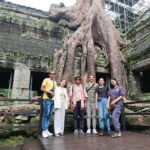
Then the tour shifts to one of the most photo-friendly temples in the whole region: Ta Prohm. It was used as a Buddhist monastery and as a university during the Angkor period. And yes, it’s famous as the Tomb Raider temple from movie filming.
The big draw is the giant tree growing through the temple. It creates a scene that looks half ruined, half alive. I recommend planning your photo time for when the light is gentler, because shade and tree shadows can make the stone details pop.
Banteay Kdei: restored but still quiet
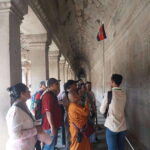
After Ta Prohm, you go to Banteay Kdei. It’s been recently restored, but it’s still open to tourists and it has that “mysterious and quiet” feel thanks to the surrounding forest.
This is the day’s good breather. You still see major carvings and architecture, but you can exhale a little. A lot of people come to Angkor for the obvious giants; Banteay Kdei is where the experience gets more human, slower, and a bit more atmospheric.
Srah Srang: water views for sunrise or sunset timing
Next is Srah Srang, a baray or reservoir associated with Banteay Kdei. The views are described as especially stunning during sunrise and sunset.
Even if you’re not there exactly at sunrise, this stop works because the water gives your eyes something other than stone to rest on. It also helps break up the dense temple concentration so Day 2 doesn’t feel like one long visual assault.
Sunset at Angkor Wat or Bakheng Mountain: pick your vibe
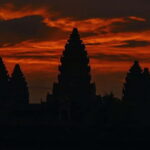
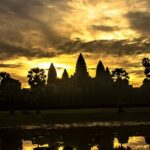
At the end, you’ll continue to a sunset site: Angkor Wat or Bakheng Mountain. Angkor Wat is the biggest religious monument, and Bakheng is known for being an impressive temple on top of the mountain.
If you’re the kind of person who wants the iconic sunset silhouette with maximum drama, Angkor Wat is the obvious choice. If you like the idea of higher viewpoint energy, Bakheng Mountain can feel more like a viewpoint chase than a monument stare.
Either way, this part is where the whole trip starts to click. When the light changes, the carvings and walls look different, and the crowd energy (which you can manage better with a private group and a guide) turns from sightseeing into atmosphere.
Price and logistics: what $360 really buys
The tour is priced at $360 for an approximately 2-day experience in Siem Reap. That price matters because temple circuits like these aren’t just “see temples” tours. You’re paying for transportation, time management, and an English-speaking guide who can explain what you’re looking at while keeping the day organized.
What’s included:
- Transportation
- Cold towels
- Drinking water
- English speaking guide
What’s not included:
- Temple tickets
- Lunch near temples
- Personal expenses
So the best way to think about value is this: you’re paying to avoid the headache of arranging your own guide and vehicle for a two-day circuit, while getting the comfort extras that keep the pace realistic. Temple tickets are the one big add-on you’ll need to budget separately.
If you’re a solo traveler, couples, or a small group that doesn’t want to plan day-by-day, this kind of private structure often ends up feeling like a fair deal rather than a splurge.
Dress code and comfort: the part people forget
This tour requires you to follow temple dress code rules. The exact rules aren’t listed here, so plan to pack accordingly and be ready to adjust if needed once you’re on site.
Also, bring comfort seriously. You’re moving between multiple temples across two days, and you’re doing real walking. I’d rather see you arrive with shoes that you can stand in for a while than with something cute that turns Day 2 into a foot injury story.
Your guide matters: English explanations and on-the-ground flexibility
An English speaking guide is included, and that can completely change how rewarding the carvings and architecture feel. In particular, the way your guide explains the myths and the building purposes helps you connect the dots across the route.
The guides tied to this tour’s past experiences include names like Mr Ly, Seng, Lucky, Vutha, Ly Hol, Bunanal, and Mr Pheach. One standout pattern: when the guide and driver team works well together, the day feels smoother, explanations come at the right moments, and you can ask questions instead of just absorbing landmarks like stamps in a passport.
There’s also an advantage to having a flexible driver. You may be able to incorporate small detours or adjust timing when something catches your attention.
Who should book this two-day Angkor circuit?
This is a strong fit if you want:
- A private plan with your own group only
- Two days to cover both Angkor Thom’s core and outer temples like Ta Prohm and Banteay Kdei
- An English guide and comfort extras that make long temple days more manageable
- A sunset option that lets you choose Angkor Wat or Bakheng Mountain
It may be less ideal if you love slow, minimal touring and want lots of free time with no structure. This itinerary is built to keep momentum, and momentum means you’ll be moving.
Should you book this Angkor Wat 2-Day Tour?
If you want a well-paced Angkor experience that covers the must-sees without turning your trip into logistics homework, I’d say yes, book it. Starting at 8:00am, getting water and cold towels, and having an English guide are exactly the kinds of practical wins that improve your whole two days.
Just go in with clear expectations. Temple tickets are separate, the dress code is real, and you’ll do a fair amount of walking in the sun. If that sounds manageable for your group, this tour is a solid way to see a lot of Angkor without losing your time to planning gaps.
FAQ
What time does the tour start?
The tour starts at 8:00am from the meeting point in Siem Reap, Siem Reap Province.
How long is the Angkor Wat 2-day tour?
It’s scheduled as a 2-day experience (approx.).
Is this a private tour?
Yes. It’s a private tour/activity, and only your group will participate.
What’s included in the price?
Transportation, cold towels, drinking water, and an English speaking guide are included.
Are temple tickets included?
No. Temple tickets are not included in the tour price.
Is lunch included?
Lunch near temples is not included.
Do I need to follow a dress code?
Yes. You need to follow the dress code rules when visiting the temples.
Can I get a full refund if I cancel?
Free cancellation is available. You can cancel up to 24 hours in advance for a full refund (you must cancel at least 24 hours before the experience’s start time).