REVIEW · SIEM REAP
Private 2 Days Angkor Wat Sunrise and Discover all Major Temples
Book on Viator →Operated by About Cambodia Travel & Tours · Bookable on Viator
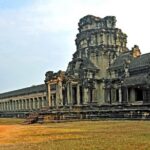
Angkor at dawn hits different. This private two-day circuit is built around sunrise at Angkor Wat, plus a long, smart sweep through the biggest names in Angkor and a few lesser-visited stops. I especially love the mix of famous monuments (Bayon, Ta Prohm-adjacent sites, Angkor Thom) with quieter temples like Ta Nei and Banteay Kdei, and the comfort details—A/C private vehicle, bottled water, and cool towels. The main drawback: you’re starting extremely early, and there are a lot of walking stairs and uneven stone surfaces, so you’ll want solid shoes and a realistic pace.
If you want a smooth Angkor visit without the stress of organizing transport, tickets, and routes, this tour does that part well. Hotel pickup and drop-off keep the day simple, and an official licensed guide with excellent English helps connect what you’re seeing to the Khmer Empire story. One more consideration: the itinerary temples aren’t automatically covered in the tour price—you’ll still need the Angkor Pass, and meals are on your own.
In This Review
- Key highlights you’ll actually feel on the ground
- Price and logistics: what $149.46 covers (and what doesn’t)
- Your two-day timing: why sunrise matters here
- Day 1: Angkor Wat sunrise, then Angkor Thom’s major monuments
- Stop 1: Angkor Wat for sunrise
- Stop 2: Angkor Thom South Gate and the causeway
- Stop 3: Angkor Thom
- Stop 4: Bayon Temple and the stone faces
- Stop 5: Baphuon Temple
- Stop 6: Phimeanakas
- Stop 7: Terrace of the Elephants
- Stop 8: Terrace of the Leper King
- Stop 9: Ta Nei Temple
- Stop 10: Banteay Kdei
- Day 2: Banteay Srei’s reputation, Preah Khan, and the Baray-side temples
- Stop 1: Banteay Srei
- Stop 2: Banteay Samre
- Preah Dak Village: souvenirs and local crafts
- Stop 3: Preah Khan
- Stop 4: Neak Pean
- Stop 5: Ta Som
- Stop 6: Eastern Mebon
- Stop 7: Pre Rup
- Comfort and comfort-saving details that matter in Angkor heat
- What you’ll need to plan for (so the tour feels smooth)
- Who this private Angkor Wat sunrise tour is best for
- Should you book this private 2-day Angkor tour?
- FAQ
- What time does the Angkor Wat sunrise start?
- Is the Angkor Pass included in the tour price?
- What’s included in the $149.46 per person price?
- Are meals included during the tour?
- Is this tour private?
- Does the tour include hotel pickup and air-conditioned transportation?
- How far in advance can I cancel for a full refund?
- My booking call: who should pick it and who should tweak the plan
Key highlights you’ll actually feel on the ground
- Angkor Wat sunrise + sunset viewpoints built into the rhythm of the two days
- Official licensed guide in excellent English, so the carvings make sense instead of just looking pretty
- Private A/C transfers, bottled water, and cool towels for the long hot hours
- A classic-to-remote mix: Angkor Thom core, then out to stops like Banteay Kdei
- Hotel pickup and drop-off that saves time and headaches in Siem Reap
- Tour stays private for your group, so you can move at a sane pace
Price and logistics: what $149.46 covers (and what doesn’t)
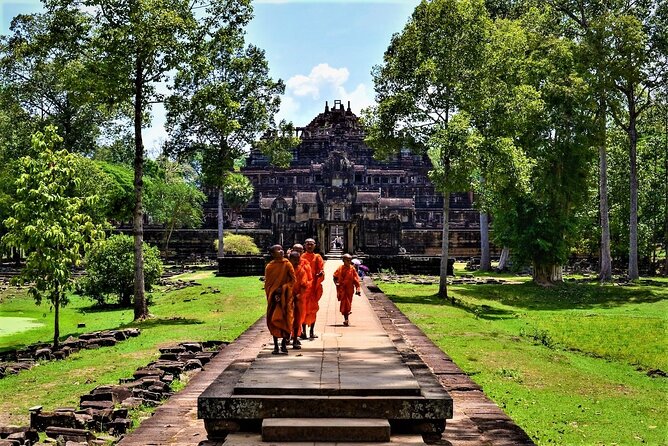
At about $149.46 per person for a two-day private temple program, you’re paying for the “how” as much as the “where.” This includes hotel pickup and drop-off, an official licensed guide (excellent English-speaking skills), private air-conditioned transport, bottled water, cool towels, and services charge plus current government VAT.
What’s not included is also important. You’ll still buy the Angkor Pass at the park entrance, and meals during the tour are at your own expense (local lunch options are typically available with both vegetarian and non-vegetarian dishes). Tipping for the guide and driver is also separate, so budget a little extra.
So is it good value? For me, it’s strongest if you care about having a guide do the interpreting, and you prefer private comfort over public shuttles. If you already plan to hire a guide separately or you’re traveling with your own driver, you might compare costs. But if you want one clean package—pickup, route planning, and a guide—you’re paying for convenience, not just temple time.
You can also read our reviews of more private tours in Siem Reap

Your two-day timing: why sunrise matters here
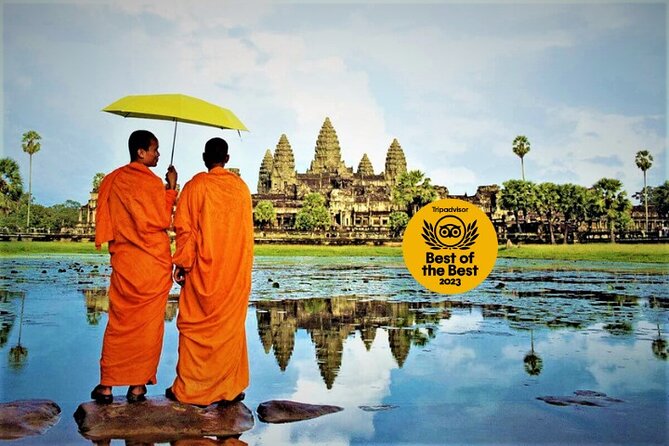
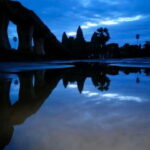
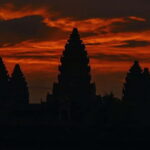
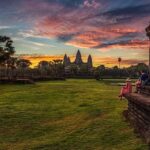
This tour leans into the classic Angkor schedule for a reason: early light changes everything. You get up around 4:30 a.m. for the sunrise focus at Angkor Wat, which is when you can see the silhouettes without fighting the later-day crowds and heat.
That early start is also where the tour’s pacing makes sense. Instead of arriving after the busiest wave, you’re walking the grounds while the air is cooler and the monuments feel more “alive” in a quiet, cinematic way. Then later, you keep seeing major sites through the day, and the plan includes time for a sunset viewpoint as well.
The trade-off is obvious: early mornings, long days, and more time spent on your feet than you’d expect from a “temples tour” label. Plan your energy like you would for a big city day—water, breaks, and comfortable shoes.
Day 1: Angkor Wat sunrise, then Angkor Thom’s major monuments
Day 1 is the big hitting block. It starts with the signature sunrise moment, then works through Angkor Thom’s core sights and related structures, ending with Banteay Kdei.
Stop 1: Angkor Wat for sunrise
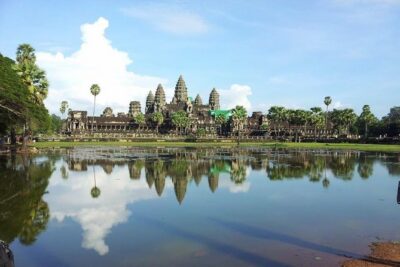
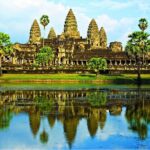
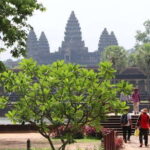
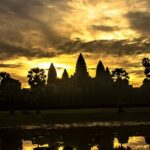
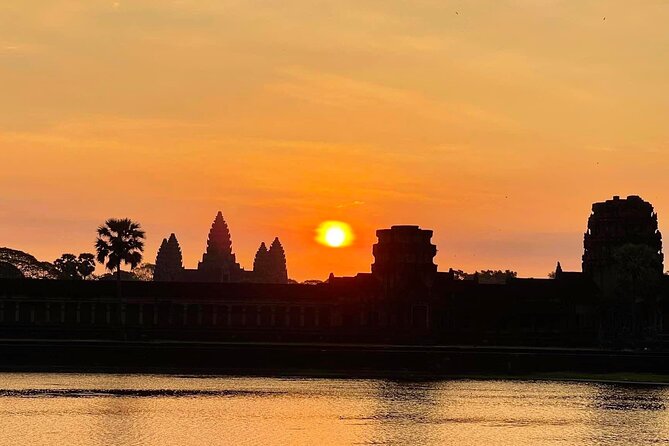
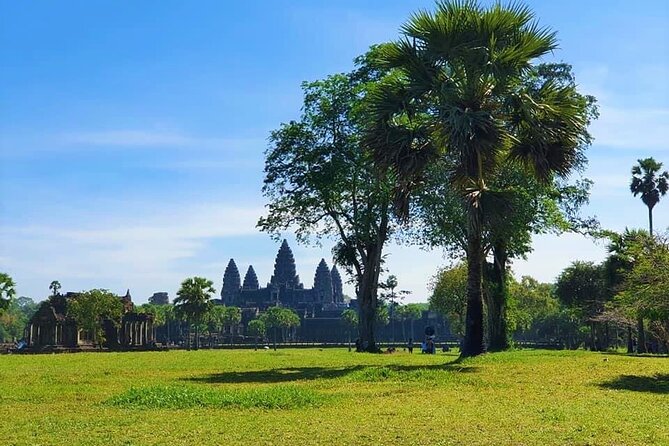
Angkor Wat is the national emblem of Cambodia and a source of Khmer pride. On this tour, you’re there early enough to catch the towers in silhouette at sunrise—worth it just for the visual impact, and even better because your guide ties it to Khmer symbolism and history.
Practical note: this stop can involve more time on-site than you think, since sunrise viewing is about timing your position and then enjoying what you see as light changes. Also, the Angkor Pass is not included in the tour price, so you’ll want to handle it with your guide before you start temple hopping.
Stop 2: Angkor Thom South Gate and the causeway
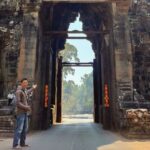
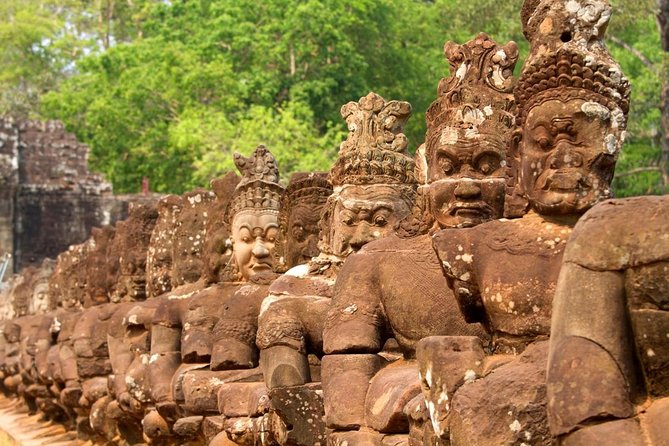
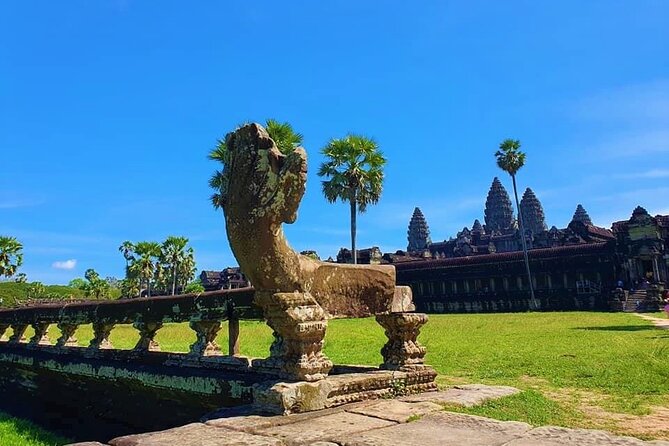
After sunrise, the tour moves into Angkor Thom’s layout via the South Gate. You’ll see the restored stone causeway crossing the moat, with railings made from rows of giant sculptures. It’s one of those moments where the architecture is doing storytelling work before you even reach the temple core.
This is also a good “stretch your legs” stop after the early wake-up. It’s short, but it sets the tone for the size and complexity of Angkor Thom.
You can also read our reviews of more tours and experiences in Siem Reap
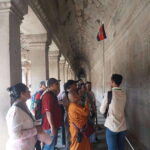

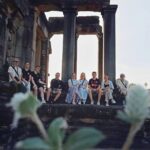
Stop 3: Angkor Thom
Angkor Thom is the great capital area, and the name itself reflects that scale. This tour gives you the meaning behind Angkor Thom and how the area fits after Angkor was no longer the Khmer capital. It’s the kind of context your guide can explain in plain language, which helps when you later compare multiple temples built across different reigns.
Stop 4: Bayon Temple and the stone faces
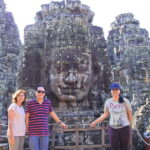
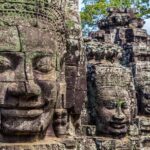
Bayon is second most popular in Angkor after Angkor Wat, and it’s the place most people come to recognize the famous stone faces. Your guide explains what you’re looking at and how Bayon fits into the Angkor Thom center.
What I like here: it’s not just “look at the faces.” It’s a chance to understand the broader temple layout while you’re still fresh enough to notice details.
Stop 5: Baphuon Temple
Baphuon sits near Bayon and is historically significant because it was by far the hugest Khmer temple before Angkor Wat. Even if you don’t catch every architectural nuance, your guide gives you a way to compare these major monuments across time.
Drawback to keep in mind: Baphuon and nearby sites can mean extra walking on uneven ground. If your knees are sensitive, go slow and take breaks.
Stop 6: Phimeanakas
Phimeanakas is known as the aerial palace and is also tied to the idea of a celestial temple. The name points back to Sanskrit roots, and your guide uses that language link to explain how the Khmer connected religion, power, and design.
This stop is shorter, so it works well as a “credit card check” moment: you see a distinct structure, learn its meaning, then move on before you get temple overload.
Stop 7: Terrace of the Elephants
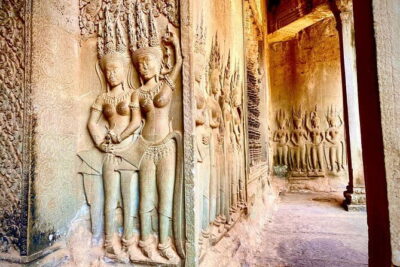
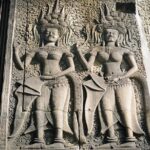
On the western edge of the Royal Square, the Elephant Terrace is an ancient wall and platform. It’s a great stop if you like carved storytelling and historical symbolism instead of only towering facades.
Stop 8: Terrace of the Leper King
Next door is the Terrace of the Leper King, another important part of the Royal Square’s northwest corner. Your guide points out why this terrace is worth studying—meaning the details are the point, not the speed photo.
These two terraces together are a good way to shift from “big temple wow” to “why the carvings matter.”
Stop 9: Ta Nei Temple
Ta Nei is a late 12th century stone temple dedicated to the Buddha. It sits near the northwest corner of the East Baray, which gives you a chance to see how temples connect to larger water features in the Angkor plan.
This is a helpful change of pace—less about the iconic images and more about the location and dedication.
Stop 10: Banteay Kdei
Banteay Kdei is relatively easy to find, and it sits close to where the Small Circuit and Grand Circuit meet. The stop also connects you to the larger geography of the park, including the reservoir Srah Srang nearby.
This is your “remote-feel” moment on Day 1. It keeps you from only seeing the most famous core sites and helps you understand how Angkor’s temple network spreads out.
Day 2: Banteay Srei’s reputation, Preah Khan, and the Baray-side temples
Day 2 focuses on a different energy—less about Angkor Thom’s royal center and more about temples spread across the broader Angkor area, plus one culture-and-souvenirs stop.
Stop 1: Banteay Srei
Banteay Srei is famous for beauty, and people often put it at the top of their Cambodia temple memories. This tour gives it the time it deserves, starting Day 2 with a site many consider a highlight.
Since your guide can frame it within Khmer temple history, you won’t just see it as another stop between bigger names.
Stop 2: Banteay Samre
Banteay Samré sits about 400 metres east of the East Baray. It was built in the early 12th century during the reigns of Suryavarman II and Yasovarman II, and it’s described as a Hindu temple in the Angkor area.
This stop is useful because it adds variety to the “temple timeline” feeling—different reigns, different dedications, and different temple characters in close geographic time.
Preah Dak Village: souvenirs and local crafts
The itinerary includes Preah Dak Village, a place known for souvenirs and objects and arts. It’s not a temple stop, but it breaks up the day and gives you a low-pressure moment to browse.
If you don’t want to shop, you can treat this as a chance to reset before the last temple cluster.
Stop 3: Preah Khan
Preah Khan is a major temple with a clear royal dedication story. In 1191, it was dedicated to Jayavarman VII’s father, and the central statue was Jayavarmeshvara, meaning Jayavarman, Lord of the world. Your guide can explain how that dedication ties into the king’s worldview.
This is one of those stops where history makes your eye travel. When you understand why the place mattered, the ruins feel less random.
Stop 4: Neak Pean
Neak Pean is exceptional because it doesn’t follow the layout style of other Khmer temples. It was on an artificial island in a huge Baray, with a diameter of 350 metres, which is part of what makes the design feel unusual.
This is a good stop if you like structure and planning, not just big monuments. The setting helps you understand the temple as part of a water-and-earth system.
Stop 5: Ta Som
Ta Som was built in the late 12th century by King Jayavarman VII. The purpose isn’t fully known, but it may have been dedicated to the king’s father or one of his teachers.
That uncertainty can be refreshing. Instead of pretending everything is perfectly documented, your guide helps you connect the clues you do have.
Stop 6: Eastern Mebon
Eastern Mebon is described as a mountain temple built in the middle of the 10th century by King Rajendravarman II, dedicated to Shiva. This gives you a direct time jump from Jayavarman VII’s era, which helps you see Angkor as a living timeline, not one frozen complex.
Stop 7: Pre Rup
Pre Rup was founded in 961 and is described as the most significant legacy of Rajendravarman II. Your guide places it among important Angkor royal names and connects it to the larger story of Angkor’s development.
This stop often feels like the end of the “temple history arc” of the second day—especially if you’ve been paying attention to how dedications shifted across centuries.
Comfort and comfort-saving details that matter in Angkor heat
The tour’s comfort package isn’t fluff. You get private transfer by an air-conditioned vehicle, bottled water, and cool towels. Those small things matter when you’re going from sunrise to late-day temples where the sun can be relentless.
Hotel pickup and drop-off also reduce decision fatigue. In Siem Reap, it’s easy to lose time to logistics. Here, the schedule is already built for you, so you can focus on the sites.
One more practical plus: your guide is an official licensed guide with excellent English. When explanations come in clear language, you spend less time guessing what you’re looking at, and you take more photos of the details that actually interest you.
What you’ll need to plan for (so the tour feels smooth)

Even with private transport, this is still Angkor. Here’s what you should plan for so the experience doesn’t feel like a hurried checklist.
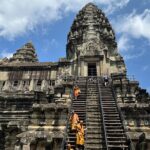
Wear shoes you trust on stone stairs. Many temple areas have uneven surfaces, and some stops include more walking than others.
Expect breaks to be part of the rhythm. With 10 major stops on Day 1 and another cluster on Day 2, you’ll benefit from small pauses—especially if you’re sensitive to sun or heat.
Budget for add-ons. The Angkor Pass is not included, and meals aren’t included. Lunches are available at local restaurants with both vegetarian and non-vegetarian options, but you’ll still be paying $3–$10 per dish (menu prices vary).
Finally, consider tipping. Tipping for guide and driver isn’t included, and it’s good to plan ahead so you’re not scrambling at the end.
Who this private Angkor Wat sunrise tour is best for

This tour is best if you want:
- A guided Angkor experience where history and temple design are explained, not just shown
- Private comfort with A/C transport and hotel pickup
- Both major icons and extra stops, like Banteay Kdei and Ta Nei, not only the top two or three
- A pace suited to your group, since the tour is private and only your group participates
It’s also a strong fit for couples who want a romantic sunrise-plus-sunset framing, and for families who appreciate having a car ready for frequent transitions. If you’re traveling with kids or you simply don’t want the stress of buses, private transport helps a lot.
Should you book this private 2-day Angkor tour?
I’d book this tour if you want the classic Angkor experience with a guide who can connect what you see to why it was built, and if you value private comfort on a long two-day schedule. The price is reasonable for what’s included—especially hotel pickup, A/C transfers, bottled water, cool towels, and a licensed English-speaking guide.
I’d think twice if you’re trying to minimize extra costs, because the Angkor Pass and meals are separate. And if you’re not comfortable with very early mornings, treat the 4:30 sunrise start as non-negotiable—this itinerary is built around it.
FAQ
What time does the Angkor Wat sunrise start?
You’ll get up early, with pickup and sunrise timing around 4:30 a.m. for Angkor Wat.
Is the Angkor Pass included in the tour price?
No. The Angkor Pass is not included, but your guide will assist you in purchasing it at the entrance of Angkor Park before starting the tour.
What’s included in the $149.46 per person price?
The tour includes hotel pickup and drop-off, a professional official licensed guide with excellent English-speaking skills, private A/C transfers, bottled water and cool towels, and services charge plus government VAT.
Are meals included during the tour?
Meals are not included. Lunches are available at local restaurants, and prices typically range from $3 to $10 per dish.
Is this tour private?
Yes. It’s a private tour/activity, and only your group participates.
Does the tour include hotel pickup and air-conditioned transportation?
Yes. Pickup and drop-off at your hotel are included, and transfers are by air-conditioned vehicle.
How far in advance can I cancel for a full refund?
You can cancel up to 24 hours in advance for a full refund.
My booking call: who should pick it and who should tweak the plan
Book it if you want a smooth, guided two-day Angkor sweep that mixes the biggest “must sees” with added temple variety, all with private A/C comfort and hotel pickup. If sunrise starts are hard for you or you’re trying to keep costs super tight because you’d rather handle tickets and meals yourself, then look for an itinerary that matches that style.