REVIEW · SIEM REAP
Afternoon Cooking Class & Village Tour in Siem Reap
Book on Viator →Operated by Village Cooking Class. · Bookable on Viator
Food lessons start in the rice fields. This Siem Reap afternoon experience mixes a village walk with hands-on Khmer cooking in a countryside kitchen, so you understand the food before you taste it. I especially like the chance to see daily rural life through farm stops and small-holdings, then move straight into cooking.
I also love that you cook with a chef’s guidance and end with a recipe book you can actually use later. With a small group (up to 8) and hotel pickup and drop-off, it feels organized without being stiff. One thing to consider: the schedule is listed with a start time and pickup time that don’t match exactly, so you’ll want to double-check your confirmation for the exact pickup hour.
In This Review
- Key Points at a Glance
- Why This Siem Reap Cooking Class Works for Real Food Lovers
- The Afternoon Schedule: Pickup, Village Drive, and What the Timing Means
- Stop at the Village: How the Tour Sets Up Your Cooking Lesson
- Vegetable and Mushroom Farms: Fresh Ingredients You Can Picture Later
- Rice Wine Distillation House: A Look at Local Fermentation and Flavor
- Tasting Herbs and Sauces: Where Khmer Cooking Becomes Clear
- Cooking in a Countryside Kitchen: What You’ll Actually Make
- Your Homemade Dinner: Eating With Context
- The Take-Home Recipe Book: The Real Souvenir
- Price and Value: Why $35 Can Be a Good Deal Here
- Who This Tour Suits Best (And Who Might Want Something Else)
- The Bottom Line: Should You Book This Afternoon Cooking Class?
- FAQ
- FAQ
- How long is the cooking class and village tour?
- Is hotel pickup and drop-off included?
- What time does the tour start?
- What will I cook during the class?
- Do I get anything to take home?
- Does the tour include a village visit and farm stops?
- What’s the group size limit?
- Is this experience suitable for most people?
- What is included in the price?
- What if the weather is bad?
- What is the cancellation policy?
Key Points at a Glance
- Village tour plus countryside kitchen: You learn the setting, then cook right there.
- Farm-style stops: Vegetable and mushroom farms are part of the route.
- Rice wine distillation house visit: You get a look at how local spirits are made.
- Hands-on Khmer cooking: You prepare three main courses and a Khmer dessert.
- Take-home recipe book: You’re not just tasting, you’re learning to recreate.
- Small group size (max 8): Easier questions, more personal attention.
Why This Siem Reap Cooking Class Works for Real Food Lovers
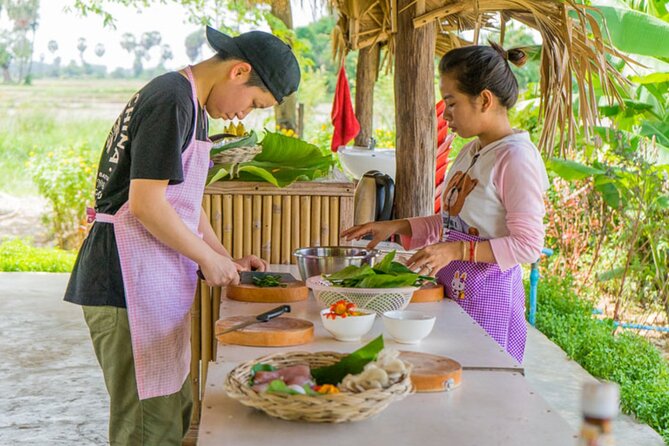
If you’ve ever eaten a delicious plate of Khmer food and wondered why it tastes the way it does, this tour gives you the answer in a practical way. You’re not just in a kitchen for show. You start outside Siem Reap City, roll through rice fields and temples, and then reach a village where the food story makes sense.
The best part is the pacing. You see a bit of rural life—farms, everyday landscapes, and a rice wine distillation house—then you move into cooking lessons with a chef’s help. By the time you sit down to your homemade dinner, the ingredients and techniques feel less mysterious.
And for the value-minded traveler, this is one of those tours where the price covers more than a cooking demo. You get hotel pickup and drop-off, multiple dishes to cook and eat, and a recipe book to take home. That turns the class into both a meal plan for the day and a future project for your own kitchen.
You can also read our reviews of more cooking classes in Siem Reap
The Afternoon Schedule: Pickup, Village Drive, and What the Timing Means
This is an afternoon outing that runs about four hours. The details provided show two different times: pickup is listed as 3:00 pm, while the meeting start time is shown as 2:00 pm. Because of that, I’d treat the confirmation message as the source of truth and plan to be ready early.
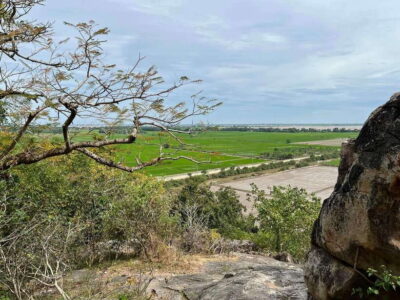
Your driver picks you up at your hotel and heads you out of Siem Reap City. You’ll travel through rice paddies and temples, which is a big part of the point: you’re trading a hot, crowded city afternoon for a calmer countryside route before you ever start cooking.
In practical terms, an afternoon schedule also means you’re not locked into an early morning. If you’re the type who likes to sleep in, shop, or hit Angkor sights in the morning, this fits nicely. Just remember that the experience requires good weather, so a rain plan is worth thinking about.
Stop at the Village: How the Tour Sets Up Your Cooking Lesson
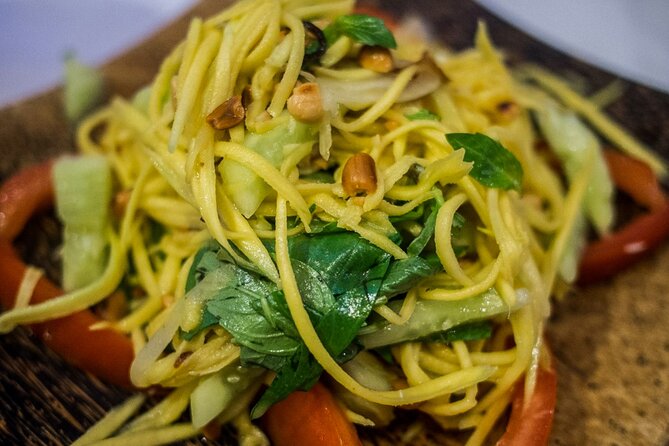
Once you reach the village area, the tour isn’t random wandering. It’s framed around food—where ingredients grow, how local products are made, and how village households live day to day. You also have a local guide with you, and that matters because village cooking works best when you understand the context behind the flavors.
The route includes village life sights and landmarks, then specific farm stops. You’re basically building a map in your head: where herbs come from, what local vegetables look like at harvest time, and why certain ingredients show up again and again in Khmer dishes.
This is also the moment where a small-group size helps. With a maximum of 8 people, it’s easier to ask questions as you move from one place to the next. That’s useful because cooking instruction relies on details—what’s fresh, what’s dried, and what gets mixed and heated.
Vegetable and Mushroom Farms: Fresh Ingredients You Can Picture Later

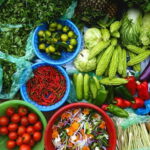
One of the most practical parts of the day is the visit to vegetable and mushroom farms. Even if you don’t know Khmer agriculture terms, you’ll come away with a clearer sense of how ingredients are sourced. That makes the later cooking more than just following steps.
Why this matters: recipes are easier to repeat when you can picture the real ingredient. When you’re holding a seasoning paste or mixing herbs later, you’ll remember what those plants looked like in the field. You’ll also understand why certain herbs smell stronger than others, and why local mushroom types show up in many dishes.
A possible drawback here is logistics on uneven ground. Farm visits usually mean walking and standing for a bit. Wear comfortable shoes and be ready for dirt and uneven paths, even if the tour stays friendly and casual.
Rice Wine Distillation House: A Look at Local Fermentation and Flavor
The stop at a local rice wine distillation house is one of the most distinctive elements of this tour. It connects food culture to a drink culture—showing how local rice is processed beyond cooking.
Even if you don’t drink alcohol, this kind of visit adds texture to your understanding of rural food systems. Fermentation and distillation are part of how communities use what they grow. Seeing that process in person helps explain why certain flavors feel at home in Khmer cuisine: they often come from techniques that rely on time, microbes, and careful handling.
Just keep expectations realistic. You’re not likely to leave with a chemistry lesson—more with a clear understanding of the idea and the local practice behind it. That still makes it a useful, memorable stop.
You can also read our reviews of more tours and experiences in Siem Reap
Tasting Herbs and Sauces: Where Khmer Cooking Becomes Clear
After the visits, the tour moves into the ingredient-knowledge phase. You’ll taste aromatic herbs and sauces, then learn traditional techniques. This is the moment where I think many cooking classes either help you understand flavors—or just throw you into chopping.
Here, the tasting step gives your brain something to connect. When you taste a herb or a sauce first, it becomes an anchor point. Later, when you add it to a dish, you’ll notice the change in smell and taste right away.
This also makes your cooking more confidence-building. You’re not just guessing. You’re learning the logic of Khmer flavor building—how herbs and sauces are chosen, balanced, and used during cooking.
Cooking in a Countryside Kitchen: What You’ll Actually Make
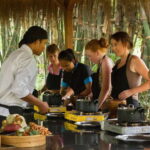
The hands-on part is done with a private chef in their countryside kitchen. That setup is important. A private kitchen lesson usually means you can ask questions without feeling rushed, and you’re more likely to get specific guidance for your dish.
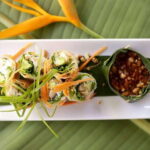
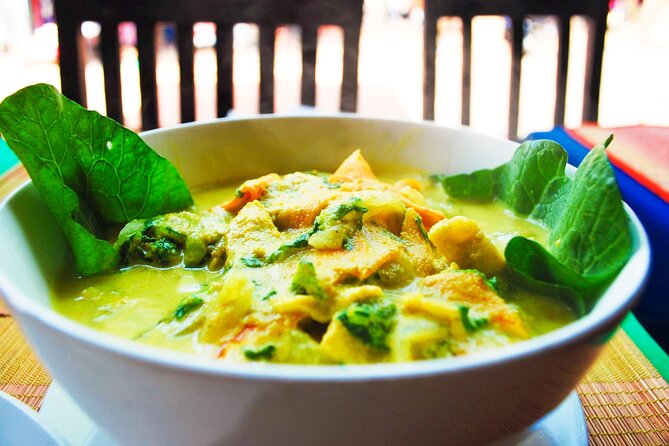
You’ll create a variety of Khmer specialties and cook three main courses plus one Khmer dessert. The exact dish names aren’t specified in the info you provided, but the structure is clear: a solid meal set, not just one simple dish for photos.
In my experience, the best cooking classes focus on technique you can repeat. Even without seeing the dish list ahead of time, you can expect you’ll learn how to work with Khmer ingredients and how to handle common cooking steps—mixing, simmering, and balancing flavors—because you’re producing multiple courses.
Your Homemade Dinner: Eating With Context
Once your dishes are ready, you’ll sit down and enjoy your delicious homemade dinner. This is where the earlier village and farm stops pay off. Eating becomes more than taste. It becomes confirmation.
You’ve already seen where ingredients come from and you’ve tasted herbs and sauces before cooking. So when you take that first bite, you’re connecting the flavor to a real place and real process. That’s the kind of meal that sticks with you after the tour ends.
Also, because the group is capped at 8, the meal experience is usually more relaxed than in large crowds. You’re not standing in a line of strangers waiting for your turn.
The Take-Home Recipe Book: The Real Souvenir
At the end of the cooking course, you receive a recipe book. This is one of the biggest reasons this tour is worth your time, because it turns the experience into something you can repeat.
A recipe book matters most when it’s paired with real instruction. You cook three main dishes and a Khmer dessert during the class, so you’re bringing home something you’ve already made once. That makes it far more likely you’ll cook these dishes again rather than shelving the book.
If you like cooking at home, this is the best kind of souvenir. It gives you a reason to plan a meal night later and actually use your memories instead of just collecting photos.
Price and Value: Why $35 Can Be a Good Deal Here
At $35 for about four hours, this isn’t positioned as a luxury experience. It’s a practical, food-focused day with real teaching time.
Here’s where the value comes from:
- Hotel pickup and drop-off save you time and hassle.
- You cook and eat 3 main courses plus 1 Khmer dessert, not just one dish.
- You get a recipe book, which extends the value beyond the tour itself.
- The tour includes a village donation, which is a meaningful part of supporting the community you visit.
- Small group size (max 8) means the chef and guide time isn’t stretched thin.
Could there be a drawback? Sure—if you’re expecting a high-end restaurant style class with lots of written handouts and polished English narration, this is more grassroots. But if your goal is to understand Khmer cuisine and learn technique in an authentic rural setting, the price feels fair.
Who This Tour Suits Best (And Who Might Want Something Else)
This is a strong match if you want:
- Khmer cooking instruction you can repeat at home
- A village route outside Siem Reap City, not just a city center activity
- Farm and culture stops tied directly to food
- A smaller group format with a chef’s guidance
You might consider a different option if you:
- Need a perfectly timed schedule with no weather sensitivity (this experience requires good weather)
- Want a super structured itinerary with fixed dish names listed ahead of time
- Prefer indoor, climate-controlled activities only
For many people, though, the mix of cooking plus village visits is exactly what makes it satisfying.
The Bottom Line: Should You Book This Afternoon Cooking Class?
If you’re in Siem Reap and you want more than a single-food experience, I’d say yes. The tour doesn’t treat cooking as a stand-alone show. It connects ingredients to local farms, and techniques to what you taste first.
Also, the combination of three main courses, a Khmer dessert, and a take-home recipe book is hard to beat for the price. Just double-check the pickup timing shown in your confirmation, and plan for walking on farm paths.
FAQ
FAQ
How long is the cooking class and village tour?
It lasts about 4 hours.
Is hotel pickup and drop-off included?
Yes, hotel pickup and drop-off are included.
What time does the tour start?
The information provided shows a start time of 2:00 pm, and pickup is listed as 3:00 pm. Check your confirmation for the exact pickup time.
What will I cook during the class?
You’ll cook 3 main course Khmer dishes and 1 Khmer dessert.
Do I get anything to take home?
Yes. You receive a recipe book at the end of the course.
Does the tour include a village visit and farm stops?
Yes. You visit a village outside Siem Reap City, plus vegetable and mushroom farms, and a local rice wine distillation house.
What’s the group size limit?
The tour has a maximum of 8 travelers.
Is this experience suitable for most people?
The information says most travelers can participate.
What is included in the price?
Included are hotel pickup & drop-off, the dishes (3 main courses and 1 dessert), a village donation, and local guide and local chef services.
What if the weather is bad?
The experience requires good weather. If it’s canceled due to poor weather, you’ll be offered a different date or a full refund.
What is the cancellation policy?
You can cancel for free up to 24 hours in advance of the experience for a full refund. Canceling less than 24 hours before the start time isn’t refunded.