REVIEW · SIEM REAP
Angkor Cab: Siem Reap 3 day private tour: ‘off the beaten track’
Book on Viator →Operated by ANGKOR CAB-OFF BEATEN TRUCK · Bookable on Viator
Waking up early has a payoff here. This 3-day private Siem Reap plan mixes sunrise Angkor Wat with quieter temples and Tonle Sap, all in a private vehicle with AC and bottled water.
I love the way it stays off the beaten track, with safe driving and English-fluent temple guides (including Panha, per one thank-you message). One thing to plan for: the Angkor Temple Pass and most site admissions are not included, so your total cost can rise.
In This Review
- Key things to know before you go
- The real value: a private Angkor introduction, without the stress
- Day 1: The pink temple start (Banteay Srei) and a quieter circuit
- Srah Srang and Tonle Sap: why water stops feel like a reset
- Day 2: Angkor Wat at sunrise, then Angkor Thom and Ta Prohm
- Day 3: Beng Mealea’s raw feel, plus Bakong and Preah Ko
- Pricing that makes sense for families and friend groups
- Included comforts: bottled water, private transport, and a guide you can ask
- Off-the-beaten-track, but still grounded in the essentials
- Who this tour fits best (and who might want a different style)
- Should you book this off-the-beaten-track 3-day private tour?
- FAQ
- How many people is the tour for?
- What time does the tour start?
- Is hotel pickup included?
- What’s included in the price?
- Are temple tickets or the Angkor Temple Pass included?
- What food and drinks should I plan for?
- What’s the cancellation policy?
Key things to know before you go
- Private, small-group feel: up to 3 people per group, with your own tour setup
- Early-day flexibility: you’ll get a dawn plan for Angkor Wat, but the rest stays relaxed
- English-speaking temple guidance: you’re not left guessing what you’re looking at
- A mix of big names and calmer ruins: from Angkor classics to lesser-hit sites
- Real-world pacing: comfort stops and breaks built into the day flow
The real value: a private Angkor introduction, without the stress
Siem Reap can feel like two trips at once. There’s the headline stuff—Angkor Wat and Angkor Thom—and then there’s the rest of the ancient Khmer story, spread across smaller temples, countryside drives, and lake life. This tour tries to give you both. You’ll do sunrise at Angkor Wat, then come back down to earth with a route that often feels quieter.
The biggest value is control. With a private car and a professional guide, you can keep moving without feeling rushed or lost. You’re also not playing the “what time do we line up?” game all day. The tour’s structure does the hard work—timing key sites, routing between them, and keeping the day comfortable.
Also, the guide quality matters here. You get English-fluent temple guidance, so you’re not just staring at carvings and hoping for the best. When you know what you’re looking at, even a smaller ruin feels bigger.
The only real budget headache is admissions. The Angkor Temple Pass isn’t included, and individual temple tickets are also listed as not included. That means the advertised price covers the guiding and logistics, but you still need to set aside money for entry fees.
You can also read our reviews of more private tours in Siem Reap

Day 1: The pink temple start (Banteay Srei) and a quieter circuit
Day 1 is a smart move for first-timers. You don’t start with the biggest crowd magnets. Instead, you begin with Banteay Srei, often called the pink temple. The timing and routing matter: you’ll be driven from your hotel and spend about an hour exploring, while your guide explains details of what you’re seeing. The drive itself is part of the experience too—more local activity, less “tour bus only” scenery.
Next up is Banteay Samre. It’s a 12th-century temple located not far from East Baray. You’ll get another short, focused temple visit with on-the-spot interpretation from your local guide. This is the kind of stop that pays off because it’s not trying to be everything at once. You can actually look.
Then comes Banteay Kdei—a Buddhist temple built in the mid 12th to early 13th century under King Jayavarman VII. It sits in the orbit of Ta Prohm, but it’s a calmer detour that helps break up the Angkor overload. You’ll also build in a local lunch before heading onward, with lunch cost depending on what you choose (listed as roughly $5 to $10 per person, byo).
After lunch, you’ll shift from temples to water and everyday Khmer landscape. You’ll go to Srah Srang, described as the largest swimming pool in the world. It was built in the mid 10th century and later modified by Jayavarman VII in the 12th century. Even if you’re not there for a swim (please don’t), it’s a neat cultural contrast: a man-made water feature tied to royal era planning.
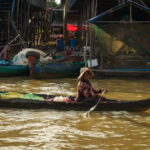
Day 1 ends with Tonle Sap Lake, one of Southeast Asia’s biggest freshwater lakes. You’ll spend about two hours here, learning how the lake’s size changes dramatically—around 10,000 square kilometers in the wet season and about 3,000 in the dry season, plus how five provinces connect to this water system. It’s a good way to end the day without squeezing more ruins into the night.
Srah Srang and Tonle Sap: why water stops feel like a reset
Temple days can run together if you’re not careful. What I like about this plan is the mid-to-late-day reset. Srah Srang is visually different from carved stone towers. It also gives your feet a short break. You’ll walk across to see the pool, then move on.
Then Tonle Sap adds a different kind of “wow.” Instead of more architecture, you’re seeing how Khmer history and modern life share the same geography. You get time for a more relaxed pace—no constant tiptoeing around groups or trying to photograph around elbows.
If you’re the kind of traveler who gets temple fatigue, this is your relief valve. And if you’re the type who loves history, water management and seasonal changes are part of the story too.
Day 2: Angkor Wat at sunrise, then Angkor Thom and Ta Prohm
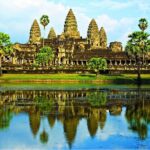
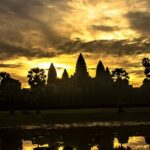
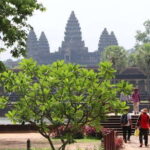
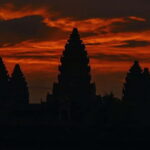
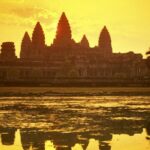
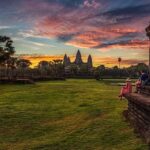
Day 2 is the headline day, and the tour handles it with a time strategy that’s hard to beat. You start early—about 5:00am from your hotel—and drive roughly 30 minutes to Angkor Wat. The goal is sunrise with the iconic view of the temple waking up in the morning light.
You’ll have about three hours at Angkor Wat. That’s long enough to see the main views, walk around at a comfortable pace, and let your guide translate key details into something you can understand. This is also when the timing advantage really matters: sunrise crowds can be intense, but with your group and guide rhythm, it feels manageable instead of chaotic.
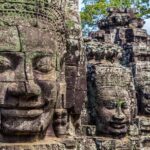
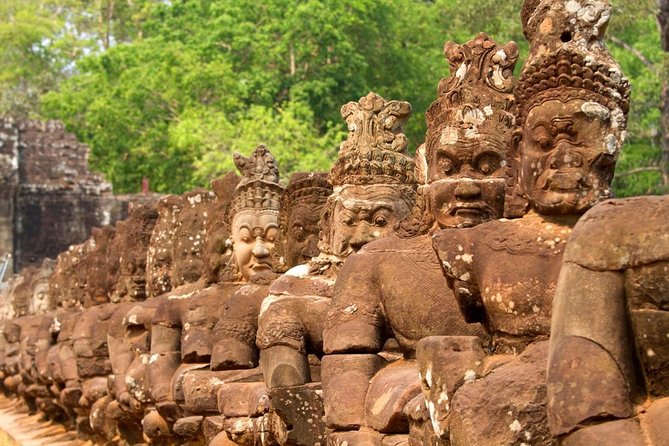
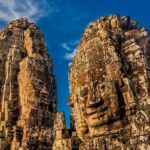
After that, you head to Angkor Thom, the capital city. It’s only about a five-minute drive, then you stop at the South Gate for photos before entering the main temple area. You’ll spend about two hours here, moving through the central sights with guidance on what each section represents.
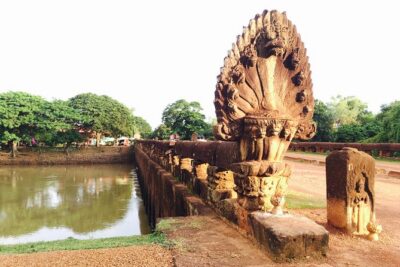
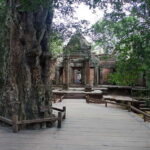
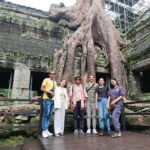
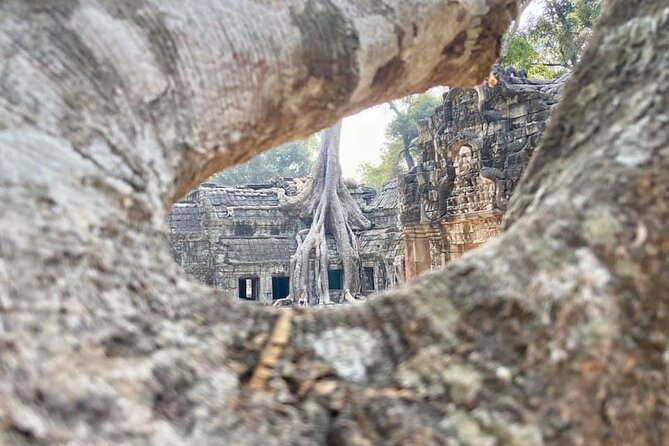
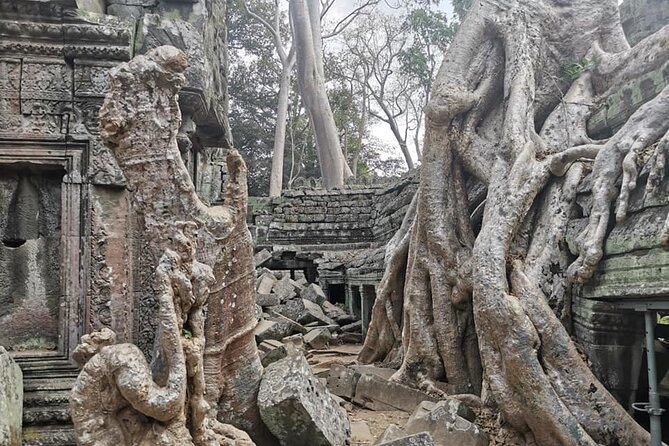
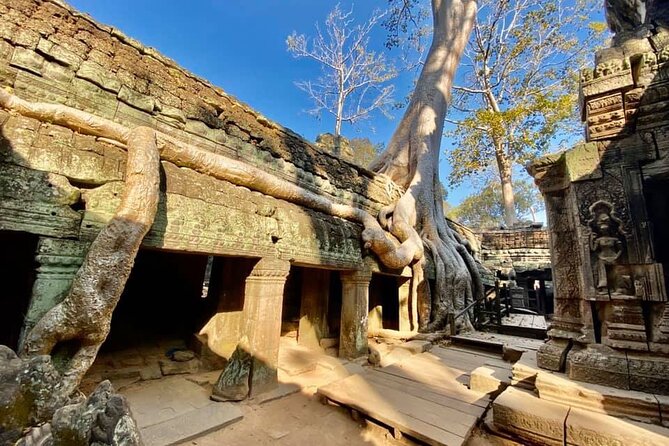
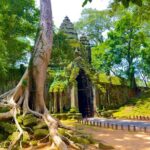
Next comes Ta Prohm, known for its dramatic tree roots. You’ll drive around 15 minutes from Angkor Thom. Along the way, you’ll stop at a stone bridge for a quick look at the tree growth on top—small detours like this are where “off-the-beaten-track” becomes real, because you’re not only going from the A-ticket to the B-ticket.
You’ll have about one hour at Ta Prohm. The visit time is short enough to keep the day from dragging, but long enough to see the setting and understand what makes this temple so famous.
Day 3: Beng Mealea’s raw feel, plus Bakong and Preah Ko
Day 3 shifts the focus from the famous Angkor core to sites that feel more rugged and less staged. You meet your guide and driver around 9:00am and drive about one and a half hours to Prasat Beng Mealea.
Beng Mealea is the kind of place where your brain goes into explore mode. The tour route includes time to watch local daily life along the way, so the drive isn’t dead time. You’ll spend around three hours here—enough to wander and take it slow. Admission tickets are not included, so plan for that cost on top of the pass situation.
After Beng Mealea, you head to Bakong, a temple tied to the ancient Khmer capital city called Hariharalaya. Bakong is built in the 9th century by Shiva King Indravarman I. You’ll have about 40 minutes to see it with your guide’s interpretation. This stop is valuable because it shifts your understanding of where Khmer power centers sat before the most famous later phases.
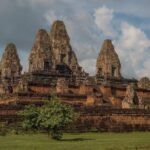
Then you finish with Preah Ko, dedicated to Shiva and described as the sacred bull. It was built in 879 under Hindu King Indravarman I, and you’ll spend about 30 minutes there. It’s a compact ending, which is good on the last day—no need to sprint if your legs are already tired.
You can also read our reviews of more tours and experiences in Siem Reap
Pricing that makes sense for families and friend groups
The price is $550 per group, for up to 3 people. That matters because this is private transportation plus a professional guide for multiple days. If you’re a single traveler, the cost per person can feel steep. If you have 2 or 3 people, the per-person number becomes much more reasonable.
Here’s the quick math:
- For 3 people: about $183 per person (before tickets and food)
- For 2 people: about $275 per person
What you’re paying for is time, comfort, and explanation. With private driving, you’re not wasting time coordinating public transport or merging into crowds. The bottled water and the included driver support also help keep the day smooth.
Just remember what’s not covered. Meals and drinks aren’t included, and lunch is described as depending on what you choose (around $5 to $10 per person). The big one is admissions: the Angkor Temple Pass and other activity fees (if any) are not included.
Included comforts: bottled water, private transport, and a guide you can ask
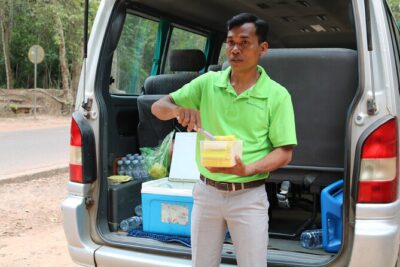
You’ll have bottled water, a driver, and a professional guide, with the tour described as private. Pickup is offered, and the tour also uses a mobile ticket, which is convenient if you want less paper.
Comfort is not a small detail in Siem Reap. Temple time is mostly daytime heat and walking on uneven surfaces. Having AC on in the car and cold water ready is practical. It’s also one reason this kind of multi-day private plan feels better than a scramble through the same sites with a patchwork of tickets and buses.
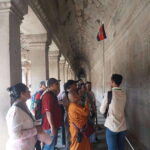
The guides are described as English fluent, and that shows up in the way the stops are structured. You don’t just get dumped at a gate and pointed at a doorway. You get context while you’re there—why the temple is shaped the way it is, who it was linked to, and what you’re supposed to notice.
Off-the-beaten-track, but still grounded in the essentials
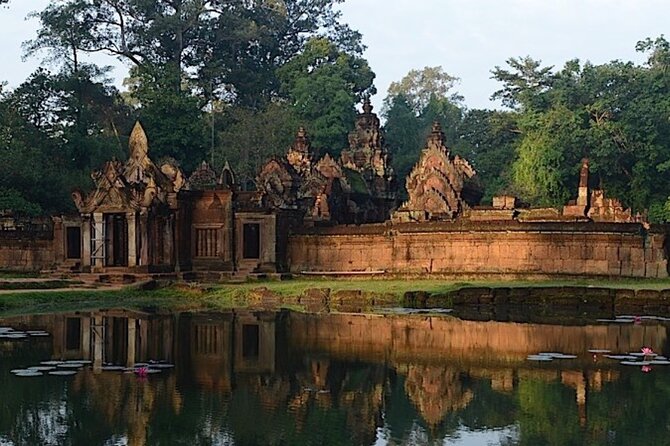
This tour’s promise isn’t to avoid Angkor completely. It actually does the essential anchors: Angkor Wat at sunrise and Ta Prohm and Angkor Thom. Where it changes the feel is in the supporting route—more of the Khmer temple circuit, more countryside drives, and a Tonle Sap finish.
That mix is great if you want both:
- the world-famous sights with the right timing
- the quieter temples that make the whole story connect
It’s also a good fit if you’re traveling for the first time and want to get your bearings fast without burning a whole week on logistics.
If you’re the kind of person who wants only the biggest monuments and nothing else, you might feel like Day 1 and Day 3 include too many “extra” stops. But if you enjoy understanding the region, those additional temples are exactly what turns a photo trip into a real experience.
Who this tour fits best (and who might want a different style)
This setup is ideal for:
- couples or small groups who want private pacing
- first-timers who want an organized intro plus calmer detours
- people who like learning while walking, not just sightseeing
It also asks for moderate physical fitness. Most of the day is temple walking, plus a walk across at Srah Srang and time exploring ruins like Beng Mealea.
If you have very limited mobility or you need a fully seated experience, this might feel like too much. If you can handle a few hours of walking and uneven stone, you’ll likely be fine.
The tour also mentions flexibility—if you want different start/finish times or a different place to visit, you can let them know in advance. That’s useful if you’re also trying to work around hotel plans or dinner reservations.
Should you book this off-the-beaten-track 3-day private tour?
Book it if you want a private, guided Siem Reap plan that balances big-name Angkor with quieter temples and real local scenery. The sunrise timing at Angkor Wat, the English-fluent temple guidance, and the mix of Banteay sites plus Tonle Sap make it feel thoughtfully routed, not just box-checked.
Skip or rethink if your priority is purely the headline attractions with zero extra stops, or if you don’t want to handle additional costs for admissions. Since the Angkor Temple Pass and site entry aren’t included, you should budget for them before you commit.
If you’re traveling with 2–3 people and you want comfort and explanations, this is strong value.
FAQ
How many people is the tour for?
It’s a private tour for up to 3 people per group.
What time does the tour start?
The start time is listed as 9:00am, but Angkor Wat sunrise day includes an early 5:00am start from your hotel.
Is hotel pickup included?
Yes, pickup is offered.
What’s included in the price?
The tour includes bottled water, the driver, a professional guide, and a private tour.
Are temple tickets or the Angkor Temple Pass included?
No. The Angkor Temple Pass and admission tickets for temples are not included.
What food and drinks should I plan for?
Food and drinks are not included. Lunch depends on what you choose, listed as about $5 to $10 per person, and it’s byo.
What’s the cancellation policy?
You can cancel for free up to 24 hours in advance for a full refund.