REVIEW · SIEM REAP
Angkor Wat Sunrise Bike Tour With Lunch Included
Book on GetYourGuide →Operated by The Guide Cambodia Travel · Bookable on GetYourGuide
Sunrise at Angkor Wat is a whole different world. This 8-hour bike tour blends that early-morning magic with temple stops you’d otherwise bounce between by tuk-tuk. I especially liked the professional English-speaking guide, and how the schedule keeps you moving without feeling rushed.
If you’re flexible, you’ll get the best light and fewer crowds. One thing to weigh: you start very early (pick-up around 4:30–5:00 am), and the temple pass isn’t included, so you’ll need to plan that before you go.
In This Review
- Key points before you go
- A 4:30 am start at Angkor Wat (and why it’s worth it)
- Biking from Angkor Wat to Angkor Thom: a smart way to cover ground
- Bayon smiling faces and the terraces of power
- Ta Nei Temple at jungle-trail pace: quieter ruins for your morning
- Ta Prohm: where trees and ruins grab the same attention
- Lunch near Srah Srang Reservoir: fuel before the ride back
- Bikes, helmets, and how to stay comfortable for 8 hours
- Price and what $50 includes (and what doesn’t)
- Small-group timing: how the route helps you see more
- Who should book this Angkor Wat sunrise bike tour?
- Should you book this sunrise bike tour with lunch included?
- FAQ
- What time does the tour pick me up?
- How long is the tour?
- How much does it cost?
- Is Angkor temple access included?
- What’s included in the price?
- What temples will we visit?
- How big is the group?
- Do I need to bring a bike or helmet?
- Is lunch included?
Key points before you go
- Angkor Wat sunrise with guided temple history and photo-friendly timing
- Small group rides (minimum 2, maximum 8) that feel personal instead of chaotic
- Easy-to-handle mountain bikes with disc brakes, front suspension, and helmets provided
- Temple sequence that makes sense: Angkor Wat → Angkor Thom → Ta Nei → Ta Prohm → lunch
- Support transportation plus water, Coke, and fresh fruit to keep the morning comfortable
A 4:30 am start at Angkor Wat (and why it’s worth it)
Let’s be honest: waking up before dawn in Cambodia is a choice you make, not an accident. Your day kicks off at 4:30 am when your guide and driver pick you up from the hotel lobby (the tour description also notes pick-up around 5:00 am). Either way, you’ll be heading out while the world is still mostly quiet.
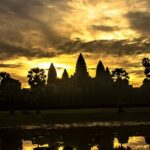
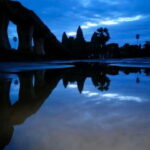
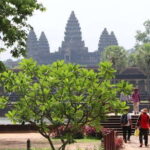
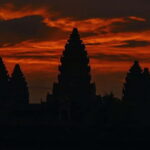
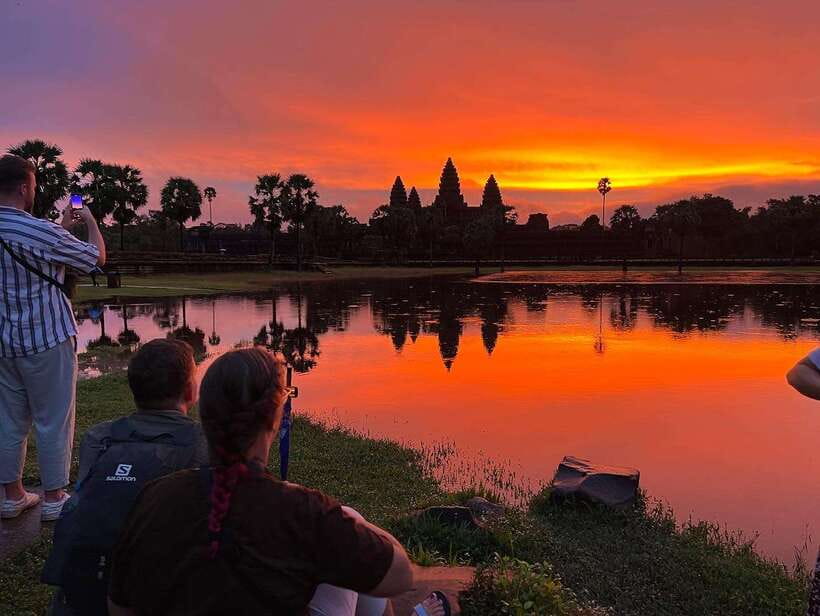
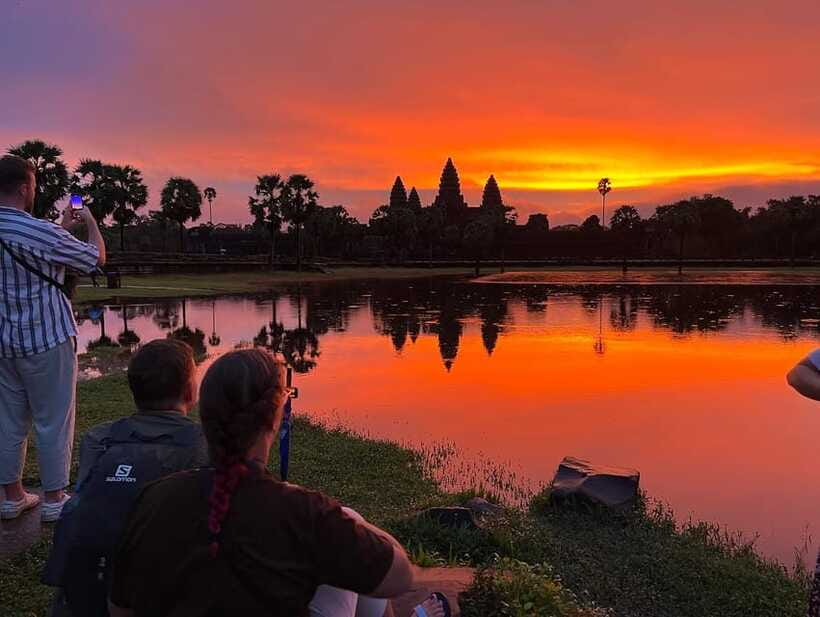
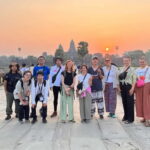
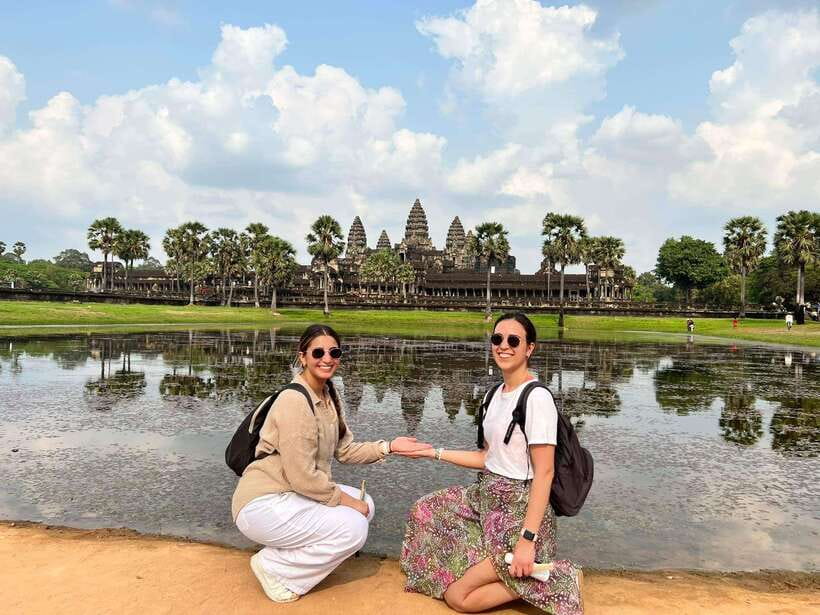
Then the payoff hits. You arrive in time to see Angkor Wat sunrise, which the tour frames as the masterpiece of the Khmer empire. That matters, because sunrise isn’t just a pretty backdrop—it changes the mood of the stone, and it gives you a real chance to take those classic photos without fighting a day’s worth of light and crowds.
I also like that you’re not just dropped at the temple and left to figure things out. The guide leads the way and shares context as you watch the sky shift. That turns your viewing into understanding, not just sightseeing.
You can also read our reviews of more cycling tours in Siem Reap
Biking from Angkor Wat to Angkor Thom: a smart way to cover ground
After the sunrise experience, you don’t waste the morning sitting in traffic. Around 8:00 am, you start cycling. The route moves you toward the south gate of Angkor Thom, then into the cluster of major Angkor sights tied to the old city.
This is where biking really earns its keep. You get active time between stops, and you can feel the geography—wide temple approaches, courtyard edges, and those stone details that are hard to appreciate when you’re only passing by from a car window.
The tour’s pacing also feels designed for attention. You’re cycling before it gets too hot, then you hit the big set pieces when your eyes are still fresh. If you’ve only done temple days by tuk-tuk, this feels more grounded, like you’re traveling through the site instead of just arriving at it.
Bayon smiling faces and the terraces of power
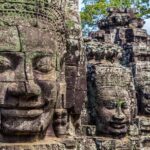
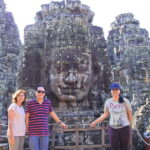
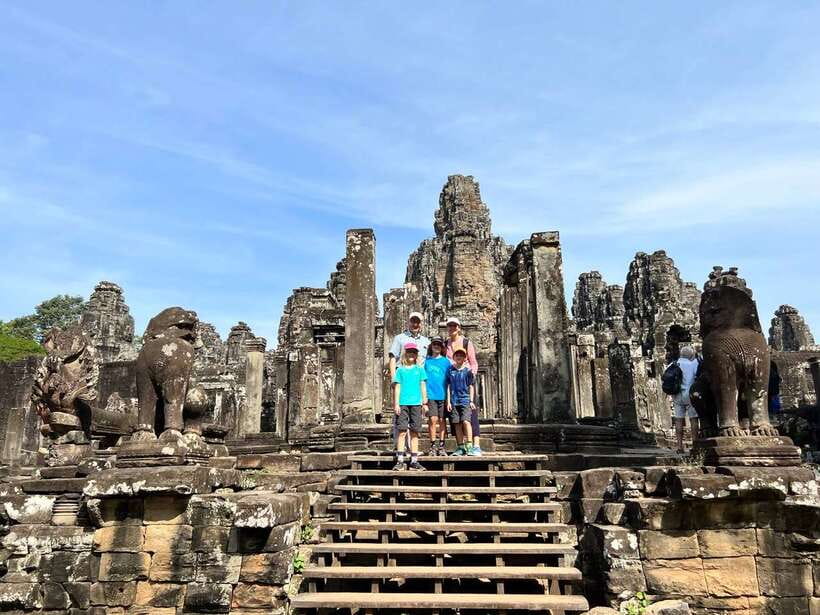
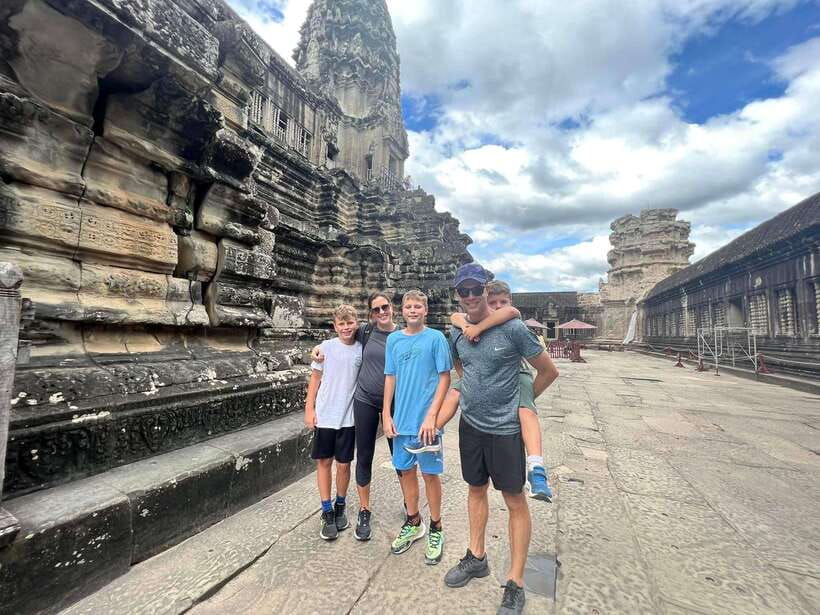
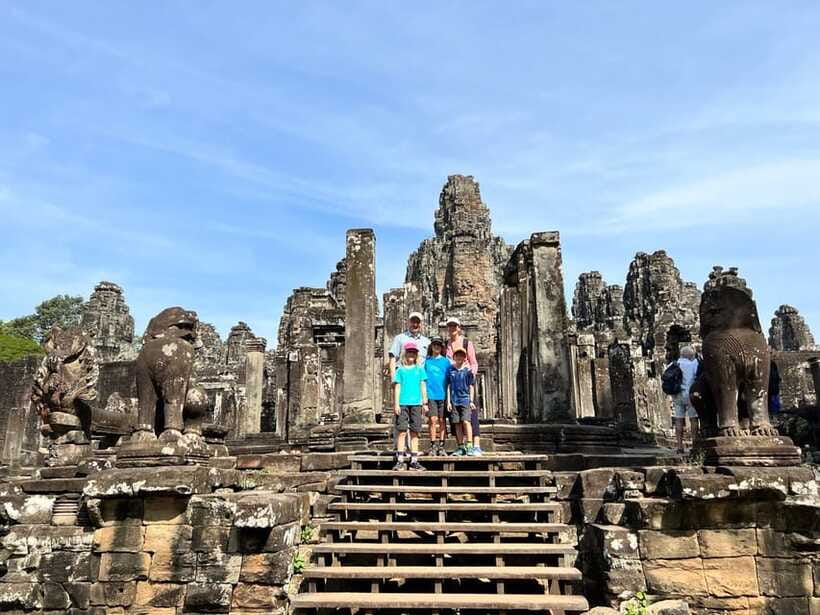
Once you reach Angkor Thom’s south gate, the main attraction becomes the Bayon temple. The signature is right in the description: the magnificent smiling stone heads. Seeing them at the start of the day gives you more breathing space to notice the carving and how the faces appear from different angles.
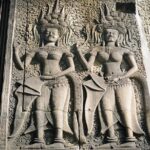
From there, the tour includes key platforms tied to Khmer royal life: the Terrace of the Leper Kings and the Terrace of the Elephants. These aren’t just named stops. They’re the kind of places where one quick explanation makes you see the stone reliefs and layout differently. You’re not guessing what you’re looking at.
One practical note: terraces can mean more steps and uneven surfaces. The tour is bike-based, but temple walking is still temple walking. Wear comfortable shoes and expect some climbing and standing for photos.
Ta Nei Temple at jungle-trail pace: quieter ruins for your morning
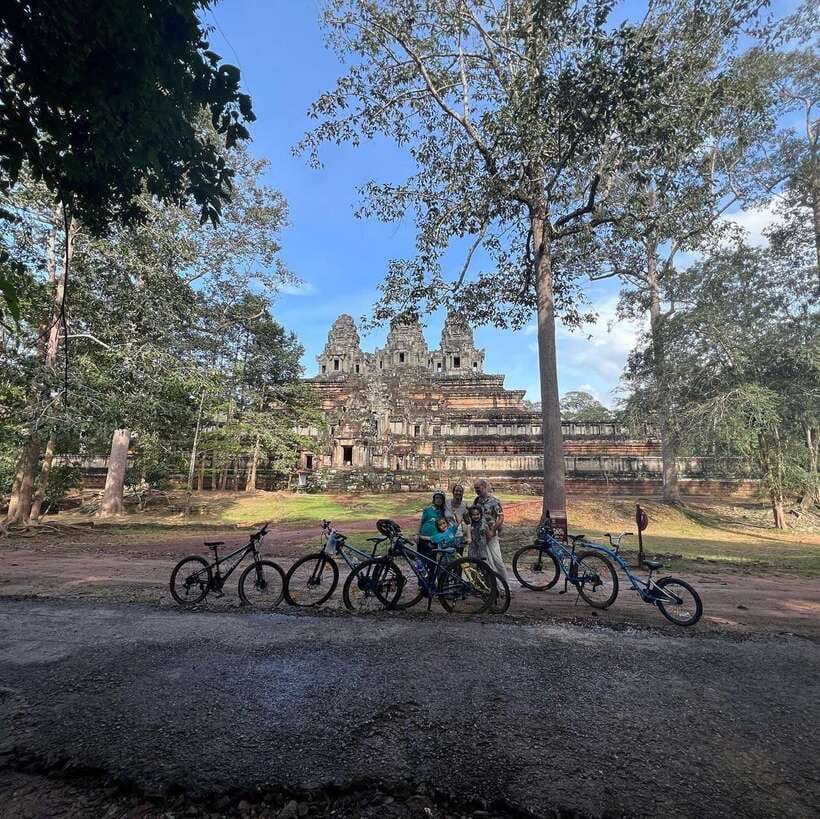
Around 10:00 am, you cycle along a trail toward Ta Nei Temple, described as a ruined temple many tourists miss. Even without adding hype, the point is clear: you’re getting away from the most heavily toured paths.
The best part here is the rhythm. You’re on a bike, so the ride keeps you in motion, but you’re still slowing down enough to take in the setting. The trail runs alongside the kind of greenery that makes Angkor feel less like a museum and more like a living landscape.
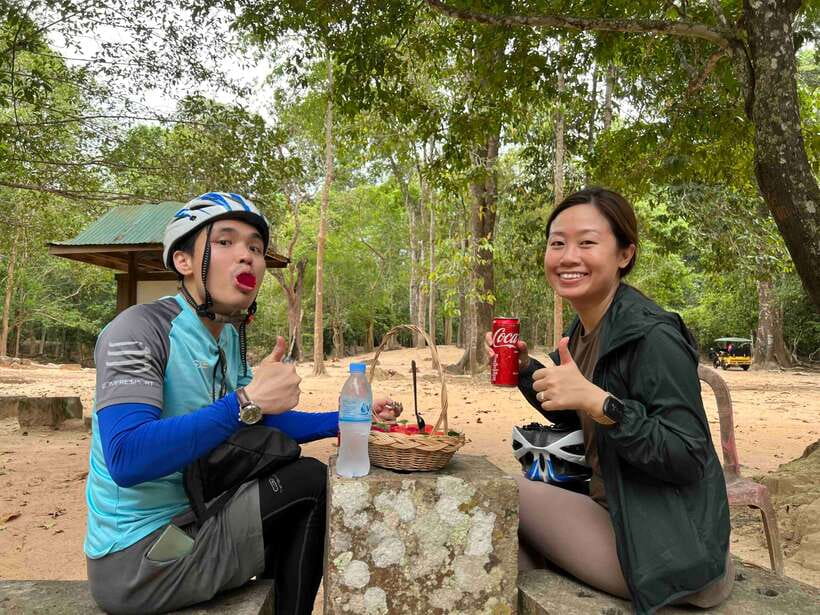
When you reach Ta Nei, the tour builds in a little pause. You get time to relax and enjoy yummy local fresh fruits. That’s a small detail, but it matters. Temple days can turn into a blur of stone and heat, and having a snack stop helps you reset before you head to a louder, more dramatic temple scene next.
Ta Prohm: where trees and ruins grab the same attention
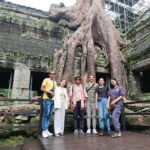
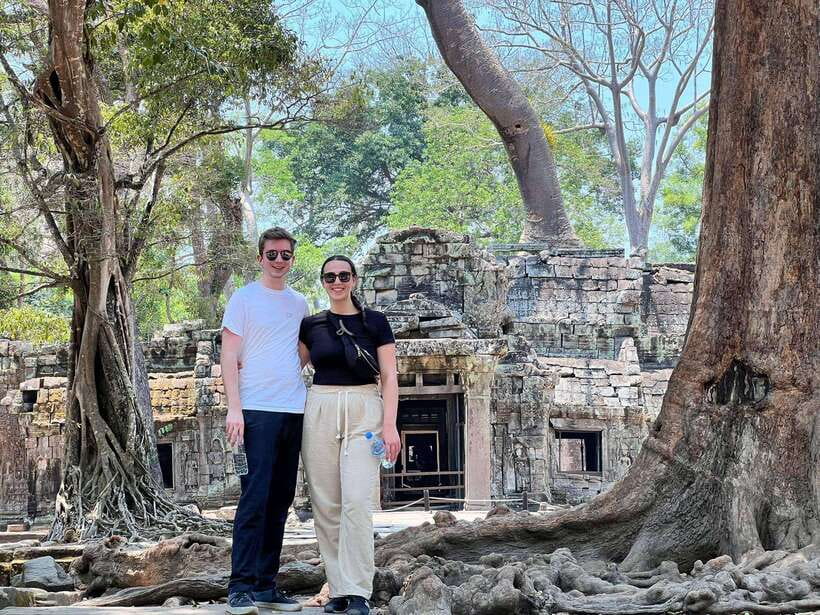
By 11:00 am, you head to the famous jungle temple Ta Prohm. This is the one where trees intertwine their trunks with ancient ruins. The tour description nails the visual: roots and branches wrapping stone like they’ve claimed it back over centuries.
I like Ta Prohm for exactly this reason. It’s not only about symmetry and overall design—it’s about texture. You’ll notice how the architecture feels partially “broken open,” and how the greenery creates natural frames for photos.
The timing helps too. Mid-morning means you’re still early enough to feel like you’re exploring, not just waiting. Still, go in knowing it’s one of the headline temples. Expect more foot traffic than at Ta Nei, and plan to move at your own pace rather than trying to race for the perfect angle.
You can also read our reviews of more tours and experiences in Siem Reap
Lunch near Srah Srang Reservoir: fuel before the ride back
At 12:00, you break for lunch at a local restaurant near Srah Srang Reservoir. I’m glad lunch is scheduled after Ta Prohm, because that’s when you’ll actually want it. You’ve had two temple-heavy blocks and a bike ride connecting them—by noon you’re ready for something real.
What’s included: lunch, plus earlier the tour provides bottle water and Coke, and the morning includes fresh fruit. So you’re not stuck paying for snacks every hour, and you can keep your energy steady rather than crashing hard after the main attractions.
Srah Srang Reservoir is a nice touch because it grounds the day in more than just temple walls. It reminds you that Angkor wasn’t only religious architecture—it also depended on water systems and careful planning, and reservoirs were part of that story.
Bikes, helmets, and how to stay comfortable for 8 hours
The tour includes modern, high-quality mountain bikes (listed as Giant) with large gear sets, disc brakes, and good front suspension, plus helmets. That combination makes a noticeable difference. Disc brakes add confidence, suspension helps on rough patches, and gearing matters when you hit uneven ground or need steady speed.
This is a bike tour, not a casual stroll, but it’s also not an all-out endurance ride. The itinerary spreads cycling between major stops, and there’s support transportation included—meaning a vehicle is there for backup if you need a breather or if conditions demand it.
My practical advice:
- Bring a light layer. Early mornings can feel cooler, and bikes can make you feel the temperature changes.
- Use sunscreen anyway. The sun can still be strong even when you start in the dark.
- Keep your water habits simple: sip regularly rather than waiting until you feel thirsty.
Between the bikes, the helmet, and the included drinks and fruit, the tour looks built for comfort, not punishment.
Price and what $50 includes (and what doesn’t)
The price is $50 per person for an 8-hour tour. That’s the kind of rate that can feel like a bargain or a fair deal depending on what’s included. Here, you’re not just paying for a guide—you’re getting the full package.
Included highlights that drive value:
- Professional English-speaking tour guide
- Mountain bike + helmet
- Water, Coke, and fresh fruits
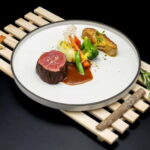
- Lunch
- Support transportation
- Hotel pick-up and drop-off by tuk-tuk or car
The big thing that is not included is the temple pass. The tour notes that you should buy Angkor Ticket Online. Don’t skip this step. Your day runs on the temple schedule, so having your pass ready keeps you from slowing down at the wrong moment.
Also, the group size is capped at a small number. This one runs from 2 to 8, with an upper limit mentioned as 10 participants in the broader description. Either way, you should expect a more personal feel than mass group bus tours.
When I think about value, this hits the sweet spot: sunrise access, bike transport, major temple hits, and meals/snacks—all built into one day cost.
Small-group timing: how the route helps you see more
A small group isn’t just a comfort perk. It also changes what the day feels like. With fewer people, your guide can make quick decisions about where to slow down, where to keep moving, and how to handle the natural crowd buildup that comes with the Angkor big names.
The tour also includes a guide who’s comfortable with pacing. In at least one case, the guide managed to keep the day running smoothly even when the group situation was unusual. The key takeaway for you: your guide isn’t just there to read facts off a sign. They’re paying attention to timing, crowds, and when it makes sense to move on.
This matters most around the big-photo temples like Angkor Wat and Bayon. You’ll want room to look up, walk around, and shoot. If your timing is smart, you spend less time standing and more time actually seeing.
Who should book this Angkor Wat sunrise bike tour?
This is a strong fit if:
- You want Angkor Wat sunrise plus the main temple sequence in one day
- You’d rather ride between sights than sit in transport all morning
- You like a guide who explains the scenes, not just points them out
- You want included meals/snacks without managing a grocery list during the day
You might want a different tour if:
- You hate very early starts (pick-up around 4:30–5:00 am)
- You don’t feel comfortable with several hours of bike time plus temple walking
- You still need to plan your temple pass and don’t want to deal with it ahead of time
It’s also great for people visiting Siem Reap with a limited window and a desire to pack in real highlights without turning the day into a sprint.
Should you book this sunrise bike tour with lunch included?
I’d book it if you’re chasing a mix of atmosphere and efficiency: sunrise at Angkor Wat, then Bayon, then the quieter-feeling Ta Nei, followed by Ta Prohm, and a proper lunch near Srah Srang Reservoir. For $50, the value is strongest when you factor in the bike, guide, meals, and support transportation.
Do it if you’re ready for an early wake-up and you’ll handle the temple pass in advance. Skip it if you want a late start or you’re not interested in cycling between major sights.
If that sounds like you, this is one of the better ways to experience Angkor without relying only on cars and waiting.
FAQ
What time does the tour pick me up?
The tour says pick-up is at about 4:30 am (and it also mentions 5:00 am) from your hotel lobby.
How long is the tour?
The tour duration is 8 hours.
How much does it cost?
The price is $50 per person.
Is Angkor temple access included?
No. Temple pass is not included, and the tour notes you should buy Angkor Ticket Online.
What’s included in the price?
Included items are a professional English-speaking guide, modern mountain bikes, helmet, bottle water, Coke, fresh fruits, lunch, and support transportation, plus hotel pick-up and drop-off by tuk-tuk or car.
What temples will we visit?
You’ll see Angkor Wat at sunrise, Bayon, Ta Nei, Ta Prohm, and you’ll also visit areas connected to Angkor Thom such as the south gate and terraces.
How big is the group?
The tour runs as a small group, from a minimum of 2 to a maximum of 8 (with a note that it is limited to 10 participants).
Do I need to bring a bike or helmet?
No. Helmets and modern mountain bikes are included.
Is lunch included?
Yes. Lunch is included, and it’s scheduled around 12:00 near Srah Srang Reservoir.