REVIEW · SIEM REAP
1-Day private Angkor Temple Tour by Tuk Tuk from Siem Reap
Book on Viator →Operated by Journey2 Angkor · Bookable on Viator
Angkor’s best hits, without the usual headaches. This private tuk tuk day makes Angkor Temples feel manageable, with an English-speaking guide and a route that hits the big icons plus the jungle atmosphere of Ta Prohm, so you can keep moving and still hear the stories. I especially like the way you start at Angkor Wat from the less-crowded eastern side, and then get to breathe Bayon’s face-towers and Ta Prohm’s trees-out-of-stone mood. One thing to watch: the Angkor Wat entrance ticket isn’t included, so you’ll need to buy it (the guide sends a link) ahead of time.
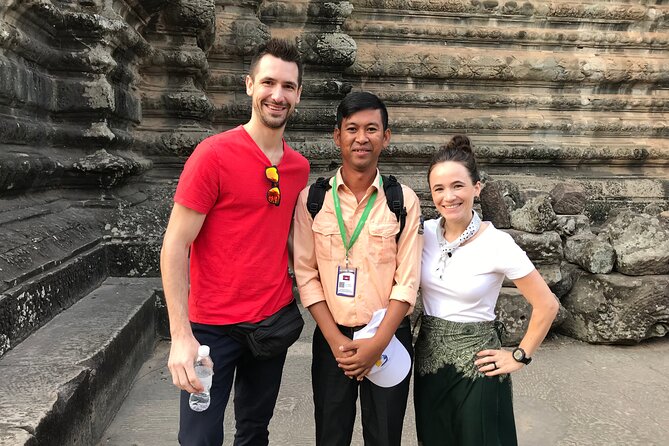
You’re looking at about 8 hours, hotel pickup and drop-off, and a vehicle that’s built for hopping between temples instead of being stuck in one place. The feedback I’m seeing also praises the guide (with Sim named directly) and the comfort touches like cold towels and bottled water, which matter more than you think when you’re walking all day in Cambodia’s heat.
This is best for you if you want a private day, clear explanations, and fewer crowd-stress moments. If you hate walking or you’re trying to do Angkor while keeping things ultra-frugal, plan for the extra entry cost and take the dress code seriously.
In This Review
- Key things to know before you go
- Why a Siem Reap Tuk Tuk Makes Angkor Feel More Human
- Price and logistics you actually need: the Angkor Wat ticket part
- Entering Angkor Wat from the east: where the day sets its tone
- South Gate of Angkor Thom: stone figures and big-city scale
- Bayon Temple with its 200+ faces: seeing the same place differently
- Baphuon and Phimeanakas: royal-palace spaces beyond the famous towers
- Baphuon
- Phimeanakas
- Terrace of Elephants and Terrace of the Leper King: ceremonies and names with stories
- Terrace of the Elephants
- Terrace of the Leper King
- Angkor Thom quiet corners: a short secret stop that changes the mood
- Ta Prohm: the jungle temple you came for
- Lunch near the temples: refuel without losing the rhythm
- Value check: is $30 worth it for a full Angkor day?
- Who this private Angkor tour is best for
- Should you book this private 1-day Angkor tuk tuk tour?
- FAQ
- How long is the 1-day private Angkor Temple Tour by tuk tuk?
- Is the tour private or shared?
- What is included in the tour price?
- Is the Angkor Wat entrance fee included?
- How do I buy the Angkor Wat e-ticket?
- What should I wear for the temples?
- Can I cancel for a full refund?
Key things to know before you go
- Private pacing in a tuk tuk: you stay with your group only, so you can move at a human speed.
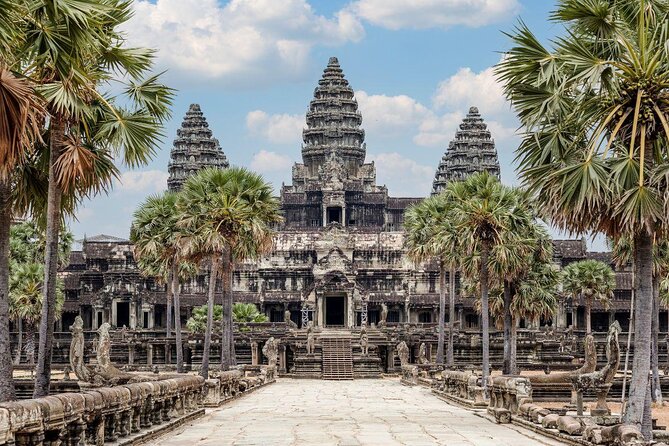
- Angkor Wat from a smarter approach: you enter from the eastern side and follow a jungle path to key viewing points.
- Bayon’s face towers up close: expect time for the 200+ enormous faces and the story carvings around them.
- Royal-palace temples in the mix: you’ll pass through areas tied to the Khmer royal enclosures, not just the headline ruins.
- Ta Prohm’s real jungle feel: the trees-and-stone look is the main event here, and you get a full hour.
- Comfort basics included: bottled water, plus comfort touches mentioned in feedback like cold towels.
Why a Siem Reap Tuk Tuk Makes Angkor Feel More Human
Angkor is enormous. The ruins are spread out, the days are long, and the crowds can feel like a moving wall. That’s exactly where a tuk tuk private tour helps. You get a vehicle that’s easy to maneuver between temple clusters, and you’re not waiting around for other people to agree on a pace.
I like that the tour is built around comfort and flexibility. You’re not stuck in a rigid loop; it’s described as flexible to your needs. In plain terms, that means when something catches your eye, you’re more likely to get the time to look instead of being rushed off with the crowd.
Also, the setup matters. The tour includes bottled water, and the kind of tuk tuk service described in the best feedback includes cold towels and a very clean vehicle. After hours of walking, that stuff becomes more than a nice-to-have. It can be the difference between cranky and calm.
You can also read our reviews of more private tours in Siem Reap

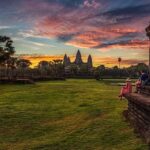
Price and logistics you actually need: the Angkor Wat ticket part
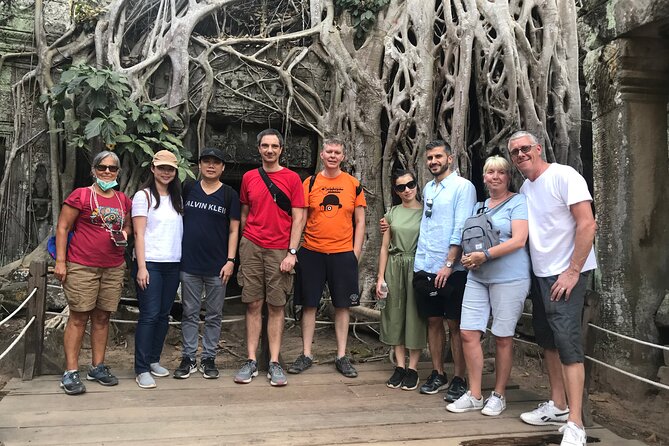
The price is $30 per person, but one line matters a lot for your budget: Angkor Wat entrance fees are not included. Your guide will send you a link to buy the Angkor Wat e-ticket days in advance. Many other temples listed on this route don’t require the same paid entry step, since they’re marked as admission free.
Practical takeaway: budget the Angkor Wat ticket cost on top of the tour price, and don’t wait until the last minute to buy it. The tour info also notes that you can get an e-ticket through a link ahead of time, which is the easiest way to avoid headaches on the day.
Dress code is another thing you should handle early. Some temples require clothing that covers knees and shoulders. Casual clothes are fine as long as they meet that standard. Bring flat shoes you can walk in comfortably. Angkor ruins can be uneven, and flip-flops are a great way to feel every step in your feet.
Entering Angkor Wat from the east: where the day sets its tone
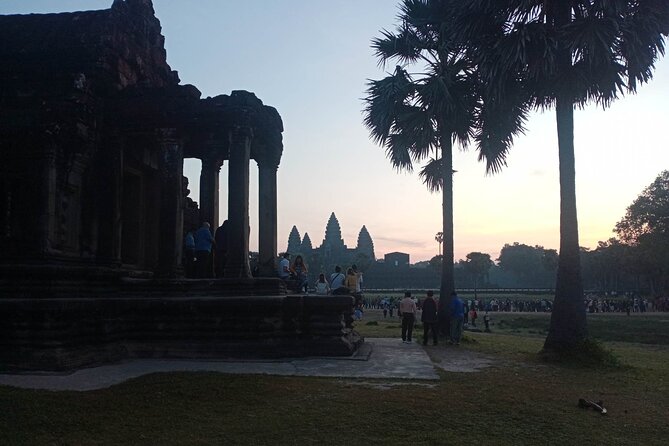
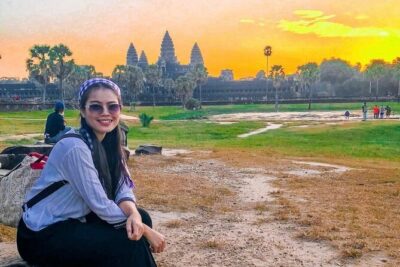
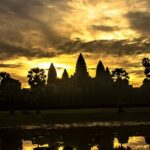
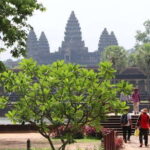
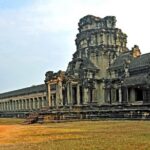
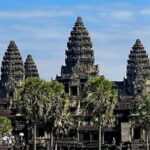
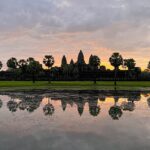
Angkor Wat is the world’s largest religious complex, and this tour gives you a strong first move. Instead of taking the main approach you’ll often see, you enter from the less-visited eastern side. That change sounds small, but it shapes the whole experience. The first impressions land differently when you’re not doing the most crowded route.
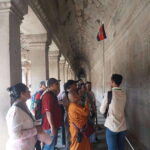
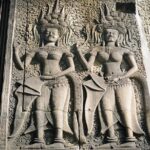
You then follow on foot, including a jungle path that leads to the North ancient library pool. From there, you spend time in the temple’s central chambers. This is where your expert guide’s explanations become the key value. You’re not just looking at stones. You’re learning how myths and stories are shown in bas-reliefs—the stone carvings, including the note that this is the longest stretch of bas-relief carvings in the world.
A good way to experience Angkor Wat is to slow down for details. Find one bas-relief panel and read the story thread the guide is describing. Then move on. When you do it in chunks, the carvings stop being background noise and start making sense.
Possible drawback: Angkor Wat is one of the main sites for a reason. Even with a smarter entry and guided context, expect it to be busy at times. If you’re sensitive to crowds, lean into the parts where you can step aside—courtyards and chamber entrances are where you can control your pace.
South Gate of Angkor Thom: stone figures and big-city scale
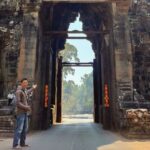
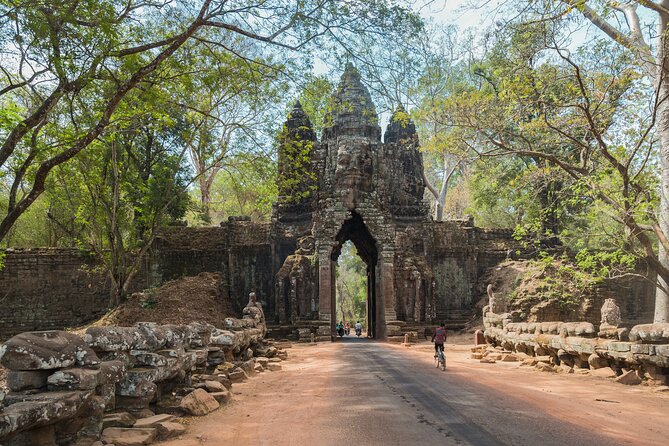
After Angkor Wat’s broad religious monument feeling, the day shifts into the ancient capital mood of Angkor Thom. The South Gate is one of the city’s gates, and it’s flanked by 54 stone figures on each side. The scale of those guardians is hard to capture in photos. Up close, they make the city feel fortified, not just scenic.
This stop is also described as a quick one—about 20 minutes—and that’s smart. South Gate is popular, and you’ll get more value by using the short stop to take in the main structure, the flanking statues, and then move on before your patience wears thin.
What I like here: the guide frames it with context. Angkor Thom at its height is described as having a population of more than one million, and the city being larger than London. Whether you take every number literally or as historical emphasis, it’s useful because it tells you what to picture while you’re looking at stones and walls.
Bayon Temple with its 200+ faces: seeing the same place differently
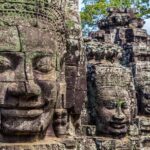
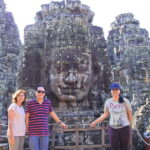
Bayon is a Khmer temple at Angkor, built in the 13th century as the state temple of King Jayavarman VII. The headline feature is instantly recognizable: the multitude of serene and smiling stone faces across the towers. You’ll see more than 200 enormous faces, clustered around the central peak.
You’ll spend about 50 minutes here, which is plenty of time to do more than one thing. Yes, take the classic photos, but also use the time to walk slowly around the faces and notice how your angle changes the mood. The faces look calm, but the expressions can feel different as you change your position.
Bayon also has two sets of bas-reliefs, with scenes that mix mythological, historical, and everyday life. This is a good temple for first-timers because the guide can connect what you see to stories you can actually remember later. The bas-relief details add texture to the faces instead of replacing them.
Tip: if you want photos without constant stop-start interruptions, hang back for a minute and let the main flow pass. Then step in when there’s a gap. A private tour helps here, because your guide isn’t forced to follow a fixed group schedule.
You can also read our reviews of more tours and experiences in Siem Reap
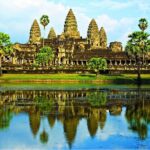
Baphuon and Phimeanakas: royal-palace spaces beyond the famous towers
A big value of this tour is that it doesn’t only center on the most iconic views. You also get time at temple-mountains and palace-enclosure elements tied to royal Khmer life.
Baphuon
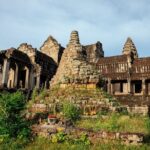
Baphuon sits in Angkor Thom, northwest of Bayon. It’s described as a three-tiered temple mountain built in the mid-11th century as a state temple. It adjoins the southern enclosure of the Royal Palace area, which is one reason this stop works well between Bayon’s face towers and the more open terraces afterward.
The scale details are helpful when you’re standing there. It’s roughly 120 meters east-west and 100 meters north-south at the base, and described as 34 meters tall without its tower (which would have made it roughly 50 meters once complete). Numbers like that make the ruin feel less like a pile of stones and more like an engineered statement.
Phimeanakas
Then you move into Phimeanakas (also spelled Vimeanakas) inside the walled enclosure of the Royal Palace of Angkor Thom. This is called the celestial temple. It was built at the end of the 10th century during the reign of Rajendravarman and completed later by Suryavarman I.
You’ll learn how it’s shaped: a Hindu temple in the form of three-tier pyramids, with a tower at the top and galleries around the top platform edges. If Bayon feels emotional because of its faces, Phimeanakas feels more geometric and architectural. It’s a nice mental shift, and it helps you understand that Angkor wasn’t one style. It was a whole system.
Terrace of Elephants and Terrace of the Leper King: ceremonies and names with stories
This part of the day gives you a break from tower faces and takes you to long, powerful viewing structures.
Terrace of the Elephants
The Terrace of Elephants stretches about 350 meters and was used as a giant reviewing stand for public ceremonies, serving as a base for the king’s grand audience. Your guide also connects the temple to local Khmer naming, where some call it the Ancient Khmer Stadium.
What to do with this: use the length. When you stand at one end and look along the terrace, it helps you understand how important these public spaces were. They weren’t just decorative. They were built for crowds and moments that mattered.
Terrace of the Leper King
Next is the Terrace of the Leper King, an U-shaped structure thought by some to be used as a royal cremation site. It was built in the 13th century under King Jayavarman VII. The name comes from a 15th-century sculpture discovered there, depicting the Hindu god Yama, the god of death.
This is a great example of why the guide’s explanations matter. Names can mislead. The stone structure is what you should focus on, and the story the guide provides gives you a framework to interpret what you’re seeing.
Angkor Thom quiet corners: a short secret stop that changes the mood
Angkor Thom is crowded by reputation, but you won’t spend the whole day pinned to the same flow. The tour includes a place described as a short stop that most tourists have never seen, plus another brief secret-toned moment within Angkor Thom.
Even without specific details, the value is clear: your guide is giving you permission to step away from the heaviest traffic areas for a short time. Those few minutes can do a lot. They lower the sensory overload and let you see the city differently.
If you like photos, this is also where you might get cleaner shots or calmer views—because you’re not always photographing over shoulder-to-shoulder crowds.
Ta Prohm: the jungle temple you came for
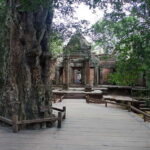
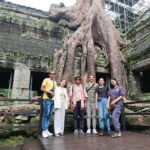
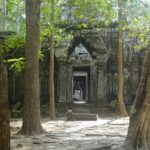
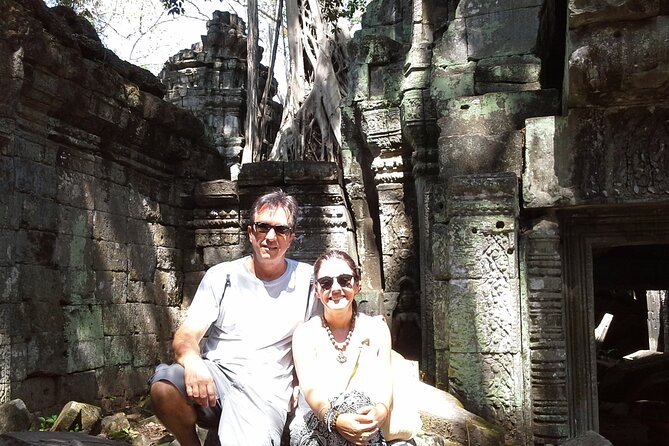
Then you hit Ta Prohm, the jungle-enveloped temple often associated with the Tomb Raider look. The key detail is that Ta Prohm is described as one of the most atmospheric temples in Angkor, built in the 13th century.
Unlike many other temples, Ta Prohm is described as being in much the same condition as when it was found. That means the iconic scene—trees growing out of the ruins and the jungle surroundings—has the raw, lived-in feel that people travel for. UNESCO listed it as a World Heritage Site in 1992.
You get about 1 hour here. That’s important. Ta Prohm isn’t a place you can skim. It takes time to notice the way the roots and branches frame doorways and how the light hits different surfaces.
Practical advice: wear shoes with good grip and watch your step around roots and uneven stones. If you rush, you miss the structure and just end up photographing plants. If you slow down, the ruins show their logic: thresholds, corridors, and the way the jungle became part of the architecture.
Lunch near the temples: refuel without losing the rhythm
This day includes lunch with cold drinks in a local restaurant associated with a 12th-century temple complex. Even if you’re not a picky eater, you’ll appreciate this stop because it lets you recover before the next walking segment.
The bigger benefit is timing. An 8-hour temple day isn’t just about monuments. It’s about keeping your energy stable. When you’re hydrated and fed, you’re far more likely to enjoy the stories your guide is sharing instead of just counting minutes to the next break.
Value check: is $30 worth it for a full Angkor day?
On paper, $30 per person feels like a deal. Here’s what pushes it toward good value.
You get:
- Hotel pickup and drop-off
- An English-speaking guide
- A private vehicle in a tuk tuk
- Bottled water
- A full-day route that includes Angkor Wat, Angkor Thom’s main gate and towers, palace-enclosure temples, terraces, and Ta Prohm
The main cost caveat is the Angkor Wat entrance ticket, which isn’t included. Since other temples are marked free in the tour details, your paid add-on may be limited to that one ticket.
Also, group discounts are noted, and the tour is private, meaning you’re paying for control over pacing and time. If you’ve ever done Angkor with a mixed group, you know how that can make or break your day. This tour is designed for you to stay with your own schedule and avoid some of the worst crowd friction.
Who this private Angkor tour is best for
This makes the most sense for you if:
- You want a private day without having to plan transport and temple sequencing yourself.
- It’s your first Angkor visit and you want a route that covers the big names with explanation, not just snapshots.
- You prefer a bit less crowd pressure and more guidance between sites.
- You like comfort extras such as cold towels and bottled water on a long walking day.
It might be less ideal if you’re strictly time-limited, hate walking for hours, or want only the most famous one or two temples. This route is packed, and that’s intentional.
Should you book this private 1-day Angkor tuk tuk tour?
If you’re balancing budget with a high-quality Angkor experience, I’d lean toward booking. The combination of private tuk tuk mobility, an English-speaking guide, and a temple sequence that covers Angkor Wat through Ta Prohm gives you a strong day without needing extra decision-making.
Book it with two conditions in mind: plan for the Angkor Wat e-ticket purchase ahead of time, and dress for temple rules (knees and shoulders covered) with comfortable flat shoes. If you can do that, you’ll get an organized, flexible day that actually helps you understand what you’re seeing.
FAQ
How long is the 1-day private Angkor Temple Tour by tuk tuk?
The tour lasts about 8 hours.
Is the tour private or shared?
It’s private. Only your group participates.
What is included in the tour price?
Included features are an English-speaking tour guide, a private vehicle in a tuk tuk, hotel pickup and drop-off, and bottled water.
Is the Angkor Wat entrance fee included?
No. The entrance fee for Angkor Wat is not included, and you’ll need to purchase the Angkor Wat e-ticket.
How do I buy the Angkor Wat e-ticket?
Your tour guide will send you a link to purchase the temple entrance e-ticket days in advance.
What should I wear for the temples?
Some temples require clothing that covers knees and shoulders. Flat shoes are recommended for comfortable walking.
Can I cancel for a full refund?
Yes, free cancellation is allowed. You can cancel up to 24 hours in advance for a full refund. If you cancel less than 24 hours before the start time, the amount paid is not refunded.