REVIEW · SIEM REAP
Siem Reap: 2-Day Private Angkor Wat & Angkor Temples Tour
Book on GetYourGuide →Operated by Vamos Camboja Turismo · Bookable on GetYourGuide
Angkor is too big to see well without a plan. This private 2-day tour keeps you moving smart, with a guide who explains what you’re actually looking at, not just where to stand.
I especially like the private format (just your group) plus the real-world comfort touches like cold water, a towel, and pickup at your hotel. A second thing I like is the guided temple storytelling: you’ll cover major stops on both the Small and Grand circuits and get context for the architecture and symbols as you go.
The main catch is that the Angkor Archaeological Park entrance ticket isn’t included (USD 62 per person), so you’ll want to budget that on top of the tour price.
In This Review
- Quick hits before you go
- Hotel Pickup and the Temple Pass Reality Check
- Day 1: Small Circuit From South Gate to Ta Prohm and Angkor Wat
- South Gate of Angkor Thom and the stone faces
- Bayon Temple and the Terrace stops
- Ta Prohm: roots, walls, and the movie-scene feeling
- Lunch (not included), then Angkor Wat in the afternoon
- Day 2: Grand Circuit and Banteay Srei’s Pink Sandstone Craft
- Preah Khan: corridors, carvings, and monastery energy
- Neak Pean: a small temple wrapped in pools
- Ta Som: the tree-covered gate
- East Mebon and the idea of islands and reservoirs
- Pre Rup: mountain-style temple and big views
- Lunch (not included), then Banteay Srei
- Sunrise Option at 05:00 AM: When Timing Becomes the Point
- Transport Comfort That Actually Helps in Angkor
- Professional Guide Quality: The Difference Between Seeing and Understanding
- Dress Code and What to Pack for Real Temple Walking
- What you must avoid
- What to wear instead
- What to bring
- Price and Value: Is $245 Worth It?
- Who Should Choose This 2-Day Private Tour?
- Should You Book This 2-Day Private Angkor Tour?
- FAQ
- How early do you get picked up on Day 1?
- Is the Angkor Archaeological Park entrance ticket included?
- What is included in the tour price besides the guide?
- What languages are available for the guide?
- Is lunch included on both days?
- What transport will we use?
- Can children join for free?
- What should I wear to enter the temples?
- Does the tour have a sunrise option?
- Is there free cancellation?
Quick hits before you go
- Private guide in your language (English, Spanish, Portuguese, Italian, French, German, or Japanese)
- Skip-the-ticket-line strategy, but you still need to pay for the Angkor pass separately
- Two classic temple circuits, paced for heat, with a relaxed lunch stop near the sites
- Day 2 sunrise option that starts at 05:00 AM and shortens the day
- Transport tailored to group size, from tuk-tuk (1–2 people) to AC van/bus (3+)
Hotel Pickup and the Temple Pass Reality Check
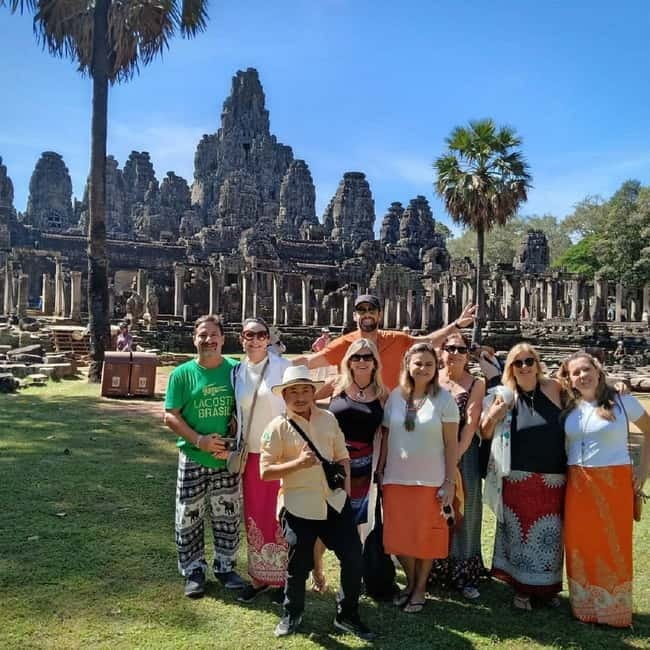
This tour starts with a straightforward hotel pickup. Your guide collects you from the hotel lobby at 08:30 AM and then you head toward the ticket booth. If you want less hassle, you can buy your pass online in advance—just remember the ticket itself is not part of the tour price.
Why this matters: Angkor runs on limited-time entry windows, crowd flow, and heat. Having a guide who handles the order of operations saves you from wasting early morning energy. Also, you’ll avoid the classic mistake of spending half your first day stuck in line or panicking about whether you have the right pass.
One more practical note: the entrance ticket covers the Angkor complex (the tour notes USD 62 per person for 2–3 days). Children under 12 can join without needing to buy the ticket, but you must show a passport for proof.
You can also read our reviews of more private tours in Siem Reap

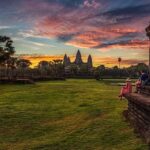
Day 1: Small Circuit From South Gate to Ta Prohm and Angkor Wat
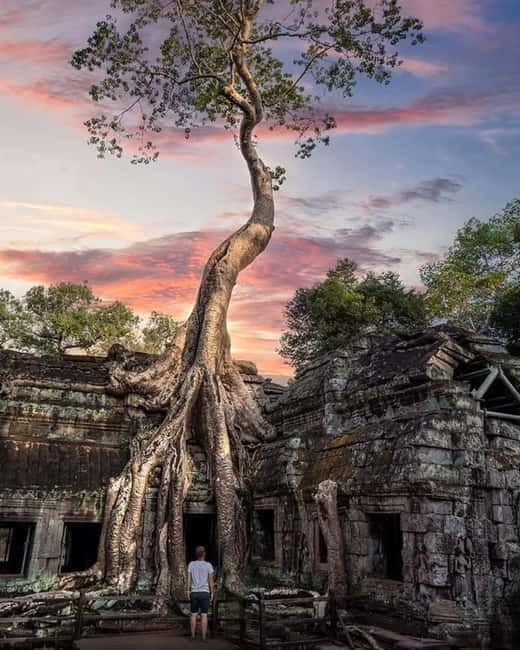
Day 1 is all about the most famous core sights, arranged so you get the big wow moments without backtracking too much.
South Gate of Angkor Thom and the stone faces
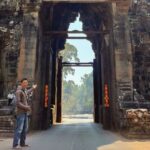
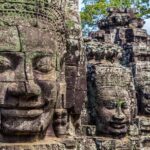
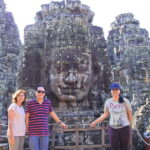
You begin at the South Gate of Angkor Thom, then walk into the ancient city under giant stone faces. Even if you’ve seen photos, seeing them up close changes the scale. This is also a helpful warm-up: your guide can use these gate carvings to explain how Angkor was planned and how later temples relate to the original city layout.
Practical tip: Start with your camera ready, but keep your feet comfortable first. Stone surfaces can be slippery, and you’ll be walking on uneven ground.
Bayon Temple and the Terrace stops
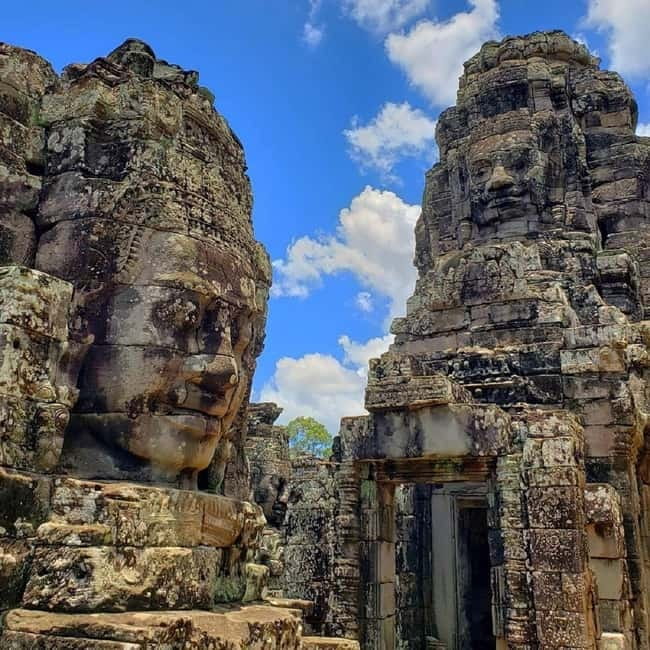
Next comes Bayon Temple, known for its towers covered in serene faces. From here, the tour walks the Terrace of the Elephants and the Terrace of the Leper King.
These terraces aren’t just scenery. They’re where you understand Angkor as a lived-in place—ritual, power, ceremony, and daily life rhythms all show up in the carvings. The terraces are also a good “explanation zone”: after your eyes get overwhelmed by the scale, your guide can slow things down and translate what the carvings mean.
One small consideration: terraces can feel crowded and hot because they’re more exposed. If you’re sensitive to sun, wear a hat and plan to take short shade breaks.
Ta Prohm: roots, walls, and the movie-scene feeling
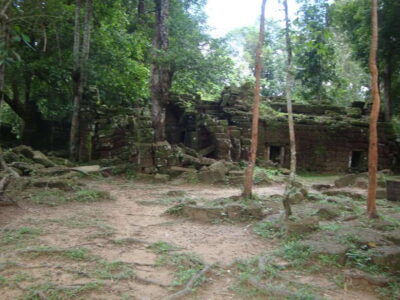
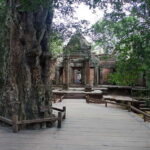
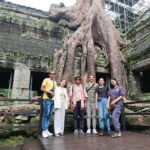
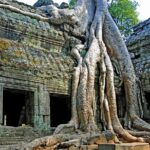
Then you reach Ta Prohm, the temple where giant tree roots thread through stone. This is often the visual highlight for first-time visitors, but the better part is the context: a good guide will connect the temple’s story to what happened to Angkor over time and why ruins like this look the way they do today.
You’ll feel it: the mix of carved stone and living roots creates a strange calm. It’s also where you’ll likely want more photos than you think, so keep your camera settings simple and expect to move slowly.
You can also read our reviews of more tours and experiences in Siem Reap


Lunch (not included), then Angkor Wat in the afternoon
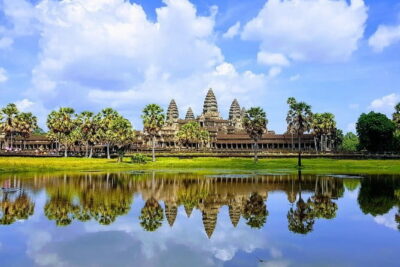
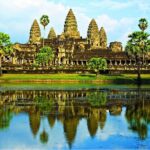
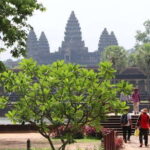
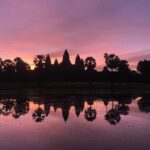
Lunch is not included, but you’ll stop at a nearby restaurant and have a Cambodian meal. After that, the afternoon focuses on Angkor Wat, the world’s largest religious monument.
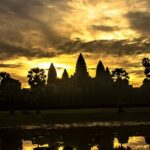
This is your Day 1 “finish big” moment. You’ll explore Angkor Wat with your guide’s help—history, symbolism, and what the layout communicates. It’s the kind of site where the explanations make a huge difference. Without context, it can turn into a long walk of beautiful buildings. With context, you start noticing patterns: alignments, levels, and the way the art directs your attention.
The day typically ends around 05:00 PM, and you’ll return to your hotel.
Day 2: Grand Circuit and Banteay Srei’s Pink Sandstone Craft
Day 2 is where you get more variety: atmospheric temple complexes, calm water settings, and then the famous delicate carvings of Banteay Srei.
Preah Khan: corridors, carvings, and monastery energy
You start with Preah Khan, a vast monastic complex with atmospheric corridors and lots of carvings. This temple can be less “instantly famous” than Angkor Wat, but it’s often where the guide’s skill shines. Your job is to follow the story through space—how the corridors pull you along and how the carvings reward close looking.
Because it’s larger and more spread out, you’ll want those comfortable shoes again. The ground can be uneven, and you don’t want shin pain to wreck your photos.
Neak Pean: a small temple wrapped in pools
Next is Neak Pean, a smaller temple surrounded by tranquil pools. This stop is a nice change of pace after corridors. It also gives your eyes a breather: instead of constant stone detail, you get reflections and a calmer rhythm.
Ta Som: the tree-covered gate
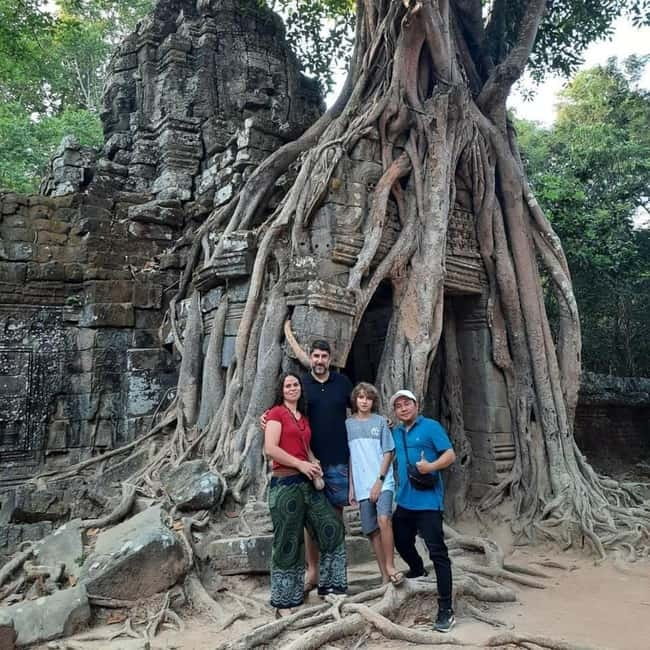
Then comes Ta Som, known for its iconic tree-covered gate. You’ll feel the same Angkor “stone meets nature” theme as Ta Prohm, but here it’s more about framing—your guide helps you see the gate as an intentional visual moment, not just a random root cluster.
East Mebon and the idea of islands and reservoirs
You visit East Mebon, once standing on an island in an ancient reservoir. This is a good example of why Angkor doesn’t make full sense just from present-day ruins. With an explanation of its former setting, the temple looks different—even the emptiness around it turns informative.
Pre Rup: mountain-style temple and big views
After that, you reach Pre Rup, a mountain-style temple with sweeping views of the Cambodian countryside. This is one of those “stand, breathe, look” spots. The climb is part of the experience, but you’ll want to pace yourself because it can be warm and exposed.
Lunch (not included), then Banteay Srei
Lunch is again not included, but you’ll eat Cambodian food at a nearby restaurant. Then the tour concludes at Banteay Srei, the Citadel of Women.
This is the artistry stop. Banteay Srei is admired for intricate pink sandstone carvings, often considered some of the finest work in the Angkor region. The key is to slow down and focus on detail—patterns, faces, and ornamental stonework.
The standard Day 2 schedule finishes around 04:00 PM, then you’re back to your hotel.
Sunrise Option at 05:00 AM: When Timing Becomes the Point
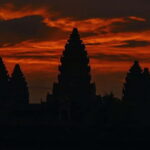
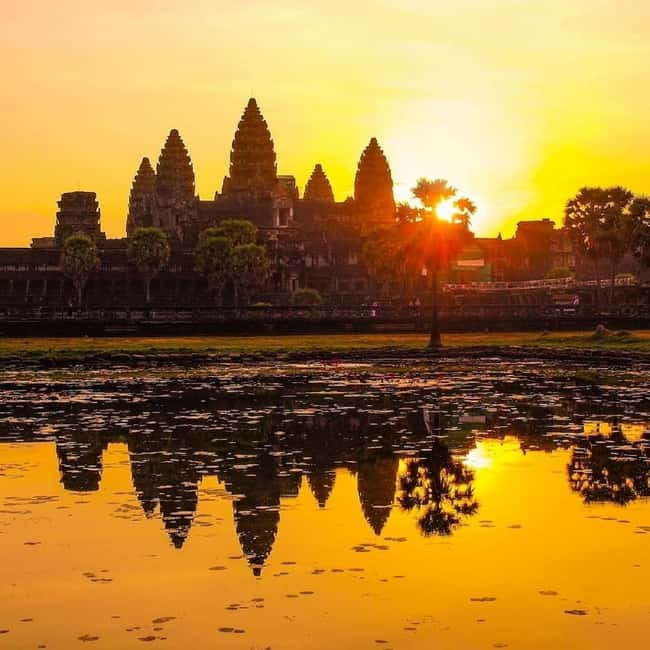
If you select the sunrise option at checkout, Day 2 starts at 05:00 AM and finishes around 12:00 PM.
Why choose it: early starts are the best antidote to crowd energy and midday heat. Sunrise also changes the way stone looks. Shadows deepen, and textures pop.
What to know: the sunrise option shortens the day to about noon, so the day feels more “compressed” than the full afternoon route. If Banteay Srei is a must for you, double-check how the shortened schedule is handled for your selected option so your expectations match the exact sequence.
Transport Comfort That Actually Helps in Angkor
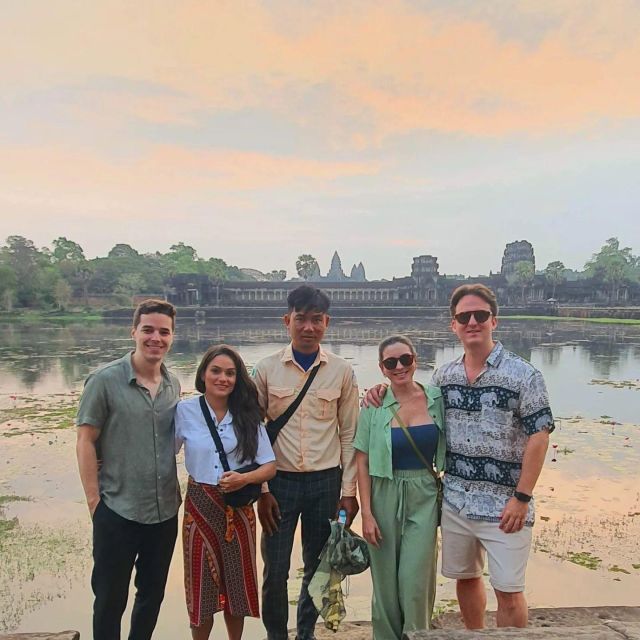
Transport is part of your comfort plan here, not just a way to get from A to B.
- For 1–2 people, it’s tuk-tuk on Day 1 and a private car on Day 2.
- For groups of 3 or more, you’ll use an air-conditioned van or bus for both days.
That air-conditioned part matters on Day 2. You’re outside for hours, then you return to a cooler ride before the next temple. The tour also provides cold water and a towel, which is exactly the kind of small support that makes the difference between a fun day and a miserable one.
Also, the tour is private, so you’re not negotiating with a mixed group’s pace. That matters at Angkor, where some people move fast and others want to linger at carvings.
Professional Guide Quality: The Difference Between Seeing and Understanding
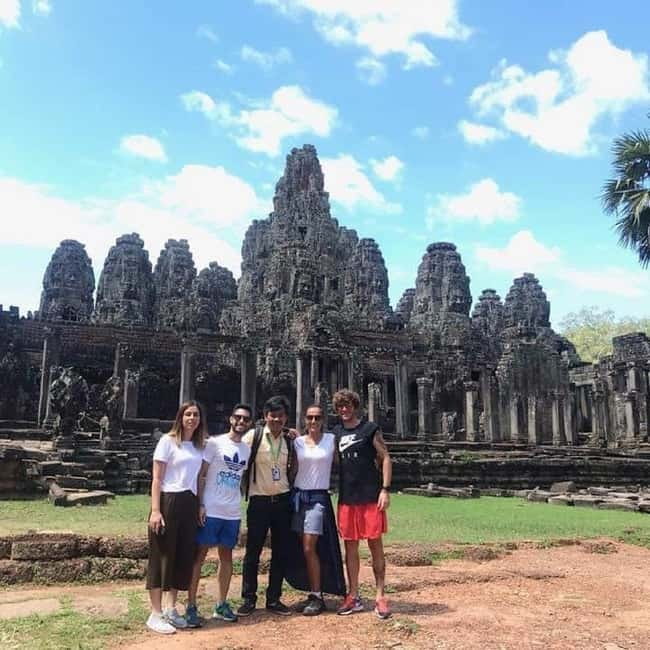
This is where the tour earns its high rating. The format isn’t just “drive and drop.” It’s explanation-led, with a professional, friendly guide in your language.
Multiple guides have been praised for being on time and giving strong explanations of Angkor’s architecture and temple meaning. Names that have come up include Vincent Bross, Rat, Raf, and Sovuth, with people specifically noting clear storytelling and helpful interactions (including photo support). Even if you don’t get one of these names, the standard goal is the same: you should leave with more than a memory of temples—you should understand what you saw.
A small but meaningful point: the tour focuses on both the big icons and the supporting terraces and circuit temples. That combo is what helps Angkor “click” as a system instead of separate monuments.
Dress Code and What to Pack for Real Temple Walking
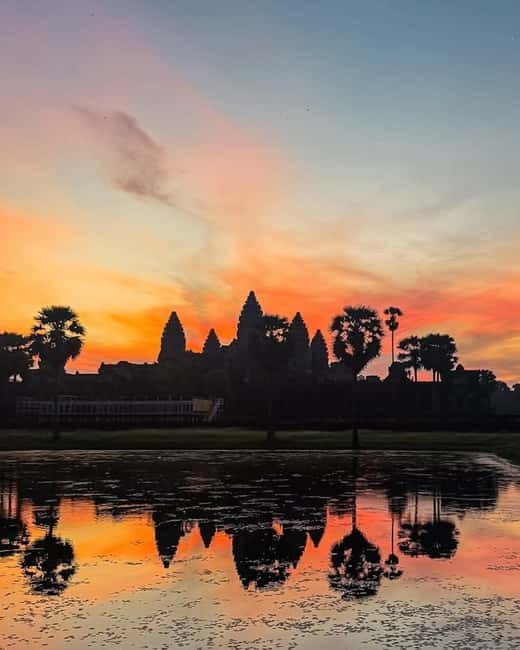
Angkor temples are strict about clothing, and the tour gives you clear rules.
What you must avoid
- Shorts
- Short skirts
- Sleeveless shirts
- Alcohol and drugs
What to wear instead
You can use a scarf to cover your knees and shoulders for most temples. But the rules are stricter everywhere else: except for Angkor Wat, you must wear pants or a skirt that covers the knees, plus shirts that cover the shoulders.
This is not a place to “wing it” with a light outfit. If you show up dressed too casually, you may have to scramble for coverage at the last second, and that eats time when you want to be in temples.
What to bring
Bring comfortable shoes, sunglasses, a hat, camera, insect repellent, and cash. Comfortable clothes also help because you’ll be moving in warm, humid conditions.
Price and Value: Is $245 Worth It?
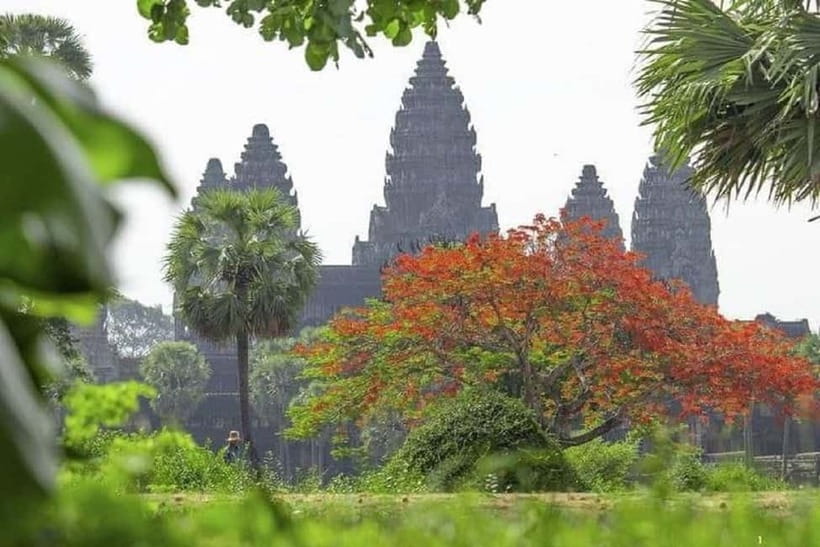
The price is USD $245 per group up to 2 for the two days.
Here’s how I’d think about value:
- You’re paying for a private guide across two full days, plus hotel pickup and drop-off.
- You’re getting transport that adapts by group size (tuk-tuk/private car/AC vehicle).
- You get practical add-ons—cold water and towels—that you’d otherwise spend time and money managing yourself.
Then subtract the big variable: the entrance ticket (about USD 62 per person for a 2–3 day pass) isn’t included. So your real budget includes that pass and whatever you spend on lunch.
Still, $245 for a private 2-day guided route is often a good deal compared to piecing together tickets, guides, and transport on your own—especially if you want the two-circuit plan without stress. If you’re traveling as two people who like a structured day and hate logistical hassle, this pricing can make sense fast.
Who Should Choose This 2-Day Private Tour?
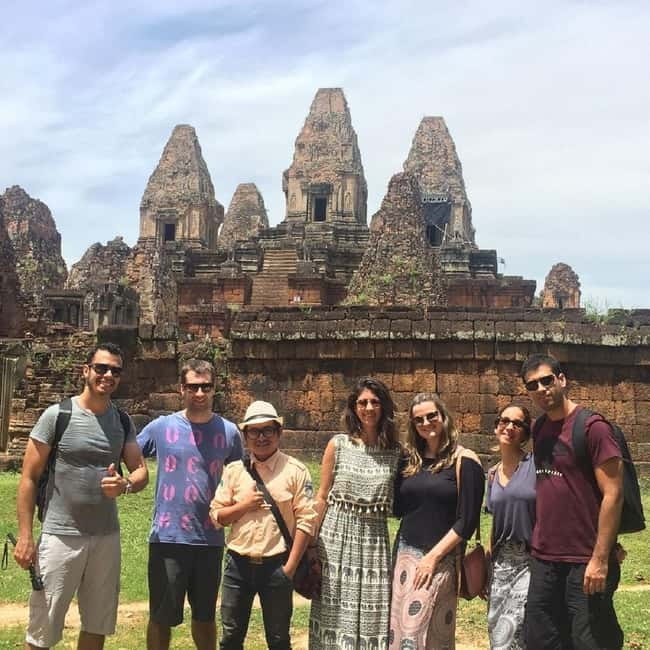
This tour is a strong fit if you:
- Want two days of Angkor without getting lost in a maze of temples and routes.
- Prefer private guidance instead of joining a larger group.
- Care about explanations in your language (English, Spanish, Portuguese, Italian, French, German, or Japanese).
- Appreciate comfort support like water, towels, and air-conditioned transport.
It’s not ideal if you:
- Need wheelchair access (the tour isn’t suitable for wheelchair users).
- Travel with very small babies (babies under 1 year aren’t suitable).
- Are very elderly (it lists people over 95 as not suitable).
Should You Book This 2-Day Private Angkor Tour?
Yes—if you want Angkor done in a way that’s both efficient and understandable. The itinerary hits the core highlights on Day 1, expands into the deeper Grand Circuit on Day 2, and finishes with Banteay Srei’s fine carvings. The private guide format, plus cold water and towels, turns long temple days into something you can actually enjoy.
Book it when:
- You’re visiting for the first time and want a balanced mix of iconic stops and circuit temples.
- You value guided context, not just photos.
Pause before booking when:
- You’re on a strict budget and don’t want to add the entrance ticket and lunch costs.
- You prefer total spontaneity and don’t like a set schedule.
If you match those points, this is a very solid way to see Angkor in two days without wasting energy.
FAQ
How early do you get picked up on Day 1?
Your guide picks you up from your hotel lobby at 08:30 AM. The note says to wait in the lobby about 15 minutes before pickup time.
Is the Angkor Archaeological Park entrance ticket included?
No. The entrance ticket is not included in the tour price. It’s listed as USD 62 per person for 2–3 days.
What is included in the tour price besides the guide?
Included are the private 2-day tour, hotel pickup and drop-off, transport as described (tuk-tuk/private car or AC van/bus by group size), cold water and towel during the tour, and visits mentioned in the itinerary.
What languages are available for the guide?
You can choose from English, Spanish, Portuguese, Italian, French, German, or Japanese.
Is lunch included on both days?
Lunch is not included. You’ll stop at nearby places for a Cambodian meal.
What transport will we use?
For 1–2 people, it’s a tuk-tuk on Day 1 and a private car on Day 2. For groups of 3 or more, it’s an air-conditioned van or bus for both days.
Can children join for free?
Children under 12 years old can join free of charge. The information also notes that a passport must be shown as proof.
What should I wear to enter the temples?
The tour notes that shorts and sleeveless shirts are not allowed. A scarf can help cover knees and shoulders at most temples, but except for Angkor Wat you’ll need pants or a skirt that covers the knees and shirts that cover the shoulders.
Does the tour have a sunrise option?
Yes. If selected at checkout, the tour starts at 05:00 AM on Day 2 and finishes around 12:00 PM.
Is there free cancellation?
Yes. You can cancel up to 24 hours in advance for a full refund.