REVIEW · SIEM REAP
5-Day All Major Temples & Kulen Mount Waterfall & Koh Ker & Beng Mealea
Book on Viator →Operated by Happy Angkor Tour · Bookable on Viator
Five days of Khmer stone, and it all clicks. This tour is a smart way to see the big Angkor icons and still get out into quieter ruins at Koh Ker and Beng Mealea, with comfort built in for the long drives. I also like that you’re not stuck guessing logistics: pickup, an English speaking licensed guide, and cooling stops keep the day from feeling like a punishment.
Two things I especially like: the sunrise schedule gives you a calmer start at Angkor Wat, and the temples are handled in a way that makes the Khmer story easier to follow temple by temple. One thing to consider: the headline price is only part of the real spend, since major temple admissions are not included and you should plan for extra ticket costs plus lunch.
In This Review
- Key things that make this tour work
- What you’re paying for: $455 plus the admissions reality
- Pickup, comfort, and the guide you’ll rely on
- Day 1: Angkor Thom’s gates, carvings, and Angkor Wat after lunch
- Angkor Thom South Gate to Bayon
- Royal Enclosure and the big platforms
- Victory Gate to Angkor Wat
- Day 2 sunrise at Angkor Wat and the pink-stone break at Banteay Srei
- Rolous Group cluster: Preah Ko, Bakong, Lolei
- Banteay Srei: the standout pink sandstone moment
- Pre Rup, Banteay Samre, and Banteay Kdei
- Day 3: Koh Ker’s former capital and Beng Mealea’s Indiana Jones energy
- Koh Ker: a briefly powerful capital
- Beng Mealea: nature taking the wheel
- Day 4: Preah Khan to Ta Prohm, then Phnom Bakheng sunset
- Preah Khan and the water-temple trio
- Eastern Mebon and Ta Keo
- Ta Nei and the anti-crowd advantage
- Ta Prohm and Phnom Bakheng
- Day 5: Phnom Kulen’s 1000 Lingas plus Artisans Angkor and Psar Chaa
- Phnom Kulen National Park and the 1000 Lingas
- Artisans Angkor: crafts you can actually buy
- Psar Chaa Old Market: optional local browsing
- Who should book this temple route, and who might not love it
- Should you book this tour?
- FAQ
- Is pickup from my hotel included?
- What is included in the tour price?
- Are temple entrance fees included?
- How much time does the tour take?
- Does the tour include a sunrise at Angkor Wat?
- Which remote sites are included?
- Is lunch included?
- Can I skip some parts like the market or sunset wait?
- What if I need to cancel?
Key things that make this tour work
- Hotel pickup plus private A/C vehicle means you start and end your day where you’re staying, with less hassle.
- Sunrise at Angkor Wat cuts the worst heat and crowds and sets the tone fast.
- Big detours to Koh Ker and Beng Mealea trade the busiest circuits for remote scale.
- Phnom Kulen’s 1000 Lingas adds a non-temple highlight that still feels deeply Khmer.
- Cool drinking water and wet towels help on days when you’ll be walking in sun and dust.
- Optional breaks at market and sunset give you some control, not just a fixed script.
What you’re paying for: $455 plus the admissions reality
At $455 per person, this is priced like a full-on guided temples day out, not a DIY day pass. You’re buying the convenience: pickup and drop-off at your Siem Reap hotel, a private vehicle with driver, a licensed English speaking guide, and the small-but-important extras like parking fees and road tolls. You also get cool drinking water and wet towels during the route, which matters when you’re moving between multiple temple sites back to back.
Now the part that catches people: temple and park entry fees are extra. Based on the tour’s listed costs, plan on:
- Angkor + All Temples: $72 per person
- Phnom Kulen National Park ticket: $20 per person
- Koh Ker Group ticket: $15 per person
Lunch is also listed as extra (about $5 per person, depending on the menu).
If you add those up, you’ll likely be closer to the mid-$500s per person before souvenirs, depending on how you handle lunch. For me, that’s still fair value because the route is packed with major sites and the guide time is structured across five days instead of trying to cobble it together day-by-day.
You can also read our reviews of more tours and experiences in Siem Reap
Pickup, comfort, and the guide you’ll rely on
This tour runs with a private A/C vehicle with driver and an English speaking licensed guide, and that’s not a luxury detail—it’s your pacing tool. With so many sites, small delays add up fast. Having a driver who handles the route and parking keeps the day from turning into constant stopping and starting.
I also like that the tour builds in cooling: water and cool towels are provided. It sounds basic, but after a couple of hours in temple courtyards and sunlit stone, you’ll appreciate anything that makes the walking feel less punishing.
One more practical point: you’re not sharing the schedule with random strangers in a large group. The tour is private in the sense that it’s only your group, which usually means fewer awkward waits and more flexibility with how long you want at each stop.
Day 1: Angkor Thom’s gates, carvings, and Angkor Wat after lunch
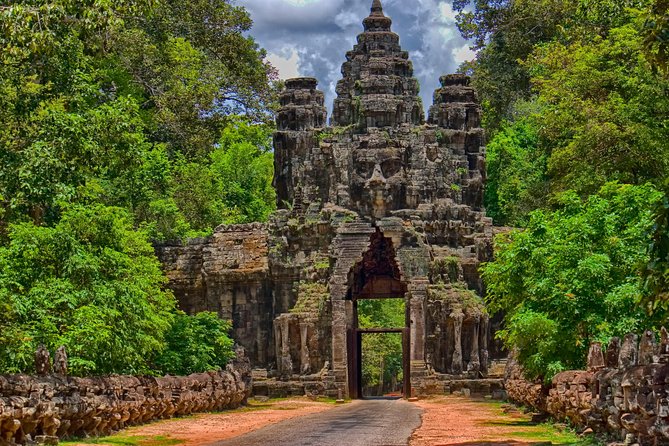
Day 1 is where you feel the scale of Angkor as a whole system. You start at Angkor Thom South Gate, then work your way through the royal-city core. This is a great approach because it prevents the common mistake of seeing Angkor Wat as a standalone postcard. Instead, you begin with gates and city temples, where the Khmer worldview shows up in every turn.
Angkor Thom South Gate to Bayon
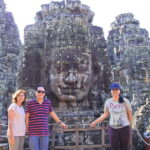
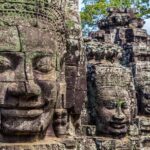
You’ll see Bayon Temple with its 49 towers and the famous faces—four faces per tower, for a total of 196 faces. That number is more than trivia. When you walk around, those faces become a way to understand the temple’s layout and why people describe Bayon as both intense and strangely personal.
From there you move to Baphuon, a temple that began as Hindu architecture and later includes a reclining Buddha built in the 16th century. That blend matters: Angkor isn’t frozen in time. It was reused, reinterpreted, and re-centered as belief systems shifted.
Royal Enclosure and the big platforms
Next is Phimeanakas, a pyramid Hindu temple inside the old royal palace area, followed by two of the most memorable platforms:
- Terrace of the Elephants, tied to kings watching returning armies
- Terrace of the Leper King, a separate platform with its own storytelling vibe
If you like symbolism, these are fun because you’re not only looking at architecture—you’re reading the Khmer idea of power, ceremony, and myth.

Victory Gate to Angkor Wat
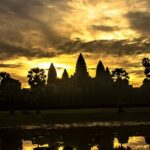
You’ll pass Victory Gate, then head toward Chau Say Tevoda, a temple restored by the Chinese Government. Nearby is Thommanon, built in the 12th century for Hindu gods.
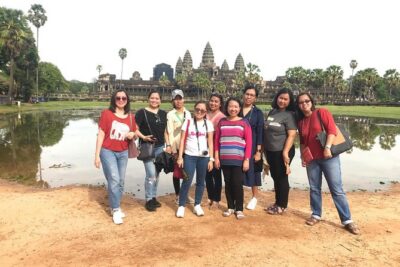
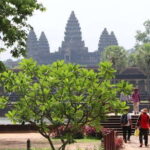
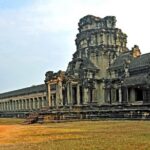
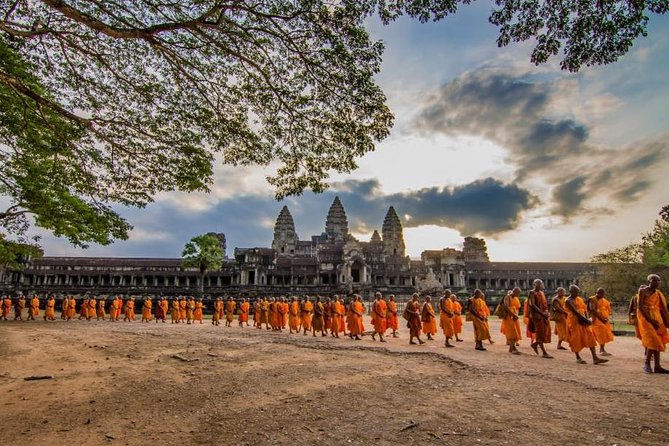
After a busy morning, you take lunch around midday, then finish the day at Angkor Wat. Expect a long visit here—about 3.5 hours. Angkor Wat began as a Hindu temple dedicated to Vishnu, then later became Buddhist. That change is visible in how people talk about the site, and in what you notice as you walk.
Possible drawback on Day 1: it’s a lot of walking in a short span. If you’re prone to fatigue, pace yourself early, and don’t try to “win” the day by rushing.
Day 2 sunrise at Angkor Wat and the pink-stone break at Banteay Srei
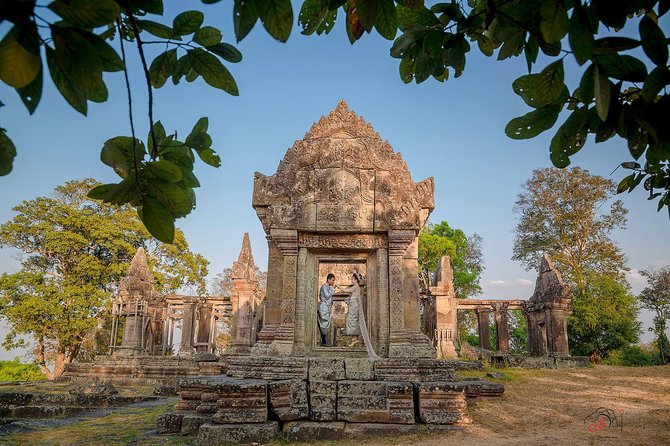
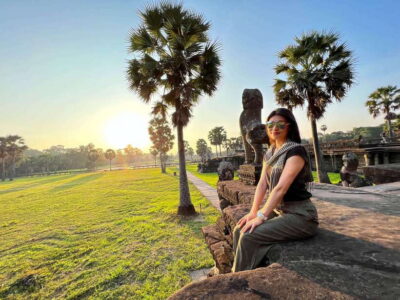
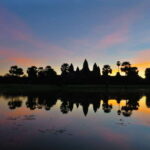
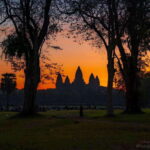
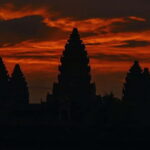
Day 2 begins very early: the guide picks you up around 5:00am so you can catch sunrise at Angkor Wat. This is one of the smartest parts of the schedule. You get softer light, cooler temperatures, and that feeling of seeing the place before your brain starts demanding shade and snacks.
Rolous Group cluster: Preah Ko, Bakong, Lolei
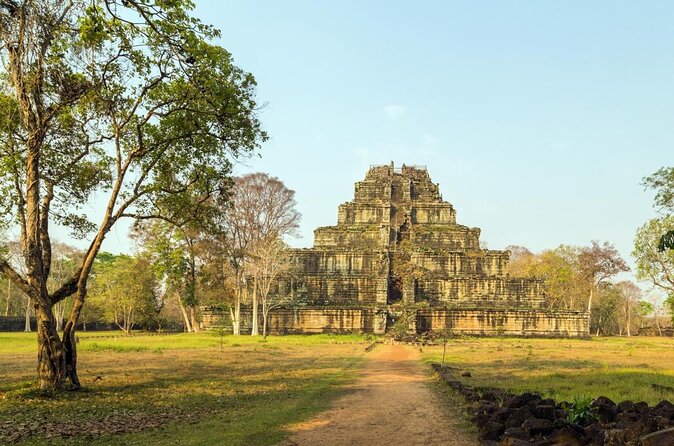
After sunrise time, you visit Preah Ko, Bakong, and Lolei—a cluster area that shows earlier Khmer temple-mountain concepts. Bakong is called out as the first temple mountain of sandstone constructed by Khmer rulers, and it’s a useful stop if you want your later Angkor sites to make more structural sense.
Banteay Srei: the standout pink sandstone moment
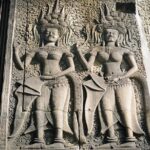
Then comes Banteay Srei, often described as the Ladies Temple. You’re looking at pink sandstone carving style and smaller scale compared to Angkor’s giants. It’s built in the 10th century and dedicated to Hindu deities (mainly Shiva).
If you’ve been thinking that Angkor is only about big drama, Banteay Srei is the counterpoint. The carvings get more attention, and your eyes slow down naturally.
Pre Rup, Banteay Samre, and Banteay Kdei
From there you head to Banteay Samre, Pre Rup, and then Banteay Kdei. These stops help you keep moving through themes: Hindu-era functions, later beliefs, and the way Khmer builders placed temples like statements across the landscape.
Tip for this day: Angkor mornings can still feel bright even when it’s cool. Bring a hat and keep water accessible.
Day 3: Koh Ker’s former capital and Beng Mealea’s Indiana Jones energy
Day 3 is the day that changes your trip from classic Angkor to “I’m really glad I booked this” territory. You go way beyond the usual Angkor footprint.
Koh Ker: a briefly powerful capital
Koh Ker Temple sits more than 150 km northeast of Siem Reap, in Preah Vihear province. It was briefly the capital of the Khmer Empire between 928 and 944. That historical context is handy because Koh Ker feels less like a perfectly curated highlight and more like a statement of shifting power.
You’ll spend about 4 hours in the Koh Ker group area. Expect the experience to feel more rugged simply because you’re farther out and the whole day has that road-trip rhythm.
Beng Mealea: nature taking the wheel
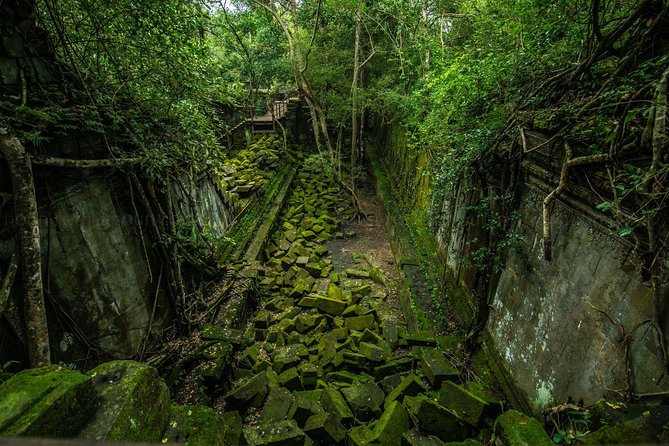
Then you go to Prasat Beng Mealea. This is described as the most mysterious Angkor temple because nature has taken over—good word if you like ruins that don’t look like they’ve been “softened” for crowds. It’s also built on a similar plan to Angkor Wat, so your brain can connect the shapes even when the jungle-like chaos is winning.
Plan around 1.5 hours here. It’s a different kind of temple visit: more exploring than photographing, and more time walking through complex spaces that feel half-ruined and half-alive.
Day 4: Preah Khan to Ta Prohm, then Phnom Bakheng sunset
Day 4 keeps stacking major sites, but it does so with a clear theme: variety of temple types and a mix of restored and less-restored experiences.
Preah Khan and the water-temple trio
You start with Preah Khan, a Buddhist temple built by King Jayavarman VII dedicated to his father. Then you visit Neak Pean, described as a small island temple in the middle of the last Barray.
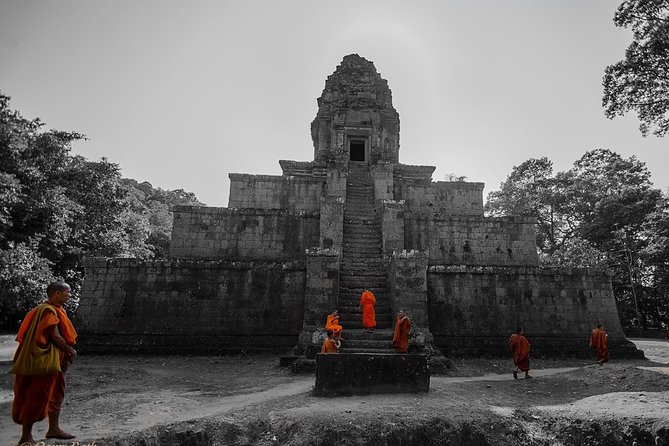
From there, you go to Krol Ko and Ta Som, two smaller nearby Buddhist temples. These are often the kind of stops where you can catch your breath, because they’re quieter and less visually “urgent” than the biggest sites.
Eastern Mebon and Ta Keo
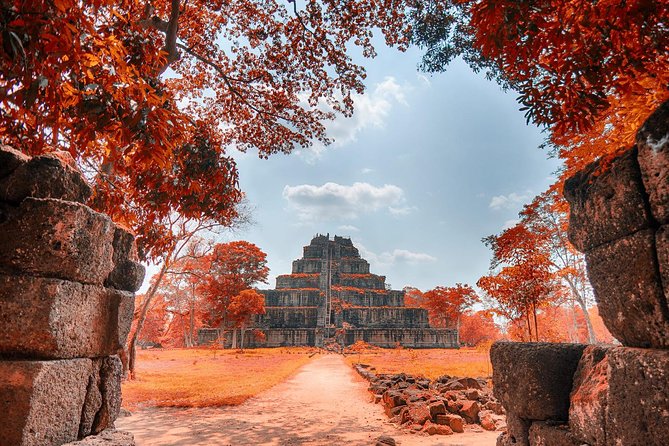
Next is Eastern Mebon, a temple-mountain ruin rising three levels with five towers, plus elephant status statues at corners. Then you visit Ta Keo, a mountain temple for Shiva built in the 11th century. It’s specifically noted as still in good shape and restored by the Chinese Government.
Ta Nei and the anti-crowd advantage
Ta Nei is smaller and less restored, and the point here is practical: it can help you avoid some crowd pressure. It’s also surrounded by large trees, which gives it a calmer vibe while the day moves forward.
Ta Prohm and Phnom Bakheng
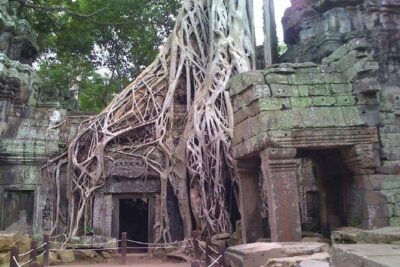
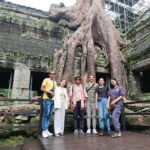
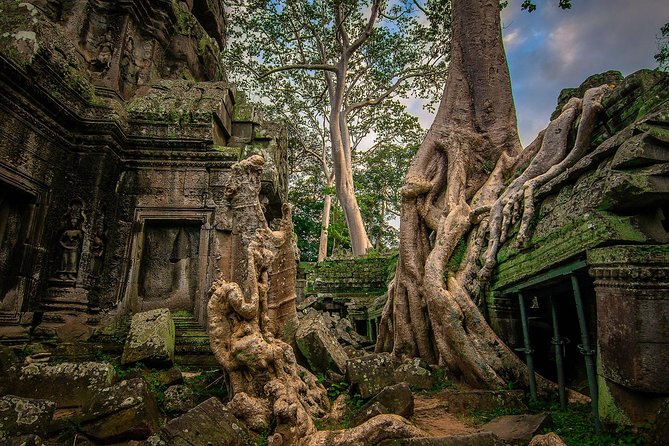
Then comes Ta Prohm, famous for huge tree roots over the structures. It’s also known as a filming location for Tomb Raider, and that pop-culture link is useful because it helps you picture the scale even if you’re not a history nerd. You’ll spend about 1.5 hours here.
After that you stop at Prasat Kravan, a small 11th-century brick temple, and then you climb Phnom Bakheng for sunset. There’s an important note: the number of tourists allowed is limited, so plan to go early enough to get in the right timing window.
You can also skip waiting for sunset if you don’t want to stand around in the heat. That flexibility is genuinely helpful on a long day.
Day 5: Phnom Kulen’s 1000 Lingas plus Artisans Angkor and Psar Chaa
Day 5 shifts away from temple-city ruins and into nature-plus-religion.
Phnom Kulen National Park and the 1000 Lingas
You head to Phnom Kulen National Park, more than 60 km from Angkor Park. This is not described as a single temple stop. Instead, it’s a river bed covered with sculptures of Lingas, called 1000 Lingas, symbolizing Shiva’s supreme essence.
It’s a full day on the ground: plan around 5 hours. This is the part of the trip that tends to feel fresh because you’re walking in a more natural setting while still seeing Khmer religious symbolism carved into place.
Artisans Angkor: crafts you can actually buy
Next is Artisans Angkor, a stop focused on traditional craft skills such as stone carving, wood carving, lacquering, gilding, and silk processing. If you like souvenirs that mean something, this is a better choice than random stalls—at least you’re seeing the work behind what you might take home.
Psar Chaa Old Market: optional local browsing
Finally, you end with Psar Chaa – Old Market in the center of Siem Reap. The tour specifically says you can skip it if you don’t want to see it. That’s a small detail, but it matters late in the trip when your feet are tired and your brain wants simplicity.
Who should book this temple route, and who might not love it
This tour fits best if you:
- want a guided plan that covers the major Angkor highlights without you mapping every route
- like variety: big temples, smaller sculpted sites, and remote ruins
- value early starts when they pay off (sunrise at Angkor Wat)
- appreciate comfort during long, hot walking days, especially the A/C vehicle and the water and cool towels
You might not love it as much if you:
- want a slow pace with lots of free time for wandering
- hate early mornings or long travel days, especially the distant Koh Ker outing
- are trying to keep total costs low, since admissions and lunch are extra
Should you book this tour?
If your goal is to see Angkor’s top temples and add two remote areas like Koh Ker and Beng Mealea, I think this is an efficient, value-minded way to do it. The comfort touches (A/C vehicle, water, cool towels) are genuinely practical, not marketing fluff, and the sunrise plan at Angkor Wat is the kind of timing move that makes the trip feel more special than a standard day.
Book it if you want structure plus flexibility, and you’re okay with paying temple admissions on top of the base price. Pass if you prefer DIY freedom only, or if you need a very low-intensity pace.
FAQ
Is pickup from my hotel included?
Yes. The tour includes start pickup from your hotel (or guest house) in Siem Reap and finish drop you back at your hotel.
What is included in the tour price?
Included features are a private A/C vehicle with driver, an English speaking guide with a licensed guide, cool drinking waters and wet towels, parking fees and road tolls, plus hotel pickup and drop-off.
Are temple entrance fees included?
No. Entrance fees are not included. You’ll pay on top of the tour price for Angkor + All Temples ($72 per person), Phnom Kulen National Park (ticket $20 per person), and Koh Ker Group ($15 per person).
How much time does the tour take?
The duration is 5 days (approx.).
Does the tour include a sunrise at Angkor Wat?
Yes. There is an early pickup at around 5:00am for sunrise viewing at Angkor Wat on Day 2.
Which remote sites are included?
Koh Ker and Beng Mealea are included. Koh Ker is listed as more than 150 km from Siem Reap, and Beng Mealea is visited as part of the experience.
Is lunch included?
Lunch is listed as not included. Lunch is described as depending on the menu and priced at about $5.00 per person.
Can I skip some parts like the market or sunset wait?
Yes. The Psar Chaa (Old Market) stop notes that you can skip it if you don’t want to see it. For Phnom Bakheng sunset, the tour notes you can skip waiting for sunset.
What if I need to cancel?
Free cancellation is offered. You can cancel up to 24 hours in advance for a full refund.