REVIEW · SIEM REAP
Angkor Wat: Sunrise 2.5 Days Temples & Tonle Sap-Small Group
Book on GetYourGuide →Operated by Journey Cambodia · Bookable on GetYourGuide
Sunrise at Angkor feels unreal at first. This 2.5-day small-group tour strings together the temples most people rush past, then slows down for Angkor Wat sunrise with torchlight inside the complex, plus a Tonle Sap boat ride (or Phare Circus in season). I especially liked how the day-by-day structure keeps you moving, but not frantic, and how the guide turns carvings and ruins into clear stories. One consideration: the big temple costs are separate, and you’ll also need to handle morning departures early in the dark.
You get focused temple time across day 1 and day 2, including Pre Rup, Banteay Srei, and the quieter, more atmospheric Preah Khan. I also like the small group limit (max 15) because it makes questions easier and helps everyone stay together on foot. The main drawback is that this isn’t suitable for mobility impairments, so if walking and uneven stone ruins are an issue, you’ll want a different plan.
In This Review
- Quick hits you’ll care about
- First light at Angkor Wat: torchlight, then faces
- Day 1’s temple circuit outside Angkor Thom (and why it’s smart)
- Pre Rup: a mountain temple with layered materials
- Banteay Srei: the precision stop
- Neak Pean: the artificial island idea
- Preah Khan: atmospheric ruins and tree roots
- Day 2’s Angkor Thom highlight loop: gates, faces, and Ta Prohm
- Breakfast with a reset, then the southern gate
- Angkor Thom proper: Bayon’s face towers
- After lunch: Ta Prohm, the jungle temple
- Tonle Sap by boat: Kampong Phluk flooded forest life
- Dry season alternative: Cambodia Phare Circus (March 1 to June 31)
- Small-group value: fewer people, easier attention
- Price and temple-pass reality: what $69 really buys
- What you should bring (and what to avoid)
- Who this tour fits best
- Should you book this Angkor Wat sunrise + Tonle Sap 2.5-day tour?
- FAQ
- FAQ
- What’s included in the 2.5-day tour?
- Do I need to buy the Angkor temple pass?
- Is Tonle Sap definitely included?
- Where does the sunrise portion happen?
- How big is the group?
- Is breakfast included?
- What should I wear?
- Is the tour suitable for mobility impairments?
- Can I cancel or pay later?
Quick hits you’ll care about
- Angkor Wat sunrise with early entry: you start pre-dawn, enter in darkness, and walk the eastern side
- Long bas-relief corridors explained: your guide reads the scenes for you, not just points at stone
- Temple highlights outside the main crowds: Pre Rup, Banteay Srei (often reopening after Khmer Rouge), Neak Pean, Preah Khan
- Angkor Thom landmarks that matter: the southern gate’s 54 gods-and-demons line and Bayon’s face towers
- Tonle Sap by boat (or Phare Circus): Kampong Phluk flooded forest in season, circus alternative in dry months
- Small group feel with real comfort stops: licensed English guide, hotel pickup, and helpful driver touches like water and towels in the heat
First light at Angkor Wat: torchlight, then faces
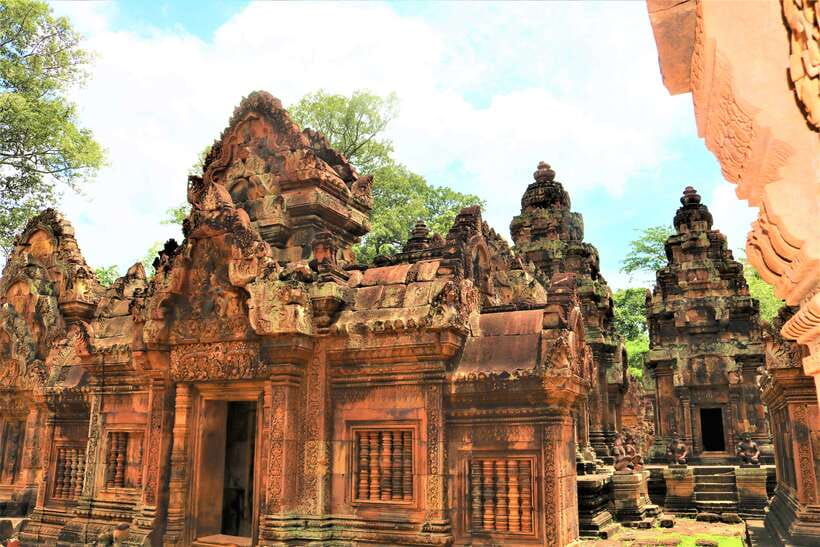
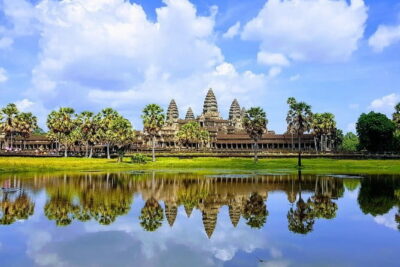
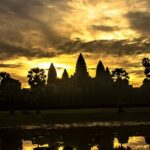
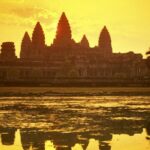
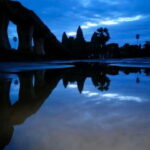
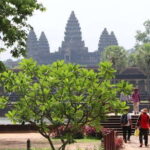
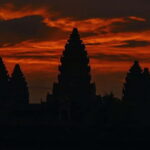
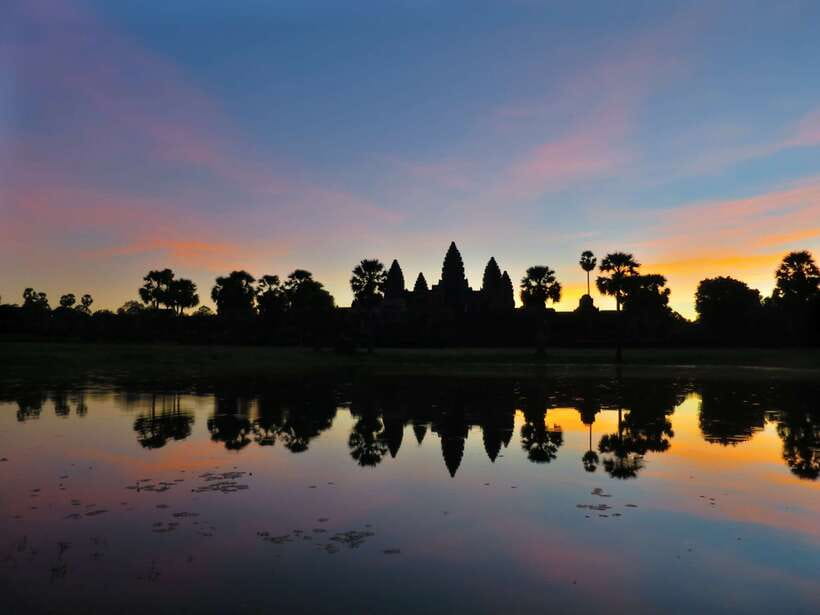
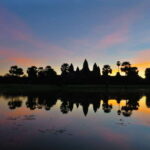
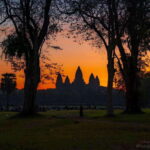
If you only do one thing in Siem Reap, make it the Angkor Wat sunrise portion of this tour. You leave your hotel pre-dawn, and once you enter Angkor Wat, it’s dark. The walk starts with light from your torch, and that simple detail changes the experience. You’re not just seeing a famous temple; you’re learning the shape of it in the quiet, before the crowds arrive.
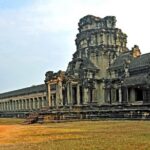
This tour also pushes beyond the standard photo spots. You walk through corridors and along areas that are described as rarely visited, including the eastern side. Even if you’ve read about Angkor Wat before, being in the space in the early hours makes the carvings feel more purposeful. You’re close enough to notice how the stone transitions from one panel to the next and how the structure guides your movement.
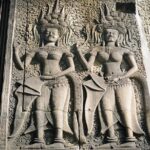
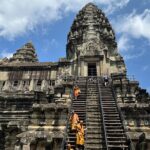
A standout part is the guide’s explanation of the long stretches of bas-relief carvings. Instead of treating them like decoration, your guide decodes what you’re seeing—stories carved into the cloister corridors, and what life looked like at the height of the Khmer Empire. When that happens, the temple turns from an impressive object into a readable place.
Practical note: you’ll want comfortable, grippy shoes. The lighting can be tricky early on, and the stone surfaces don’t do you favors.
You can also read our reviews of more tours and experiences in Siem Reap

Day 1’s temple circuit outside Angkor Thom (and why it’s smart)
Day 1 is built for momentum without wasting your time. You focus on temples outside Angkor Thom city first—an approach that helps you get variety and avoid feeling like you’re repeating the same terrain and the same sights.
Pre Rup: a mountain temple with layered materials
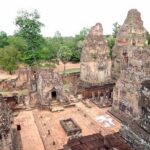
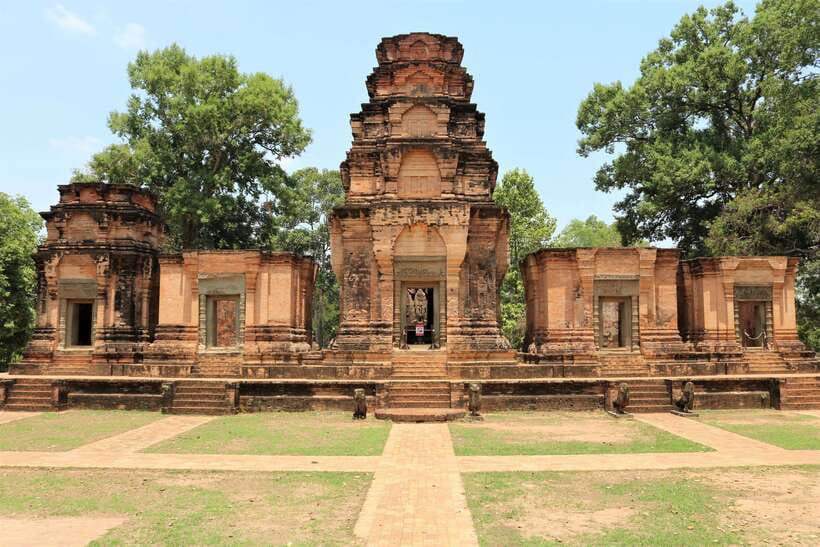
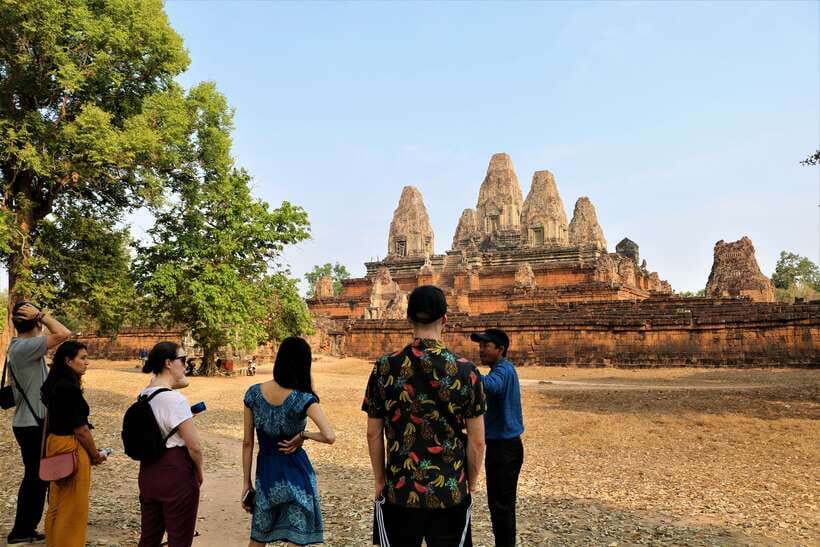
Your first major stop is Pre Rup, a Hindu temple often described as a mountain-style temple. The important part for you as a visitor is what that means in the real world: it’s the kind of structure where your eyes follow tiers upward. You get that stacked, skyline feel, and the temple’s materials—brick, laterite, and sandstone—help the colors and textures shift as you move.
Banteay Srei: the precision stop
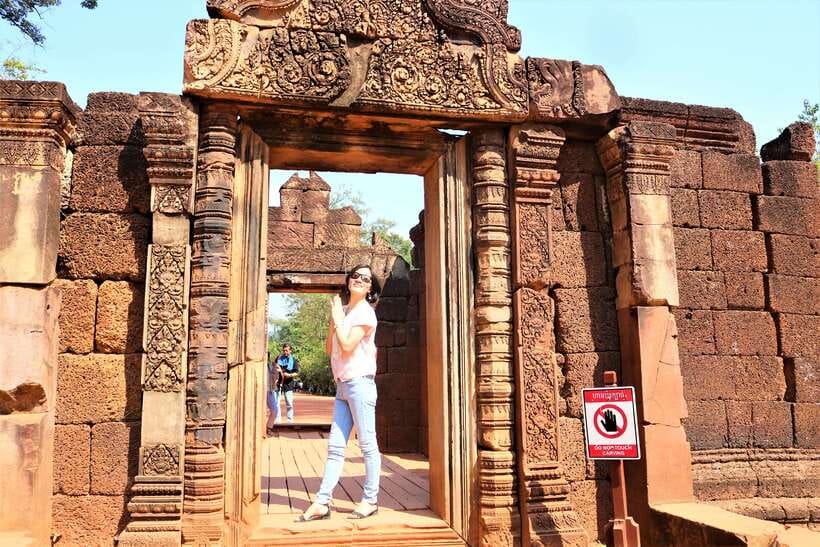
Next up is Banteay Srei, one of the most praised carvings-focused temples in the region. It’s smaller than many others, so it rewards slow looking. The reliefs are described as exceptionally fine and skillfully crafted, which is exactly why this stop works on a 2.5-day schedule. You’re not just ticking off names; you’re getting a temple where detail is the point.
You also learn something practical about access. Banteay Srei has been accessible again since the late 1990s after the Khmer Rouge left the area. That context matters because it frames why the carvings feel both preserved and fragile—this is art that took decades to recover into public view.
Neak Pean: the artificial island idea
On the return drive, you visit Neak Pean—an artificial island setup with a Buddhist temple on a circular island. It’s a great contrast to the larger, more dramatic Angkor-scale monuments. Here, the geometry and the water-in-your-mind concept help you slow down and look at the layout as a whole.
You can also read our reviews of more tours and experiences in Siem Reap
Preah Khan: atmospheric ruins and tree roots
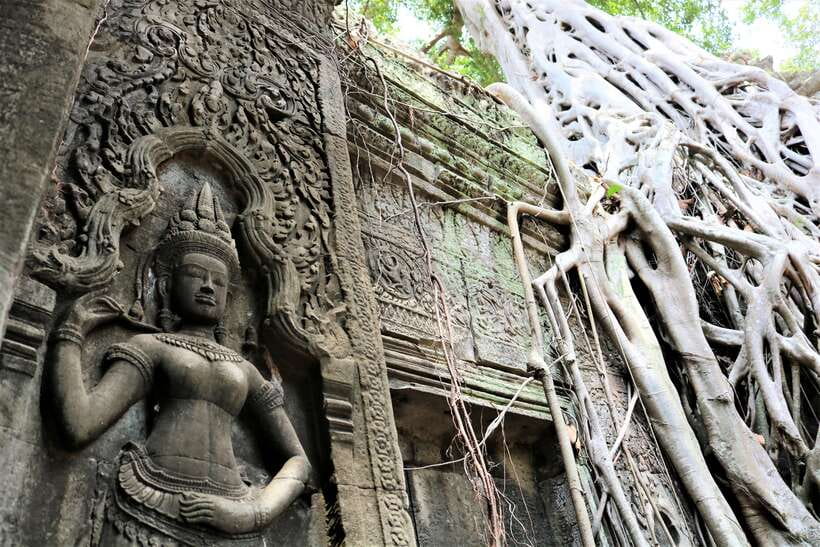
Day 1 ends at Preah Khan, a ruined temple that’s especially atmospheric because of the mix of crumbling stone and tree roots. This is the kind of place where you feel the passage of time. And because you’re there after a full day, you’ll appreciate how the scene changes from “this looks impressive” to “I can see how people once moved through here.”
If you’re the type who likes photos, you’ll still get them. But the better payoff is the mood. This stop tends to stick in your memory because it feels lived-in by nature, not staged.
Day 2’s Angkor Thom highlight loop: gates, faces, and Ta Prohm
Day 2 is split into a morning focused on Angkor Thom’s key structures, and an afternoon that turns toward jungle atmosphere.
Breakfast with a reset, then the southern gate
After the sunrise morning portion, the tour ends at Angkor with breakfast outside the temple and time to rest. That matters more than it sounds. You’ve already started in the dark and walked a lot; eating and taking a breather helps you enjoy the next sequence instead of running on fumes.
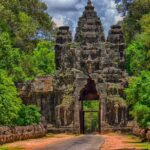
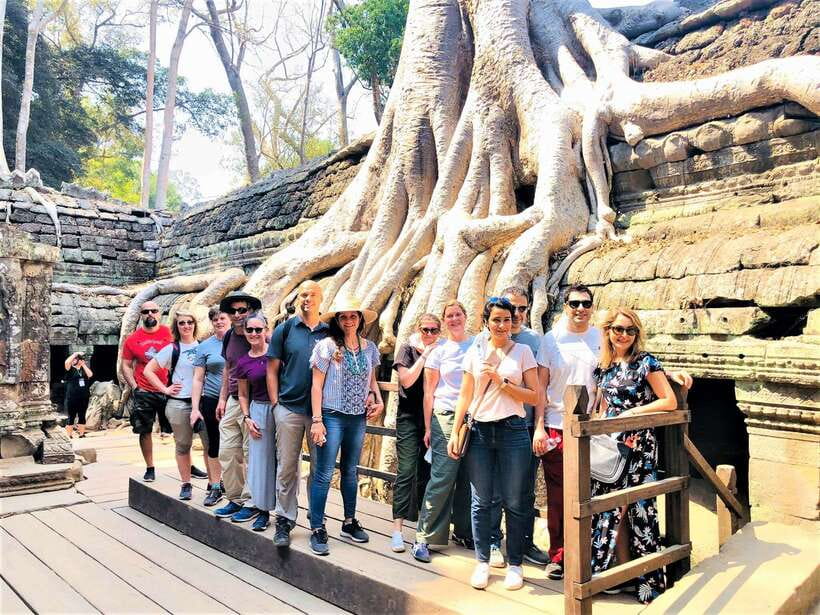
Then you continue with the southern Gate of Angkor Thom, lined by 54 stone figures of gods and demons. It’s a powerful visual not because it’s big (though it’s impressive), but because it gives you a story backdrop. You see order and conflict in the same frame, set up like a warning sign you’re walking into.
Angkor Thom proper: Bayon’s face towers
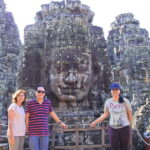
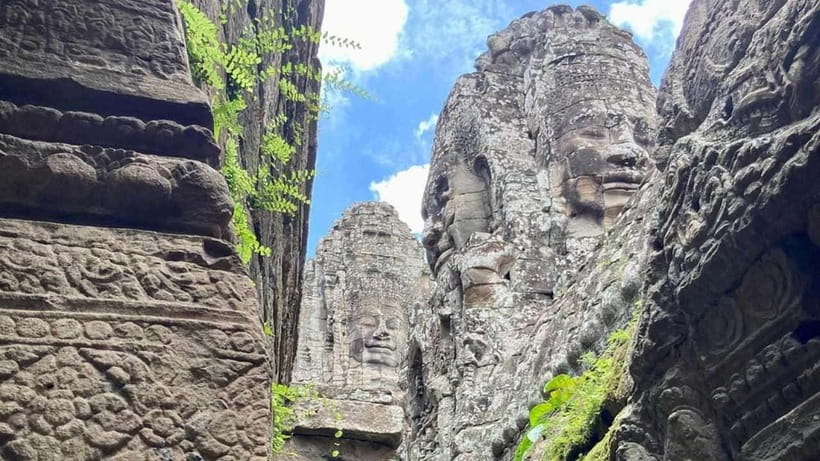
Next comes Bayon, known for its central towers covered with more than 200 enormous faces. This is one of those sights where your brain keeps shifting attention: from the face patterns to the angles of the towers to the relief work around them. With a guide, it’s easier to track what you’re looking at instead of just staring.
After lunch: Ta Prohm, the jungle temple
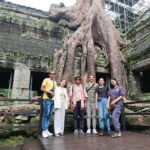
After lunch and a rest break, you head to Ta Prohm, one of the most atmospheric temples in Angkor. The big advantage of having Ta Prohm later in the day is that it’s not competing with your sunrise energy. You can actually savor the way the temple and roots interact.
This is also where people often realize why Angkor works as a multi-temple experience. Ta Prohm’s feel is different from Pre Rup’s tiers, different from Banteay Srei’s fine carving, and different from the carved corridors at Angkor Wat. You’re getting a range of “why ruins matter” instead of one repeated style.
Tonle Sap by boat: Kampong Phluk flooded forest life
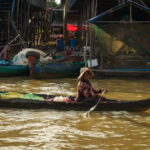
On day 3, you shift away from stone and toward water and daily life. The tour heads out through the countryside to Tonle Sap Lake, described as the world’s second-largest freshwater lake. You then take a boat trip to Kampong Phluk, which includes three small fishing villages in an atmospheric flooded forest setting.
The experience here is less about monuments and more about perspective. From the boat, you see how houses on stilts fit into a landscape that changes with the water level. You also see locals at work in the floating forest environment. If you want your trip to feel grounded in Cambodia beyond temple facts, this is the portion that does it.
A useful detail: the itinerary is designed so you cruise through the village and see the unique layout—so you’re not just doing a quick pass-by photo stop. It helps you understand how communities adapt to seasonal conditions.
Dry season alternative: Cambodia Phare Circus (March 1 to June 31)
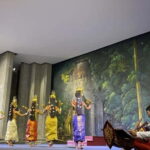
There’s one seasonal twist you should know. During the dry season (from March 1 to June 31), the Tonle Sap portion is replaced by Cambodia Phare Circus. You’ll have seat C included.
If you’re torn between nature-based scenes and performance, think about your travel style:
- If you want daily-life context, Tonle Sap is the choice.
- If you’re here during the dry months, Phare gives you an indoor alternative that still reflects Cambodian storytelling and creativity.
Small-group value: fewer people, easier attention
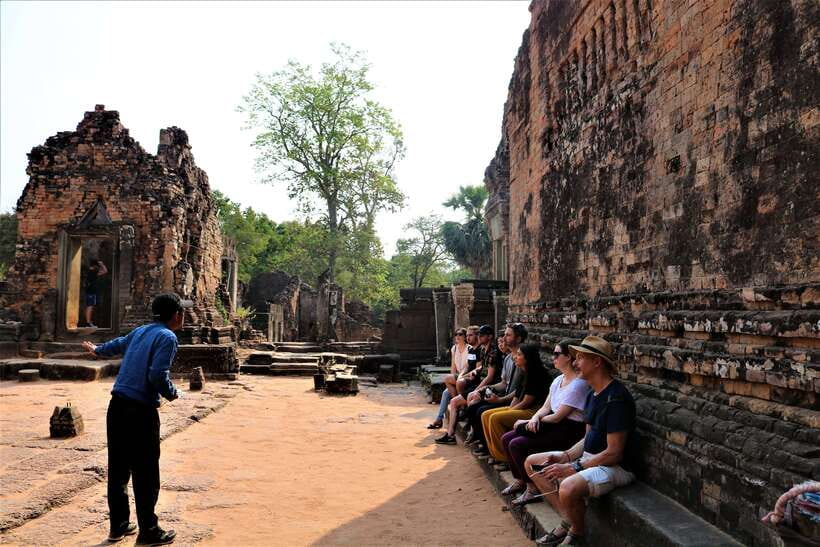
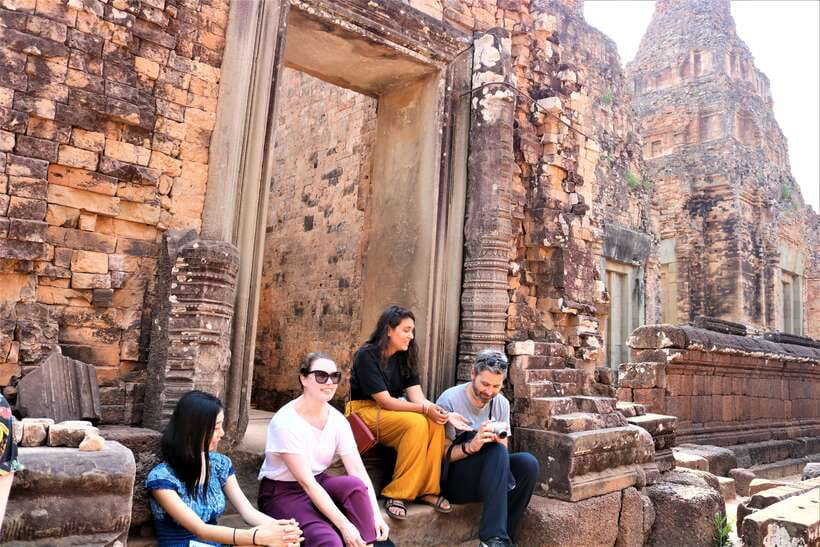
This tour limits the group to 15 participants, and that detail matters more than the number. In Angkor, you’re moving between sites, dealing with uneven ground, and trying to hear your guide while walking. A smaller group helps you keep pace and reduces the “everyone disappears” effect.
You also get a licensed English-speaking guide, and that’s where the difference shows up. In multiple experiences, named guides like Saruon Pal, Pireak, and Pi were praised for patiently explaining temple and Angkor culture, plus answering questions. Some drivers—like Keal and others mentioned in feedback—were also noted for practical care: water and cooling towels during hot walking.
That kind of attention isn’t just polite. It can keep you comfortable enough to actually enjoy the temples instead of counting minutes until you can sit down.
Price and temple-pass reality: what $69 really buys
The headline price is $69 per person for 2.5 days, and it does include some big-ticket basics: hotel pickup and drop-off in an air-conditioned vehicle, a licensed English guide, mineral water, and the Tonle Sap entrance fee & boat cruise or Phare Circus (seat C) depending on season.
But the temples themselves are not included. You’ll need a 3-day Angkor pass for $62 per person, and breakfast isn’t included either.
So here’s the value math in plain terms:
- What you’re paying for: guiding, transport, and the timed experiences (including sunrise timing and boat/circus).
- What you still need to budget: the temple pass plus breakfast.
If you’re already comfortable handling temple logistics on your own, this tour still helps because it bundles timing and interpretation. If you’d rather not coordinate sunrise entry and multiple sites by yourself, that’s where $69 turns into a good deal.
One more thing: it’s not a long-haul bus marathon. The schedule is compact, and you get multiple temple zones plus Tonle Sap or Phare without feeling like you missed the “core” pieces.
What you should bring (and what to avoid)
This is practical but important.
Bring:
- Comfortable shoes you can walk in for hours on stone and dirt.
Avoid:
- Short skirts are not allowed.
Also, the tour involves pre-dawn departure and lots of outdoor time. Even though mineral water is included, you’ll still feel the heat and humidity later in the day—so plan for sun protection if you’re the sort who burns easily.
Who this tour fits best
I think this tour is a strong match if you:
- Want major Angkor moments but with explanation that makes the stone make sense
- Like a small-group pace (max 15) that helps you stay oriented
- Want your trip to include more than temples—Tonle Sap life is the balance
You might want a different option if you:
- Have mobility impairments (this isn’t suitable, per the tour info)
- Prefer fully flexible, no-structure days (this route is scheduled and timed)
Should you book this Angkor Wat sunrise + Tonle Sap 2.5-day tour?
Yes, I’d seriously consider booking it—especially if you value interpretation and timing. The sunrise portion is the anchor, and it’s designed to be more than just a dawn viewpoint. The way day 1 mixes Pre Rup, Banteay Srei’s carving focus, Neak Pean’s geometry, and Preah Khan’s rooty ruins gives you variety without stretching your trip.
It’s also good value if you don’t want to manage guides and transport yourself, and you like the small-group format.
The decision hinge is your budget reality: you’ll add the $62 temple pass and plan for breakfast outside what’s listed. If that’s fine, you’ll likely love how smoothly the days connect, and how the mix of stone + water keeps the story of Cambodia from feeling one-note.
FAQ
FAQ
What’s included in the 2.5-day tour?
You get an English-speaking licensed guide, hotel pickup and drop-off in an air-conditioned vehicle, mineral water, and 2.5 days exploring major temples plus either Tonle Sap Lake with entrance and boat cruise (or Phare Circus during the dry season). Temple entrance fees and breakfast are not included.
Do I need to buy the Angkor temple pass?
Yes. Temple entrance is not included, and you’ll need a 3-day pass for $62 per person.
Is Tonle Sap definitely included?
It depends on the season. The tour includes Tonle Sap Lake with a boat trip to Kampong Phluk, but in the dry season (March 1 to June 31) it switches to Cambodia Phare Circus instead.
Where does the sunrise portion happen?
You do a pre-dawn departure to see sunrise outside Angkor Wat, then you enter Angkor Wat in darkness and follow the eastern side during the morning walk.
How big is the group?
The group is limited to 15 participants.
Is breakfast included?
No. Breakfast is not included, although the morning tour ends at Angkor with breakfast outside the temple.
What should I wear?
Wear comfortable shoes. Short skirts are not allowed.
Is the tour suitable for mobility impairments?
No, the tour is not suitable for people with mobility impairments.
Can I cancel or pay later?
You can cancel up to 24 hours in advance for a full refund, and you can reserve now and pay later to keep plans flexible.