REVIEW · SIEM REAP
Siem Reap: Angkor Sunrise 2 Days Guided Bike Tour
Book on GetYourGuide →Operated by Siem Reap Private Tour. · Bookable on GetYourGuide
Two days, two sides of Angkor by bike. I like how this tour is built around Angkor Wat sunrise and then keeps you moving on jungle trails instead of crowd corridors. The whole experience feels like you’re gliding from temple to village with the guide keeping the rhythm and the context clear.
What I love most is how Day 2 shifts from monuments to real rural Cambodia: rice fields, farms, markets, and Buddhist temples you reach by backroads. One thing to consider first: parts of the temple riding can be sandy and bumpy, so if you’re only an occasional cyclist, you’ll want to be honest about your comfort on mixed surfaces.
In This Review
- Key Things That Make This Tour Worth Your Time
- Sunrise at Angkor Wat by Bike Makes the Whole Place Feel Different
- Day 1 Temple Day: Angkor Wat Trails, Bayon, Preah Khan, and Ta Prohm
- Day 1 Food and Water: What You Get, and How to Think About It
- Day 2 Countryside Bike Tour: Rice Fields, Farms, Markets, and Rice Wine Areas
- Bikes, Helmet, and Terrain: How to Match Your Ability to the Route
- The Guide Experience: English Storytelling, Photo Stops, and Map Clarity
- Price and Value: $95 for Two Days, Plus Temple Tickets
- Who This Tour Suits Best (and Who Might Want Another Option)
- Should You Book Siem Reap: Angkor Sunrise 2 Days Guided Bike Tour?
- FAQ
- What time is hotel pickup on Day 1?
- What time is pickup on Day 2?
- Are Angkor temple entry tickets included?
- What meals and snacks are included?
- Do I get a bike and helmet?
- What dress code should I follow at temples?
- Does the tour run in rain?
Key Things That Make This Tour Worth Your Time
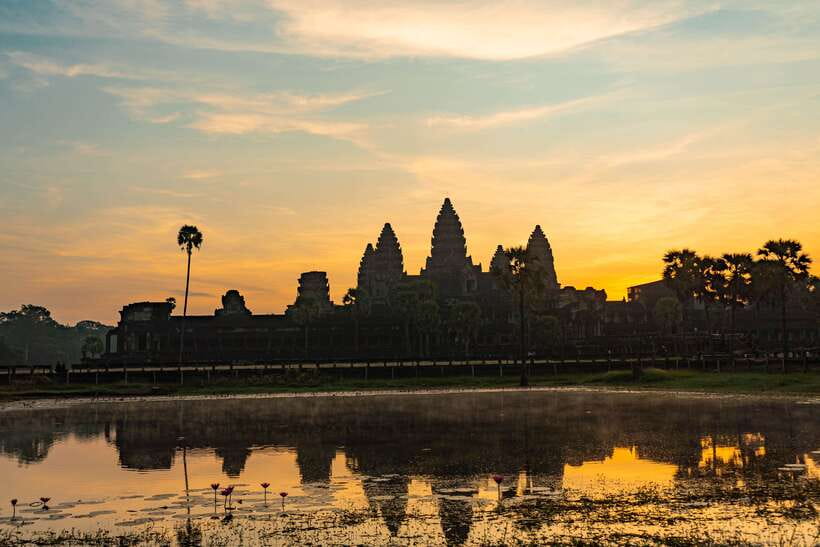
- Sunrise timing for Angkor Wat with hotel pickup at 5:00am so you can see the complex before the day heats up
- Riding behind Angkor Wat on trails that can feel quieter than the main paths
- A full Day 1 temple arc from Angkor Wat to Angkor Thom, including Bayon, Preah Khan, and Ta Prohm (the Tomb Raider temple)
- Day 2 countryside texture: rice fields, farms, local fruit/snacks, mushroom and lotus farms, and rice wine distilling areas
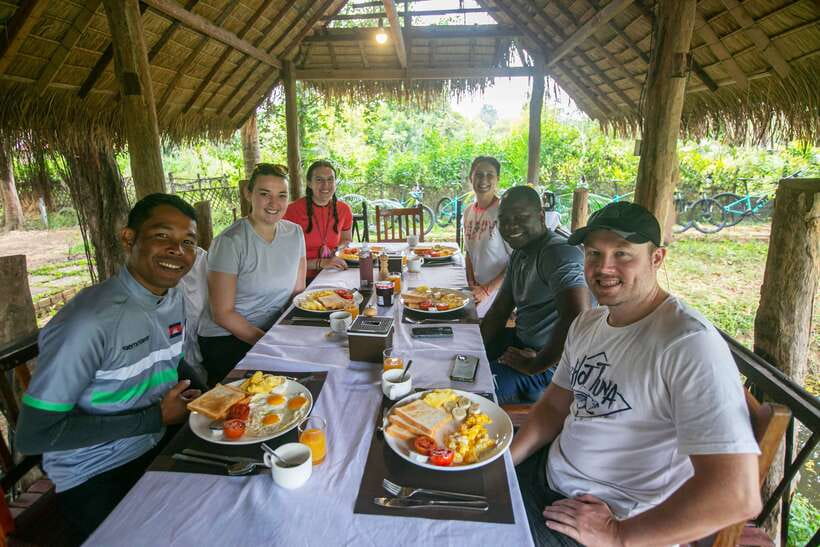
- Food and water built into the schedule with breakfast on Day 1, a traditional lunch spread, plus local snacks and daily water support
Sunrise at Angkor Wat by Bike Makes the Whole Place Feel Different
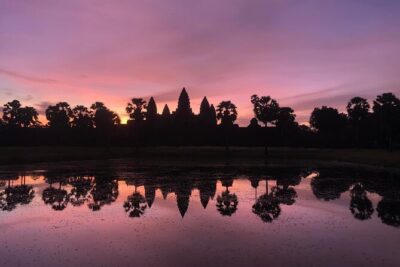
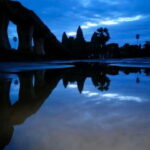
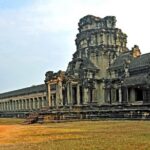
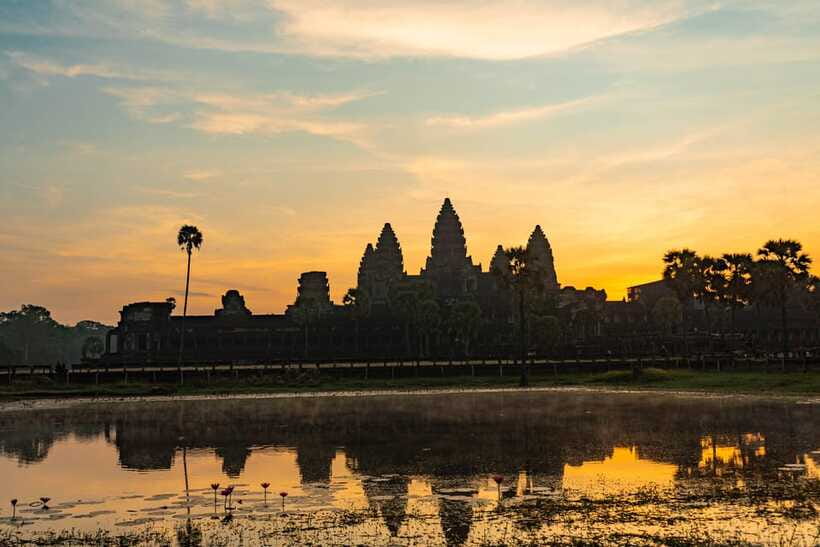
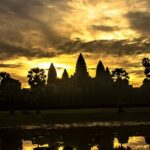
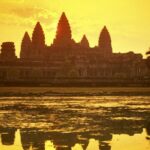
Angkor is big, and the first hurdle is time. This tour fixes that with a very early pickup at 5:00am, then gets you into position to see Angkor Wat in the softer light of sunrise. You’re not just ticking off a temple. You’re riding in when the area feels cooler, quieter, and more atmospheric—when you can actually hear the rhythm of rolling wheels and the jungle around you.
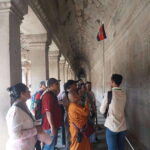
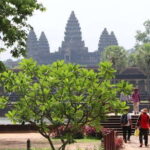
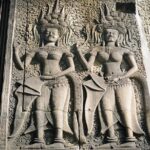
From there, the guide focuses on the temple’s history and symbolism as you move through the Angkor Wat central complex. That matters because Angkor Wat can look like a pile of stones if you only skim it. With a guide explaining why the layout is the way it is, the carvings and the structure start to connect.
Practical note: Angkor Wat and other temples have clear dress expectations. You’ll be asked to cover your shoulders and knees, so plan your outfit accordingly before you ever leave the hotel.
You can also read our reviews of more cycling tours in Siem Reap
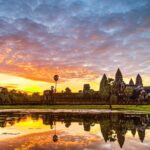
Day 1 Temple Day: Angkor Wat Trails, Bayon, Preah Khan, and Ta Prohm
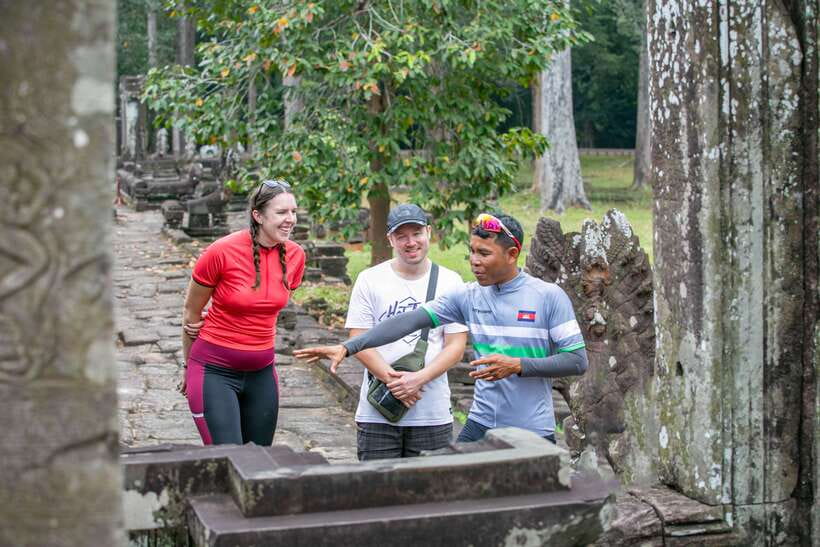
Day 1 is built like a loop—start with the most famous sight in Cambodia at sunrise, then use the bike to connect the rest without feeling stuck on one road all day.
Angkor Wat sunrise + breakfast
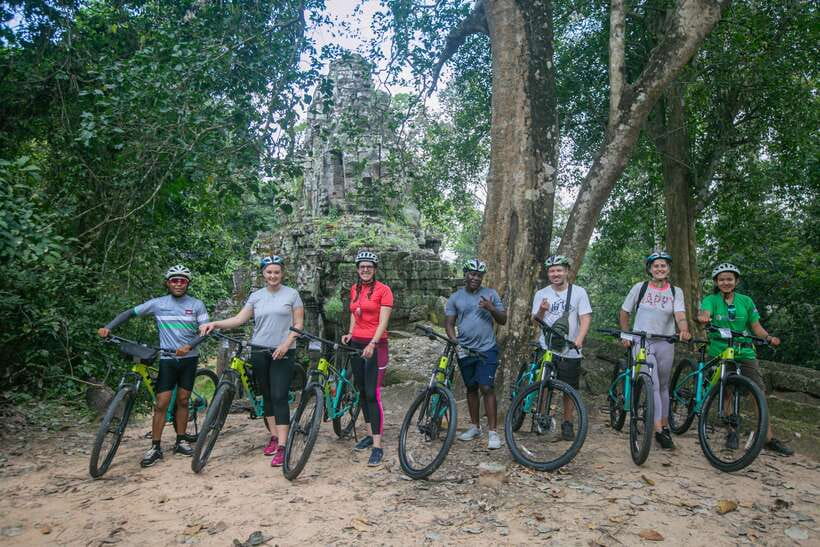
After pickup, you’ll go to the best spots for sunrise, then you’ll enter the central complex. Once you’ve had breakfast, the tour shifts from viewing to riding, using tracks and trails behind Angkor Wat.
Bike trails through temple-area villages
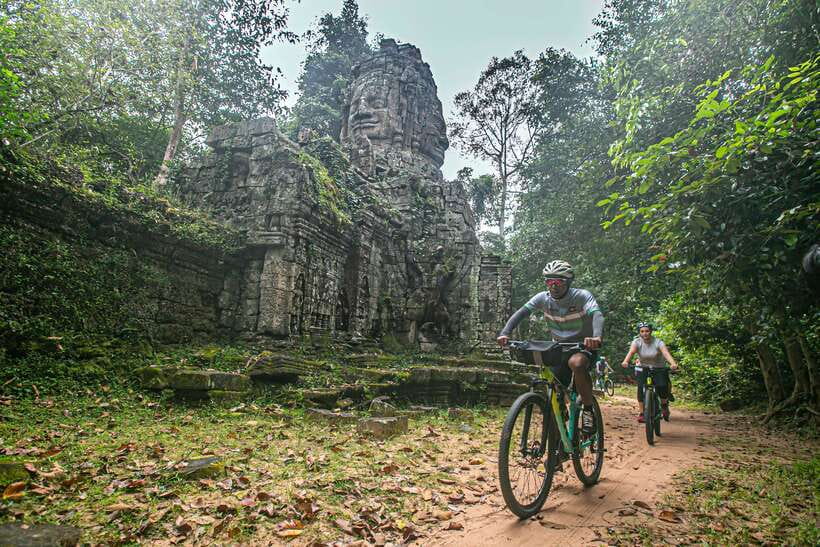
This is one of the best parts of the day. You’ll follow paths that take you through smaller villages inside the wider Angkor Wat area, so you see daily life alongside the monuments. It’s a different angle on the same UNESCO setting. Instead of only viewing Angkor as a museum piece, you get a sense of how people live in the shadow of it.
Angkor Thom City and the face towers at Bayon
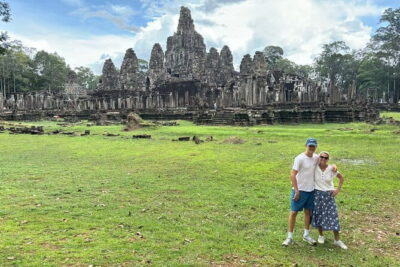
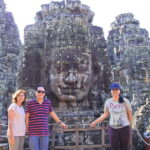
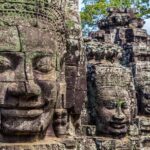
Next comes Angkor Thom City and Bayon Temple. This is where Angkor’s personality shows up: the faces, the scale, and the slightly eerie effect of looking around and feeling like you’re being watched from multiple directions.
Preah Khan Temple
From Bayon, you’ll continue to Preah Khan Temple. This stop helps break the day up because it feels less like a single icon and more like a temple complex you can wander through with stops for explanation.
Ta Prohm, the Tomb Raider temple
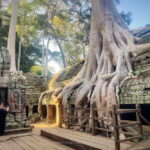
Then you’ll ride to Ta Prohm, known as the Tomb Raider temple. Trees and roots are a major part of the story here. It’s the kind of site where photos are easy, but the real value is still the guide’s framing—what you’re seeing and why it matters.
Traditional Cambodian lunch and a quick siesta
After the temple circuit, you’ll have a traditional lunch with a large spread of local dishes, then a quick siesta. That break is smart: you need it after early wake-up hours and repeated walking within temple grounds.
A balanced heads-up on Day 1: the temple riding can involve sandy or mixed surfaces, especially on trails off the main routes. One practical way to handle this is to bring a mindset of steady, controlled cycling rather than trying to move fast.
Day 1 Food and Water: What You Get, and How to Think About It
Food is included on Day 1 in a few key ways: breakfast, a traditional lunch spread, plus local snacks and fruits as part of the support plan. There’s also daily water support, which matters because Cambodia’s heat can turn a “short ride” into hard work if you’re under-hydrated.
The lunch stops and food locations are a highlight for many people who do this tour—one group described the setting as authentic and the lunch as very good. At the same time, another rider felt the lunch wasn’t top quality. So here’s my practical take: treat lunch as a included refuel, not a restaurant meal where everything is guaranteed to match your exact tastes.
If you’re picky about food texture or spice level, it’s worth checking with your guide about what you’ll be eating before you sit down. And if you get uneasy with heat, you’ll be happiest if you use the siesta as planned and don’t rush into more temple walking right after eating.
Day 2 Countryside Bike Tour: Rice Fields, Farms, Markets, and Rice Wine Areas
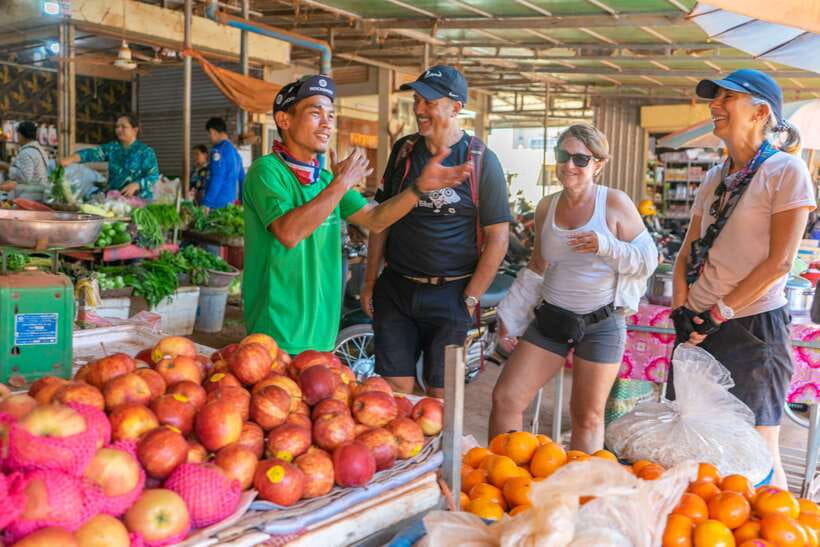
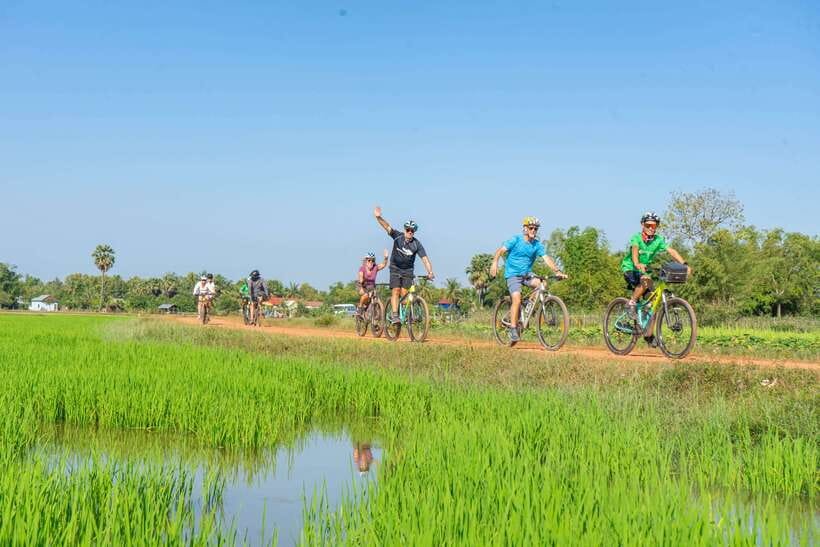
Day 2 starts later, with hotel pickup at 7:30am and a drive to the cycling shop. This is the day that often feels more relaxed—still active, but less focused on monument crowds and more focused on everyday Cambodian life.
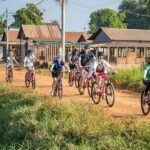
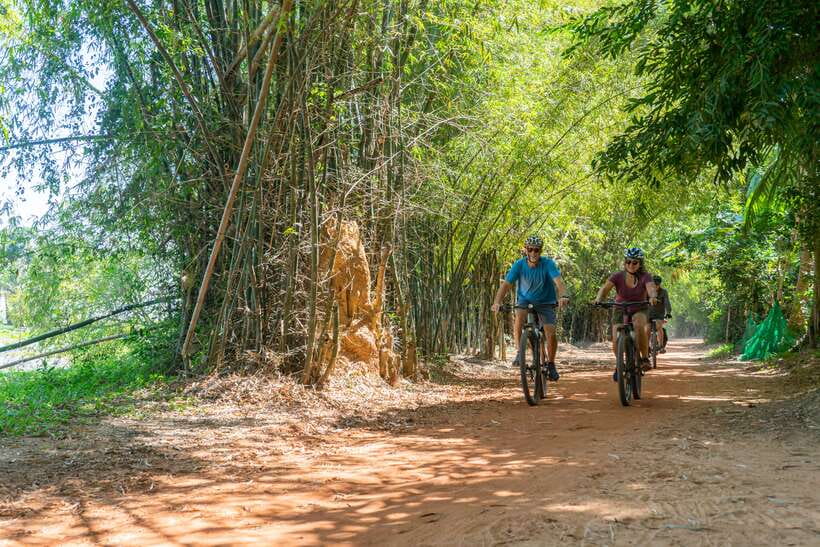
You’ll ride through backroads, rice fields, and farm areas with your guide. Expect short village moments along the way: you’ll stop, look around, and listen as you learn how people work and live.
The itinerary includes stops tied to agriculture and local production:
- A local market where you can taste fruit and snacks
- Mushroom and lotus farms
- Places where rice wine is distilled
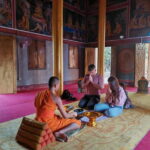
- Village handicrafts and Buddhist temples
This is a valuable change of pace. Angkor can be overwhelming because it’s so famous and so visually packed. Day 2 gives you the opposite feeling: you see how the region’s economy actually runs, and you get context for what your camera is photographing.
Comfort note: since this day includes rice fields and farm backroads, you’ll still want your cycling confidence. But compared with the sandy temple-trail segments of Day 1, the second day is usually the smoother mental load.
Bikes, Helmet, and Terrain: How to Match Your Ability to the Route
You’ll be provided with a bicycle and helmet, plus daily water support. The bikes are described as good mountain bikes, and several riders say the trails can be shaded and not overly technical. That’s a big deal because it means you can focus on the experience rather than wrestling the bike.
Still, terrain is the deciding factor for this tour:
- Day 1 can include sand on temple-area paths
- Parts of the riding may be off main routes
- If you’re not used to switching surfaces, you’ll feel it in your legs and balance
So my suggestion is simple. If you’re an occasional cyclist, plan to ride slower than you think you should. Wear sunscreen (you’re outdoors for most of both days), and bring sunglasses because bright mornings can hit hard right after sunrise.
Also remember the temple dress rule: shoulders and knees covered. That can be annoying if you prefer athletic cut shorts, but it’s part of the respect expected at these sites.
You can also read our reviews of more guided tours in Siem Reap
The Guide Experience: English Storytelling, Photo Stops, and Map Clarity
This tour includes an English-speaking guide. Several guides are mentioned by name in rider feedback, including Mony, Thy, Bob, and Tida. Different guides will highlight different details, but the overall pattern is clear: you’re not riding alone, and you’re not just handed a route.
A strong part of the guide job here is explanation. One rider described the focus as mainly history and culture of the buildings. That’s a good fit if you want meaning. If you’re the type who loves art-and-architecture specifics, you might want to supplement with your own reading before you go—because the tour explanations may lean toward symbolism and context rather than deep technical art history.
One practical area to watch: if you care about knowing exactly where you are within the Angkor grounds, ask your guide to point it out on a map at a couple of key moments. One review noted the rider came away without much sense of which Angkor areas they covered, and that’s fixable with a quick question during the ride.
On the plus side, riders also mention that guides look out for the best photo spots—so if photography matters to you, mention it early. Guides can often adjust small timing decisions to help you frame the shot you want.
Price and Value: $95 for Two Days, Plus Temple Tickets
The price is $95 per person for a 2-day guided bike tour. Temple entry tickets are not included, and they’re listed as $37 per day. For a two-day visit, that’s $74 in temple tickets on top of the $95 base price, before personal expenses.
That might sound like a lot if you only compare ticket prices. But the value here is in what the tour bundles:
- Hotel pickup and drop-off both days
- English-speaking guide
- Bicycle and helmet
- Breakfast on Day 1
- Lunch on Day 1
- Local snacks and fruits
- Daily water support
- A two-day structure that splits monuments (Day 1) from rural life (Day 2)
If you were to piece this together yourself—bike rental, a guide, transportation for starting points—you’d likely spend close to the same amount, and you’d lose the built-in timing that gets you to Angkor Wat at sunrise.
So I’d budget with temple tickets in mind from the start, then judge the tour as a full package: time, guidance, and meals are doing real work for you here.
Who This Tour Suits Best (and Who Might Want Another Option)
You’ll likely enjoy this tour if you:
- Want two different Angkor experiences: sunrise monuments plus countryside life
- Prefer seeing sights by bike rather than being stuck in a vehicle all day
- Like having a guide’s stories to connect what you’re looking at
You should reconsider if:
- You’re not comfortable riding on sand or uneven, mixed-surface paths
- You’re not able to handle moderate outdoor activity in warm conditions
- You’re pregnant; this tour is listed as not suitable for pregnant women
If you’re a regular cyclist, you’ll probably feel right at home. If you’re new to cycling, I’d focus on steady pacing and not treating every sandy section like a race.
Should You Book Siem Reap: Angkor Sunrise 2 Days Guided Bike Tour?
I’d book it if your ideal Siem Reap trip includes more than photos of Angkor Wat. The sunrise timing, the ability to ride trails, and the way Day 2 swaps monuments for real farm-and-village stops make it more than a standard temple day.
Do it with one clear expectation: Day 1 includes the more challenging riding moments. If you’re okay with that, you’ll get a tour that feels practical and varied—temples in the morning, countryside in the afternoon, and food breaks that keep you from burning out.
If you want an art-history lecture first and cycling second, you might feel slightly underfed on the most technical architectural details. In that case, bring a bit of pre-reading and ask your guide what you’re most curious about. You’ll get more out of the time.
FAQ
What time is hotel pickup on Day 1?
Hotel pickup is at 5:00am for the Angkor sunrise bike tour.
What time is pickup on Day 2?
Hotel pickup on Day 2 is at 7:30am.
Are Angkor temple entry tickets included?
No. Temple entry tickets are not included, and they are listed as $37 per day.
What meals and snacks are included?
Day 1 includes breakfast and a traditional Cambodian lunch. There are also local snacks and fruits included.
Do I get a bike and helmet?
Yes. A bicycle and helmet are included.
What dress code should I follow at temples?
You’ll be asked to wear clothing that covers your shoulders and knees for cultural respect, especially at Angkor Wat.
Does the tour run in rain?
Yes, the tour takes place rain or shine.